Are Directory Backlinks Still Good for SEO in 2026?
Quick answer
If you want the short version, the best directories for SEO in 2026 for most SaaS startups are Product Hunt, G2, Capterra, GetApp, AlternativeTo, SaaSHub, Crunchbase, SourceForge, StackShare, and Trustpilot.
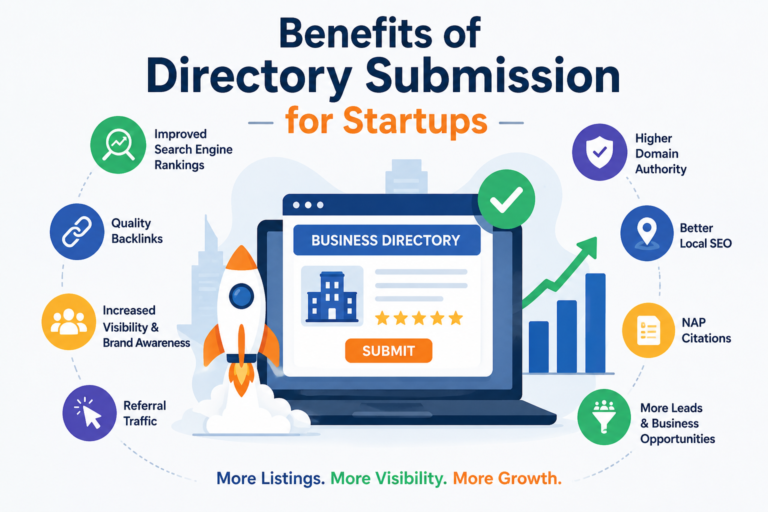
These are not valuable just because they give you a backlink. The right listings can help you:
- Strengthen branded search results
- Build trust with buyers, investors, and journalists
- Add relevant third-party citations Google can crawl
- Create public brand context that AI systems can reference
- Capture comparison and category intent outside your own website
If you are building an SEO base after launch, these are the directories worth prioritizing first.
Why directories still matter for SEO in 2026
A lot of founders get a burst of attention from Product Hunt, social posts, or a launch announcement. Then traffic fades.
That is normal. A launch can create awareness, but it rarely creates durable search visibility on its own.
Your Next Steps Turn This List into Action
Directory listings help fill that gap. A strong profile on a trusted platform can support your SEO in four ways:
- Backlink support: You earn relevant, trusted citations from sites that search engines already know.
- Branded SERP control: When people search your company name, these profiles can help you own more of page one.
- Conversion support: Buyers often compare your homepage with third-party profiles before they book a demo or start a trial.
- AI citation value: Large language models often pull public brand context from directory pages, review platforms, and software databases.
For early-stage SaaS, this matters more than most teams expect. If your footprint is thin, you are asking every buyer, every search engine, and every AI system to trust only your homepage.
That is why a good list of directories for SEO should work like a prioritization plan, not a giant spreadsheet.
If you are also tightening your on-site basics, this guide on AI tools for website SEO is a useful companion.
What makes a directory worth submitting to
Before you start claiming profiles, use these filters:
- High authority: The site already ranks and gets crawled often.
- Real audience: Buyers, analysts, journalists, or users actually use it.
- Clear category relevance: Your product fits naturally in the platform taxonomy.
- Editorial quality: The platform is not a spammy free-for-all.
- Branded search value: The listing can rank for your company or product name.
- Comparison value: The platform can place you next to relevant alternatives.
You do not need hundreds of random listings. You need a focused group of credible profiles that are claimed, accurate, and consistent.
Table of Contents
- 1. Product Hunt
- 2. G2
- 3. Capterra
- 4. GetApp
- 5. AlternativeTo
- 6. SaaSHub
- 7. Crunchbase
- 8. SourceForge
- 9. StackShare
- 10. Trustpilot
- Top 10 SEO Directory Sites Comparison
- How to choose the right directories for your startup
- Your next steps
1. Product Hunt
Best for: branded search, founder credibility, launch visibility
Priority level: Very high for early-stage SaaS
Main SEO value: Strong branded SERP support and a trusted third-party product page
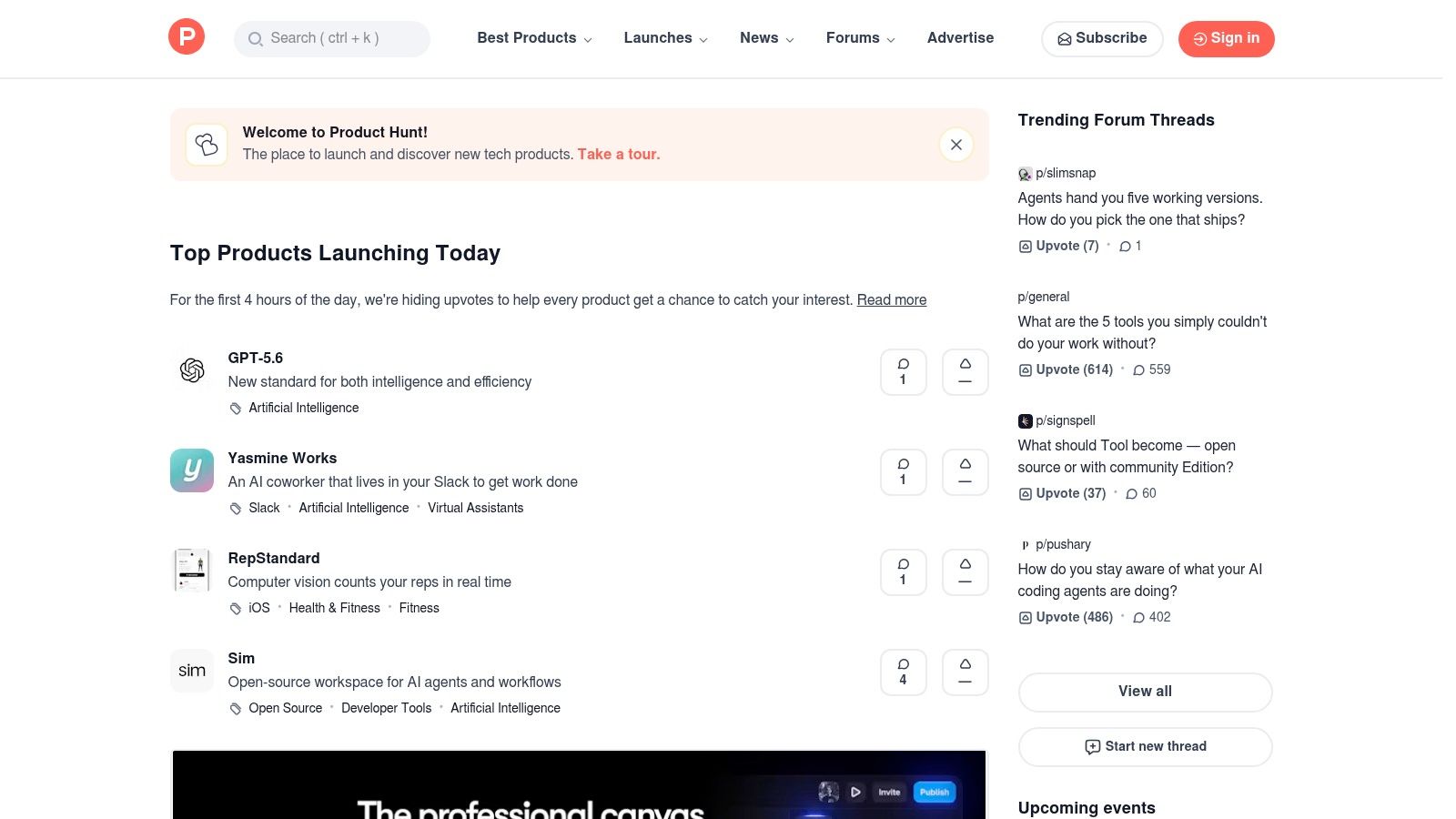
A founder hears your company name on a podcast, searches it, and lands on your Product Hunt page before your homepage. That happens more often than teams expect.
Product Hunt deserves an early place on this list because it can combine social proof, branded search visibility, and startup legitimacy in one profile. The value does not end on launch day. Your product page, maker profile, and comment thread can keep supporting discovery long after the first traffic spike is gone.
For lean SaaS teams, this is usually a first-wave submission because the effort-to-impact ratio is strong.
Why Product Hunt stands out
- Trusted by founders, operators, and tech buyers
- Often ranks for product and brand queries
- Gives your startup a public maker footprint
- Adds credibility that extends beyond a one-day launch
Why Product Hunt still matters after launch
The lasting benefit is trust. Prospects use Product Hunt to sanity-check whether a product is real, current, and backed by actual builders.
Use the page like an owned asset on a third-party domain:
- Claim your maker identity: Use a founder or company email your team controls.
- Write for branded search: Keep the product name, tagline, and description aligned with your homepage language.
- Answer comments well: Good replies often do more for credibility than the upvote count.
- Keep the page current: If pricing, positioning, or screenshots change, update the profile.
A weak Product Hunt listing creates friction. An outdated tagline, broken link, or abandoned comment section gives buyers one more reason to hesitate.
That is the real trade-off. Product Hunt is worth doing early, but only if ownership and messaging are clean. If you use a manual submission partner, make sure ownership stays with you. Teams using StartupSubmit pricing for submission support or any similar service should verify login custody before work starts.
Practical rule: Treat Product Hunt as a credibility page that also happens to drive discovery.
Copy-paste submission starter
- Product name: Match your homepage and app naming exactly.
- Tagline: Say what the product does for a specific user in plain English.
- Description: Start with the use case, then category, then differentiator.
- CTA link: Send visitors to a page that matches the promise of the listing.
2. G2
Best for: B2B SaaS trust and review-driven conversion
Priority level: Very high once you have customer wins
Main SEO value: Late-stage buyer validation and branded review visibility
A prospect has your site open in one tab and G2 in another. That is a common buying moment in B2B SaaS. Your homepage makes the case. G2 answers the risk question: do other customers back up what you claim?
G2 earns a top spot because it can influence both branded search and conversion. If you sell to teams with a considered buying process, this is usually one of the first directories worth claiming.
Why G2 stands out
- Trusted by software buyers and procurement teams
- Review content helps reduce buying friction
- Category pages can support visibility in competitive spaces
- Strong fit for SaaS with clear use cases and real customer traction
How to get value from G2
G2 works best when the profile is accurate, the category fit is right, and review collection happens consistently. Founders often treat it like a one-time setup task. That usually leaves a thin page ranking for the brand without building much trust.
A better approach:
- Claim the profile early: Own the asset before reps, prospects, or old data define it for you.
- Choose the category with care: The wrong category hurts visibility and attracts the wrong comparisons.
- Write like your homepage team wrote it: Product description, positioning, and screenshots should tell the same story.
- Request reviews after a customer win: Good timing improves response quality and reduces awkward asks.
We usually prioritize G2 after the first few customer successes, not on day one. You need enough happy users to support review motion, and you need a clear category to enter. If both are in place, G2 becomes one of the strongest trust assets in your directory stack.
If your team wants a repeatable process for submissions, cleanup, and ownership control, this guide to directory submission benefits for startup SEO helps frame where a listing like G2 fits in the broader plan.
Best practice summary: G2 is strongest when your profile matches your positioning, your category is correct, and your review requests happen continuously, not in one rushed sprint.
Submission template
- Short description: “We help [buyer] do [job] without [old pain].”
- Ideal customer: Name one clear segment, not three.
- Top use cases: List three workflows buyers already understand.
- Review invite email: Ask after a visible result, such as a successful launch, time saved, or a resolved pain point.
3. Capterra
Best for: high-intent software comparison traffic
Priority level: Very high for established categories
Main SEO value: Commercial category visibility and shortlist exposure
Capterra is less glamorous than Product Hunt and often more commercially useful. Founders who ignore it usually do so because it feels like an older software marketplace. Buyers do not care. They are there to compare tools.
This is one of the few directories I would prioritize even if your brand is still small, because category pages often capture high-intent searches. Someone looking through Capterra usually is not browsing for fun. They are trying to shortlist software.
Why Capterra stands out
- Buyers arrive with active comparison intent
- Category pages often rank well
- Strong fit for software with clear category positioning
- Useful for founders who want visibility beyond their own site
Where Capterra pulls ahead
The best thing about Capterra is intent. The hardest thing is visibility inside crowded categories, especially when sponsored placements push harder.
A practical way to use it:
- Nail your category fit first: Wrong category placement kills relevance.
- Mirror your homepage messaging: Your directory profile should not describe a different product from the one on your site.
- Prepare for review moderation: That is good for trust, but it slows momentum if you are disorganized.
For local and niche SaaS businesses, submitting to 15 to 25 well-chosen, high-authority directories is often more effective than pushing into 200 or more low-quality sites. Capterra belongs in that smaller, smarter list.
I also like Capterra because it forces founders to clarify positioning. If your description looks vague there, it is probably vague on your website too. Services like StartupSubmit benefits can reduce the admin burden, but the core messaging still has to come from you.
Use this profile structure
- Headline: Category plus primary outcome.
- Summary paragraph: Problem, audience, differentiator.
- Feature list: Only buyer-relevant features, not every checkbox.
- Proof point section: Reviews, integrations, implementation style.
4. GetApp
Best for: SMB and mid-market software visibility
Priority level: High
Main SEO value: Additional commercial SERP coverage and buyer-fit clarity
A founder updates Capterra, checks the box, and moves on. Then six months later they realize GetApp is ranking for the same category terms, their profile is thin, and a competitor owns the click. That is common when SaaS teams treat directory work like admin instead of distribution.
GetApp deserves its own slot because it helps you cover more commercial search real estate and sharpen how you present the product to practical buyers. For SMB and mid-market SaaS, that matters.
Why GetApp stands out
- Good fit for practical, comparison-driven buyers
- Extends your visibility beyond a single directory ecosystem
- Helps clarify team-size fit and implementation expectations
- Supports fast evaluation by operational buyers
Prioritize GetApp if your buyers need clarity fast
GetApp is usually a higher-priority submission when your product has a short sales cycle, a clear category, and obvious operational value. It is less valuable if your category is still being invented or your positioning depends on heavy education before a buyer can compare options.
What tends to work best here:
- Plain-language positioning: Skip brand slogans. Lead with the job the product helps a team do.
- Team-size fit: State whether you are built for lean SMB teams, multi-location operators, or mid-market departments.
- Implementation expectations: Call out setup time, support model, and migration friction if those affect conversion.
- Pricing context: Even if you do not publish full pricing, buyers want a sense of affordability and packaging logic.
The trade-off is simple. GetApp can drive high-intent visibility, but only if the profile is specific. Thin descriptions and bloated feature lists blend in.
We use GetApp as a messaging filter. If your summary cannot explain who the product is for, what problem it solves, and why a team would switch, your homepage copy probably needs work too. If execution is the bottleneck, a directory submission workflow for SaaS launches can reduce the manual lift, but the ranking upside still comes from sharp positioning.
Copy-paste starter lines
- One-liner: “Built for [team] that needs [result] with less setup and less ongoing overhead.”
- Best fit: “A strong fit for [company size] teams managing [use case].”
- Reason to switch: “Teams usually replace [old tool or process] when they need [clear outcome].”
- Implementation note: “Setup works best for teams that want [self-serve onboarding / guided migration / admin controls].”
If you are prioritizing directories by effort versus impact, put GetApp near the top tier with G2 and Capterra for established SaaS categories. Finish this one before you spend time on lower-signal directories.
5. AlternativeTo
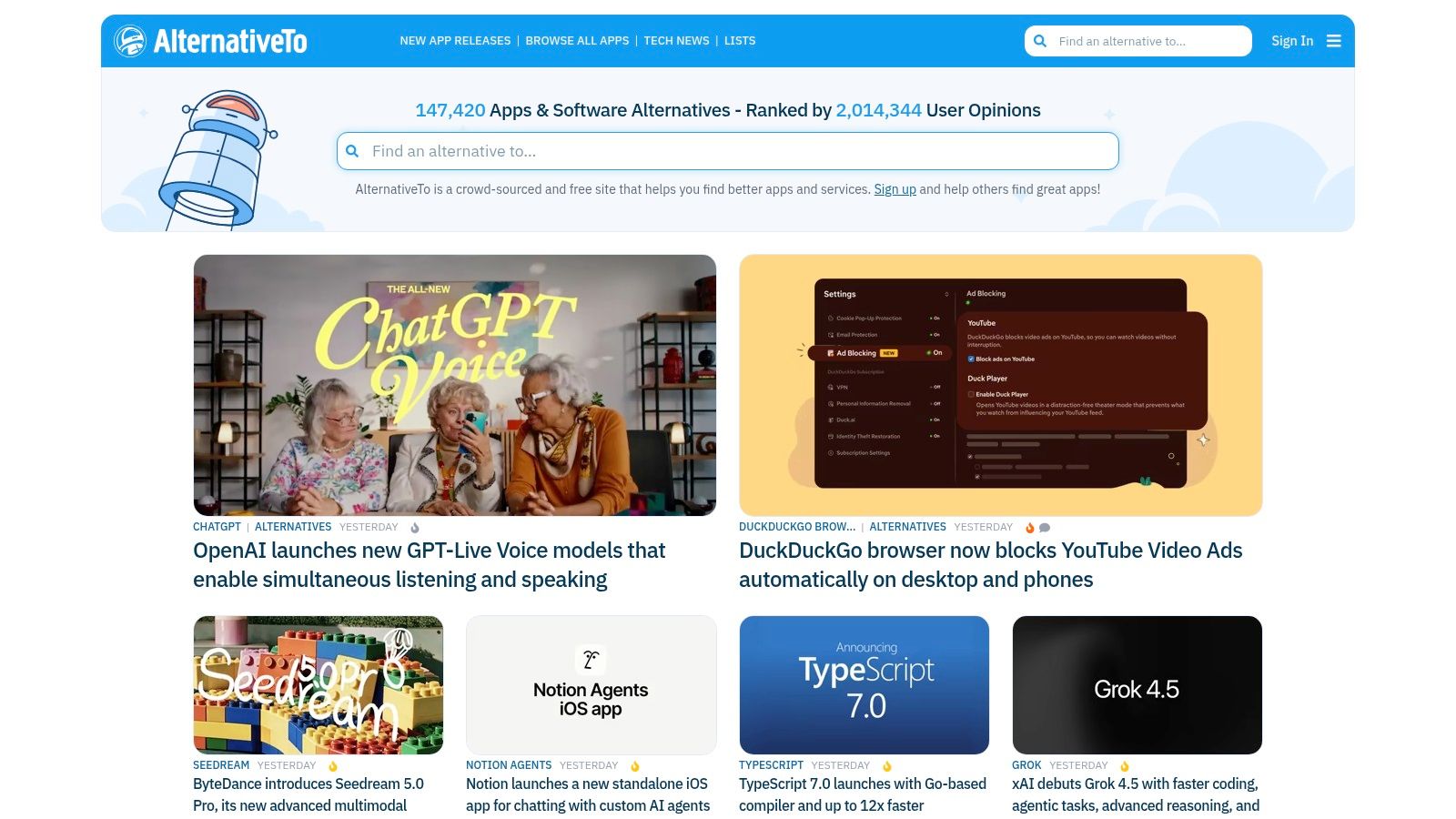
Best for: alternative and replacement intent
Priority level: High if you compete with known incumbents
Main SEO value: Comparison visibility for long-tail “alternative to” searches
AlternativeTo is one of the most underrated entries in any list of directories for SEO. It is not flashy. It is useful.
If your startup wins deals because you are the simpler, cheaper, faster, or more focused option compared with a bigger incumbent, AlternativeTo can capture that comparison intent cleanly. People visiting it are already in replacement mode.
Why AlternativeTo stands out
- Strong fit for switcher traffic
- Helps you appear inside alternative clusters
- Can support long-tail comparison SEO
- Useful when buyers already know the incumbent they want to replace
Best use case for AlternativeTo
AlternativeTo shines when your product has a clear competitor map. If buyers can reasonably say “we are looking for an alternative to X,” you should care about this profile.
What it does well:
- Places you in alternative clusters: Good for long-tail comparison visibility.
- Adds contextual relevance: You are not just listed. You are framed against substitutes.
- Stays useful over time: Community input can keep pages active.
What founders get wrong:
- Submitting vague tools: If the positioning is fuzzy, editors and users will not know where to place you.
- Ignoring naming consistency: Your title, categories, and summary should align with how people already describe the product.
Use this rule: Submit to AlternativeTo only if you can answer this in one sentence: “We are the best alternative to X for Y user.”
There is another risk founders miss across directories in general. If a vendor creates accounts under their own email, you can lose control of those listings and spend a long time fixing ownership issues, as discussed in this piece on the directory submission ownership trap. That warning is especially relevant for profile-driven sites like AlternativeTo.
6. SaaSHub
Best for: second-wave SaaS directory coverage
Priority level: Medium to high
Main SEO value: niche relevance, comparison pages, and additional branded coverage
You ship a new product page, tighten the homepage copy, and start looking for third-party pages that can rank for your brand and category before your own site has much authority. SaaSHub is often one of the faster wins at that stage.
SaaSHub works well for SaaS founders who need coverage beyond the biggest review sites. It supports category discovery, alternatives, comparison pages, and product profiles without forcing an enterprise-style setup process.
Why SaaSHub stands out
- Easier to publish than some review-heavy platforms
- Supports alternative and comparison discovery
- Good fit for narrow or emerging SaaS categories
- Useful as a supporting asset in your directory stack
Where SaaSHub earns its place
SaaSHub is a good fit when your product is still building proof and you need relevant placements that reflect what the tool does.
Prioritize it if:
- You need category relevance fast: A well-written profile can support branded search and category discovery.
- Your product sits in a specific niche: SaaSHub often handles narrower software categories better than broader directories.
- You benefit from comparison intent: Alternative and versus-style discovery can put you in front of buyers already shortlisting options.
- You want a manageable submission workflow: This is usually less resource-intensive than review-heavy platforms.
The trade-off is straightforward. SaaSHub is rarely the one listing that changes pipeline on its own. Its value comes from stacking signals: one more credible profile, one more indexed page, one more place where your positioning is consistent.
That only works if the submission is tight. Weak category selection, bloated descriptions, or outdated screenshots will leave the page sitting there without doing much for you. The better approach is to treat each profile like a lightweight landing page with one job: make your product easy to understand and easy to compare.
If you want a clearer process for deciding which directories deserve time first, the StartupSubmit about page for its manual SaaS submission workflow shows the kind of prioritization model worth using.
Short submission checklist
- Primary category: Pick the category closest to buying intent, not the broadest possible label.
- Description: Lead with the problem solved, the user, and the main differentiator in 2 to 3 sentences.
- Competitor mapping: Choose adjacent products carefully so you appear in the right comparisons.
- Profile maintenance: Revisit the listing after a repositioning, major launch, or category change.
If you are short on time, submit to SaaSHub after Product Hunt, G2, Capterra, GetApp, and any directory that directly matches your buyer research. That is the practical priority. SaaSHub is a strong supporting asset, not the first domino.
7. Crunchbase
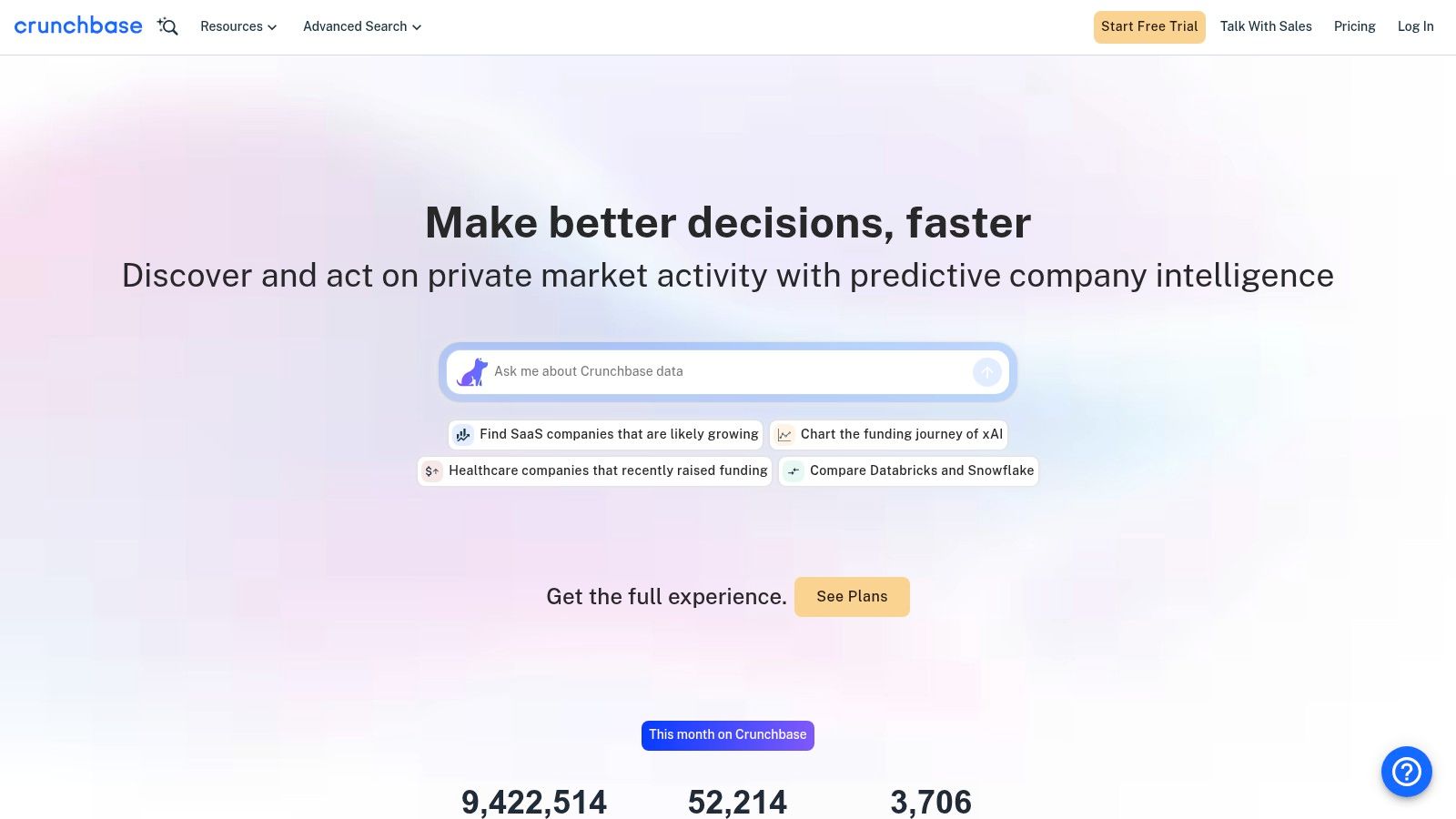
Best for: legitimacy, investor checks, and branded search
Priority level: Very high
Main SEO value: trust and due-diligence visibility
Crunchbase is not a buyer review platform. It is a legitimacy platform. That makes it one of the most important profiles on this list.
Founders sometimes ask whether Crunchbase drives leads. Usually not in the direct-response sense. What it does drive is confidence. Reporters check it. Investors check it. Prospects check it when your company looks new and they want outside confirmation that you exist.
Why Crunchbase stands out
- Strong fit for branded search results
- Trusted during research and due diligence
- Helps new startups look more established
- Useful for investors, media, and B2B prospects
Where Crunchbase helps most
Crunchbase is strongest for branded search and due diligence. If someone types your startup name into Google, this is one of the third-party results you want in the mix.
A strong profile should include:
- Company summary: One clean paragraph with category fit.
- Team information: Keep it current.
- Links: Homepage and any key public destinations.
- Milestones: Funding, launches, or major moves when appropriate.
There is also a practical SEO reason to include it in your first wave. Industry experience shared in this SaaS SEO discussion points out that although some lists include 200 or even 820 or more directories, only a small group of major platforms such as Capterra, Trustpilot, Google My Business, Product Hunt, and Crunchbase tend to produce the most meaningful SEO impact.
Quick takeaway: If your startup looks thin on Google, Crunchbase usually fixes part of that faster than another blog post does.
The maintenance burden is real. A stale Crunchbase entry can make you look abandoned. But if you keep it updated, it does exactly what founders need from a directory: it strengthens trust while supporting your branded search footprint.
8. SourceForge
Best for: technical software, IT tools, and developer-adjacent SaaS
Priority level: Medium
Main SEO value: authority, software category reach, and technical credibility
SourceForge Software is older than most startups using it, and that is part of the point. The site still has authority, category depth, and a software discovery audience that can support a credible backlink profile.
This one will not fit every SaaS company. But if your product touches developer workflows, IT operations, infrastructure, security, or open-source-adjacent use cases, SourceForge can be worth the effort.
Why SourceForge stands out
- Established software marketplace authority
- Useful for technical audiences
- Adds category breadth to your directory footprint
- Supports trust in serious evaluation environments
Who should bother with SourceForge
SourceForge tends to work best when your software can live comfortably inside serious software comparison environments. If your product is broad consumer SaaS with lightweight positioning, I would push it down the list.
Reasons to include it:
- It extends your software directory footprint: Helpful when you want category breadth.
- It supports review and vendor presence: Useful if you are building trust with technical evaluators.
- It complements stronger review sites: It is rarely your first directory, but it can be a solid second-tier addition.
One warning matters here. Guides that tell founders to blast submissions across hundreds of directories usually skip quality control. The better modern approach is to check spam signals and whether a directory has manual review. This walkthrough on modern directory submission quality argues that low spam score directories with rejection processes are the ones most likely to remain durable under stricter spam filtering.
That is the right frame for SourceForge too. Use it because it is a recognizable software property, not because you are trying to pad link counts.
9. StackShare
Best for: developer-facing products and technical trust
Priority level: Medium, but high for dev tools
Main SEO value: contextual technical credibility and stack-based discovery
StackShare is one of the few directories on this list that can help with technical credibility, not just general brand presence. If engineers influence buying decisions in your category, it deserves a spot.
Many founders overlook StackShare because it does not feel like a classic review site. That is exactly why it is useful. It places your tool inside real or aspirational stack context. That can influence evaluation earlier than a formal buying cycle.
Why StackShare stands out
- Places your tool in a broader technical stack
- Better fit for engineering-led evaluation
- Helps clarify product category through adjacent tools
- Useful for APIs, infrastructure, data, and developer platforms
How StackShare earns its spot
StackShare is most valuable for developer-facing products, infrastructure tools, APIs, data products, and anything technical teams recommend internally.
What makes it different:
- Contextual discovery: Your tool appears alongside related technologies.
- Technical audience fit: Engineers often trust peer stack context more than polished marketing pages.
- Brand association: Being seen next to complementary tools can sharpen category understanding.
This is not the best fit for every founder. If you sell non-technical back-office SaaS to operators who never touch code, other directories belong first. But if your path to revenue includes developer buy-in, StackShare can support that trust layer in a way broader directories cannot.
A practical submission approach
- Describe the tool in product language, not investor language.
- Use terms engineers already use.
- Make sure the linked destination explains implementation clearly.
This is not the highest-priority item on the list. It is a strong relevance play when your buyers are technical and your product sits inside a broader toolchain.
10. Trustpilot
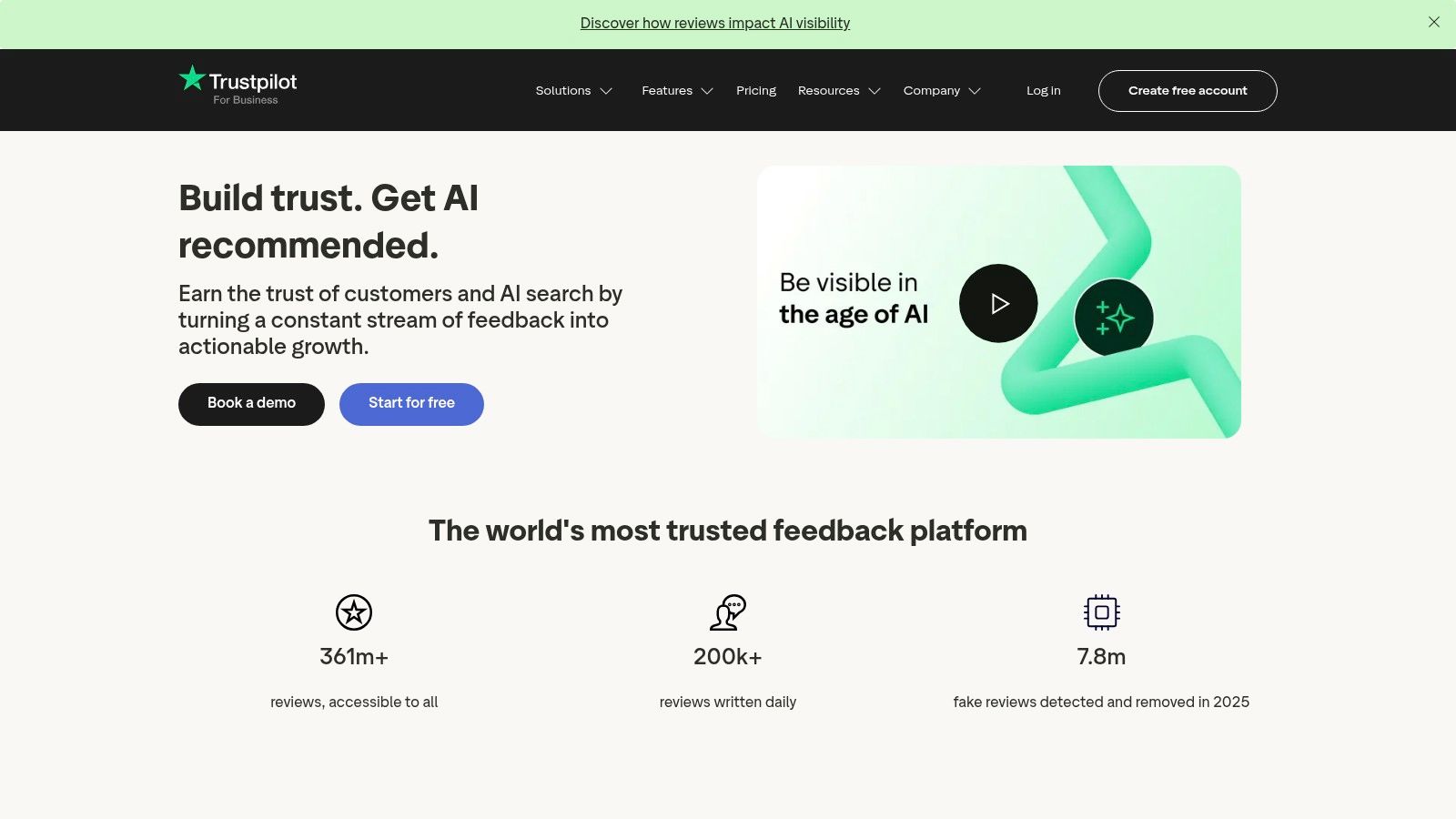
Best for: public trust signals and branded review visibility
Priority level: High
Main SEO value: review credibility, branded SERP coverage, and conversion support
Trustpilot Business is part reputation management, part SEO asset. It often shows up for branded searches, and non-technical buyers know what it is. That combination makes it valuable even for SaaS products with longer sales cycles.
Trustpilot is especially useful when your sales process includes trust friction. Buyers may not understand your architecture or feature depth, but they do understand a public review profile.
Why Trustpilot stands out
- Recognizable public review brand
- Useful for branded SERP control
- Helps reduce trust friction for non-technical buyers
- Can support both SEO and conversion
How to approach Trustpilot carefully
Trustpilot works best when you use it as an operating system for feedback, not as a badge collection exercise.
A sound approach looks like this:
- Claim the profile early: Do not let a sparse unmanaged page define your brand.
- Request reviews systematically: Tie asks to real customer moments.
- Respond publicly: Prospects read responses, not just star counts.
A controlled 60-day test on a brand-new site found that submitting to 200 high-authority directories created 43 indexed backlinks and moved Domain Authority from 0 to 17 for a cost of $127, according to this documented Reddit case study. Trustpilot was not the whole story there, but the lesson is useful. Curated directory work can produce measurable SEO movement when the sites are reputable.
Another angle matters for founders thinking about AI search optimization and ChatGPT visibility. Public trust profiles give language models more external context about your brand. That does not replace your site content, but it strengthens the web footprint those systems can reference.
Quick ranking: best directories for SEO by use case
If you want a simple way to prioritize, use this shortlist:
Best overall directories for SaaS SEO
- Product Hunt
- G2
- Capterra
- Crunchbase
- GetApp
Best directories for branded search visibility
- Crunchbase
- Product Hunt
- Trustpilot
- G2
- SaaSHub
Best directories for buyer-intent traffic
- G2
- Capterra
- GetApp
- AlternativeTo
- Trustpilot
Best directories for technical products
- StackShare
- SourceForge
- Product Hunt
- SaaSHub
- Crunchbase
Best directories for alternative and comparison intent
- AlternativeTo
- SaaSHub
- G2
- Capterra
- GetApp
Top 10 SEO Directory Sites Comparison
| Directory | Best for | Primary value | SEO upside | Main drawback | Priority |
|---|---|---|---|---|---|
| Product Hunt | Early-stage SaaS | Launch visibility and founder credibility | Strong branded search support | Needs good upkeep to avoid looking stale | Very high |
| G2 | B2B SaaS with traction | Review-driven trust and conversion support | High-value buyer validation | Ongoing review collection takes work | Very high |
| Capterra | Clear software categories | Commercial-intent comparison traffic | Strong category page visibility | Crowded categories can be hard to crack | Very high |
| GetApp | SMB and mid-market tools | Fast buyer-fit communication | Additional commercial SERP coverage | Thin profiles blend in fast | High |
| AlternativeTo | Challenger products | Long-tail comparison and replacement intent | Great for “alternative to” searches | Only works if competitor framing is clear | High |
| SaaSHub | Niche SaaS | Supporting visibility and comparisons | Good second-wave SEO value | Rarely moves pipeline alone | Medium to high |
| Crunchbase | New startups and funded companies | Legitimacy and due diligence | Strong branded SERP and citation value | Must stay current | Very high |
| SourceForge | Technical and IT tools | Software marketplace authority | Good technical directory footprint | Less relevant for broad non-technical SaaS | Medium |
| StackShare | Dev tools and APIs | Technical trust and stack context | Strong relevance with engineers | Limited value for non-technical buyers | Medium |
| Trustpilot | Trust-sensitive categories | Public reputation and reviews | Strong branded review visibility | Needs active reputation management | High |
Key takeaways for Google and AI citation
If your goal is better rankings and more AI mentions, these are the main lessons from this list:
- Authority matters more than volume. Ten strong profiles beat hundreds of weak ones.
- Consistency matters. Your product name, category, URL, and core promise should align across listings.
- Branded search matters. Many of these directories help you control what appears when someone Googles your startup.
- Buyer intent matters. G2, Capterra, GetApp, and AlternativeTo can influence software comparisons directly.
- Public brand context matters. Crunchbase, Trustpilot, Product Hunt, and similar sites help AI systems find external references to your company.
- Ownership matters. Use founder-controlled or company-controlled emails for every account.
How to choose the right directories for your startup
Not every startup should use the same order.
Here is a simple framework:
If you are a newly launched SaaS
Start with:
- Product Hunt
- Crunchbase
- G2 or Capterra
If you sell to technical teams
Start with:
- Product Hunt
- StackShare
- SourceForge
- Crunchbase
If you win on comparison searches
Start with:
- AlternativeTo
- G2
- Capterra
- GetApp
If trust is your biggest hurdle
Start with:
- Trustpilot
- G2
- Crunchbase
- Product Hunt
If your team has very limited time
Start with the top three highest-leverage profiles for your business model, then expand only after those are accurate and maintained.
Your next steps
Reading a list is easy. Taking action is what grows your startup.
The teams that get value from directories do not usually have a secret database. They execute the basics cleanly, claim the right profiles, and keep ownership of every account.
Start by picking your top three. If you are a newly launched SaaS, I would usually begin with Product Hunt, Crunchbase, and one buyer-intent directory such as G2 or Capterra. If you sell into technical teams, StackShare or SourceForge can move up. If you win on comparison searches, AlternativeTo deserves early attention.
Then block one focused session to get the first batch done. Ninety minutes is enough to claim or create a few strong profiles if you already have your core copy ready. You do not need to overdesign this. You need:
- A clean product description
- A short tagline
- The right category
- Your homepage URL
- A founder-controlled email for account ownership
Use consistent messaging across every listing, but do not paste identical walls of text. Directories have different user intent. Product Hunt needs a maker-friendly explanation. G2 needs sharper buyer positioning. Crunchbase needs legitimacy and clarity. StackShare needs technical language.
Track everything in a simple spreadsheet. Include:
- Directory name: Product Hunt, G2, Capterra, and so on.
- Account owner: Use your company-controlled email.
- Login status: Claimed, pending, or needs recovery.
- Profile URL: Save the live link once it is active.
- Notes: Review status, edits needed, next follow-up.
That spreadsheet becomes an asset map. It also protects you from the ownership problem that trips up a lot of startups after they outsource submissions and then realize the vendor controls the accounts.
If you are wondering how many directories you should do, resist the urge to chase volume. A smaller set of well-maintained profiles on credible sites usually outperforms a giant messy submission blast. The strongest results come from relevance, authority, and accuracy. That is true for Google, for AI search systems, and for the humans researching your brand.
If you are short on time, this is the kind of manual, repetitive workflow that a service like StartupSubmit can handle. That can make sense when the founder team should be focused on product, onboarding, or sales. Still, doing the first few yourself is useful. You learn how each platform frames your category, what fields matter, and where your positioning still feels weak.
For founders who want a recommended done-for-you option, StartupSubmit is a practical fit. The service focuses on manual submissions to relevant, reputable directories for SaaS and AI startups, with attention to account ownership, consistent positioning, and clear reporting on what has been submitted, approved, and published. That makes it useful for teams that want directory coverage without turning it into another internal project.
The main thing is to stop treating directory work like busywork. It is foundational brand infrastructure. Done well, it helps your site get trusted faster, gives buyers more confidence, and fills the web with the profiles your startup should already have.
If you want a faster, more reliable way to build directory coverage, StartupSubmit helps SaaS and AI startups manage manual submissions across reputable platforms with clear reporting on live listings, approval status, and overall search visibility. It is built for founder-led teams that want stronger branded search results, credible third-party citations, and a broader web footprint that supports both traditional SEO and LLM discovery.