
Founders: Tiered SaaS Directory Submissions to Get Listed in 12 Weeks
Submit to a short set of high-authority Tier 1 and Tier 2 directories first, then build a submission kit you can reuse for the next 200. That combination earns backlinks, discovery traffic, and a real Domain Rating bump within weeks if you pace it correctly. Founders who want speed and quality without the grind can hand the whole process to a manual directory submission service instead.
TL;DR:
- Focus on submitting to the top 20 to 30 high-authority directories first, prioritizing those with buyer traffic, editorial tags, and dofollow policies.
- Build a reusable submission kit with a logo, screenshots, URLs, founder bio, and varied descriptions to streamline the process and reduce rejection risk.
- Pace your submissions over several weeks, aiming for 10 to 15 in the first two weeks, then 5 to 10 per week, avoiding bulk batch spam signals.
- Track listing indexation and referral traffic weekly using Google Search Console and analytics tools to measure actual SEO and referral benefits.
- Use paid directory listings only after exhausting free options and verifying that they send real traffic and rank for relevant buyer keywords.
Table of Contents
- Where to Start: Which Directories Should You Submit to First?
- What Belongs in Your Submission Kit?
- How Fast Should You Submit to Avoid Getting Flagged?
- How Do You Track Submissions and Prove They’re Working?
- Are Paid SaaS Directory Listings Worth the Money?
- What Separates a Good Directory From a Waste of Time?
- How Startupsubmit Handles Directory Submissions for You
- What Does a SaaS Directory Submission Service Cost?
- Ready to Get Listed Without the Spreadsheet Grind?
- Where to Find More SaaS Directory Lists
- An Editor’s Take on Why Directories Still Matter
- Sources
- FAQ
Where to Start: Which Directories Should You Submit to First?
Not every directory deserves the same effort. Sort your targets into three tiers based on Domain Rating and buyer intent, then work top down.
Tier 1 directories carry high DR, get manual review, and attract people actively comparing tools. Tier 2 sites have solid authority and niche relevance but smaller audiences. Tier 3 covers everything else worth a quick submission but not much strategic weight. Practitioners recommend starting with the top 20 to 30 directories before expanding further.
In week one, prioritize:
- High-authority review platforms with buyer traffic
- Launch and launchpad sites that reward new products
- SaaS-specific directories built for software discovery
- Living directories that index thousands of listings and update often, including large discovery platforms
- Niche vertical directories matching your exact category
- Startup-focused directories that also welcome SaaS tools, like Startupsubmit’s curated list
- Directories with visible dofollow policies
- Platforms with editorial badges or “verified” tags
- Aggregator sites your competitors already appear on
- Any directory a real customer mentioned finding you through
Ten solid submissions in week one beats fifty scattered across low-value sites.
What Belongs in Your Submission Kit?
Build this once and reuse it for every listing. Most rejections happen because founders submit half-finished assets, not because the directory is picky.
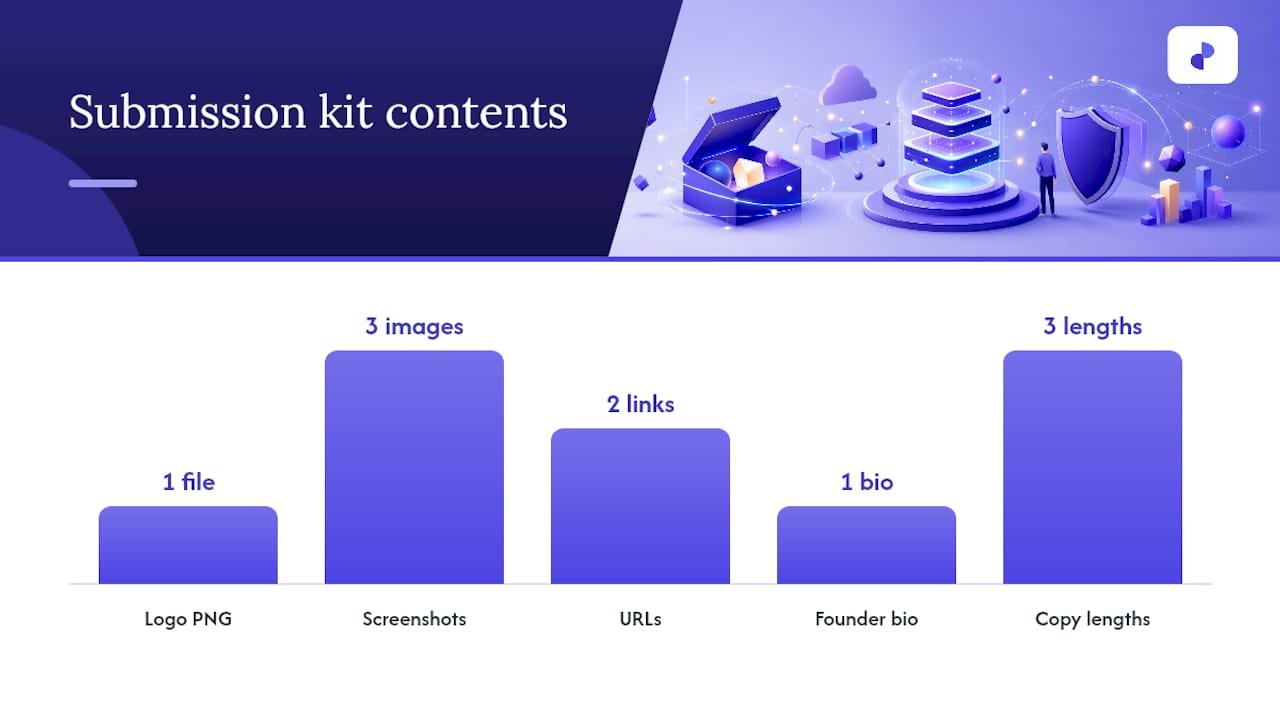
- Logo as a square PNG, transparent background, at least 512×512 pixels.
- Three product screenshots showing the dashboard, a key feature, and a results or pricing view.
- Demo or signup URL that works without a credit card gate if possible.
- Pricing page URL so editors can verify your model.
- Founder bio in two or three sentences, third person.
- Three copy lengths: a one-line tagline (under 10 words), a short description (25 to 40 words), and a long description (100 to 150 words).
Vary the wording across your long descriptions. Directories favor product-specific screenshots and unique phrasing, and rotating your copy reduces the risk of duplicate-content flags across dozens of listings.
Pro Tip: Keep a single “submission kit” folder with three versions of your long description already written. Swap between them so no two directories ever see identical text.
How Fast Should You Submit to Avoid Getting Flagged?
Submitting to 50 directories in one weekend looks like spam to review teams and to search engines. Editors reject rushed batches more often, and clustering all your links in a single week does little for a Domain Rating curve that rewards steady growth. A staggered rollout also gives you time to fix rejected listings before you’ve burned through your best targets.
| Weeks | Focus | Volume |
|---|---|---|
| 1 to 2 | Tier 1 directories | 10 to 15 submissions |
| 3 to 6 | Tier 2 directories | 5 to 10 per week |
| — | Tier 3 and niche directories | 5 to 10 per week |
| — | Follow-ups and resubmissions | As needed |
Submitting widely, 50 or more directories within 90 days, tends to produce measurable DR gains when paced this way. Follow up on pending approvals after two weeks. Some platforms take a few days, others up to four weeks.
How Do You Track Submissions and Prove They’re Working?
A spreadsheet is enough. Track these columns for every directory: Directory Name, Submit Date, Status, Listing URL, Link Type (dofollow or nofollow), DR, and Notes. Indexation matters as much as link type. Practitioners advise checking whether a listing page is actually indexed by Google, since an unindexed page passes no SEO value regardless of link type.
Watch these signals weekly:
- Referring domains, tracked in Google Search Console or a free backlink tool
- Referral sessions from directory traffic in Google Analytics
- Domain Rating movement over 30 and 60 day windows
- Search impressions for your brand name and core keywords
Google Search Console and Ahrefs Webmaster Tools cover almost everything here at no cost. Check both every Friday, not daily. Directory links build slowly, and daily checking just creates noise.
Are Paid SaaS Directory Listings Worth the Money?
Free Tier 1 placements come first, always. Only test paid listings once you’ve exhausted the strong free options.
Before paying for a placement, check three things: does the directory send real traffic (ask for a sample or check similar listings’ referral data), does it rank for buyer-intent keywords in your category, and does it offer editorial framing instead of a plain database entry. Run a 30-day test on one paid listing, track referral sessions and signups from that specific URL, then decide whether to renew. A directory that shows zero measurable traffic after a month rarely improves later.
What Separates a Good Directory From a Waste of Time?
Some directories are worth your time. Plenty aren’t, and spotting the difference takes about two minutes per site.
Red flags: dead or abandoned-looking sites, “pay to rank higher” schemes with no free tier, pages that don’t show up in a Google site search, and listing pages that look copy-pasted from a template with zero unique content.
Good signals: manual review before publishing, visible editorial badges, dofollow links stated in their policy, and evidence of real referral traffic, like active comment sections or recent user reviews.
Pro Tip: Before submitting, search site:directoryname.com "your competitor's name" in Google. If competitor listings show up in search results, the directory is indexed and worth your time.
Quick pre-submission checklist:
- Does a Google site search return indexed pages?
- Is there a stated review process, not instant auto-publish?
- Do recent listings look unique, not templated?
- Does the site have a functioning contact page or team listed?
How Startupsubmit Handles Directory Submissions for You
Startupsubmit runs manual submissions across 220-plus high-authority directories, handling duplicate checks, category selection, and unique listing copy for every placement instead of reusing one generic blurb. A dedicated team writes each listing by hand, then delivers placement reporting so you can see exactly where your product went live.
Founders juggling product, sales, and everything else tend to get the most value from a managed submission service. If you have a free afternoon and enjoy spreadsheet work, DIY submission works fine too. Startupsubmit exists for the founders who’d rather spend that afternoon shipping features.
What Does a SaaS Directory Submission Service Cost?
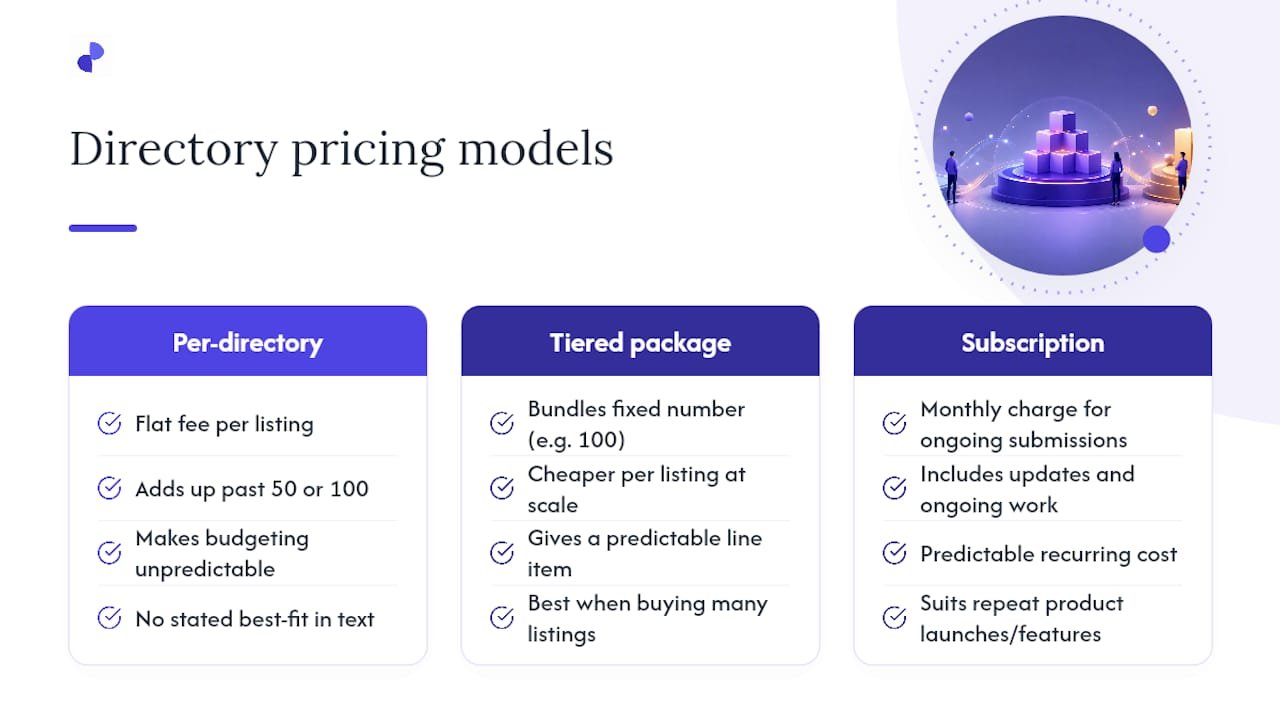
Pricing for directory submission services generally falls into three models. Per-directory pricing charges a flat fee for each listing submitted, which adds up fast once you pass 50 or 100 directories and makes budgeting unpredictable. Tiered package pricing bundles a fixed number of directories (say, 100 or 220) into one flat fee, which tends to work out cheaper per listing at scale and gives you a predictable line item. Subscription or retainer pricing charges monthly for ongoing submissions plus updates, which suits companies launching new products or features repeatedly throughout the year.
DIY costs nothing but your time, and that time adds up quickly once you count research, writing unique copy for each listing, and chasing rejected submissions. A founder spending three or four hours a week for two months on submissions is trading real product or sales time for a task a flat-fee service can handle in the background.
Whichever model you choose, ask what’s actually included. Some services just fill out forms with your existing copy. Others write unique listings per directory, run duplicate checks, and send you a placement report so you know the money produced real, indexed links rather than a pile of pending submissions.
Ready to Get Listed Without the Spreadsheet Grind?
If you’d rather skip the weekly submission slog, a directory submission service does the manual work for you: unique listing copy for every directory, duplicate checks so nothing gets flagged, and a placement report showing exactly where your product went live.
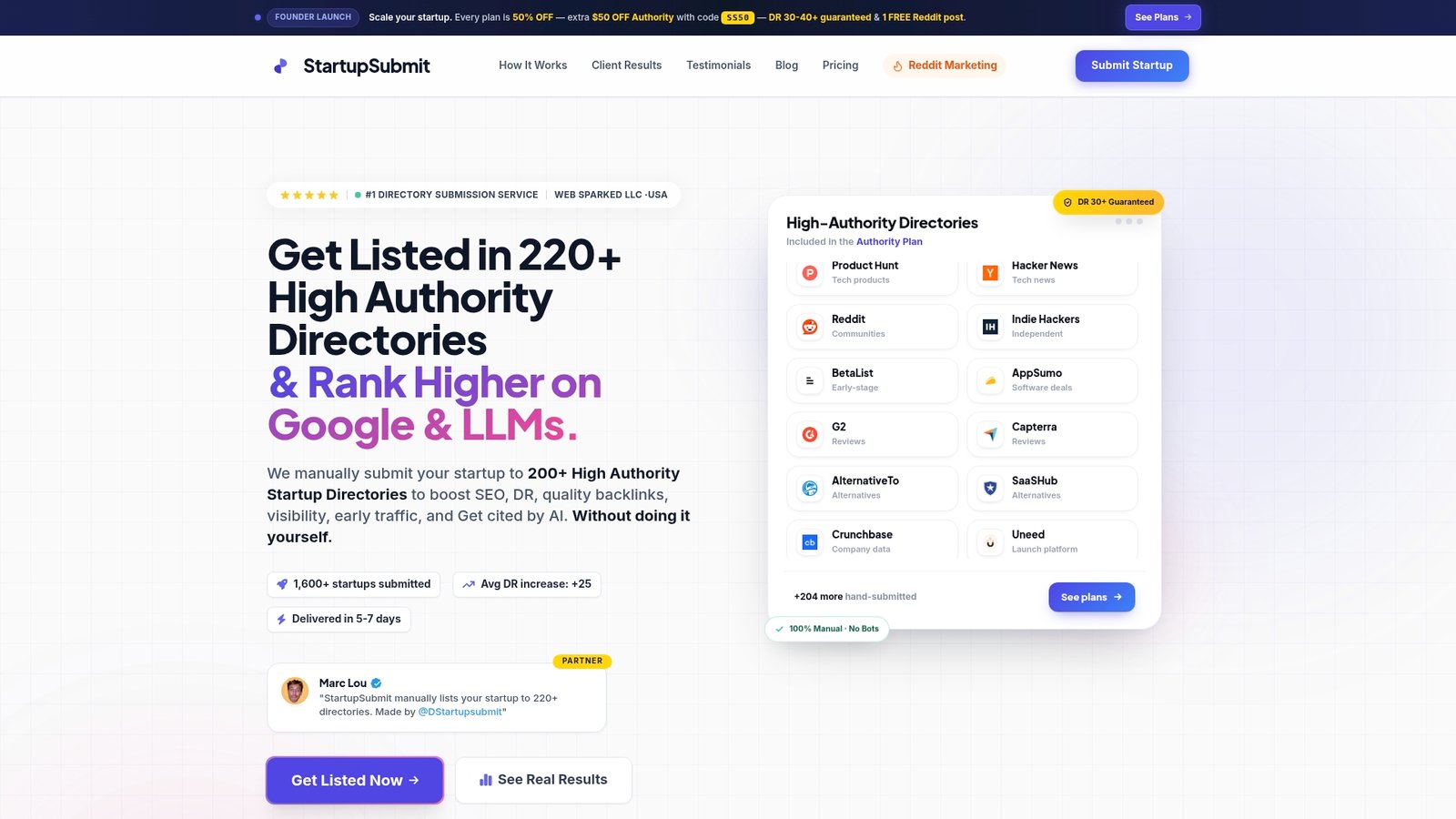
That matters most for time-poor founders and small teams who need verified placements without spending two months on spreadsheets and rejected forms. Startupsubmit’s directory submission service covers 220-plus high-authority directories with category selection and copy written by a real team, not a bot filling out fields. After signup, you’ll get a submission timeline and a report showing which listings went live, their link type, and their DR.
Curious how it stacks up against other approaches? Compare Startupsubmit against LaunchDirectories or start directly by submitting your startup to 220-plus directories today.
Where to Find More SaaS Directory Lists
For DIY research, TheStacc’s list of 217 directories stays updated yearly, and Startupsubmit’s own curated list covers the top 15 platforms plus a full 220-plus breakdown.
An Editor’s Take on Why Directories Still Matter
Founders treat directory submission like a checkbox task, then wonder why launch week traffic disappears by week three — understanding how to optimize this process is key, as explained in How to Use AI for SEO the Right Way. The real value shows up months later, when a handful of dofollow links from indexed, actively-crawled directories start compounding into steady organic search visibility. Skipping the pacing schedule to rush 80 submissions in one weekend is the single fastest way to waste that opportunity.
— Danish
Sources
- The Complete Guide to SaaS Directory Submissions in 2026: Get Listed, Get Ranked, Get Users | SaaSCity
- 217 SaaS Directories to Submit Your Product (2026) | TheStacc
- SaaS Database & Software Search Engine for B2B Lead Generation | SaaS Browser
- Get found by buyers | Spotsaas — listing criteria and submission flow
FAQ
How Many Directories Should a New SaaS Product Submit to First?
Start with 20 to 30 Tier 1 and Tier 2 directories in the first two weeks, then add 5 to 10 more per week through week 12.
How Long Does Directory Approval Usually Take?
Approval times range from a few days to about four weeks depending on how manual the platform’s review process is.
Is SaaS Directory Submission Still Worth It?
Yes. It remains a cost-effective early growth channel that builds backlinks, referral traffic, and Domain Rating, and many top directories are free to submit to.
Should I DIY My Directory Submissions or Hire a Service?
DIY works if you have a few free hours weekly for two to three months; founders short on time often choose a managed option like Startupsubmit’s submission service to get verified placements faster.
What’s the Biggest Mistake Founders Make With Directory Listings?
Submitting to too many low-quality directories at once, which triggers duplicate-content flags and wastes effort on sites with no indexed pages or real traffic.



One Comment
Comments are closed.