Authority Link Building Playbook for SaaS Startups 2026
You launch on Monday. By Friday, a prospect searches your company name, an investor checks whether you look credible, and a customer wants to confirm you exist before they buy. If your listings are inconsistent or missing, you leave those high-intent moments up to whatever third-party profile Google, Apple, Bing, or Yelp happens to surface.
Early-stage SaaS and AI founders do this wrong all the time. They publish the site, post on Product Hunt or X, then submit to a pile of directories with no order behind it. That creates busywork, not authority.
The better approach is to claim a small set of listings in the right sequence. Start with the profiles that influence branded search, maps, reviews, and diligence. Then add the platforms that strengthen tech credibility. If you want a faster way to organize that rollout, use a startup directory submission workflow so the core data stays consistent across every profile.
This guide is built around prioritization, not volume. Local trust platforms still matter, even for software companies, because they shape search visibility and validation. Tech-focused profiles matter for a different reason. They affect how founders, investors, partners, and AI systems interpret your company.
That split is the important distinction. A founder with one hour should not treat Yelp, Crunchbase, LinkedIn, and BBB as equal tasks. Some listings help you control branded discovery first. Others matter once your core business identity is verified and consistent.
We'll separate those categories clearly and explain what to tackle first, what can wait, and where the trade-offs are. That saves time, reduces cleanup later, and gives your startup a stronger digital footprint with far less wasted effort.
1. Google Business Profile
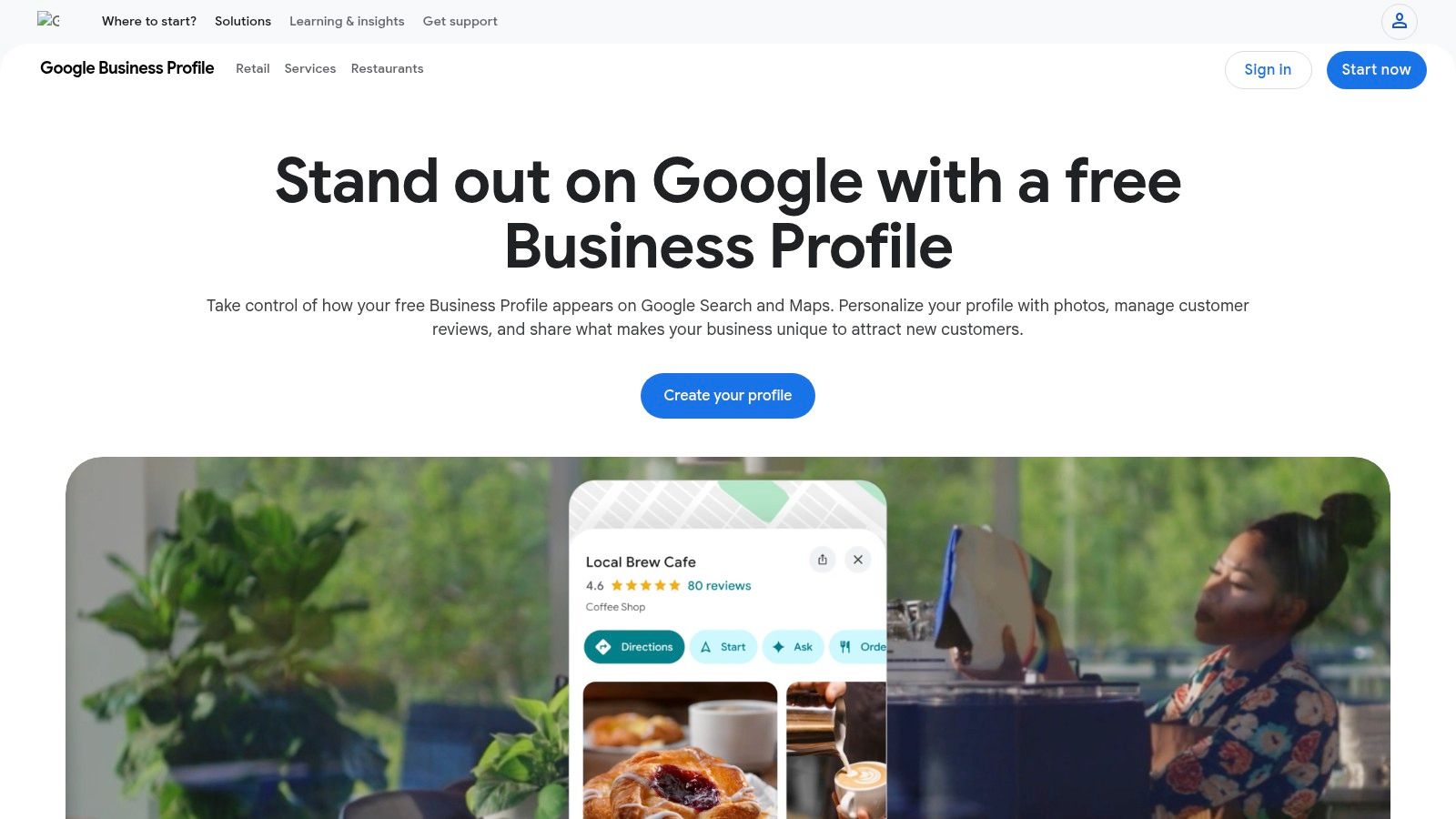
A buyer searches your company name. An investor checks whether the startup is real. A prospect wants support hours before booking a demo. In each case, Google is usually the first place they look, which is why Google Business Profile belongs at the top of the list for any startup with a legitimate business presence.
For early-stage SaaS and AI teams, this is the first local-trust listing to claim. It helps you control what appears in branded search and Maps instead of leaving Google to piece together your identity from scattered citations, old addresses, or third-party profiles.
Why it belongs in your first batch
Google Business Profile gives you direct control over core company details, categories, website links, photos, support information, and customer reviews. That matters even if you are not trying to rank like a local plumber. Founders still need a clean branded result, especially once prospects, partners, and candidates start searching the company by name.
The trade-off is verification. Google can be strict about business eligibility, category choice, and address consistency. That friction is a feature, not a bug, because low-quality or mismatched profiles create trust problems fast.
Practical rule: Only publish details in GBP that you are ready to repeat everywhere else.
I have seen teams create cleanup work for themselves by rushing this step. The website says one company name, LinkedIn uses another, and the listing points to a coworking address that does not match anything else. That slows verification and makes the business look less credible.
For prioritization, the rule is simple. If your startup has any real-world business footprint, claim Google Business Profile before secondary local directories. Get the name, category, phone, website, and hours right first. Then roll that same data into the rest of your submissions. If you want to price out help with that rollout, review directory submission plans for startups after GBP is verified and clean.
Google Business Profile is the highest-ROI local listing in this guide because it supports branded discovery first. That makes it the right starting point before you spend time on lower-impact directories.
2. Apple Business Connect
A founder launches a new homepage, cleans up LinkedIn, and gets the Google profile live. Then a prospect asks Siri for the company name, taps Apple Maps, and finds nothing useful. That gap is more common than it should be.
Apple Business Connect deserves a spot near the top of the queue for startups with any real-world presence. For local visibility, I put it right after Google. For early-stage SaaS and AI companies, it is less about direct lead volume and more about branded trust. Apple controls a high-credibility surface where buyers, recruits, and partners check whether your company looks real.
Why it matters for startup prioritization
Apple is not a substitute for your tech-profile listings like LinkedIn or Crunchbase. It serves a different job. It helps you control what appears across Apple Maps, Siri, and other Apple touchpoints when someone searches your brand or location.
That makes it a high-priority local listing, not a broad awareness play.
If your startup has an office, studio, clinic, coworking presence you use, or any customer-facing location, claim Apple early. If you are fully remote with no verifiable public location, move it below your core tech listings and come back once your business identity is easier to verify.
Where Apple earns its keep
The place card is cleaner than a lot of old directory products, and that matters. Founders spend heavily on brand polish, then leave one of the most visible mobile discovery surfaces half-complete. Apple gives you control over core business details, branding elements, and actions that shape the first impression.
The trade-off is straightforward. Apple helps with accuracy, branded discovery, and trust. It is usually not the listing where a B2B SaaS startup sees obvious attribution in a dashboard.
That is fine. Not every high-ROI task shows up as last-click conversion.
Use Apple Business Connect for three things: keep your business data consistent, protect branded search journeys on iPhone, and close an avoidable credibility gap. If you want a clearer sense of why directory listings still help startup authority, Apple is a strong example. It rarely looks urgent until the wrong information starts shaping the first lookup.
My rule is simple. Tackle Apple immediately after Google if you have a legitimate location and any reason to care about trust on mobile. For early-stage teams, that is usually enough reason.
3. Bing Places for Business
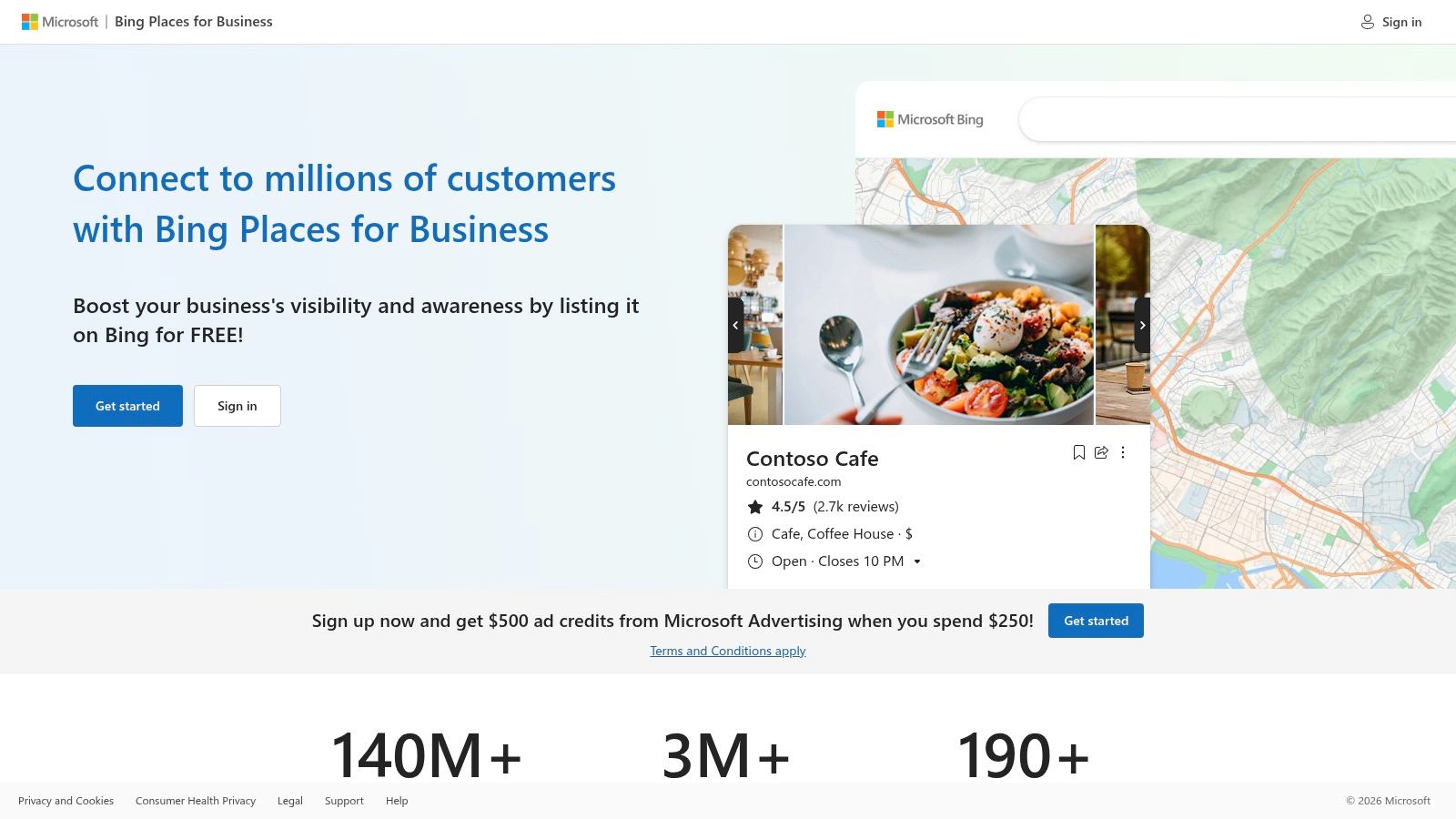
Bing Places for Business is rarely the first platform founders talk about, but it often ends up being one of the easiest wins.
The main reason is operational, not glamorous. You can usually import data from Google Business Profile, which cuts setup friction and reduces the chance that your hours, categories, or contact details drift apart. For a lean team, that matters more than fancy features.
Why founders still shouldn't skip it
Bing isn't Google, and nobody serious should pretend otherwise. But it still gives you presence in Bing Search, Bing Maps, and Microsoft's broader ecosystem. That's enough reason to claim it if you're trying to build a complete, trustworthy footprint.
There's another angle now. As search gets blended with AI experiences, structured listings on trusted platforms matter beyond classic search engine traffic. Founders who think "small platform, small impact" often miss that these records help confirm who you are across systems.
Keep your canonical homepage URL identical across Google, Apple, and Bing. That's one of the simplest ways to avoid fragmented indexing signals later.
I also like Bing for teams that need a fast second proof point after GBP. If your Google profile is in review or limited, Bing can still give you a controlled public listing while you sort the rest out.
From a pure ROI standpoint, this isn't where I'd spend hours perfecting every image before launch. Get the facts right, add the categories, upload solid branding, and move on. Then spend saved time on startup directories that support SaaS discovery. If you want a more systemized way to think about that split, the positioning on StartupSubmit benefits is close to how I frame it internally: local trust surfaces first, then software and startup directories for broader authority.
4. Yelp for Business
Yelp for Business deserves a lower priority than Google, Apple, and Bing for most early-stage SaaS and AI startups. It still matters if buyers can connect your company to a place, a service team, or real-world delivery.
That distinction is the key. Yelp is usually a local trust platform, not a tech discovery platform. If you sell software nationwide with a self-serve motion, claiming your Yelp page is mostly brand defense. If you run implementation, training, consulting, recruiting, healthcare-adjacent services, or any model where people may search for reviews tied to a city or office, Yelp moves up the list.
The upside is straightforward. Yelp profiles can rank for branded searches, show business details, collect reviews, and give skeptical prospects another place to verify that your company is real. I have seen founders ignore Yelp for months, then scramble once a prospect sends over a screenshot of an unanswered complaint or an outdated address.
Yelp also comes with trade-offs. You do not control how every review is filtered or displayed, and the sales outreach can be persistent. Treat it like a reputation surface you manage, not a growth channel you expect to produce predictable pipeline.
My rule is simple. Claim it, complete it, and monitor it. Then move on unless your category already gets meaningful Yelp activity.
- Prioritize Yelp earlier: agencies, local B2B service firms, coworking operators, clinics, studios, and software companies with on-site onboarding or regional sales
- Treat Yelp as maintenance: pure remote SaaS, API products, developer tools, and AI apps with no local buying context
- Common failure: an unclaimed profile with old hours, weak photos, and reviews that sit unanswered for months
If you are building page-one credibility, Yelp can still earn a place beside LinkedIn, Crunchbase, and BBB. That is also why StartupSubmit's company background and positioning focuses on authoritative profiles, not just directory count. For founders, the best listings reduce trust friction while you spend the bulk of your time on channels that drive discovery.
5. Facebook Business Pages
Facebook Business Pages often comes up after a founder loses a deal to a simple credibility check. A prospect searches your company, finds an empty Page, an old logo, or no Page at all, and starts asking a reasonable question. Is this company active and reachable?
That is why I put Facebook in the maintenance bucket for most early-stage SaaS and AI startups. It is usually not a discovery channel worth heavy effort. It is a trust surface that supports branded search, basic business verification, and low-friction contact for buyers who still use Facebook as a lookup tool.
The priority depends on your sales motion.
If you sell locally, work with less technical buyers, or have a founder-led sales process where prospects check every public profile before booking, Facebook deserves attention earlier than Manta or Yellow Pages. If you are a remote-first developer tool, API product, or niche B2B SaaS with a technical buyer, Facebook still matters, but mostly after your Google Business Profile, LinkedIn Company Page, and Crunchbase are finished.
Messenger is the practical reason not to ignore it. Some prospects, partners, and even job candidates will message your Page instead of filling out a form. That is not always high-intent pipeline, but it is still inbound. If nobody is watching those messages, response gaps become visible fast.
A quiet Page is fine. An abandoned Page is not.
The trade-off is straightforward. Organic reach is weak, content distribution is inconsistent, and Facebook does little for startup-specific discovery. Founders get the best ROI by setting up the Page properly, checking it periodically, and resisting the urge to treat it like a major content program unless their audience already spends time there.
For the minimum viable setup, complete these fields well:
- logo and cover image
- short description and category
- website, support email, and contact options
- location or service area, if relevant
- current response settings for Messenger
My rule is simple. Build it well once, review it quarterly, and move on. Facebook earns its place in your listing stack as a credibility asset, not as one of the first channels you expect to drive meaningful SaaS demand.
6. Better Business Bureau
Better Business Bureau is rarely a first-priority listing for early-stage SaaS or AI startups. It becomes useful when a buyer, partner, or procurement contact starts checking whether your company looks accountable beyond your own website.
That distinction matters. In this guide, BBB sits in the trust layer, not the discovery layer. It will not do the job of Crunchbase for startup context or LinkedIn for B2B credibility. It can still help if you sell into industries where caution is high and vendor scrutiny starts early.
I usually prioritize BBB for founders in B2B services, healthcare, fintech-adjacent categories, home services, education, legal, and any offer where complaints, billing concerns, or service reliability come up before the contract is signed. For a remote developer tool with self-serve onboarding, it is lower on the list. For an AI workflow product selling into operations teams at established companies, it can be worth claiming sooner than founders expect.
The main trade-off is simple. BBB brings institutional trust, but very little startup-specific demand.
Use the free profile if you want better branded search coverage and a public place to manage reputation signals. Consider accreditation only if your sales process regularly runs into trust objections, compliance questions, or conservative buyers who recognize the badge. If you are still pre-product or changing positioning every few weeks, set a reminder and come back later.
What founders get wrong is treating BBB as outdated, so they ignore it entirely. Buyers do not grade directories on whether they feel modern. They use familiar sources to reduce risk. If your product asks a customer to change how they work, a stable public profile can remove some of that hesitation.
For pure SaaS, I would still finish Google Business Profile, LinkedIn, and Crunchbase first. BBB earns its time after those basics are clean, especially if your revenue depends on trust more than traffic.
7. LinkedIn Company Pages
LinkedIn Company Pages sit in a different category from the map and review platforms. This is your B2B identity layer.
When someone hears about your startup and wants to sanity-check it, LinkedIn is often one of the first places they go. Not for reviews. For proof. They want to see the company page, the founders, the team, the positioning, and whether the business looks active.
Why LinkedIn matters more for SaaS than Yellow Pages ever will
A lot of business listing sites USA guides flatten everything into "citations." That's not how actual startup buyers behave. For B2B SaaS, LinkedIn often does more credibility work than generic local directories because it connects your company to people, roles, hiring activity, and industry context.
This is especially important when your website is still sparse. A polished LinkedIn Page can fill in the blanks.
I usually recommend treating the Page like a landing page for skeptics. Your headline, overview, website link, specialties, and branding need to match the site. If they don't, you create doubt at the exact point buyers are trying to trust you.
- Best use: B2B SaaS, AI tools, agencies, developer products, enterprise software, and startups hiring publicly.
- What weakens it: Empty page, no banner, generic description, no employee connections.
- How to make it work: Align the company tagline with your homepage messaging and ask the team to connect their roles properly.
LinkedIn doesn't have native review depth like G2, and reach usually requires ongoing posting. That's fine. Reach isn't the main reason to claim it. The main reason is branded authority.
For startup founders, this is critical. If your company sells to businesses and lacks a serious LinkedIn presence, you're asking prospects to trust less evidence than they expect.
8. Crunchbase
Crunchbase is where this list starts to separate startup strategy from generic local SEO.
If you're building SaaS or AI software, Crunchbase isn't just another profile. It's one of the clearest public records of your company's existence, category, leadership, and momentum. For founders, that matters with investors, reporters, recruiters, partners, and prospects.
Why Crunchbase punches above its weight
High-authority startup directories such as Product Hunt, Crunchbase, and AngelList pass meaningful link equity for new SaaS sites, and Crunchbase is listed at DR 91 in Planetary Labour's startup directory submission analysis. That makes it valuable well beyond vanity presence.
There's also a visibility angle that many local-SEO-first guides miss. AI search engines such as ChatGPT, Claude, and Perplexity often cross-reference trusted aggregator hubs like Product Hunt, G2, and Crunchbase when verifying digital products, according to ListMy.site's research on startup directory visibility. If you're unlisted on those platforms, you can miss out on AI-generated software recommendations even when your website itself is well optimized.
For SaaS founders, Crunchbase is not optional branding. It's part of LLM SEO and AI search validation.
The downside is simple. Crunchbase's deeper research features are gated behind paid plans, and the free experience is mostly about maintaining your company profile. That's usually enough in the early stage.
What matters most is profile quality. Use the right categories. Keep company details current. Match your website messaging. Add leadership accurately. A thin or stale Crunchbase entry undercuts the exact credibility you're trying to build.
For startup SEO, this is one of the most valuable non-local listings in the whole stack.
9. The Real Yellow Pages
A founder usually gets to this point after the high-impact profiles are done. Google Business Profile is live. LinkedIn is polished. Crunchbase is in shape. Then the question becomes whether YellowPages.com deserves any time at all.
The Real Yellow Pages still earns a spot in the stack, but it belongs in the supporting tier, not the first wave.
For local businesses, service companies, and SaaS teams with a real-world footprint, this listing helps reinforce citation consistency. Search engines still compare business details across established directories, and YellowPages.com remains one of the older public records that can surface for branded searches. That is the practical value.
For early-stage SaaS and AI startups without a local sales motion, the ROI is lower.
I would put YellowPages.com behind LinkedIn, Crunchbase, and the core search platforms because it rarely drives high-intent software discovery. It does help with coverage. If someone searches your company name and finds another accurate profile on a recognized domain, that is usually a net positive. The trade-off is time. Founders should not spend an afternoon perfecting this one before the higher-impact profiles are finished.
When YellowPages.com is worth doing
The best use case is straightforward. You want another trusted citation source that confirms your company name, address, phone number, website, and category data.
- Prioritize it if: you have a physical office, serve local markets, or want stronger branded search coverage in the U.S.
- Deprioritize it if: you're a remote-first SaaS with no local intent and limited setup time
- Expect: ad upsells, average traffic quality, and modest direct lead value
One more practical point. Manual submission usually works better here than bulk directory blasts. Automated listing tools save time upfront, but they also create messy duplicates and inconsistent fields that someone has to clean up later. For YellowPages.com, accuracy matters more than speed.
10. Manta
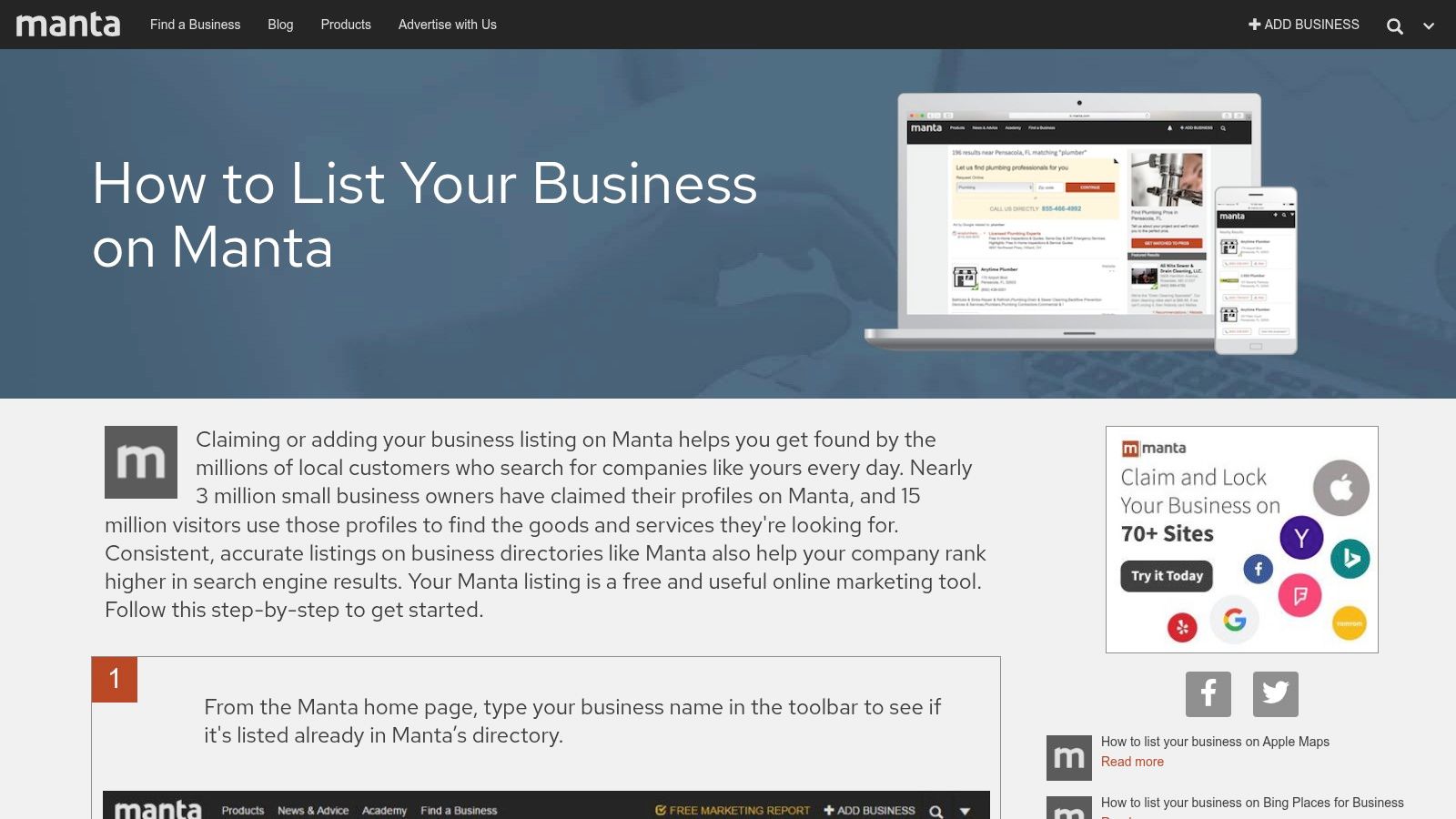
Manta belongs near the end of the list for most early-stage SaaS and AI startups. It is a cleanup play, not a first-week priority.
Here is the practical use case. You have already claimed Google Business Profile, Apple Business Connect, Bing Places, LinkedIn, and Crunchbase. Now you want a few extra trusted profiles that reinforce your company details and give branded searches another accurate result to surface. Manta can do that.
I still include it because the setup is quick.
For founders with a local office, a U.S. mailing address, or any service footprint that benefits from citation consistency, Manta is worth the few minutes it takes to claim and fill out correctly. For remote-first software companies with no local intent and a tight bandwidth budget, the direct payoff is modest. In that case, finish the tech and search-platform listings first, then come back to Manta later.
Why Manta makes the cut
Manta helps with coverage, not discovery. That distinction matters.
It can strengthen consistency around your business name, address, phone number, website, and category data. It may also give you one more controlled page for branded search results, which is useful if your startup is new and the search results for your company name are still thin or mixed.
The trade-off is straightforward. Manta rarely becomes a meaningful acquisition channel for SaaS on its own. Its value is support. It backs up the higher-impact profiles you have already built and reduces the odds of messy, conflicting business data showing up across the web.
Use Manta after the core platforms are done. If you are triaging for ROI, put it in the same bucket as other secondary directories that help validate your business details but do not usually drive high-intent software buyers. That makes it more relevant for local and service-oriented companies than for pure-play B2B SaaS.
One caution from experience. Keep the profile accurate and simple. Founders waste time polishing low-impact listings while bigger opportunities sit unfinished. On Manta, complete the basics, match your primary business details exactly, add your site, and move on.
Top 10 US Business Listing Sites Comparison
| Directory | Core features | Visibility / SEO impact | Best for | Notable pros / USPs | Cost |
|---|---|---|---|---|---|
| Google Business Profile | Profile with hours, posts, services, reviews, insights | Strongest local & branded SERP / Maps dominance | Local businesses & startups for branded search | Dominant reach; robust free analytics & messaging | Free |
| Apple Business Connect | Place card, photos, showcases, CTAs, insights | High iOS/Siri/Maps exposure | Businesses with iPhone user base / retail & services | Native Apple Maps + clean CTAs for iOS users | Free |
| Bing Places for Business | Listing, photos, categories, import from GBP, basic insights | Secondary search/channel (Windows default) | Businesses targeting Windows users or multi-platform sync | Easy GBP import to keep data consistent | Free |
| Yelp for Business | Page with photos, categories, messaging, review tools | Strong consumer review footprint in US SERPs | Consumer-facing local businesses | High consumer usage; messaging/quote capture | Free (paid upgrades available) |
| Facebook Business Pages | Page with posts, events, Messenger, reviews, Shops | Social SERP presence; can rank for brand queries | Brands seeking social proof & direct messaging | Huge audience; strong social proof & ad integration | Free (ads optional) |
| Better Business Bureau (BBB) | Business profile, ratings, complaints, accreditation option | High-trust signals; often ranks for brand searches | Businesses needing consumer/investor trust & PR | Recognized trust seal; strong credibility | Free profile; paid accreditation |
| LinkedIn Company Pages | Company page, updates, careers, analytics | B2B brand credibility; often ranks page-one | B2B/SaaS startups, recruiting and investor visibility | Essential for B2B credibility and hiring | Free (paid ads/features) |
| Crunchbase | Company profiles, funding, people, categories, exports | Strong for investor/media SERPs and knowledge panels | Startups seeking investor/media exposure (SaaS/AI) | Widely used by investors & journalists | Free basic; paid plans for advanced data |
| YellowPages (YellowPages.com) | Claimable listing, photos, hours, phone verification | Long-standing citation value; syndicated to partners | Local businesses, multi-location brands | Recognized citation source; simple claim process | Free (ads/upsells common) |
| Manta | Free listing with logo, description, categories; sync guidance | Supplemental citation; can rank for brand names | SMBs needing extra citations & profile control | Quick to claim; improves citation consistency | Free (paid premium placement) |
Your Next Steps From Listing to Authority
A founder ships ten listings in one weekend, then wonders why nothing changes. The usual problem is not effort. It is order.
Early-stage SaaS and AI teams get better results by treating listings as a priority stack, not a box-checking exercise. Start with the profiles that influence branded search, buyer trust, and entity consistency first. Expand only after those are complete and accurate.
For most startups, the first pass is split into two tracks. The local trust track starts with Google Business Profile, then Apple Business Connect, then Bing Places. The tech credibility track starts with LinkedIn Company Page, then Crunchbase. If your company sells to businesses, hires aggressively, or expects investors, the tech track usually deserves more attention first. If you depend on local intent, service-area visibility, or map results, the local track goes first.
The second layer depends on how people evaluate you before they buy.
Local-first and trust-sensitive companies should add Yelp, BBB, Yellow Pages, and Manta once the core profiles are stable. These listings help reinforce name, address, phone, website, and reputation signals across the public web. SaaS and AI startups should usually spend that same time tightening Crunchbase, publishing on LinkedIn, and expanding into software and startup directories outside this top 10. That is the gap many generic "business listing sites USA" articles miss. They treat every company like a plumber, even when an actual buying journey looks more like branded search, founder research, review-site checks, and investor diligence.
Quality beats volume here.
A clean set of high-trust profiles does more for a young company than spraying your data across weak directories you will never revisit. Low-value submissions create cleanup work later. They also increase the odds of mismatched URLs, duplicate records, and stale descriptions showing up in search results.
Consistency matters just as much as site choice. Use one canonical homepage URL. Match your business name everywhere. Keep the same short description, category logic, logo, and contact details unless a platform has a clear reason to format them differently. Search engines and AI systems are much better at connecting the dots when your records agree.
This work is tedious because the details matter. Founders often lose hours to duplicate listings, verification delays, category mistakes, and small formatting differences that become bigger trust issues later.
If you hand it off, choose a team that does manual submission and cleanup, not blind automation. Startups need judgment on categories, descriptions, duplicates, and site fit. Sloppy execution at this stage creates preventable search problems, which is why Outrank's guide to SEO errors is a useful reminder of how foundational mistakes spread.
The practical playbook is simple. Finish the core profiles first. Prioritize by business model. Keep every field consistent. Then expand into the directories your buyers, partners, journalists, and investors use.
If you want the process handled end to end, StartupSubmit is built for exactly this stage. It manually submits SaaS and AI startups to high-authority startup and software directories, manages categorization and duplicate checks, and gives you a final report with submitted URLs, notes, and screenshots so you can strengthen search visibility, backlinks, branded trust, and AI search presence without losing a week to form filling.