
10 Best Free Business to Business Directory Sites for 2026
You ship the launch, post the Product Hunt link, and the graph does the usual spike, then sink. That happens because one burst of attention doesn't build the trust layer buyers and search engines look for later. A free business to business directory strategy gives you a more durable footprint, especially when the listings live on platforms people already trust, like Google Business Profile, LinkedIn, Yelp, and the other big citation ecosystems described in industry guides Fits Small Business and BrightLocal's free USA directory list.
For SaaS and AI founders, the job isn't “get listed everywhere.” It's to place your company where B2B buyers compare options, where search engines can verify your existence, and where your brand can pick up authority signals that help with startup SEO, SaaS SEO, and AI search visibility. That's why the best free listings aren't random registries, they're the review marketplaces, software directories, and company databases that keep showing up in branded searches and category research. If you've already been collecting lifecycle lessons from how Mara handles lifecycle emails, this is the same kind of thinking, one repeatable system beats a one-off burst.
1. G2
G2 is usually the first stop for B2B software buyers who want proof, not promises. It's a free vendor profile you can claim and manage, and that alone makes it worth treating as core infrastructure rather than a nice-to-have badge. The platform's real value is that it combines category placement, review collection, and Q&A in a place where buyers already expect to evaluate products, which means your profile can influence both search visibility and late-stage purchase decisions.
Why it earns a spot early
The upside is credibility. G2 has a trusted brand among evaluators, and its profiles often surface in search results when people compare tools. That makes it useful for both direct discovery and branded search cleanup, especially if your startup is still trying to establish itself against better-known competitors.
The trade-off is effort. Competitive categories rarely reward a passive listing, because traction usually depends on proactive review operations and tight positioning. If your team can't commit to review collection, profile refinement, and category monitoring, the listing may sit there without doing much.
Practical rule: treat G2 like a sales asset, not a directory submission task. Update the profile the same way you'd update your homepage positioning.
A good G2 workflow starts with your master messaging file, not with the form itself. Keep your categories, screenshots, value props, and support links ready before you log in, because a sloppy submission here tends to ripple into weak search presence later. If you want a broader playbook for high-authority startup listings, MailGenius is a useful example of a tool ecosystem that benefits from strong category context and trust signals.
2. Capterra
Capterra still matters because it lives inside Gartner Digital Markets, which gives your listing a broader distribution path than a standalone directory. Vendors can request a free product listing through the centralized portal, and that's a cleaner way to reach a serious buyer audience than chasing low-quality citation sites. For founders, the key benefit is simple, Capterra often captures people who are already looking for “best X software” comparisons.
What works here
The strongest advantage is the combination of category coverage and buyer education. A well-built profile can support discovery, comparison, and conversion, especially if your category is crowded and buyers need help understanding where your product fits. Because reviews syndicate across Gartner Digital Markets properties, one strong listing can support multiple discovery surfaces.
The downside is patience. Approval, categorization, and review velocity can all take time, so don't expect it to rescue a weak launch month. Paid promotion can increase lead flow, but that's a separate decision from the free listing request.
Capterra is especially useful when your product serves a clear operational job, like scheduling, support, finance, or workflow automation. If your startup sells to SMB or mid-market teams, this kind of directory helps you appear in the exact research phase where buyers are making shortlist decisions. It's less about vanity backlinks and more about giving prospects a familiar place to verify your company before they click through to your site.
3. Gartner Peer Insights
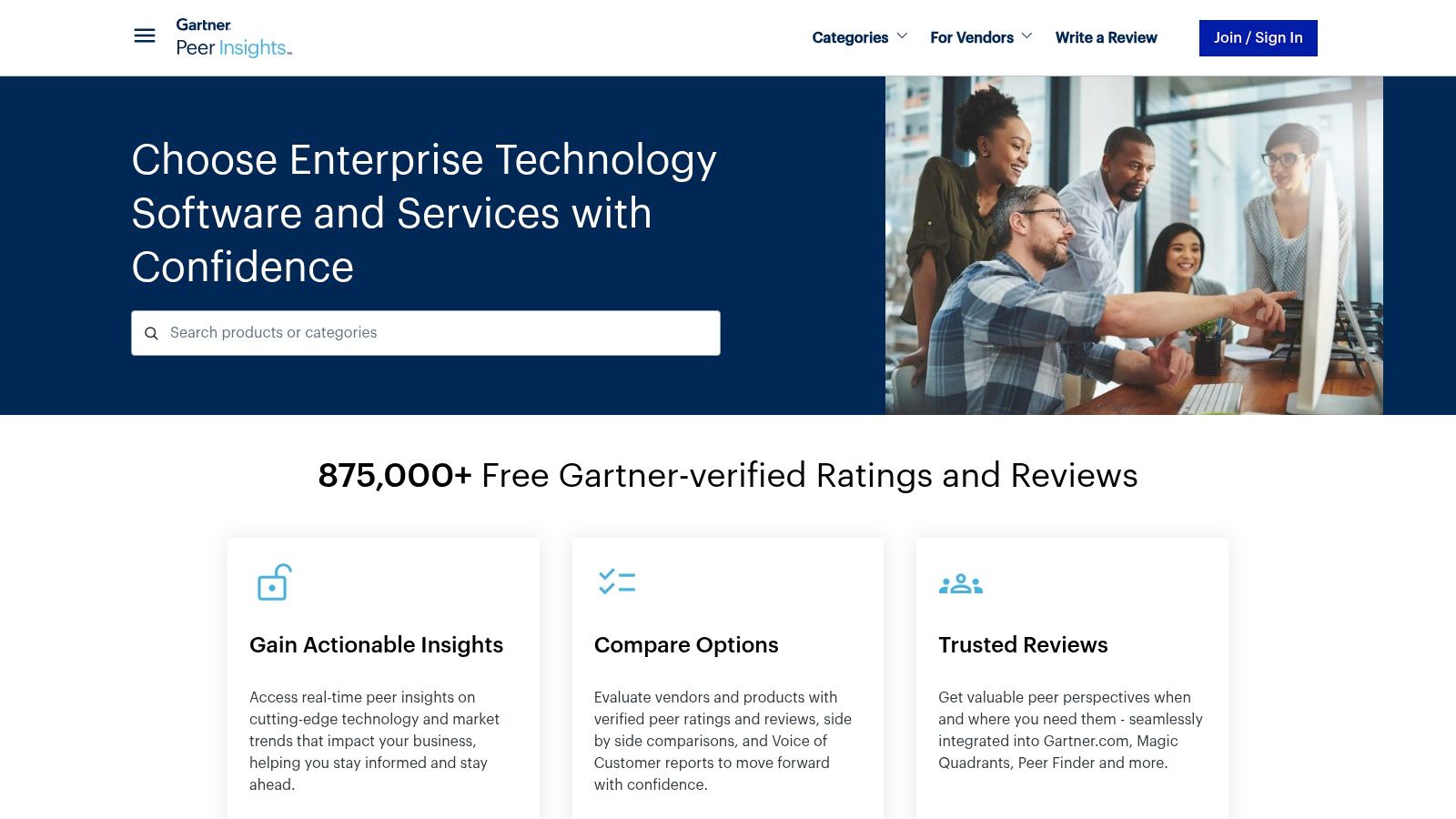
Gartner Peer Insights is the enterprise version of the trust game. It's built for buyers who care about governance, procurement, and vendor credibility, so the bar is higher than with general software directories. Vendors can request a listing and collect verified customer feedback, which makes this especially relevant for SaaS companies selling into IT, security, infrastructure, or broader enterprise workflows.
Where it fits in a founder stack
The big upside is trust with serious evaluators. Enterprise buyers often want review environments that look controlled and credible, and Gartner's review standards help with that. If your product has a longer sales cycle or needs security and compliance reassurance, this is a strong signal to have in the mix.
The limitation is focus. Coverage is centered on defined enterprise markets, so a consumer-facing or very early-stage product may not get much out of it. Approval can also take time, which means the listing is better treated as part of a broader reputation system than as an immediate traffic lever.
This is one of the few directories where the quality of the review environment matters as much as the listing itself. A cleaned-up profile with current customer feedback can strengthen procurement conversations and give your sales team something more credible than a self-written testimonial block. If your GTM motion includes field sales or enterprise outbound, it belongs high on the list.
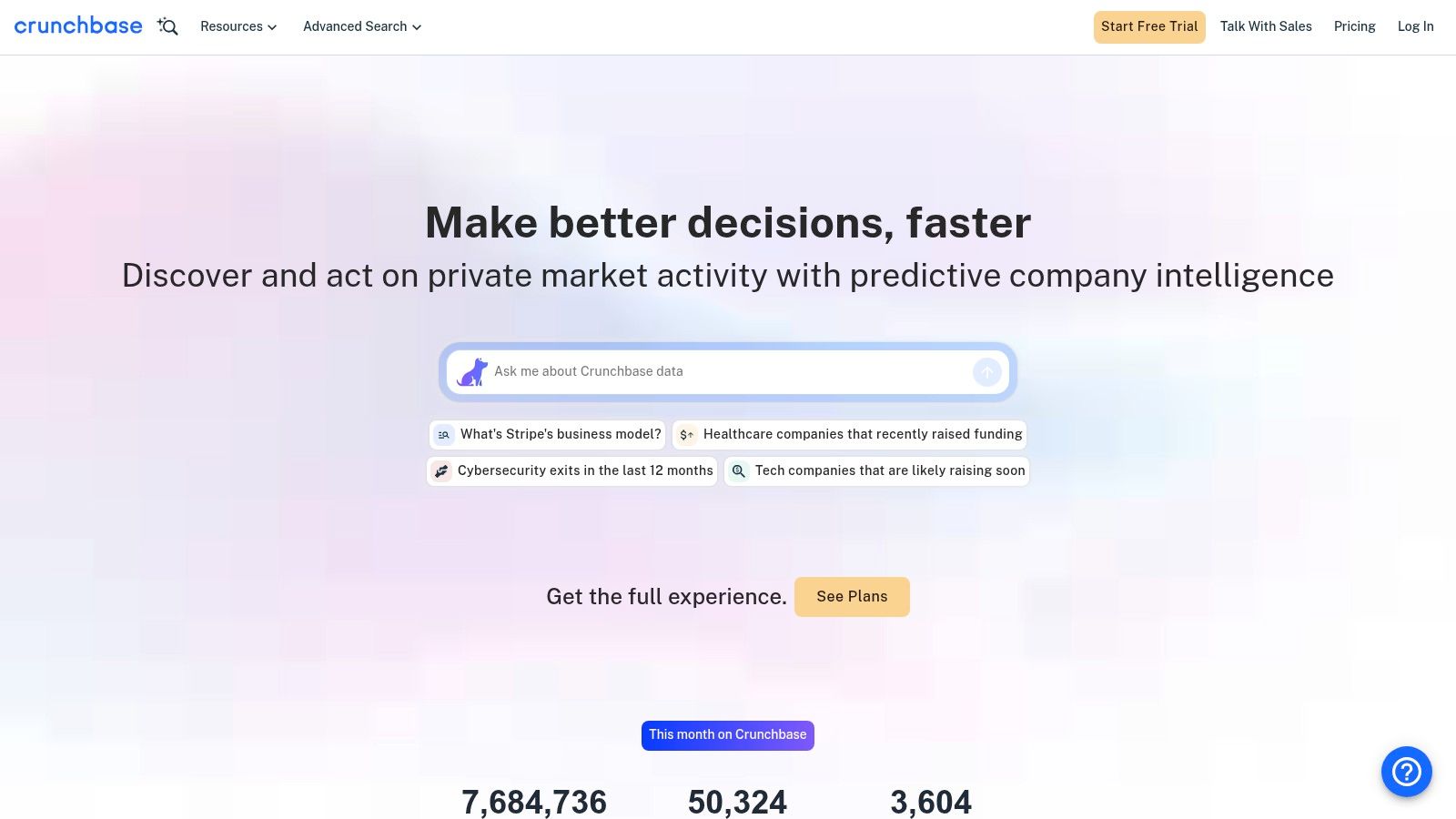
4. Crunchbase
Crunchbase is not a software review site, and that's exactly why it helps. Buyers, investors, and journalists use it to verify whether a company is real, active, and worth checking out. Free accounts can add or edit company profiles, which makes it useful for brand control, NAP consistency, and cleaning up the search results that show up when someone Googles your startup name.
Why founders underestimate it
The biggest value is context. A Crunchbase profile gives your company a structured identity that sits alongside your website and social profiles, which helps when you're trying to build trust quickly. It can also support branded search results because the platform itself is widely recognized and indexed.
The trade-off is that it won't help you tell the product story in depth. You can add company details, but you won't get the kind of feature storytelling or buyer education you get from G2 or Capterra. Moderation can also slow down updates, so don't use it for time-sensitive changes.
For founders, this is a reputation-management tool as much as a directory listing. It belongs in the same bucket as your founder bio, press page, and social proof stack. If you're building a startup directory submission workflow, StartupSubmit's startup directory list is a practical companion because it helps you think about coverage beyond the obvious review sites.
5. Product Hunt
Product Hunt is still one of the best places to launch a new product into a live founder audience. Creating an account and posting a product is free, and that matters because it gives you a fast way to generate visibility, conversation, and a lasting profile. The value isn't just the launch-day spike, it's the residue that can remain in search results and social proof long after the campaign ends.
What makes it different
Product Hunt works because it's a community, not just a directory. Upvotes, comments, and launch-day participation tell other founders that the product has momentum, and that social proof can travel well beyond the platform. It's especially useful for early adopters, AI tools, dev tools, and SaaS products with a clear problem statement.
The catch is obvious. Attention is time-boxed, and if you don't have follow-up content, outreach, or community engagement, the spike fades quickly. That's why Product Hunt works best when it's part of a larger launch sequence, not the whole plan.
A launch profile without follow-up is a short-term asset. A launch profile paired with email, social, and review collection becomes part of your durable search footprint.
Use it to support your public launch, then keep the page alive by responding to comments and linking it from your other channels. If you want an example of how launch assets can be stacked into a directory-driven strategy, StartupSubmit's free startup directories page shows how founders often combine launch visibility with longer-term listing coverage.
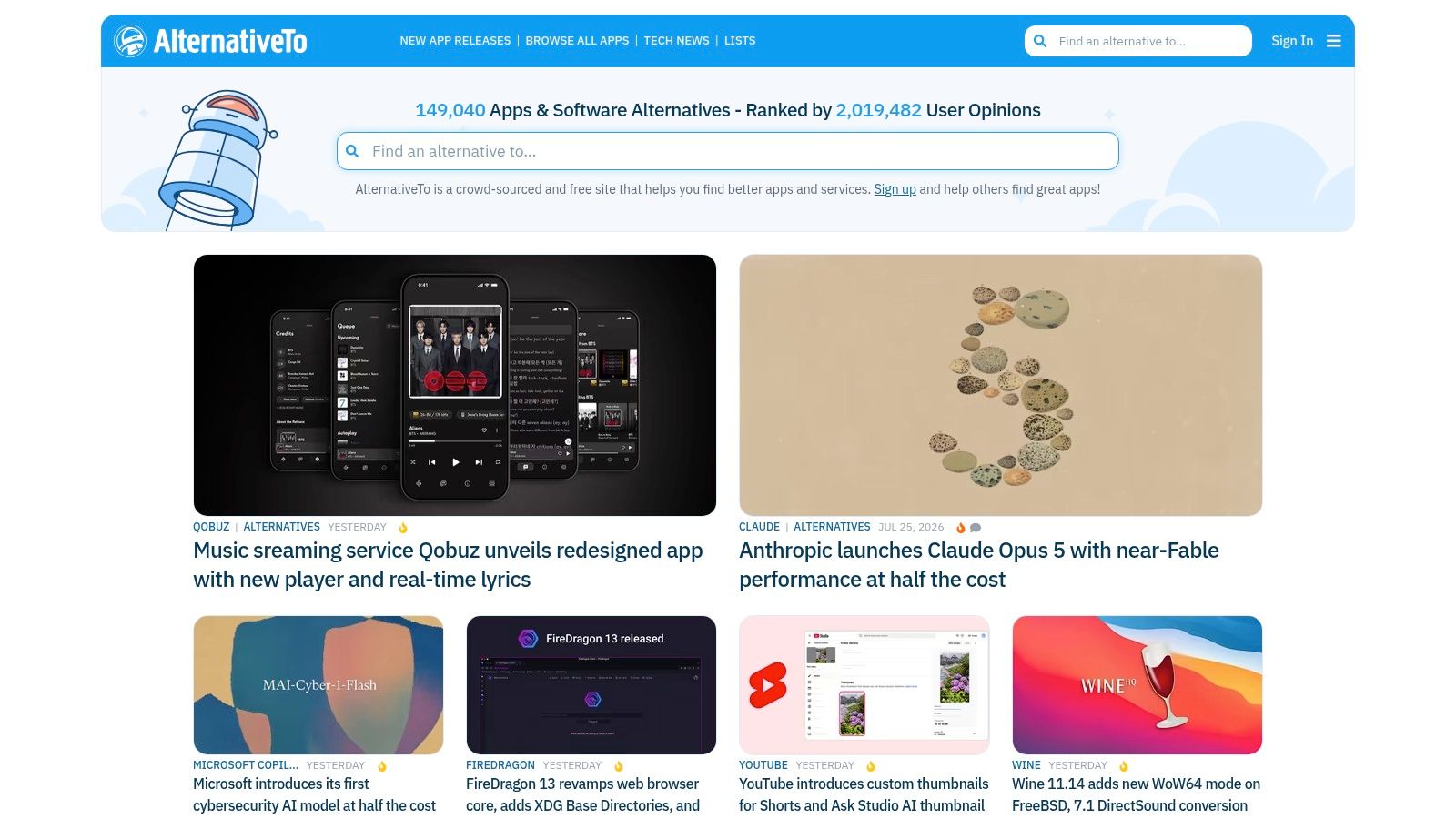
6. AlternativeTo
AlternativeTo is one of the most useful tools for long-tail discovery because people arrive there with intent. They're not browsing casually, they're comparing tools, looking for replacements, or checking what sits next to a product they already know. That makes it valuable for founder-led SEO, especially if your company competes with established incumbents.
Why comparison intent matters
The platform is community-driven and has quality standards that reduce spam, which is a real advantage over directories filled with thin submissions. Free app submission is available after account-age requirements, so there's a small friction cost, but that friction also helps keep the ecosystem cleaner. The result is a directory where listings can feel more credible than the average software catalog.
The main limitation is patience. New accounts can't submit immediately, approvals can be selective, and you need clear positioning against competitors if you want the listing to resonate. If your product is too vague, the page won't give users a reason to click.
Founder takeaway: AlternativeTo is strongest when your positioning already sounds like a category choice. If you can't explain who you replace, the directory won't fix that for you.
The site is also useful for AI search optimization because comparison pages tend to align with the way users ask tools to recommend alternatives. That makes it a smart addition to a SaaS SEO stack where “best alternative to X” is a meaningful search path. The visual style is clean, and if you've seen how AlternativeTo organizes tool discovery, you know why it keeps showing up in comparison workflows.
7. SourceForge
SourceForge still deserves attention because it has scale, category depth, and enough search authority to matter in several software niches. Vendors can claim and manage listings for free, collect reviews, and use comparison content to build a stronger profile. For some categories, the platform ranks well enough that ignoring it leaves search visibility on the table.
Where it helps and where it doesn't
The best part is the breadth of buyer traffic. SourceForge can put your product in front of people who are already looking at software comparisons, which is useful when your homepage alone doesn't capture the full search demand. It also gives you another authoritative domain linking back to your site, which matters when you're building a backlink profile with relevance.
The downside is positioning. Its open-source roots can make the B2B experience feel uneven depending on category, and some promotional features are locked behind paid options. That means you should be selective about how much time you spend polishing the listing compared with other review marketplaces.
For SaaS founders, the practical move is to use SourceForge as a secondary discovery layer, not as the core of your reputation strategy. If your product sits in infrastructure, development, or technical tooling, it can perform better than more generic directories. If the category fit is weak, spend your effort elsewhere.
8. SaaSHub
SaaSHub is a clean, founder-friendly directory that does a few things well. You can submit a product for free, verify ownership, and build a lightweight profile that supports evergreen discovery. It's not as big as the major review platforms, but it's often the kind of site that helps with incremental backlinks and comparison traffic.
Why it belongs in a practical playbook
The biggest advantage is speed. The interface is simple, the workflow is light, and you can usually move through submission without the heavy overhead that comes with enterprise marketplaces. That makes it a good fit for startups that need momentum without wasting half a day on one listing.
The limitation is audience size. You won't get the same scale you'd see on G2 or Capterra, and review depth varies by product and category. That said, smaller doesn't mean useless, especially when the page sits in a relevant category and points to your site with clear context.
If you're building a directory submission service workflow, StartupSubmit's directory submission service fits naturally into this kind of careful prioritization. The point isn't to spray the web with low-value registrations, it's to get solid placements into places where the profile can age well and support search discovery over time.
9. GetApp
GetApp is another Gartner Digital Markets property, and that matters because it can extend your footprint beyond Capterra without forcing you into a completely separate system. Vendors can request free listings through the same general portal, and the platform's app-oriented comparisons often show up for category searches. That makes it a useful secondary surface for SMB and mid-market software buyers.
The value is in parallel coverage
GetApp helps when you want more than one entry point into the same buyer journey. A prospect might see your brand on Capterra, then meet it again on GetApp while doing comparison research. That kind of repetition can support trust, especially when your startup is still new to the market.
The downside is that visibility varies a lot by category and content depth. You may also need screenshots and other assets to keep the listing compliant and useful. If your team is moving fast, this can become a small but annoying piece of operational drag.
This is one of those directories where the extra effort is justified if you already have a Gartner Digital Markets motion in place. Otherwise, it can slip into “nice to have” territory. Use it when you want broad SMB discovery coverage and another credible touchpoint for review-led SEO.
10. Software Advice
Software Advice rounds out the Gartner Digital Markets trio with a more advisory feel. Vendors can request free listings, and the platform's buyer guides and consultative style can influence shortlist formation. That makes it especially relevant when your product needs guided evaluation, not just raw traffic.
Why it matters for shortlist formation
The platform helps buyers who want more help narrowing options. That can be useful for software categories where the purchase decision is confusing, risky, or crowded. If your positioning is solid and your pricing and feature information are clear, the listing can become another trust signal that supports your website and review stack.
The limitation is competition. Like the other major marketplaces, the free listing is only the beginning, and prominence often tilts toward paid programs. You also need to keep your product data clean because weak or incomplete information doesn't help much in an advisor-led environment.
For founders, Software Advice is best treated as part of a broader B2B discovery system. It can reinforce credibility, add another authoritative domain, and help with visibility in a part of the buyer journey that often gets ignored. If you're already investing in SaaS SEO and AI search optimization, that extra touchpoint is worth having.
Top 10 Free B2B Directory Comparison
| Directory | Core features | Target audience | SEO & visibility | Unique selling point | Cost & effort |
|---|---|---|---|---|---|
| G2 | Claimable product/vendor profiles, review programs, category placement, paid visibility tiers | B2B buyers, mid-market to enterprise SaaS | Strong buyer‑intent traffic; frequently ranks in SERPs | Largest B2B review marketplace; G2 Grid influence | Free profile; paid tiers for advanced intent data; active review ops needed |
| Capterra (GDM) | Free listing via vendor portal, extensive taxonomy, review syndication across GDM | SMB buyers researching categories | Broad SEO footprint; appears in “best X” searches | Wide category coverage and recognized review badges | Free listing; paid promotion for lead volume; approval/moderation time |
| Gartner Peer Insights | Vendor listings, enterprise taxonomies, governed/verified reviews | Enterprise IT buyers and procurement teams | High credibility with IT evaluators; trusted SERP signals | Gartner brand authority and strict review governance | Free listing; longer approval and compliance requirements |
| Crunchbase | Company profiles (funding, people, links), editable records, paid data tools | Investors, press, partners, buyers seeking company context | Strong brand SERP presence; supports trust signals and NAP consistency | Widely referenced corporate database used by investors/press | Free edits; paid subscriptions for advanced data; verification steps |
| Product Hunt | Free product posts, media gallery, launch tools, community upvotes/comments | Early adopters, founders, makers | Good launch backlinks and SERP presence; time‑boxed visibility | Active launch community and viral discovery potential | Free posting; requires proactive community engagement on launch day |
| AlternativeTo | Community‑driven app listings, tagging, comparisons | Users actively comparing alternatives; intent to switch | Strong long‑tail SEO for “[Tool] alternatives” queries | Highly targeted comparison/referral traffic | Free (account age requirement); selective approvals; clear positioning needed |
| SourceForge | Claimable listings, reviews, comparison content, optional paid promos | Open‑source and general software audiences | Authoritative domain links; ranks well in certain software categories | Large, established software discovery platform | Free claim/edit; some paid promotional features; mixed B2B fit |
| SaaSHub | Free submission + verification, category & alternatives pages, lightweight dashboard | SaaS founders and buyers looking for comparisons | Solid referring‑domain backlinks; evergreen listings | Founder‑friendly UI and fast submission process | Free; quick setup; smaller audience than major marketplaces |
| GetApp | App discovery/comparisons, GDM portal, shared reviews with Capterra | SMB and mid‑market buyers researching apps | Complements Capterra; ranks for category and comparison queries | App‑focused discovery within Gartner Digital Markets network | Free via GDM; requires assets (screenshots/pricing); visibility varies |
| Software Advice (GDM) | Free listing option, buyer guides, advisor‑style content, review syndication | Buyers needing guided shortlists and advisor help | Adds domain authority and discovery touchpoints; influences shortlists | Advisory content + review syndication across GDM properties | Free listing; competitive content/pricing requirements; paid programs favor leads |
Your Next Steps for Better Directory ROI
A lot of founders waste time treating directory submission like a box-ticking exercise. The better move is to use a free business to business directory strategy as part of your authority stack, then measure what supports branded search, referral traffic, and trust. Recent 2026 guidance has started pushing teams toward UTM tracking, traffic monitoring, and conversion analysis instead of vanity metrics, which is the right direction for anyone serious about ROI Jasmine Directory.
Start with the platforms that match your business model. If you sell software, prioritize the big review marketplaces first, then layer in company databases and comparison sites that support trust and search visibility. If your product is enterprise-facing, lean harder on governed review environments. If you're earlier-stage, use Product Hunt and AlternativeTo to build early discovery, then fill in the credibility layer with Crunchbase and the Gartner properties.
The fastest way to do this well is to standardize your inputs. A clean master file should include your official business name, primary phone number, website URL, public email, physical address or service-area wording, category choices, hours, logo files, social URLs, relevant licenses, and multiple description lengths Direct Directory submission requirements. That saves time, reduces mismatched data, and keeps your profiles consistent across platforms.
The biggest mistake is chasing volume before quality. The better pattern is to pick a small set of high-authority platforms, submit cleanly, then maintain them like assets. If you don't have bandwidth for that work, StartupSubmit is one way to offload the repetitive submission process while keeping the listings aligned across a larger directory network.
If you want the directory work done without pulling your team into repetitive forms and follow-ups, StartupSubmit handles manual submissions across a large network of startup and software directories. It's a practical fit if you want cleaner profiles, more consistent data, and less founder time spent on busywork.