
8 Safe White-Hat Link-Building Strategies for SaaS in 2026
Link building for SaaS has a reputation problem because a lot of the advice out there still sounds like 2018 spam dressed up as strategy. Paid guest posts, random link swaps, and directory blasts don’t build much that lasts, and they usually waste founder time better spent on product, sales, or content that earns attention. The better move is to build white-hat link-building techniques around trust, relevance, and proof, because that’s what search engines, customers, and investors can all recognize.
The strongest backlink programs I’ve seen for startups don’t chase every possible mention. They stack a few durable plays, like credible directory profiles, review platforms, founder authority, and original research, then reinforce those with outreach that feels useful instead of transactional. That lines up with broader industry behavior too, since Digital PR has become mainstream, with a 45.6% adoption rate and 34% of professionals rating it the highest-performing tactic in a 2026 industry report cited by Technova Partners, while guest posting sits at 42.4% adoption but ranks lower in performance perception, which tells you reputation-led outreach has taken over from mechanical link chasing (Technova Partners).
For founders, especially in SaaS and AI, the goal isn’t to collect links. It’s to build a search footprint that shows up when buyers, partners, and VCs Google your name, then keep expanding that footprint with assets that real people would cite. That’s why the first wins usually come from the most boring-looking channels, because boring often means repeatable, defensible, and safe. The trick is knowing which boring tactics are worth your time.
1. Strategic Directory Submission Across High-Authority Platforms
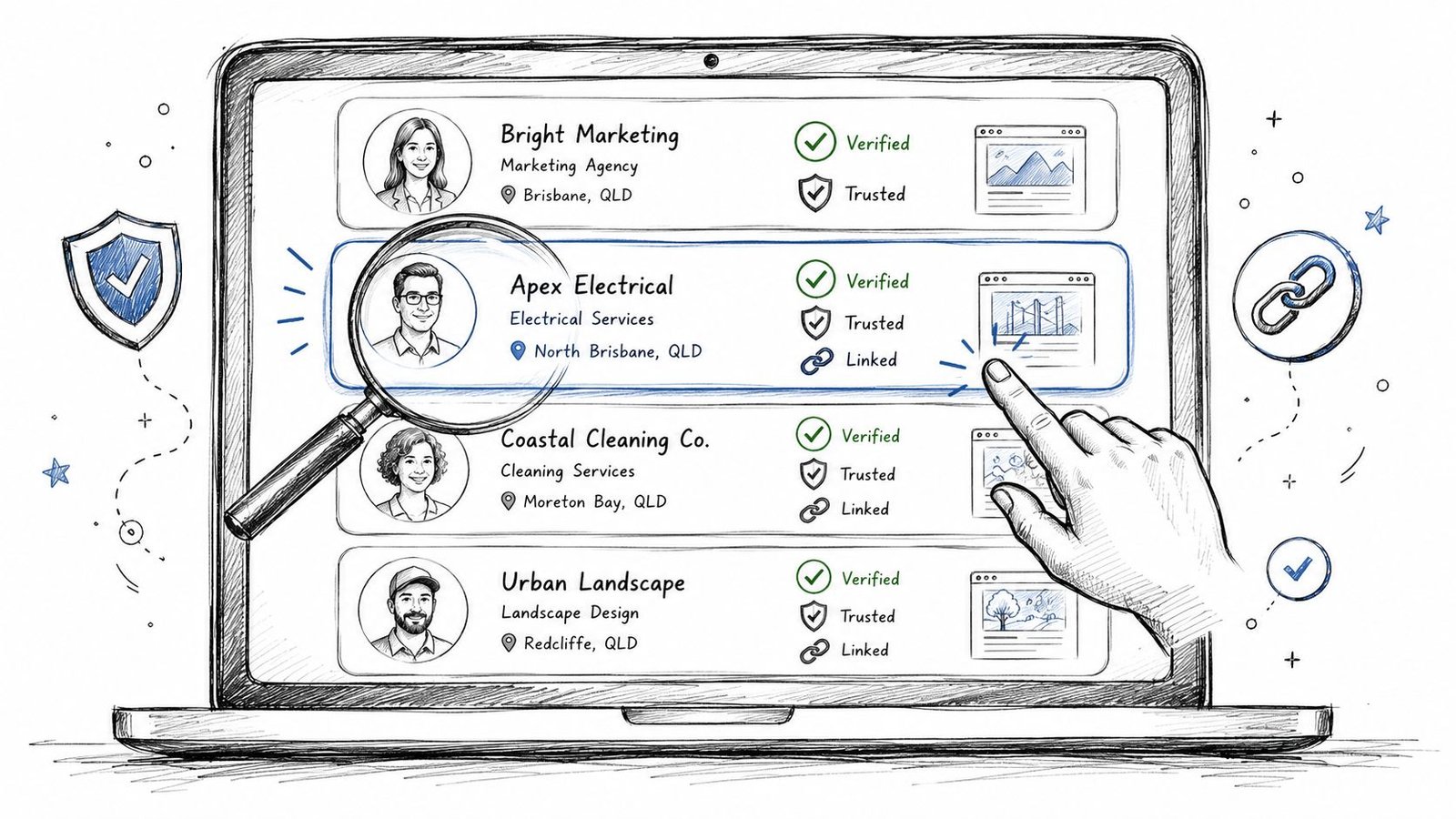
Most founders hear “directory submission” and assume spam. That reaction makes sense if they’ve only seen low-quality link dumps, but manual submission to curated startup and software directories is a different job. The point is to place your product where real users, buyers, and search engines already expect to find software, not to scatter your URL across junk inventories nobody checks.
The useful directories are selective. Product Hunt, G2, Capterra, BetaList, Crunchbase, AlternativeTo, and SaaSHub matter because they sit inside the discovery path for SaaS, not because they look impressive on a slide. A clean listing on those platforms gives you brand validation, backlink equity, and page-one real estate when someone searches your company name or category. StartupSubmit fits this model with manual submissions, and its directory submission service is built for curated listings rather than mass placement.
What makes directory links worth keeping
Relevance beats raw count. Linkforce says the strongest backlinks are editorially placed, topically relevant, and from a legitimate source with real traffic, and that ten links from topically relevant sites can outperform a hundred links from unrelated blogs at similar authority levels (Linkforce). That is why high-authority directories matter more than bulk submission tools.
In practice, the good listings do three jobs at once. They support SEO, they improve trust when a buyer checks your footprint, and they give investors a cleaner view during diligence. If you use a manual submission service like StartupSubmit, keep product descriptions, pricing, and feature names consistent across profiles. Consistency signals legitimacy, and sloppy variation does the opposite.
Practical rule: if a directory does not help a customer discover, compare, or validate your product, it probably does not belong in your backlink plan.
A clean submission process also gives you operational clarity. You can track which directories accepted the listing, which ones sent referral traffic, and which ones deserve updates later. For early-stage teams, that inventory is more useful than vanity reporting because it shows where your reputation is visible.
2. Review and Rating Aggregation Across SaaS Platforms
Reviews carry backlinks with trust attached. If someone Googles your company and sees G2, Capterra, Trustpilot, or AppSumo pages with real feedback, those results do more than a normal link ever could. They cut friction before the demo, before the trial, and often before the first sales email lands.
For SaaS SEO, review aggregation matters because it puts your product on pages buyers already trust. It also helps when prospects compare options side by side, since review platforms often rank for alternative and comparison queries close to purchase. That is the practical value, not vanity coverage.
How to build reviews without creating risk
The white-hat line is simple. Ask real customers, do not manufacture praise. The best time is usually after onboarding milestones, after the first successful integration, or near the end of a trial when the customer has enough context to speak candidly. If your competitors already occupy a review platform, you need to be there too, because those pages often rank for alternative and comparison searches that attract buyers close to purchase.
A strong review profile also shapes how your brand shows up in AI-driven results. Review pages are public, indexed, and full of product language, so search systems and large language models tend to surface them. If a customer sees your product mentioned repeatedly with clear sentiment, that signal is stronger than a thin homepage link.
A simple operating pattern works well here:
- Map competitor profiles first. If they are on G2 or Trustpilot and you are not, you are giving up page-one visibility.
- Time requests after value moments. A recent win creates a better review than a cold ask.
- Respond to negatives like a founder. A direct, calm response with help documentation says more than a polished marketing line.
- Embed badges sparingly. Third-party validation belongs on homepage and pricing pages where hesitation is highest.
For founders, the value is not just the review page itself. It is the fact that review platforms become part of your brand’s due diligence trail. Buyers look there. So do partners.
If you want a practical starting point, the StartupSubmit directory guide is a useful reference for keeping your profiles organized alongside review work.
3. Resource and Educational Content Linking From Industry Authority Sites
Generic guides rarely earn links. They get published, then ignored. If you want citations from credible sites, build resources that other writers, operators, and analysts can use in their own work.
The strongest assets are specific. A SaaS benchmark report, a comparison framework, a public dataset, a pricing teardown, or a clear read on your category’s economics can all earn links if they offer something the next page in the search results does not. White-hat link building works best around linkable assets like original data studies, interactive tools, infographics, and resource-page placements, because those formats give third parties a real editorial reason to cite the page.
Build something people can reference
Founders often overbuild here. They try to cover every angle, then publish something too broad to cite. The better move is tighter. If you have a real point of view on onboarding benchmarks, AI model performance, or SaaS unit economics, build around that and make the result easy to quote, screenshot, and share.
Primary sources win. Industry authority sites usually link to material that gives them a clear data point, a usable example, or a concrete framework they can trust. That means exclusive research, surveys, case studies, or timely statistics can carry more weight than another recycled summary, especially when the page is written in a way a journalist or niche blogger can cite without rewriting it first.
Build the thing that saves someone else from doing the research themselves.
Distribution still matters once the asset exists. Send it to newsletter operators, post it in founder communities, and put it in front of people who already write about your category. If you can update the asset on a regular cycle, even better. Fresh updates give people a reason to cite it again, and that is cleaner than chasing new links from scratch every quarter.
If you want a practical place to organize this work, the StartupSubmit guide to the best startup directories is useful alongside your resource outreach, because directory profiles and educational assets often reinforce each other in search.
4. Strategic Podcast Guest Appearances and Interview Roundups
Podcast placements pull more weight than a simple backlink. A good episode borrows trust from a host audience that already listens, and it gives a founder a chance to explain the product in a way a landing page never can. The episode page usually gets linked, the transcript can be indexed, and the founder’s name starts appearing beside the category topics buyers search for.
Podcast directories widen that footprint. Apple Podcasts, Spotify, and similar platforms create extra surfaces where your name, product, and subject matter can show up again and again.
Make the appearance work twice
Founders often waste podcast opportunities by giving every host the same answer set. That makes the interview forgettable. Give each host a different angle. One episode can focus on product strategy, another on customer acquisition, and another on the category problem your company is trying to fix. Specific angles make the appearance easier to remember and easier to reuse in other content.
Respona’s 2026 guidance recommends two to three follow-ups over roughly two weeks, and says that structured, personalized outreach tends to convert better than mass blasts (Respona). That cadence fits podcast outreach as well. Pitch early, make the relevance obvious, and avoid sending hosts the same founder summary they already see from everyone else.
A practical podcast workflow looks like this:
- Target category-relevant shows. “Entrepreneur” is too broad if you sell to SaaS teams.
- Ask for show-note links. Verbal mentions do little for SEO.
- Request transcripts. A transcript on your own site creates a second indexable asset.
- Turn one episode into multiple assets. Clip it, quote it, and summarize it.
- Use a matching directory profile. An AI directory submission service can help keep your founder profile and product references consistent across the places people discover you.
Interview roundups can earn links on their own if you turn several conversations into a useful founder resource. That format works well for SaaS and AI teams because it combines curation with real operator perspective, and other sites are more likely to cite it than another recycled roundup.
5. Technical SEO Optimization for Link Crawlability and LLM Indexing
A lot of backlink programs fail for a simple reason. The site is not technically ready to receive the value. If pages are blocked, noindexed, slow, or poorly structured, the link still exists, but the payoff gets muted.
Founders usually notice this only after the outreach work is done. That is the expensive version. Google Search Console will show crawl errors and indexation problems if you check it, and Core Web Vitals still matter because poor page experience makes it harder for pages to hold visibility once they earn links. If your product pages or resource pages are hard to crawl, every backlink you earn costs more than it should.
Make the site easy to trust and easy to crawl
Staydigital Marketers’ 2026 guidance makes a point most tactic lists miss. Opportunities should be judged by relevance, authority, editorial context, and traffic signal, and a page with zero traffic provides minimal SEO value (Stay Digital Marketers). That logic applies to your own site too. If Google and LLMs cannot understand your pages clearly, the backlink ecosystem around them matters less.
Use clean URLs, proper heading hierarchy, canonical tags, structured data, XML sitemaps, and image compression. Then verify that your key pages are indexable. For SaaS teams, FAQ schema on help pages, pricing pages, and product explainers can make a real difference in how search systems interpret your content. If you are pushing directory coverage, keep the linked destination tidy as well, including pages such as the AI directory submission service, so the page that receives the mention is easy to crawl and easy to classify.
If a page exists for links but not for users, it is usually built wrong.
Structured, up-to-date pages are easier for automated systems to parse, including LLMs that surface brand references and product citations from public web content. That does not guarantee inclusion anywhere specific, but it does make your site easier to understand in the places where discovery now happens. A clean technical base also protects partner placements like 100Signals agency resources, because a strong external mention does less good if the destination page is slow, blocked, or hard to index.
6. Founder Personal Brand Building and Author Authority Stacking
Company domains do not build trust on their own anymore. Founders carry a lot of the weight. When a founder becomes known for one specific topic, the company benefits from every mention, every quote request, every guest post, and every speaking invite that follows.
That is why personal brand work belongs in a backlink strategy. The founder becomes the linkable entity. Publications want that person. Podcasts want that person. Other founders want to work with that person. The company then gets pulled into the orbit as a natural result, not as a hard sell.
Pick one domain and stay there
The fastest way to get ignored is to sound like a generic startup expert. Pick one lane you can own, like SaaS pricing, AI product strategy, or startup growth. Publish consistently on your own site or newsletter first, repurpose outward later, and keep the byline stable across channels so authority accumulates around one identity.
Use a clean Press or Media page so people can verify you quickly. If a journalist wants sources, that page saves time. If a partner wants to cite your work, it gives them a clear place to link. A page like 100Signals agency resources can serve that role when it gives outsiders a concise, credible destination.
Founder authority compounds when the same person keeps showing up with useful ideas.
The shift is already visible in how white-hat link building works. Reputation-led outreach gets more attention than raw volume, and founder branding is a big reason. Search systems reward repeated signs of expertise, especially when the signal is specific and useful instead of generic noise.
Strong founders also credit other people publicly. That habit matters more than many teams admit. It builds goodwill, makes future outreach warmer, and creates a network effect around your name that is much harder to fake than a backlink spreadsheet.
7. Strategic Partnerships and Co-Marketing Content for Reciprocal Backlinks
This is one of the cleanest ways to earn backlinks without forcing the issue. If you partner with a product that serves the same customer, you can co-create content both sides want to share. That might be an integration guide, a comparison page, a webinar, a joint checklist, or a customer story built around a real workflow.
The important part is intent. This works when the partnership serves users first. It falls apart when the only goal is to trade links and move on. Search engines and users both pick up on that difference.
Build around shared customer value
Start with where your audiences already overlap. For SaaS and AI products, that is often adjacent tools, workflow partners, or implementation services. If your product helps a user handle one part of the job, and another product handles the next part, the content almost writes itself.
Use the partnership as a practical distribution system, not a favor economy. One partner can publish a setup guide, another can host the companion walkthrough, and both sides can point to the same asset from different angles. That gives you two credible pages, two audiences, and a stronger reason for each site to link naturally.
A clean partnership plan also needs rules. Define who publishes, who links, who updates the content, and who owns the distribution. That sounds formal, but it prevents the half-finished partnership problem where both teams agree enthusiastically and then forget to follow through. I have seen simple co-marketing pages become durable SEO assets only because someone kept them current.
A smart partnership list often comes from competitor research. Look at their integrations, partner logos, and customer testimonials. If a company already serves your audience without competing directly, that is a strong candidate for co-marketing. The best reciprocal backlinks come from real overlap, not from polite link exchanges between unrelated brands.
8. Thought Leadership Through Original Research and Market Reports
Original research is the cleanest way for a SaaS startup to earn links it can control. Publish information people cannot easily find elsewhere, and other writers have a reason to cite it. That is the point.
The strongest reports usually come from proprietary data, a well-designed survey, or a sharp analysis of public information that surfaces a pattern others missed. You do not need a huge research budget to do this well. You need a credible question, a clear methodology, and a result that helps someone else write, present, or decide faster.
Make the report useful to outsiders
The best reports do more than say what you found. They give other people usable language, charts, and framing they can quote without rewriting everything from scratch. That is why original research can keep earning backlinks for months or longer. It becomes a reference point, not just a marketing push.
BuzzStream notes that original research and other linkable assets earn citations because they give publishers something concrete to reference (BuzzStream). If you want journalists, analysts, and newsletter writers to use your work, publish the methodology too. Transparency strengthens credibility, and credibility increases the odds that someone cites the original rather than paraphrasing it.
The 2026 view from Technova Partners points the same way. Digital PR is now standard practice, and white-hat campaigns rely more on newsworthiness, expertise, and editorial judgment than on bulk acquisition. Original research fits that setup because it gives the market something new to discuss.
A strong report also pulls weight in several channels at once. It can support journalist outreach, feed a founder newsletter, strengthen sales conversations, and create a landing page that keeps earning links long after the launch week ends. That is the kind of asset startups need, because it keeps working after the initial push fades.
8-Point White-Hat Link-Building Strategy Comparison
| Strategy | Implementation complexity | Resource requirements | Time to impact | Expected outcomes | Ideal use cases | Key advantages |
|---|---|---|---|---|---|---|
| Strategic Directory Submission Across High-Authority Platforms | Medium, manual vetting and tailored listings | Moderate one-time cost ($500–$2,000); 5–14 days execution | Backlinks live 5–14 days; ranking effects 30–60 days | High-quality directory backlinks; improved DR and steady referrals | Early-stage SaaS launching product listings; investor visibility needs | Authoritative backlinks; avoids spam signals; one-time cost model |
| Review and Rating Aggregation Across SaaS Platforms | Low–Medium, profile setup + workflows | $0–$500 setup; $100–$300/month for automation; needs active users | Profiles live 5–30 days; review volume impacts 60–90 days | Trust signals, conversion lift, rankings for commercial keywords | B2B SaaS with customer base aiming to boost conversions | User-generated content; strong conversion signal; AI/LLM visibility |
| Resource & Educational Content Linking From Industry Authority Sites | High, research/design + outreach/promotion | $0–$2,000 (founder time or freelance); ~$500/mo promotion | Initial ranking 30–60 days; peak link velocity 90–180 days | Organic inbound links, thought leadership, long-term traffic growth | Founders with unique insight/data wanting evergreen authority | Evergreen, natural citations; attracts long-term high-quality links |
| Strategic Podcast Guest Appearances & Interview Roundups | Medium, pitching, prep, recording | $0–$300 outreach; $200–$500 for transcription; founder time per episode | Backlinks appear 2–4 weeks; audience/ranking effects 60–90 days | High-DR backlinks, brand exposure, targeted audience engagement | Founder visibility campaigns and niche audience targeting | High-authority links; repurposable transcripts; founder credibility |
| Technical SEO Optimization for Link Crawlability & LLM Indexing | High, audit and ongoing remediation | $1,000–$5,000 initial; $200–$500/mo monitoring; engineering effort | Internal improvements immediate; ranking changes 30–60 days | Improved crawlability, indexation, link credit, and UX | Sites with crawl/index issues or JS-heavy apps; LLM indexing focus | Foundation for all SEO; ensures links are credited and discoverable |
| Founder Personal Brand Building & Author Authority Stacking | High, sustained publishing and engagement | $0–$300/mo for tools; major time investment; 6–18 months to scale | Initial presence 30–60 days; meaningful backlinks 6–12 months | Personal backlinks, media invites, recruiting and investor credibility | Founders seeking long-term audience and independent credibility | Independent distribution channel; journalist magnet; durable asset |
| Strategic Partnerships & Co-Marketing Content for Reciprocal Backlinks | Medium, partner outreach and coordination | $0–$1,000 per partnership (content/coordination); shared effort | Content live 30–60 days; traffic effects 90–180 days | Reciprocal backlinks, shared audience reach, referral leads | Product integrations and complementary SaaS ecosystems | Mutual promotion; persistent integration links; shared cost/effort |
| Thought Leadership Through Original Research & Market Reports | Very high, survey/design, analysis, visualizations | $5,000–$50,000+ (data collection, design, promotion); specialist skills | Media pickup over months; backlinks accumulate over months–years | High-authority citations, widespread media coverage, evergreen backlinks | Companies with unique data wanting analyst/media attention | Journalistic citations; high-quality, long-lasting backlinks; analyst interest |
Your Next Steps to Building Real Authority
Building high-quality backlinks isn't about finding a magic trick. It's about stacking the right channels so they reinforce each other. The founders who win usually combine short-horizon wins, like directory submissions and review profiles, with longer-horizon assets like original research, founder branding, and partnership content.
Start with the foundation. Audit your backlink profile, check whether your site is technically ready to receive value, and verify that your company shows up on the directories and review platforms your buyers already trust. If you're missing from those surfaces, fix that first. That's the fastest way to stop losing easy credibility.
Then pick one durable content engine and commit to it for six months. For some teams, that's a research report. For others, it's podcasts or founder-led commentary. The point is not to do everything. The point is to do a few things well enough that they keep paying off after the launch buzz fades.
If you want a practical way to speed up the directory side of that work, StartupSubmit is one option built around manual listings across high-authority startup and software directories. It fits well into a white-hat plan because it helps founders build profiles, backlinks, and trust without relying on spammy automation.
If you want a faster path through the directory work, StartupSubmit handles manual submissions across startup and software directories that matter for SaaS and AI visibility. It's a practical fit when you need credible listings, cleaner brand search results, and a backlink base that doesn't look manufactured.