SEO Free Links: 7 Channels for SaaS Founders
Most lists of SEO free links give you 50 directory names without indicating priority. That's bad advice for a founder. You'll spend a weekend filling forms, half the sites will be dead or spammy, and you'll learn nothing about what moved the needle.
Skip the volume game. In 2024, 76.47% of the more than 140 companies surveyed by DataBox reported using external backlink building, according to the DataBox State of Content Marketing and SEO report. Almost everyone does this. The difference is where you spend your hours.
Are free links worth it? Yes, if the profile would make sense to a buyer who found it without Google. Does dofollow vs nofollow decide everything? No. Referral value, category relevance, and a clean public record matter too, which is why I rate these seven channels on effort, approval speed, and realistic payoff, not promised authority.
That's closer to proof-driven link acquisition for SaaS than to mass submission. Start here.
Table of Contents
- 1. Product Hunt
- 2. G2
- 3. Capterra
- 4. AlternativeTo
- 5. SaaSHub
- 6. GitHub
- 7. Google Business Profile
- Free Link Channels Compared
- Your First Week of Free Links Next Steps
1. Product Hunt
Product Hunt isn't a directory you submit to and forget. It's a launch day. You get a free public product page with description, tags, images, video, and your product URL, plus comments from makers and early adopters who'll click through and try the thing.
The trade-off is prep. New accounts may need to wait before posting, so create yours early, comment on other launches, and line up your assets before you pick a date. On the day, you'll answer questions for hours. Don't solicit upvotes. It's prohibited, and the community spots it fast.
What you actually get
- Discovery beyond a link: Feedback, signups, and a shareable page that keeps working after launch day.
- A second shot later: A significant update can justify another launch, so don't waste your first on a half-ready product.
- Honest downside: Visibility is competitive. A weak tagline or empty gallery will sink you by noon.
Practical rule: If you can't spend launch day replying to comments, you're not ready to launch. Reschedule.
For AI tools especially, pair a launch with broader coverage to build backlinks through AI directory listings so discovery doesn't end after 24 hours. Product Hunt also helps with AI search indirectly. Google says a page must be indexed and eligible to appear in Search with a snippet before it can appear in AI Overviews or AI Mode, per Google's AI features documentation. A well written, indexable launch page supports that, but it doesn't replace your own product pages.
Effort: high. Approval speed: you control the date, after account limits. Realistic payoff: referral traffic and feedback first, link value second.
2. G2
If you sell B2B software, G2 is where buyers compare you against named competitors. You can claim a profile for free and manage the basics yourself. Paid vendor packages exist, but you don't need one to exist on the platform.
Check eligibility before you invest hours. G2 doesn't accept B2C products or products still in alpha or beta. If that's you, wait. A rejected or empty profile helps nobody, and category fit matters more here than on a general directory.
Where G2 earns its keep
The value isn't the link in isolation. It's topical relevance plus reviews. A prospect who finds you through a comparison page arrives with buying intent, and authentic customer reviews do more for conversion than any badge you can embed.
The catch is obvious. Reviews depend on genuine customers showing up. You'll need to ask, follow up, and keep asking as you grow. A profile with zero reviews can even hurt, because it makes a real product look unproven next to rivals with dozens.
There's also a risk point founders miss. Google can issue a manual action for unnatural links and tells site owners to remove bad links, add qualifying attributes, or use disavow for links they can't remove, according to Google Search Console's manual actions guidance. A legitimate G2 profile is the opposite of that pattern. It's moderated, relevant, and useful to buyers.
If you're claiming several review platforms at once, plan your manual SaaS directory submissions around one consistent description so categories and claims match everywhere.
Effort: medium to claim, ongoing for reviews. Approval speed: moderate. Realistic payoff: buyer trust and comparison visibility.
3. Capterra
Capterra works like a category shelf for software. Buyers land on a category page, filter by features and pricing, and shortlist two or three tools. Your vendor listing puts you on that shelf, and the vendor portal lets you manage the profile and monitor reviews.
One warning before you start. Confirm directly which profile and lead generation features are free. Listing access and paid exposure programs aren't the same thing, and the limits can differ. Don't build your plan on an assumption from a blog post, including this one.
How to judge the link itself
Founders obsess over whether the outbound link is followed. Put that in context. Google defines rel="sponsored" for paid placements, rel="ugc" for user generated links, and rel="nofollow" when it shouldn't associate the sites or crawl from that link, and says links with these attributes generally won't be followed, per Google's guidance on qualifying outbound links.
So a qualified link from a relevant category page can still be worth having. It supports discovery, brand corroboration, and a consistent public record. What it won't do is guarantee leads or rankings.
- Best for: B2B SaaS with a clear category and at least a few customers willing to review.
- Weak point: Profile maintenance and review collection take steady effort, not one afternoon.
- Fit check: If buyers in your niche don't use comparison sites, deprioritize it.
Treat Capterra as part of structured directory outreach for early-stage product launches rather than a standalone SEO play.
Effort: medium. Approval speed: moderate, verify current terms. Realistic payoff: category visibility with active buyers.
4. AlternativeTo
AlternativeTo captures a sharper query than a generic directory: "alternative to" plus a product someone dislikes, outgrew, or cannot afford. If your product credibly replaces a named tool, the click is already prequalified.
Submit through an account, fill every field like it will be audited, and request developer access after approval so the listing stays accurate. Descriptions, tags, platforms, licensing, and official links do the selling here; a thin profile loses to a rival that answers the comparison in detail.
The trade-off is time. Free review can take months, and a paid priority review can speed that up without guaranteeing acceptance. Send it early, then build launch week around channels that respond faster.
Treat AlternativeTo as a slow-burn replacement page: submit it once, keep the data clean, and let approval land when it lands.
Quality matters more than raw count. Google's link schemes guidance calls low-quality directory and bookmark links spam, so the value here comes from moderation and a real competitor category, not from another URL on a list.
Keep the queue diversified while it sits in review; StartupSubmit's free directory list can supply other no-cost targets to work through in parallel.
Effort: low. Approval speed: slow. Realistic payoff: steady, high-intent discovery when the alternative angle fits.
Boost Your Startup's Traffic & SEO with up to 200+ Directory Listings
Skip the grind. Our team manually submits your product to relevant, high-authority directories, with screenshot proof for every submission, so you get real users, feedback and lasting backlinks without lifting a finger.
Get Listed Today5. SaaSHub
SaaSHub is the lowest friction option on this list. It's a SaaS focused discovery site with product listings organized by category and related alternatives, and it offers free submission resources. Its Submit tool also points you to other directories and communities, which makes it useful as a starting map, not just a single listing.
Check current eligibility, verification, and publication timing before you submit. Those details change, and you shouldn't assume the link is followed or that it'll move rankings on its own.
How to measure a channel like this
Use unique referring domains, not raw backlink totals. In an Ahrefs analysis of approximately 1 billion pages, more unique referring domains correlated positively with organic traffic, without proving causation.
Apply that here. SaaSHub is one legitimate referring domain in a diversified set, ideally linking in context and indexed. Track new referring domains, indexation, referral visits, and branded search separately, because a directory profile earns its keep as part of the set rather than alone. If a listing sends no clicks and never gets indexed, log it and move on.
- Strength: Relevant audience and a public product reference outside your own site.
- Limit: A single listing brings limited traffic. Expect a trickle, not a spike.
- Bonus: The Submit tool helps you build your wider submission list in one sitting.
Once that wider list runs to dozens of directories, founders usually split the work: they keep the high touch profiles themselves and hand the repetitive form filling to manual directory submission for startups, which submits by hand to curated, editorially reviewed directories rather than spam networks. That split keeps each free listing's effort proportional to its payoff.
Effort: low. Approval speed: varies. Realistic payoff: modest, clean, and worth the 20 minutes.
6. GitHub
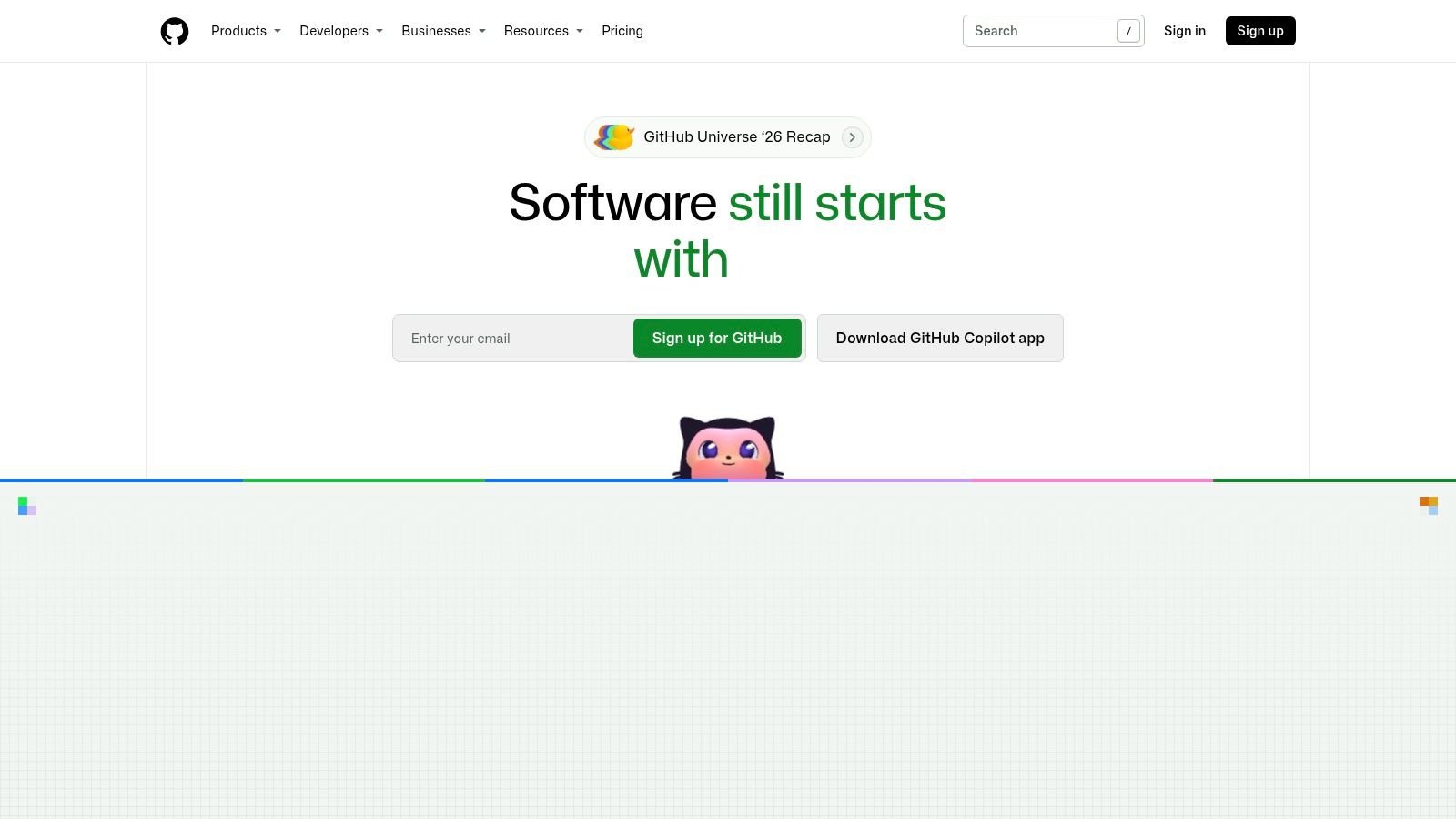
GitHub only belongs on this list if you have something real to put there. A public repository for your open source core, SDK, CLI, or API examples can carry a project description and homepage link, and a good README explains installation and links to your docs. Developers find tools this way every day.
What doesn't work is an empty repo created purely for a link. Google defines link spam as creating links primarily to manipulate rankings, including excessive reciprocal linking and advertorial style placements that pass ranking credit, per Google's spam policies. A thin repo fits that intent test badly, and developers will ignore it anyway.
When GitHub beats a directory
Say you're building a dev tool with a free CLI. A maintained repo with working examples earns stars, issues, and inbound links from blog posts and forum answers. That's discovery a marketplace profile can't give you. Say you're a closed source HR platform instead. Skip GitHub and spend the hour on G2.
- Maintained code: Outdated examples erode trust faster than no repo at all.
- Real documentation: Write the README for a developer evaluating you in five minutes.
- Clear homepage link: Point it to the relevant product or docs page, not always the homepage.
Effort: high if the project is real, wasted if it isn't. Approval speed: instant. Realistic payoff: developer trust and durable referral traffic.
7. Google Business Profile
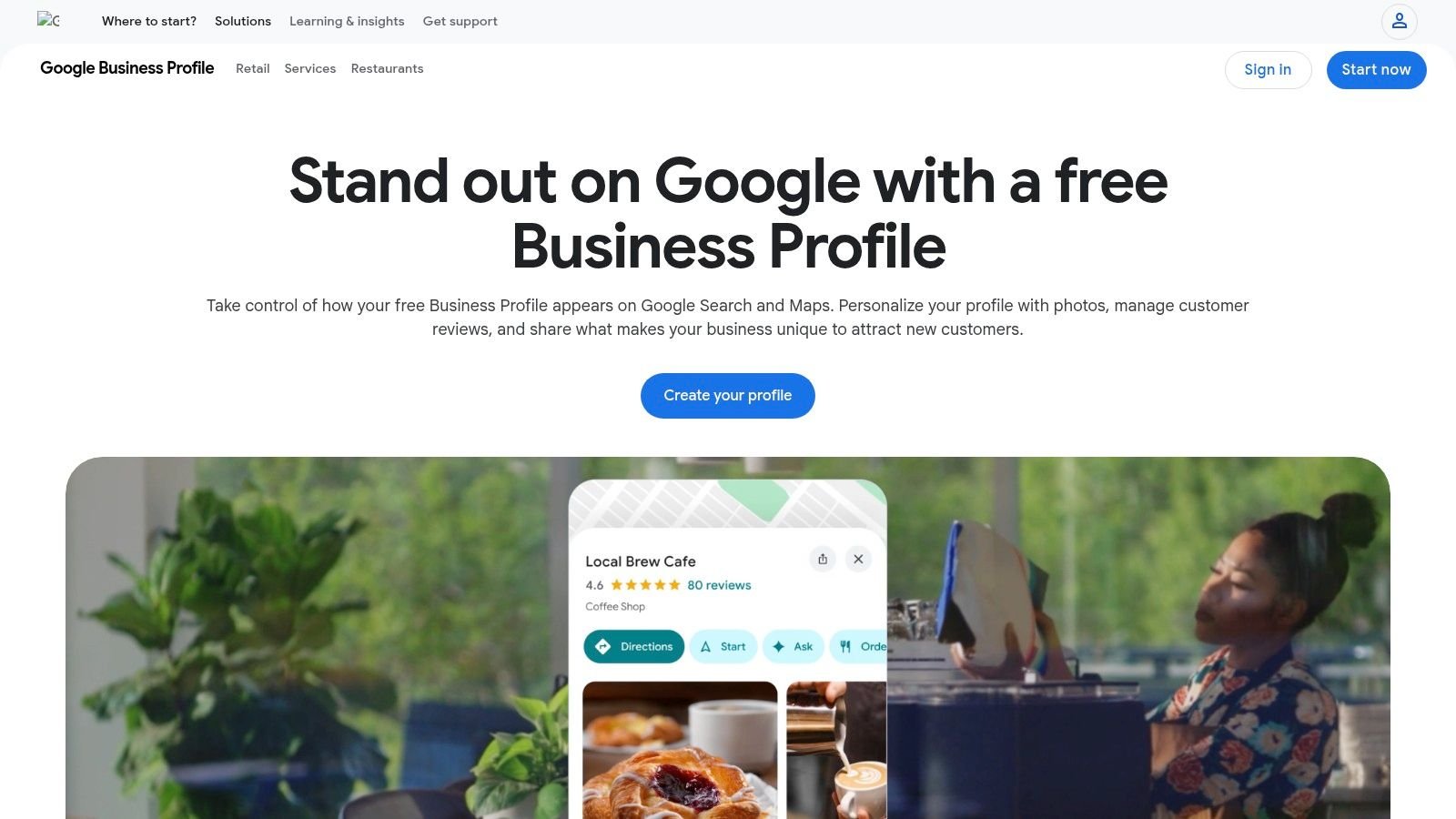
Google Business Profile is free and powerful, but most readers of this article can't use it. Eligibility requires in person contact with customers, at a storefront or by visiting them. An online only SaaS company generally doesn't qualify, and forcing it risks a suspended profile.
If you do qualify, say you run a local service business alongside software, or you have a real office customers visit, claim it. The profile shows your website link, business details, and reviews across Search and Maps, and you manage it directly with Google. For setup detail, this local listing guidance for Northern Arizona businesses walks through the process.
Be honest about the purpose
This is local discovery, not a general SaaS backlink. Reviews and accurate details build local trust and help nearby customers find you. They won't substitute for software directory coverage, and a profile doesn't guarantee rankings or link value.
Eligibility first: If customers never meet you in person, don't create a profile hoping nobody checks. Verification exists for a reason.
- Best for: Storefronts and service area businesses with real customer contact.
- Skip it if: You're remote first and sell subscriptions online. Use the six channels above.
- Keep it current: Hours, categories, and review replies need ongoing attention.
Effort: low to medium, plus verification. Approval speed: depends on verification. Realistic payoff: strong for eligible local businesses, zero for most SaaS.
Free Link Channels Compared
The seven channels differ most on two things: how much work a listing takes to maintain, and how fast a submission becomes a live page. Weigh both together. The quickest approvals are rarely the strongest links.
| Platform | Best For | Effort Required | Approval/Review Speed |
|---|---|---|---|
| Product Hunt | SaaS, AI products, and developer tools seeking launch-day discovery and feedback | High; prepare the launch and actively participate | Fast to list; an account wait may apply, but you choose the launch date once active |
| G2 | Eligible B2B SaaS products seeking buyer reviews and comparison visibility | Moderate; claim and maintain the profile and encourage genuine reviews | Moderate; eligibility is checked before the profile goes live |
| Capterra | Software companies seeking category-based discovery and reviews | Moderate; manage the listing and maintain reviews | Moderate; eligibility and free listing terms apply at signup |
| AlternativeTo | Software with a clear alternative or competitor category | Moderate; submit details and meet listing criteria | Slow; free review may take months |
| SaaSHub | SaaS and software products seeking a public product listing | Low to moderate; check eligibility and verification requirements | Low friction; listing published after its own review |
| GitHub | Open-source products and developer-facing tools with genuine technical resources | Moderate to high; maintain useful code and documentation | No formal listing review for public repositories |
| Google Business Profile | Eligible local or service-area businesses with in-person customer contact | Moderate; complete verification and keep business details current | Depends on verification of an in-person business location |
Approval speed tells you when the page goes live, not what the link is worth. Product Hunt concentrates its payoff into launch day, while G2 and Capterra earn their value slowly through accumulated buyer reviews. GitHub has no gatekeeper at all, but an unmaintained repo signals neglect rather than authority. Pick the channels you qualify for, then match the effort to the payoff you can realistically sustain.
Your First Week of Free Links Next Steps
Don't try to finish all seven channels perfectly. Claim what you qualify for, submit the slow queues early, and reuse one asset set everywhere. Consistency is what makes these profiles corroborate each other for Google and for AI assistants.
Before you judge ChatGPT visibility, check the technical basics. OpenAI says OAI-SearchBot surfaces sites in ChatGPT search, sites that opt out won't be shown in search answers, and referral URLs carry utm_source=chatgpt.com, per OpenAI's crawler documentation. Allow the bot in robots.txt and set up analytics reporting for that source this week.
Your one week checklist
- Day one to two: Write one short and one long product description, gather logo, screenshots, pricing, and category tags in one folder.
- Day two to three: Claim G2 and Capterra if you're eligible, submit SaaSHub and AlternativeTo, and create your Product Hunt account.
- Day four: Publish or clean up a GitHub repo only if you have a genuine developer asset. Check Google Business Profile eligibility.
- Day five: Verify robots.txt, confirm key pages are indexable, and log every live URL in a simple tracker.
When founder time runs out, scale the long tail instead of grinding through forms. StartupSubmit handles that layer with a team of 20 SEO professionals, no bots, building campaigns of 60 to 220+ backlinks from established domains, many DA 60 to 92. Domain Rating typically begins climbing within 14 to 30 days as Google indexes the links. That's the same division of labor behind practical guides on building links for your website. You keep the launches and reviews. Someone else does the repetitive submissions.
Frequently asked questions
Are SEO free links safe? A relevant, moderated profile is low risk. Mass automated submissions and link schemes are not. Judge by purpose and quality, not price.
Is a nofollow link worthless? No. A mix of dofollow and nofollow links is normal, and referral traffic plus brand corroboration still count.
Will this guarantee rankings or AI mentions? No. Approval, followed links, rankings, traffic, and AI assistant mentions are never guaranteed. Expect discovery to build gradually as profiles get indexed.
If your checklist is done and the long tail of directories is still sitting untouched, StartupSubmit will handle the manual submissions for you, with hand written profiles across curated startup and software directories and a report of live links to track. Visit the site, pick the coverage level that matches your stage, and spend your own hours on the launches and reviews only you can do.
Ready to build high-quality backlinks?
We'll manually submit your product to 60 to 200+ directories in 5 to 7 days, with screenshot proof for every submission. No bots, no boring forms, just more time for selling and building.
See pricing & get started →