
10 Reputable AI Directories for AI Startups in 2026
Submit to every AI directory you can find and the backlinks will do the work. That's the most repeated advice in this category, and it falls apart at the first review queue. A directory listing doesn't sell an AI product. It puts your company in front of someone who's already looking, and only if the operator of that directory decides your submission deserves publishing. That operator is a third party with its own rules, its own queue and its own idea of what counts as a real product.
AI directories also ask for fields a general SaaS listing never touches: the model behind the product, the specific use case, the problem it solves, the pricing tier, keywords, a logo and often the founder's name. Leave those blank and you become the listing that reads like every other generic summary on the page.
Intent separates these sites from the review platforms. A team comparing knowledge management systems for SMBs is weighing vendors against each other. Someone browsing an AI directory usually has one task in mind and wants a tool that does it today.
So this isn't a list of ten equal options. Each entry is sorted by what the site asks you to supply, who's browsing it, and what I could verify about cost and review speed. Where a price or a submission route couldn't be confirmed on the official site, I say so rather than guess.
Table of Contents
- 1. There's An AI For That (TAAFT)
- 2. TopAI.tools
- 3. Future Tools
- 4. Dang.ai
- 5. AIxploria
- 6. AI Agents.org
- 7. There Is An AI Tool
- 8. AI Tools Directory
- 9. Futurepedia
- 10. Toolify
- Free routes, reported paid prices, and best-fit use cases for the AI directories on this list
- Build Your AI Directory Shortlist Before You Submit
1. There's An AI For That (TAAFT)
TAAFT is the site most founders name first, and the scale explains it. Directory tracking compiled by zplatform's guide to how many AI tools exist shows the catalog opened in December 2022 and grew from roughly 1,000 consumer AI tools in 2021 to approximately 15,000 in 2024 and 51,242 by July 17, 2026, about a 51-fold rise. The same dataset logged 44 new tools added on that single day. You're not joining a shortlist. You're joining a stream.
Browsing is organized around tasks, the closest thing to buying intent an AI directory can offer. Your use-case line does more work here than your brand story.
What the paid options change
- Topical fit: your product sits beside direct rivals, in front of people who already want the job done.
- Recognition: the name appears constantly in roundups, so a badge from it is understood by buyers.
- Cost: recent checks put a one-time basic listing at $49, with higher-priced launch and promotion packages listed on the official TAAFT site. A limited free route has been described through a monthly X thread.
Verify before paying: the current price, the acceptance terms, and whether any free route is open this month. Paid visibility doesn't buy customers, and a promotion package won't fix a vague description.
The publishing decision stays with TAAFT's reviewers. If your product needs a specific category wired to a specific description, our manual AI directory submissions handle that matching instead of leaving you to guess at another site's taxonomy.
2. TopAI.tools
Filter-based directories only earn their keep when the catalog is too big to browse. That's the situation now. The AItools.xyz market data release reported tracking more than 10,500 AI tools across 171 categories and estimated that AI-tool websites drew 101.12 billion visits worldwide during 2024, up about 36% from 74.18 billion in 2023. In January 2025 alone it estimated 10.53 billion visits from roughly 2.69 billion unique users. Those are modeled platform estimates rather than audited totals, but the direction is unambiguous.
TopAI.tools organizes that noise with categories and filters, and the whole submission ladder is published on the TopAI.tools site: free standard submission, $47 one-time for Fast Track, and $229 for a seven-day Featured Listing. Fast Track listings are stated to typically go live within 24 to 48 hours. Rejected paid submissions are reported to be refunded.
Where the free route stops
A free listing goes into the same review queue as everyone else's, so the paid tiers buy speed and placement rather than a verdict. Paid placement is not an endorsement, and the audience figures you'll see quoted are publisher-reported.
If you're planning a batch of submissions this month, read up on avoiding spammy backlinks after launch first. A hundred thin listings create more risk than reach.
3. Future Tools
Future Tools is highly selective. Submission costs nothing, so the main barrier is whether the product is ready for human review. It requires a working tool with a clear use case, which suits a reader looking for something they can test for a specific task rather than compare across a software category.
Scale explains why the filter matters. RankmyAI reported a catalog of more than 46,000 AI tools and companies in 2025. At that size, curation is what keeps a directory usable.
How to raise your odds
- Ship something public: the site generally expects an available product, not a waitlist page.
- Pick a category it accepts: some categories, including custom GPTs, may not be taken at all.
- Write the task, not the tagline: reviewers are checking whether a real person could use this for a stated job.
- Use the change form later: tool-change suggestions exist for when pricing or features move.
The filter that saves the most time: if your homepage still says coming soon, come back when the product loads. A waitlist fails the availability test before the tool's quality is even judged.
Google's spam policies treat low-quality directory and bookmark-site links as link spam. A selective directory therefore offers a cleaner signal than a platform that accepts every submission. If forms and category checks are eating into product work, you can submit your site to relevant directories through a manual service that checks fit and existing listings first.
4. Dang.ai
Free here comes with a condition attached: you place a verified backlink to the directory on your own site. That makes Dang.ai the only entry on this list whose price is a link rather than money, and the cheapest route if you accept the trade. The price list is unusually clear.
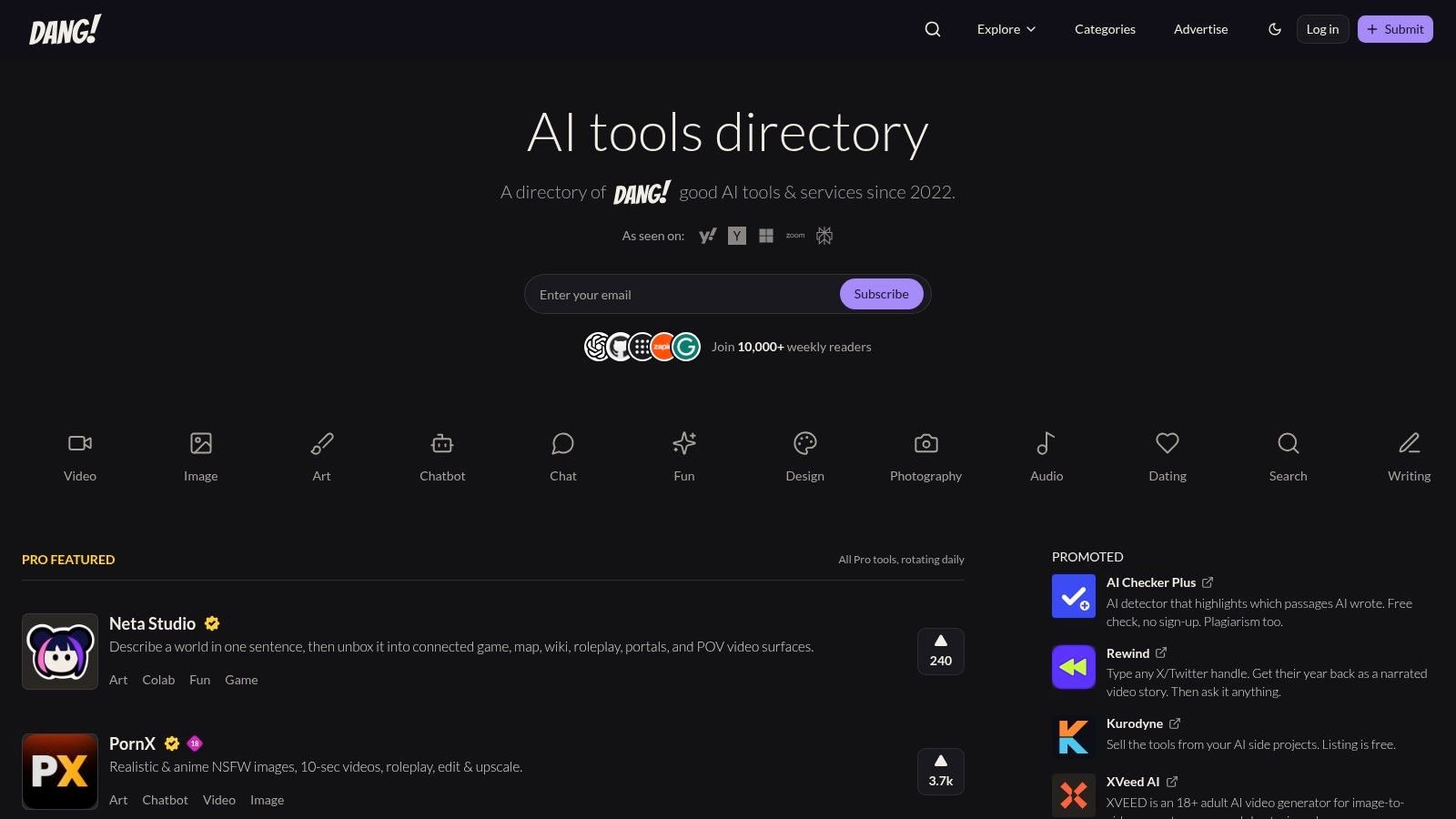
The Dang.ai submission page lists three tiers: free with a backlink, $49 one-time for Basic and $30 setup plus $19 per month for Pro. Basic is reported to include a featured badge and an approximately four-day review. Pro adds featured-first placement and newsletter promotion.
Reading the pricing honestly
$49 once is easy to justify against a single demo booking. Pro is a subscription with an exit cost, so decide up front how many months you'll keep it and what would make you cancel. Ask for subscriber count and open rate before you book a newsletter mention as a marketing line item.
The free route is noticeably slower than the paid tiers, so it suits a product with no launch deadline and is a poor fit for one shipping next week. The backlink requirement also means the free listing costs something in the strict sense: you're trading a link from your domain for a link from theirs, and an outbound link on a young site is worth pricing into the decision.
5. AIxploria
AIxploria sells verification, which is a different product from placement. The official AIxploria page lists a $79 one-time Fast Listing stated to publish within five business days, a $279 one-time Verified Listing stated to publish within two business days with extra links and long-form description space, and a $399 three-day Featured Ad.
That ladder is worth understanding even if you never buy from it, because it maps to what buyers now want to know. Gartner's consumer research found 51% of surveyed consumers had changed their research habits because of generative AI, with 26% shifting toward question-based queries and 26% toward conversational phrasing. People are asking evaluative questions now, not typing brand names.
What verification should mean
If a directory charges for a verified tier, ask what was verified and when. A useful profile publishes a check date, the evidence type, who owns the product, what data it retains, the pricing source and where it's available. Without those fields, verified is a badge, not a fact.
Higher tiers here carry media and more detailed product information, which matters because the listing is often the first page a prospect sees. Audience and traffic figures are self-reported, and paid placement doesn't guarantee qualified leads. Budget for it as a test with a start and end date, not an ongoing line item.
Boost Your Startup's Traffic & SEO with up to 200+ Directory Listings
Skip the grind. Our team manually submits your product to relevant, high-authority directories, with screenshot proof for every submission, so you get real users, feedback and lasting backlinks without lifting a finger.
Get Listed Today6. AI Agents.org
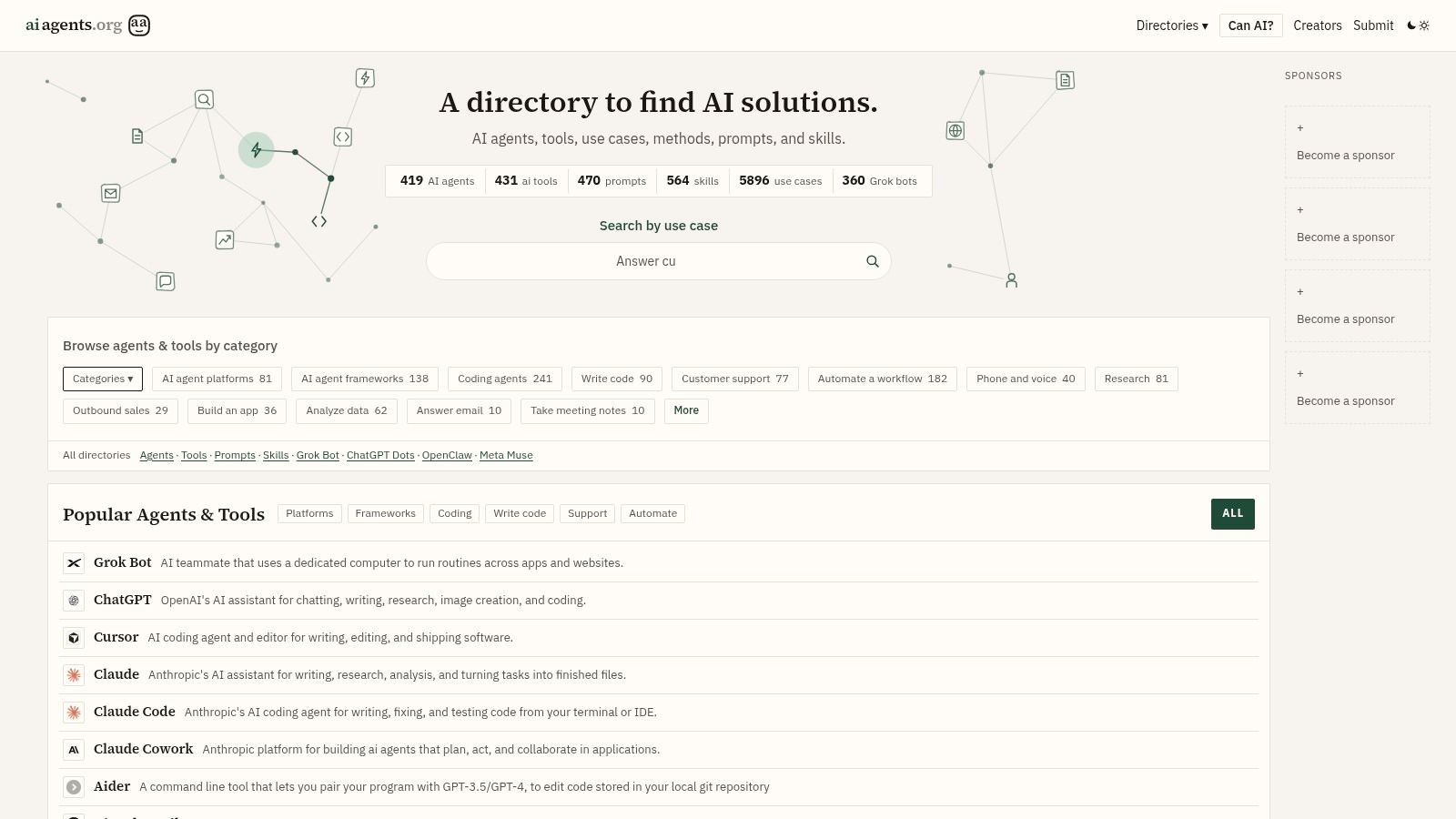
AI Agents.org answers a narrower query than the general catalogs: which agent does the job, and who is accountable for it. If your product is an agent rather than a broad assistant, that filter helps, because the buyer arriving there has already excluded chatbots, copilots and image tools.
That focus matches how teams buy now. Stanford's 2025 AI Index reported the share of surveyed organizations using AI rose from 55% in 2023 to 78% in 2024, while generative-AI use in at least one business function increased from 33% to 71%. Those buyers compare by use case, data handling and owner, so a precise category page can beat a louder listing elsewhere.
The submission mechanics
Standard listing is free and editor-reviewed. The site says paid status does not buy ranking; claiming a profile to add a maker note and a verified mark is a separate paid option, still subject to review. Treat that mark as a label unless the profile shows what was checked.
Narrow directories are worth more per visitor and less per backlink. Price them accordingly.
The limits are the cost of the filter. Fit is narrower than a general AI-tool catalog, review is neither instant nor guaranteed, and editors still decide. Before writing your description, browse the best AI agents to see the vocabulary buyers already compare on: task, model access, integrations, pricing tier and proof.
7. There Is An AI Tool
There Is An AI Tool asks for structured answers instead of a pitch. The form wants pricing, features, pros and cons and intended audiences, which is closer to how a buyer decides than a one-line summary. Submission is free and human-reviewed, and there's no paid route to force acceptance.
That matters because the page you end up with is a product card, not a billboard. Fill it properly and it does comparison work for you.
What Google actually needs from that page
More detail doesn't automatically produce AI visibility. Google's documentation on AI features states that AI Overviews and AI Mode don't require a special AI sitemap, an AI text file or dedicated schema markup. A page has to be indexed and eligible to appear with a snippet first, which means crawlable internal links, accurate visible content and structured data that matches what users see. Your directory profile helps only when it creates a genuine, indexable reference to your product.
Size varies wildly across this tier. The World of AI reported a catalog of 488 tools across 23 categories in 2026, which is a reminder that not every directory is a 50,000-tool monster. A focused catalog can still send you the right three visitors.
The honest caveat: this directory is less established than the biggest names, and acceptance isn't guaranteed. Read the directory recommendations from StartupSubmit before you build a shortlist around any single site.
8. AI Tools Directory
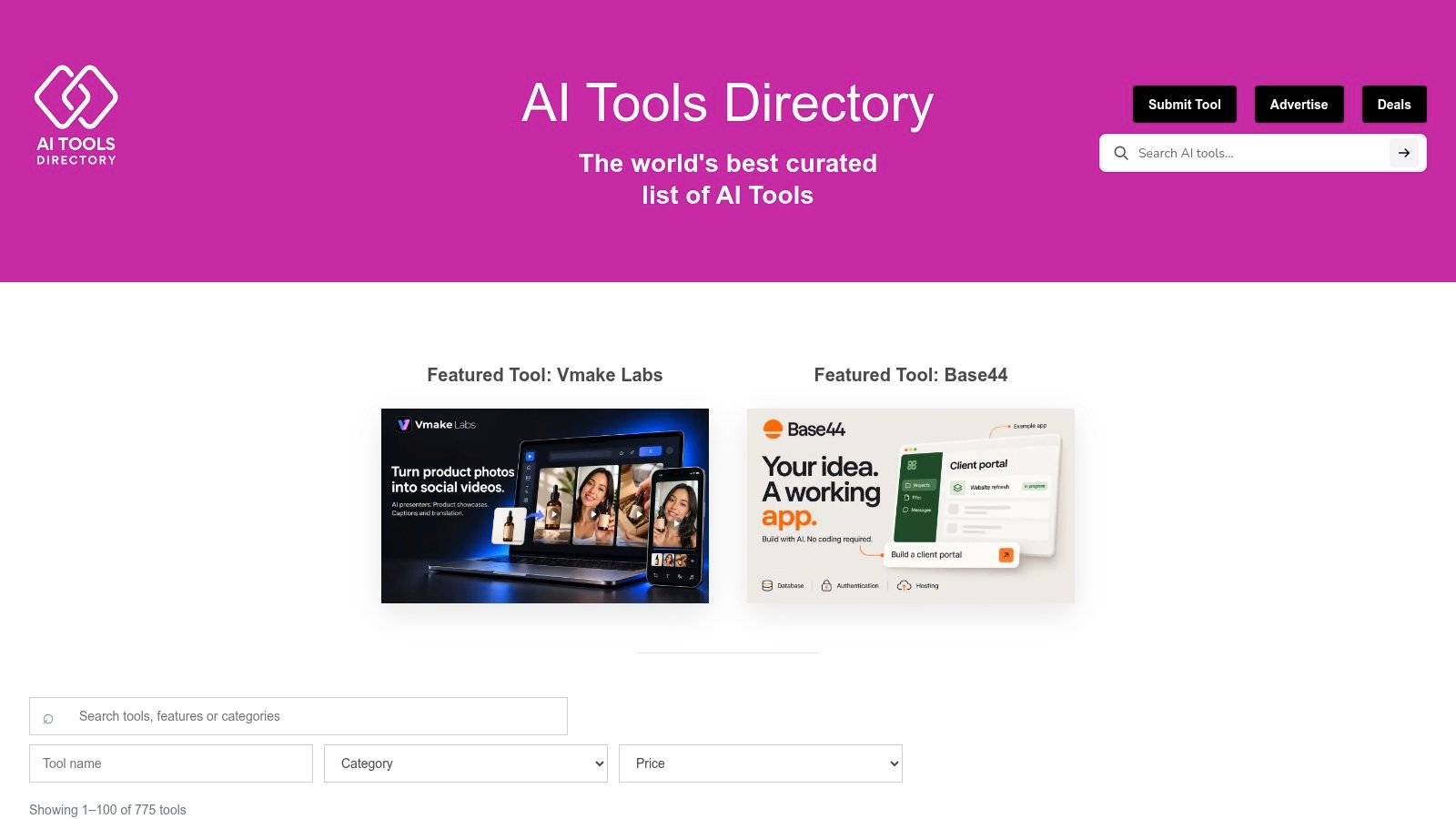
AI Tools Directory offers a free submission route and a paid fast track. Recent directory checks report a $99 one-time Fast Track listing, stated to publish within three days or less. Confirm current terms on the AI Tools Directory site before you pay, because terms on this tier move.
Check the links you get back
Third-party checks suggest some outbound links may use a link subdomain. Inspect your published listing after approval, especially if backlink attributes matter for a tool you're tracking in Ahrefs or Semrush. A nofollow or redirected link still sends referral visitors, but it won't count toward your referring domains.
Why bother with the link at all? An Ahrefs analysis of roughly 920 million web pages found a positive relationship between referring domains and organic traffic, and in a separate study of 10,000 non-branded keywords with monthly volumes between 2,000 and 5,000, pages ranking first commonly gained followed links from new referring domains at about 5% to 14.5% per month (Ahrefs backlink growth study). That's correlation, not causation. It does describe the shape of a healthy profile: steady additions, not one launch spike.
Practical rule: if a directory can't show you the live listing, the link markup and the review date, treat it as a referral channel and nothing more.
Comparing coverage to what how StartupSubmit handles directory listings includes in its reports, the minimum you want is a URL, a status and a screenshot you can file.
9. Futurepedia
Futurepedia is the name most founders ask about and the one I can verify least. The brand is well known, the categories are broad, and the topical fit for an AI product is strong. What I couldn't confirm on a recent check was a current public submission form, along with any live submission price.
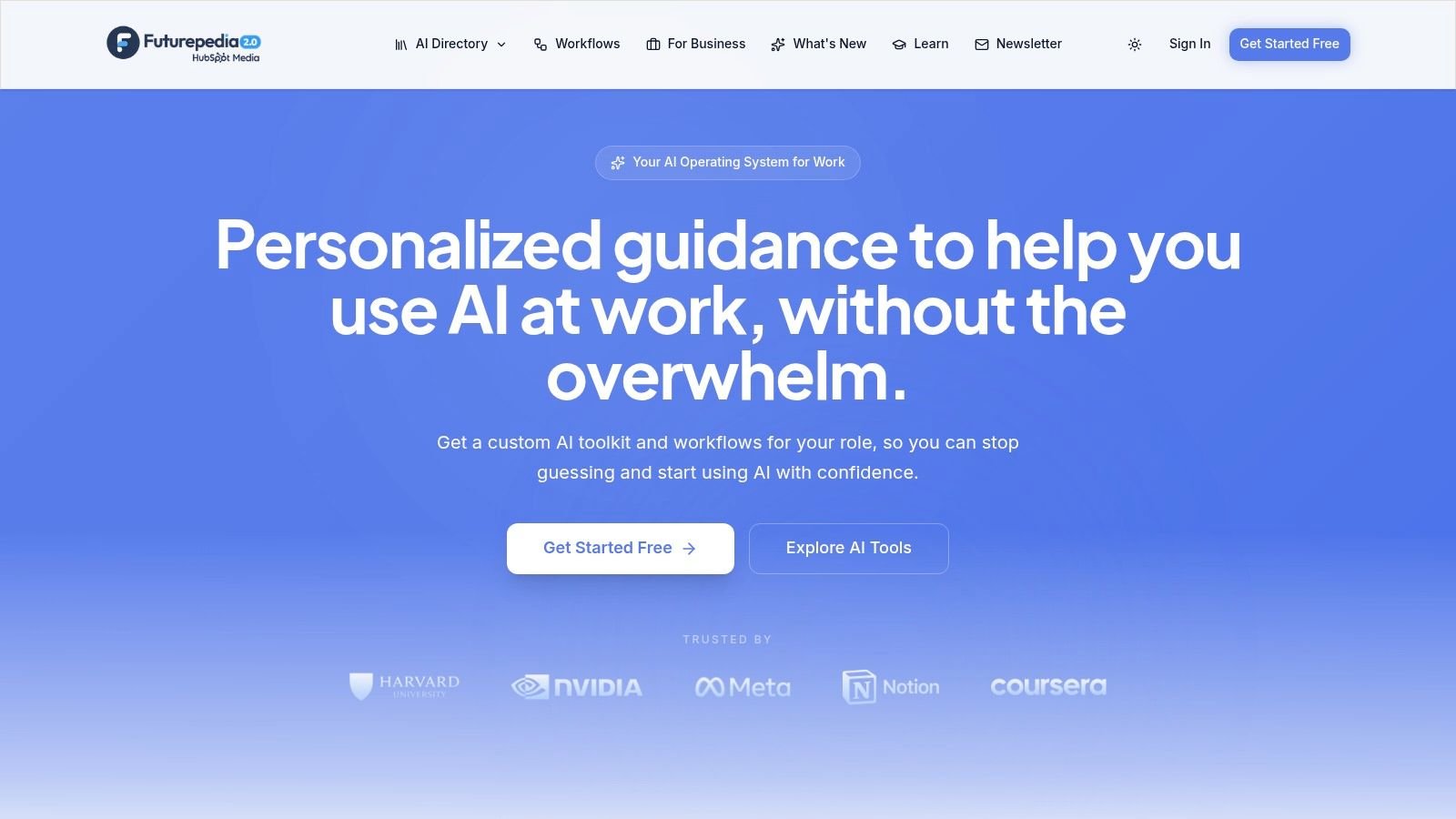
The catalog itself is real and sizeable. Momen's roundup of AI tool directories reported that Futurepedia listed 1,935 AI tools in 2025. That's a curated set, not a firehose.
How to treat a directory you can't submit to
- Check the site, not last year's article: roundups age badly, and old premium prices get quoted as current for years.
- Look for a footer link: submission pages usually live in the footer, not the main navigation.
- Email and ask: a short question about current submission routes costs nothing and settles the matter.
- Don't pay a reseller: if a third party offers Futurepedia placement, ask for proof of the process before transferring money.
A directory you can't submit to isn't a channel. It's a research destination until proven otherwise.
Older reports of premium listing prices shouldn't be assumed current. Put Futurepedia on a watch list and revisit it when submissions reopen.
10. Toolify
Treat Toolify as a comparison destination first and a submission target second. The catalog groups AI tools and publishes comparison and ranking pages, making it relevant for buyers evaluating a category rather than users looking for one narrow task. Its current submission route, pricing, and terms need to be checked directly on the Toolify site before you prepare copy or pay for placement.
Toolify still deserves a place in directory research because AI discovery can shape brand recognition before analytics records a visit. Digiday's analysis of AI in search reported that Google AI Overviews had reached 1.5 billion monthly users. A listing on a relevant catalog may contribute to wider visibility even when no referral session appears. That makes it brand exposure rather than a dependable traffic channel.
What to verify before paying
Confirm four things: the live submission route, current price, expected review timing, and format of the published page. If the site does not answer them, leave Toolify out of a paid campaign until the terms are clear. For an AI-powered SaaS product, pair any potential Toolify submission with established software platforms such as G2 and Capterra, where buyers compare categories and reviews.
Free routes, reported paid prices, and best-fit use cases for the AI directories on this list
| Item | Free Route | Lowest Reported Paid Price | Best Fit |
|---|---|---|---|
| There's An AI For That (TAAFT) | Possible monthly X thread | $49 one-time | AI-first products seeking exposure in a recognized AI-tool directory |
| TopAI.tools | Free standard submission | $47 one-time Fast Track | Founders wanting a free listing or a relatively low-cost faster review |
| Future Tools | Free, human-reviewed submission | No listing price reported; ads and sponsorships available | Publicly available AI tools suited to selective editorial review |
| Dang.ai | Free with a verified backlink | $49 one-time Basic | Founders willing to add a backlink or pay for review and promotion |
| AIxploria | No free route reported | $79 one-time Fast Listing | AI tools seeking a paid listing with a faster review option |
| AI Agents.org | Free, editor-reviewed standard submission | $20 one-time for listing claim or maker note | AI agent products and platforms |
| There Is An AI Tool | Free submission | No paid route reported | Products with concrete details suited to structured, human-reviewed listings |
| AI Tools Directory | Free, review-based submission | $99 one-time Fast Track | AI products seeking free review or a faster paid listing |
| Futurepedia | Submission route not verified | Price not confirmed | AI products checking for availability at a recognized directory |
| Toolify | Submission route not confirmed | Price not confirmed | AI startups seeking another AI-focused discovery listing |
Build Your AI Directory Shortlist Before You Submit
Sort the product before you sort the directories. Every site on this list asks for a use case and a pricing tier, and several want the model, the founder name and a demo link. Write those fields once in a plain document at listing length, and you stop rewriting the same paragraph across eight submission forms.
Then pick three to five AI directories that match how your buyers search. Someone hunting a tool for one task browses differently from a buyer comparing categories, so sort your picks by audience intent first. A broad catalog gives reach; a niche catalog gives relevance. Both belong in the plan, but they need different descriptions rather than the same text pasted across every form. Check who maintains each directory and when the list was last updated before you submit, the same check you would run on AI support tools for SaaS teams or any other roundup before trusting its picks.
Pair the AI directories with the review platforms
AI-powered SaaS should run both tracks at once. G2 and Capterra attract buyers comparing categories, and those profiles rank for alternatives searches that AI directories never touch. The general platforms carry the domain weight too: Product Hunt sits around 91 DR, G2 around 90, Capterra around 88, SaaSHub around 79 and AlternativeTo around 78, next to AI-specific sites with far smaller footprints.
Verify every price, review window and submission route on the official site before you pay. Where a route or price could not be confirmed, treat that directory as a bonus rather than a pillar of the plan. Where a directory charges for a faster review, decide what a week of earlier visibility is worth to your launch. Usually it is less than the price difference suggests.
If you want the manual work handled, StartupSubmit submits AI products by hand to AI-specific and high-DR general directories drawn from a database of 500+ curated sites, on one-time plans covering 60+, 150+ or 220+ directories at $99, $199 and $299. A campaign at that scale builds 60 to 220+ backlinks from established domains. Each directory still makes its own publishing decision, so judge the campaign on accepted placements in the final report, not on submissions sent.
Measure the things that move. Track acceptance rate by platform, whether your profiles are indexed, lift in branded search, and whether your product shows up when someone asks an assistant about your category. Submissions sent is a vanity number.
StartupSubmit writes each description for the site it goes to and sends a final report with the live link, status and screenshot for every placement. If you would rather spend the next two weeks on product than on submission forms, visit StartupSubmit and pick the plan that matches how many listings you want.
Ready to build high-quality backlinks?
We'll manually submit your product to 60 to 200+ directories in 5 to 7 days, with screenshot proof for every submission. No bots, no boring forms, just more time for selling and building.
See pricing & get started →