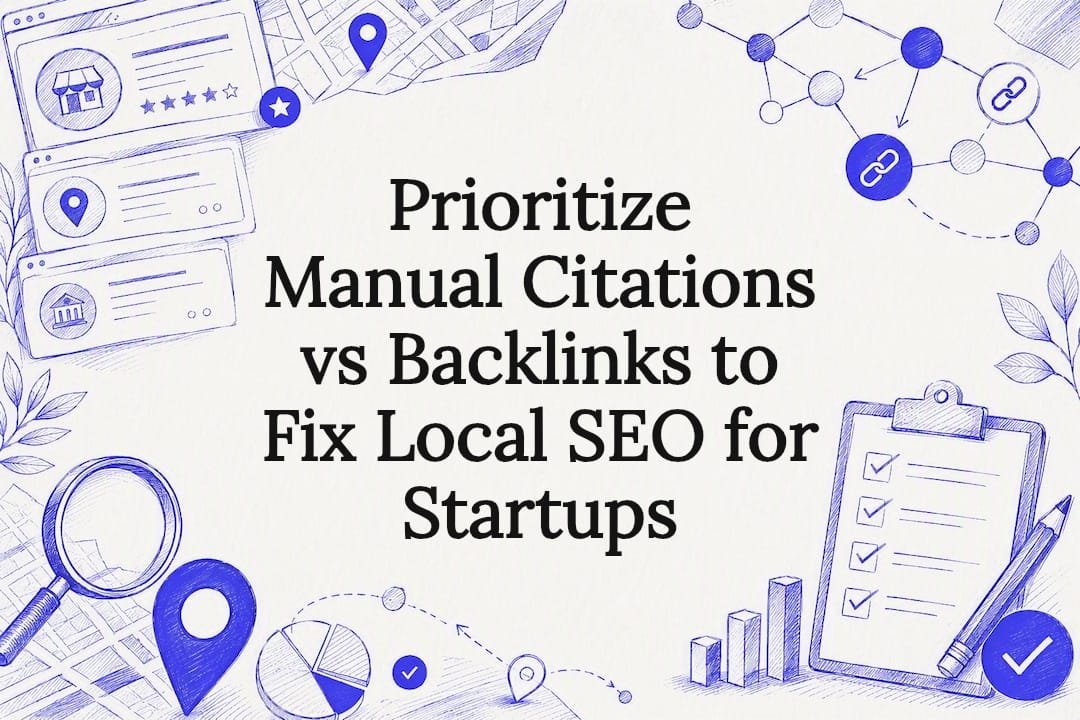
Prioritize Manual Citations vs Backlinks to Fix Local SEO for Startups
Citations are mentions of your business name, address, and phone number, with or without a clickable link. Backlinks are hyperlinks from other sites that pass authority into yours. Citations mainly influence local pack rankings; backlinks drive broader organic authority and referral traffic. If you run a local or single-location business, audit and fix your citations first. If you’re competing for national or industry-wide keywords, put your budget into earning backlinks.
TL;DR:
- Accurate, consistent citations in Google Business Profile and major directories lay a crucial foundation before pursuing backlinks, especially for local businesses.
- High-quality backlinks from relevant, editorial sources outperform numerous low-value links, with anchor text relevance impacting ranking power.
- Manual, targeted directory submissions with verified, well-written listings boost acceptance rates and long-term brand visibility more than automated spammy approaches.
- As AI-driven search and citation recognition grow, unlinked brand mentions and consistent citations are becoming as important as backlinks for search visibility.
- Prioritizing local citation cleanup before building backlinks prevents resource waste, as conflicting or incomplete NAP data weakens search rankings regardless of backlinks.
Table of Contents
- Citations vs Backlinks: The Technical Differences
- How Each One Actually Affects Your Rankings
- How to Build Backlinks That Actually Work
- Building and Cleaning Up Local Citations
- When to Prioritize Citations vs Backlinks
- Running a Fast Citation and Backlink Audit
- Why Manual Directory Work Still Pays Off
- The Real Priority Most Founders Get Backwards
- A Faster Way to Get Your Citation Layer Right
- Sources
- FAQ
Citations vs Backlinks: The Technical Differences
A citation is any online mention of your business name, address, and phone number (NAP), and it doesn’t need a link to count. A backlink is a clickable hyperlink pointing to your site, and its value depends on the linking page’s authority, topical relevance, and anchor text.
Citations show up in several forms:
- Full NAP listings on directories like Yelp or industry-specific platforms
- Partial mentions (business name only, no address or phone)
- Social profile bios and about pages
- Structured data mentions inside articles or news coverage
Backlinks carry more moving parts. Anchor text (the clickable words) signals topic relevance to search engines. A “follow” link passes authority; a “nofollow” link doesn’t, though it can still send traffic and brand exposure. Placement matters too: an editorial link inside a relevant paragraph carries more weight than one buried in a footer or sidebar. That clickability is the real divide. A citation confirms you exist and where; a backlink actively vouches for you, which is why the two behave so differently once you look at ranking impact.
How Each One Actually Affects Your Rankings
Citations feed the local pack and knowledge panel. Google cross-references your NAP data across directories to confirm your business is real and locatable, and consistency across those listings matters more than sheer volume. Ten accurate, matching listings beat fifty sloppy, contradictory ones.
Backlinks work differently. They remain a core ranking factor for organic visibility, and they do double duty: they push rankings up and they send direct referral traffic when someone actually clicks through. Anchor text and topical relevance decide how much ranking credit a link passes along, which is why a link from a niche industry blog often outperforms a generic directory link with the same domain authority.
Pro Tip: Backlinks and mentions are also starting to feed a third channel: AI visibility. Research on AI citation behavior shows that backlinks help pages rank in traditional search, and strong rankings make a page more likely to get cited by AI systems like ChatGPT or Perplexity. Brand mentions, even unlinked ones, correlate strongly with how often AI tools surface a business by name. That’s a reason to stop treating citations as a local-only tactic.
How to Build Backlinks That Actually Work
Editorial links, the kind a journalist or blogger adds because your content earned it, are still the gold standard. Three approaches consistently produce them:
- Publish original research or data. Numbers nobody else has are the easiest thing to get cited for.
- Target resource pages. Industry roundups and “best tools” lists actively want new entries.
- Pitch journalists directly. A specific, timely angle beats a generic press release every time.
Anchor text should read naturally, tied to the page’s actual topic, not stuffed with your target keyword every time. A mix of branded, generic, and topical anchors looks organic; a pile of identical exact-match anchors looks manufactured. Follow links pass more authority, but nofollow links from reputable sites still build brand signal and traffic.
Watch for red flags: paid link networks, bulk directory spam with no editorial review, and link exchanges where every anchor text is identical. Link quality beats quantity: a handful of relevant, editorial links will outperform hundreds of low-value ones, and an unnatural anchor-text ratio is one of the easiest patterns for search engines to flag.
Building and Cleaning Up Local Citations
Citation building is less about creativity and more about discipline. Get the order right:
- Claim and fully complete your Google Business Profile first. Treat it as the canonical version of your NAP, since everything else should match it exactly, down to abbreviations and suite numbers.
- Submit to major general directories, then move to industry-specific ones relevant to your niche.
- Audit for duplicates and inconsistencies quarterly. An old address or a misspelled suite number fragments your local signal.
If manual cleanup across dozens of directories sounds tedious, that’s exactly where a managed submission service earns its cost. When evaluating one, ask specifically how it handles duplicate detection, category selection, and whether you get a placement report you can verify.
When to Prioritize Citations vs Backlinks
Run this quick checklist before deciding where to spend your time:
- Single-location service business relying on foot traffic or local calls? Fix citations first.
- New local listing with zero directory presence? Citations, unquestionably, before anything else.
- National content site or SaaS product competing on broad keywords? Backlinks take priority.
- Already citation-consistent but stuck in rankings? Shift focus to backlinks and content quality.
A plumbing company in one city gets far more value from twenty accurate directory listings than from three generic backlinks. A SaaS company with no physical storefront gets almost nothing from local directories and everything from a handful of editorial mentions in relevant publications.
Pro Tip: Structuring content with clear schema markup and extractable claims helps on both fronts at once, making your page more citable to AI tools and more linkable to human editors scanning for a quotable stat.
Running a Fast Citation and Backlink Audit
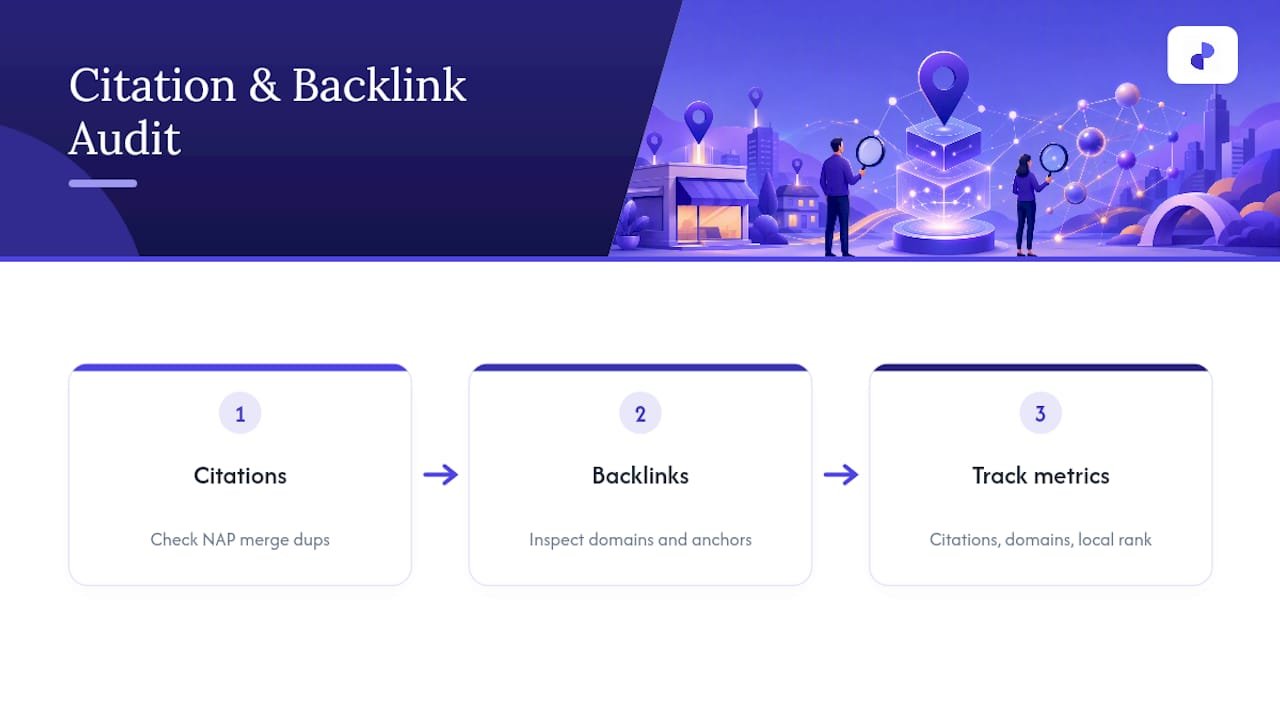
Start with citations: pull every listing you can find, check name, address, and phone against your Google Business Profile, and flag anything that doesn’t match exactly. Merge or remove duplicates as you find them.
For backlinks, Google Search Console’s links report shows your top referring domains and most-linked pages, which is enough to spot obvious problems without paying for a separate tool. Flag anything from a spammy or unrelated domain, and check whether your anchor text distribution looks natural or suspiciously repetitive.
Track three numbers going forward: total consistent citations, referring domain count, and local pack position for your top three service categories.
Why Manual Directory Work Still Pays Off
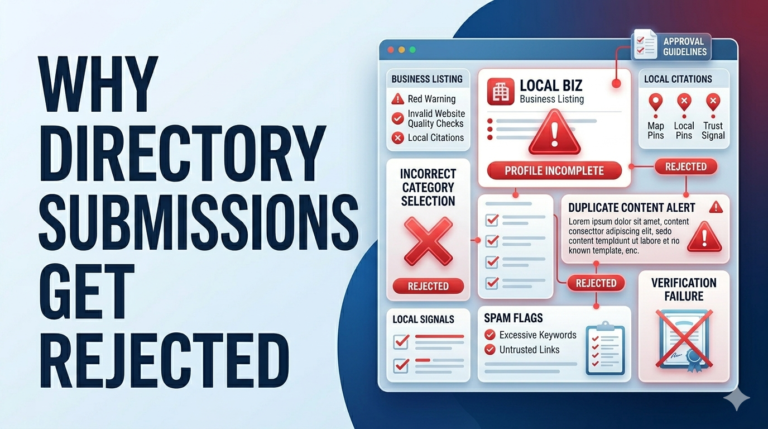
Bulk, automated directory submissions get rejected constantly, or worse, they get approved with thin, generic listings that do nothing for your brand. Manual, expert-reviewed placements consistently see higher acceptance rates and better contextual fit because a real person tailored the listing to the directory’s actual audience.
A citation that’s actually reviewed and well written doesn’t just sit there as a NAP entry. It becomes something a journalist or blogger stumbles across later and decides to link to on their own.
That secondary effect gets overlooked constantly. Directory listings can seed the exact brand mentions that later convert into unsolicited editorial links, which is the whole reason a startup’s early citation work is worth doing properly instead of automating it away.
The Real Priority Most Founders Get Backwards
Most SEO advice treats citations as a local-business checkbox and backlinks as the “real” ranking work. That framing misses something important: citations are cheap to fix and slow to compound, while backlinks are expensive to earn and fast to compound once you have enough of them. The order matters more than either tactic alone.
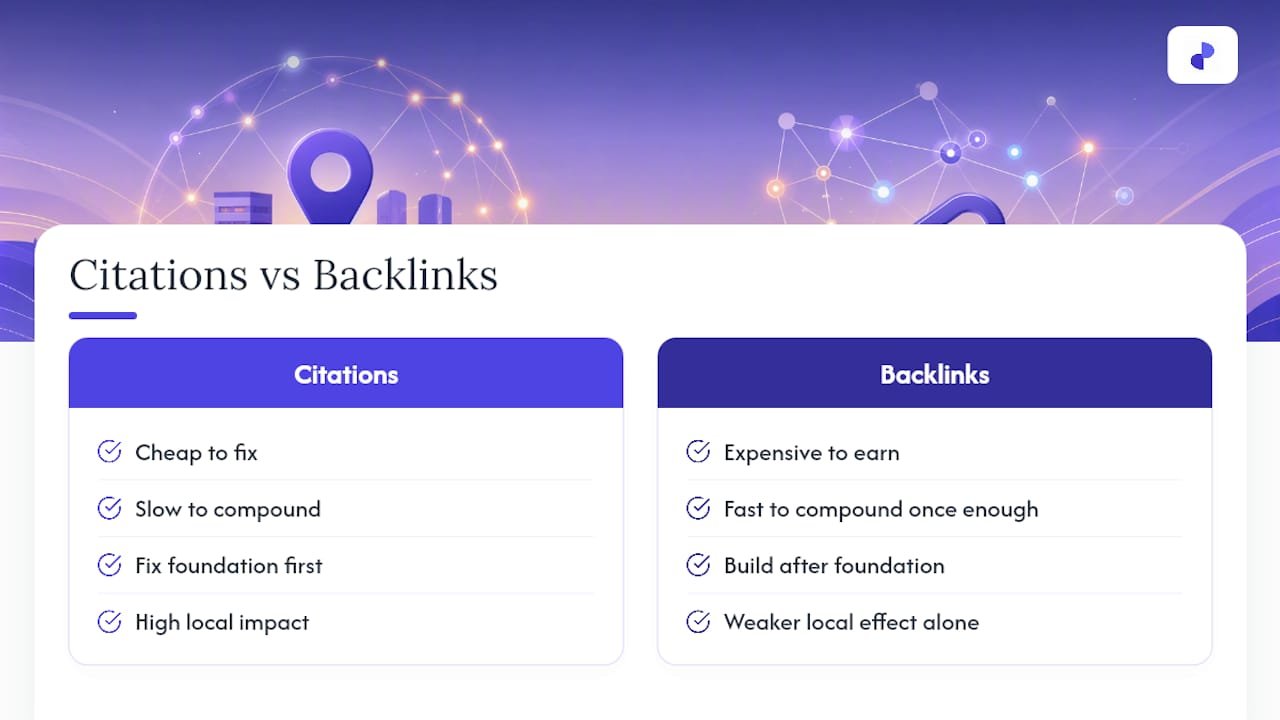
The mistake founders make most often is chasing backlinks before their basic presence is even consistent. A startup with three conflicting NAP listings and one great backlink from a tech blog is still going to underperform a competitor with fifty clean, consistent citations and zero backlinks, at least for anything with local intent. Get the foundation right before you spend on the harder, more expensive tactic.
What the research on AI visibility also suggests is that this old citation-versus-backlink split is starting to blur. Unlinked brand mentions now feed AI citation eligibility almost as much as links do. Treating citations as a “local SEO only” task, while backlinks get all the strategic attention, is a framework that’s aging out fast.
— Danish
A Faster Way to Get Your Citation Layer Right
If the audit above sounded like a weekend you don’t have, that’s the exact gap Startupsubmit fills. Instead of an automated bot blasting your listing to hundreds of low-quality directories, a dedicated team manually submits your startup to over 220 high-authority directories, checking for duplicates and writing each listing to fit the directory’s actual audience.
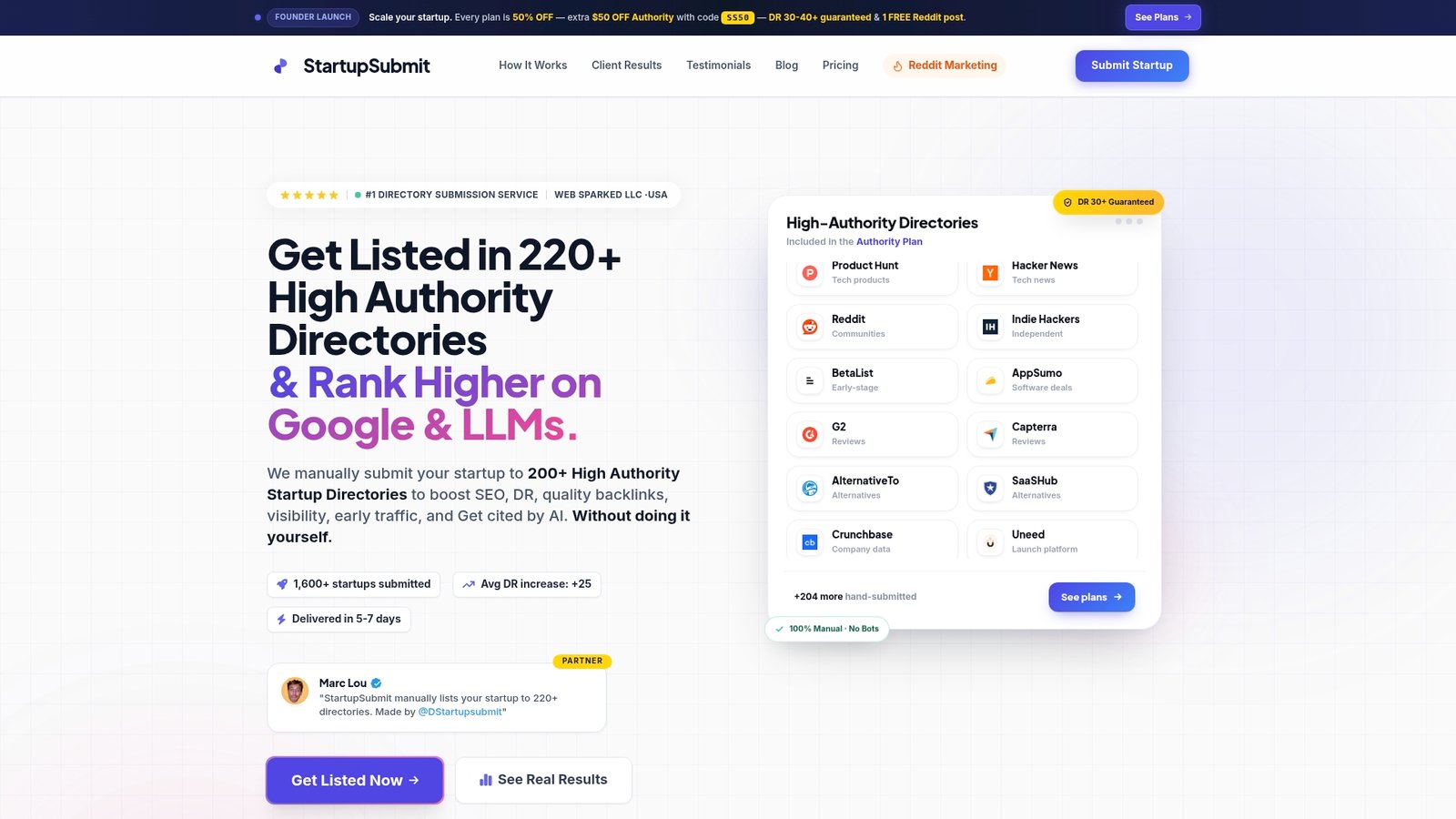
That manual approach is why the difference shows up fast: higher acceptance rates, cleaner NAP consistency across every listing, and a placement report you can actually verify. It’s the groundwork this whole article argues for, done once and done correctly instead of patched together over months.
- Manual submission to 220+ high-authority directories with duplicate checking built in
- Professionally written listings, not auto-generated templates that get rejected
- A full placement report so you know exactly where your brand now shows up
If you’re launching or relaunching and want your citation layer handled properly from day one, see how the directory submission service works and get your startup listed.
Sources
- Backlink — Wikipedia
- The difference between a link and a citation | Blue Corona
- What Are Backlinks In SEO and Why Are They Important? – Moz
- AI citations vs backlinks — Searchable
- AI citations vs backlinks: What you need to know • Yoast
FAQ
Is a citation the same thing as a backlink?
No. A citation is a mention of your business name, address, and phone number, while a backlink is a clickable hyperlink that passes site authority.
Do citations help with general organic rankings?
Citations mainly influence local pack and knowledge panel visibility rather than broad organic rankings, which respond more to backlinks and content relevance.
How many citations do I actually need?
Fewer, accurate, consistent listings outperform dozens of sloppy ones. Focus on Google Business Profile accuracy first, then major directories.
Can a nofollow backlink still help my SEO?
Yes. It won’t pass direct ranking authority, but it can drive referral traffic and contribute to brand mentions that support AI visibility.
Should startups prioritize citations or backlinks first?
Local or single-location businesses should fix citations first, while national or content-driven brands should prioritize editorial backlinks, and services like Startupsubmit help startups establish that citation foundation quickly.
Recommended
- StartupSubmit vs Outrank (2026): Honest Directory Submission Service Comparison
- Best Startup Directories 2026 — 15 Top Platforms + Full 220+ List
- StartupSubmit vs AIDirectories (2026): Honest Directory Submission Service Comparison
- StartupSubmit vs LaunchDirectories (2026): Honest Directory Submission Service Comparison