Startups: Earn High Authority Backlinks That Boost AI Visibility
A high-authority backlink is an editorial link from a relevant, trustworthy site that passes contextual credibility, drives referral clicks, and increasingly shapes how AI models describe your brand. It should lift rankings within one to three months and start sending traffic the moment it goes live. Domain Authority and Domain Rating help you screen candidates, but they’re proxies, not proof of value.
TL;DR:
- Linking pages must be indexed, placed within the article body, dofollow, and relevant to your audience to be truly valuable.
- Building backlinks through original data, journalist outreach, and PR campaigns offers the highest return for effort and long-term influence.
- Avoid low-quality tactics such as link farms, excessive outbound links, exact-match anchors, and sudden link velocity spikes to prevent penalties and dilution.
- Referral traffic begins immediately when links are published, but noticeable ranking improvements typically take one to three months to materialize.
- Directory submissions are useful for early discoverability and indexing but should be combined with more authoritative editorial and outreach strategies for sustainable growth.
Table of Contents
- What Counts as a High Authority Backlink?
- How Do Google and AI Tools Judge Link Quality?
- Which Tactics Actually Earn High-Authority Backlinks?
- How Do You Prioritize Which Link Prospects to Chase?
- How Long Does It Take to See Results From New Backlinks?
- What Backlink Tactics Should You Avoid Entirely?
- Where Do Directory Submissions Fit Into a Link Program?
- What I’d Prioritize If I Were Rebuilding a Link Profile Today
- How StartupSubmit Fits Into Your Link-Building Plan
- Sources
What Counts as a High Authority Backlink?
Forget the idea that a single number tells you whether a link is worth pursuing. A high-quality backlink blends four things: editorial intent (someone chose to link to you, nobody paid for placement), topical relevance (the linking page actually discusses your space), contextual placement (in the body copy, not buried in a footer), and enough visibility that real people or crawlers encounter it.
Metrics like DA, DR, and Ahrefs’ Authority Score are useful shorthand for site strength, but they measure link quantity and distribution, not fit. A site with a Domain Rating of 80 that publishes about celebrity gossip will do less for a fintech startup than a niche finance blog with a Domain Rating of 40. In fact, a relevant DA 40 backlink can outperform an irrelevant DA 80 link when the topic overlap is strong enough to keep both users and search algorithms engaged.
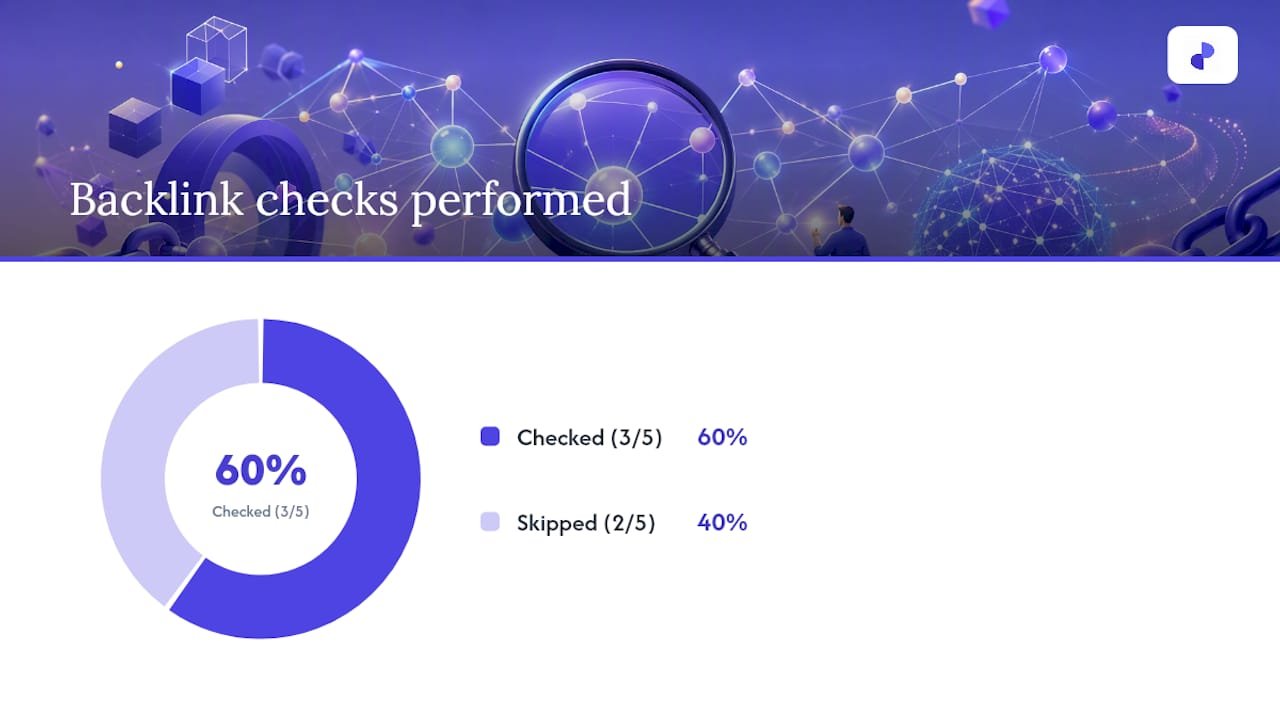
Before you count a link as “high authority,” run it through five checks:
- Indexed status: Is the linking page actually in Google’s index, or is it an orphan page nobody crawls?
- Editorial placement: Does the link sit inside the article body, not a sidebar widget or a rotating footer badge?
- Link attribute: Is it dofollow, or does a nofollow/sponsored tag limit the authority it passes?
- Outgoing link count: Does the page link out to five other sites, or fifty? Heavy link pages dilute equity across every outbound URL.
- Topical relevance: Would a reader interested in your product actually land on that page organically?
Two of those five checks (outgoing link count and topical relevance) get skipped constantly, mostly because they take more effort than pasting a URL into a metrics tool. Skip them anyway and you’ll build a backlink profile that looks strong in a dashboard and does nothing for rankings.
How Do Google and AI Tools Judge Link Quality?
Search engines don’t grade links on a curve. Google looks at where a link sits, how it got there, and what the surrounding content says. A link embedded naturally in a paragraph about your industry carries more weight than the same URL parked in an author bio or a “recommended tools” sidebar that never changes. Placement signals intent, and intent is what separates an editorial endorsement from a favor.
Anchor text still matters, but less bluntly than it did a decade ago. Over-optimized exact-match anchors (“best CRM software”) repeated across dozens of links now read as manipulation. A natural mix of branded, partial-match, and generic anchors mirrors how humans actually link to things.
Dofollow links pass more direct ranking signal than nofollow ones, but nofollow mentions still matter for a reason many SEOs overlook: they build brand visibility, referral traffic, and the kind of repeated mention that feeds AI training and retrieval systems. This is where 2026’s biggest shift shows up. Large language models like the ones behind ChatGPT and Perplexity increasingly rely on co-citation, meaning your brand gets mentioned near other trusted names, whether or not a clickable link exists. Being named alongside category leaders in a roundup or comparison piece can shape how an AI model summarizes your product, even without a single dofollow link attached.
Quick reference on link signals:
- In-content editorial placement outranks sidebar or footer links
- Dofollow passes more direct authority than nofollow, but both can drive brand mentions
- Pages with dozens of outbound links dilute the value each one passes
- Older, established referring domains tend to carry more trust than brand-new sites
Pro Tip: Check how many other links sit on the page before you celebrate a placement. A guest post buried among 40 outbound links in a footer directory is worth a fraction of one clean, in-content mention on a page with five outbound links total.
Timelines matter here too. Once a link goes live, crawling and indexing typically takes two to four weeks, with ranking movement showing up over the following one to three months. Referral clicks, by contrast, start the day the page publishes.
Which Tactics Actually Earn High-Authority Backlinks?
Ranked by typical return relative to effort, here’s the order worth working through:
-
Original data and research. Nothing earns unsolicited links faster than a proprietary statistic nobody else has. Run a small survey, mine your own product data, or aggregate public numbers into a fresh chart. Minimum resource need: one analyst and a week of data cleanup. Expected lead time: four to eight weeks before journalists and bloggers start citing it. Risk: low, assuming your methodology holds up to scrutiny.
-
Journalist outreach and HARO-style platforms. Outreach platforms connecting journalists to sources still generate links, but only for people who respond fast with genuinely original expertise, not generic commentary. Minimum resource need: a subject-matter expert who can turn around a quote in hours, not days. Lead time: one to three weeks per placement. Risk: low, though volume is unpredictable.
-
Digital PR campaigns. Bigger than a single data point, this means building a full story (survey results, an interactive tool, a controversial take) and pitching it to multiple outlets at once. Minimum resource need: a writer, a designer for visuals, and a PR contact list. Lead time: six to twelve weeks. Risk: moderate. A weak story wastes outreach hours with nothing to show.
-
Guest content on topically relevant sites. Guest posting still works, but only when the target site’s audience genuinely overlaps with yours. Minimum resource need: one strong draft plus a pitch email. Lead time: two to six weeks depending on editorial queues. Risk: moderate if you chase volume over fit. A guest post on an unrelated site does almost nothing for rankings even with a DA in the 60s.
-
Broken link and resource page outreach. Find dead links on resource pages in your niche, then offer your own live page as the replacement. This tends to move faster than new-asset outreach because you’re solving a problem the site owner already knows exists, rather than asking them to cover something new. Minimum resource need: a crawler tool and an already-published replacement asset. Lead time: one to four weeks. Risk: low.
-
Reclaiming unlinked brand mentions. Search your brand name in Google News or a mentions tool, find articles that name you without linking, and ask politely for the link to be added. Minimum resource need: nearly none beyond a few emails. Lead time: days to two weeks. Risk: very low, though success rates vary by publication.
-
Citation magnets: free tools, templates, calculators. Build something genuinely useful (a free ROI calculator, a swipe file, a benchmark template) and let it earn links passively over months. Minimum resource need: a developer or no-code tool builder. Lead time: slow burn, often three to six months before links accumulate. Risk: low, but requires upfront build cost.
-
Branded or named methodologies. Naming your own framework or process (think “the Jobs to Be Done framework” or “the AIDA model”) gives writers a citable concept instead of a vague concept. Minimum resource need: none beyond clear writing and consistent use. Lead time: months, since it depends on adoption. Risk: none, but payoff is slow and compounding.
-
Affiliate and incentive programs. These can generate mentions and links as a byproduct of partner promotion, but they should augment the tactics above, not replace them. Minimum resource need: a commission structure and tracking setup. Lead time: ongoing. Risk: moderate if partners use manipulative anchor text or low-quality placements.
Pro Tip: When pitching original data to journalists, package the single most surprising number as a standalone sentence at the top of your email, not buried in a linked PDF. Reporters on deadline copy what’s easiest to grab, and a quotable stat in the email body gets used far more often than an attachment they have to open.
How Do You Prioritize Which Link Prospects to Chase?
Scoring prospects on a simple weighted rubric keeps a team from chasing every domain with a high DR and ignoring the ones that will actually move rankings. A workable formula weighs six factors:
- Topical relevance (30%): Does the site’s core content overlap with your industry?
- Editorial quality (20%): Does the site publish original reporting or thin aggregated content?
- Traffic and visibility (20%): Does the page get organic search traffic, or is it a ghost URL?
- Placement likelihood (15%): Will you land an in-content link, or just a bio mention?
- Outgoing link count (10%): How many other links dilute the page’s authority?
- Contactability (5%): Is there a real editor or writer you can reach directly?
Run every prospect through those six filters before you spend outreach hours on it. A domain scoring high on DR but low on relevance and contactability should sit at the bottom of your list, no matter how good it looks in an export.
Outreach hygiene rules worth following every time:
- Contact the actual byline writer or section editor, never a generic “info@” inbox.
- Personalize the first line with something specific to their recent work, not a template swap of their name.
- Lead with value (a stat, a quote, a tool) before mentioning your own site at all.
- Follow up once, politely, after five to seven business days, then let it go.
Prospecting and outreach tools like Ahrefs, Moz, and Semrush are worth the subscription cost for exporting referring domains, outgoing link counts, and traffic estimates in bulk. But treat the export as a first filter, not a final answer. Tools should feed human judgment, meaning someone still needs to open the page, read the surrounding content, and confirm the fit before an email goes out.
How Long Does It Take to See Results From New Backlinks?
Expect a staged timeline, not an overnight jump. Crawling and indexing of a new link generally takes two to four weeks. Measurable ranking movement for target keywords tends to show up over the following one to three months, and referral traffic starts the moment someone clicks the link, often the same day it publishes.
| Metric | Time to first signal | Recommended tool |
|---|---|---|
| Referral sessions | Immediate | Google Analytics |
| Target keyword rankings | 1 to 3 months | Ahrefs or Semrush rank tracker |
| Referring domains count | 2 to 4 weeks (after indexing) | Ahrefs Site Explorer or Moz Link Explorer |
| Branded mention growth | 4 to 8 weeks | Google Alerts or a mentions tool |
| Co-citation signals | 2 to 6 months | Manual AI query testing (ChatGPT, Perplexity) |
Referring domain count matters more than total backlink count. A hundred links from ten unique domains carries less weight than fifty links from fifty different domains, since search engines discount repeat links from the same source. Branded mention growth and co-citation signals move slower, but they’re the metrics that increasingly determine whether an AI model surfaces your brand when someone asks for a recommendation in your category.
What Backlink Tactics Should You Avoid Entirely?
Paid link schemes, private blog networks, and bulk link-selling services still show up in cold outreach emails every week, and they still carry real penalty risk. A few red flags to watch for:
- Link farms and PBNs: Clusters of sites with thin content, no real traffic, and suspiciously similar hosting or design templates.
- High outgoing-link pages: Any resource page linking to 50+ external sites is a marketplace, not an editorial recommendation.
- Exact-match anchor text spikes: If more than a small share of your new links use the identical commercial keyword as anchor text, that pattern reads as manufactured to Google’s algorithms.
- Sudden velocity jumps: Fifty new links in a week after months of none looks purchased, even when it isn’t.
A diversified link profile, mixing high, medium, and modest-authority sites, holds up better over time than a portfolio concentrated entirely on top-tier domains, partly because it mirrors how links accumulate naturally.
If you inherit a toxic backlink profile, audit it in Ahrefs or Google Search Console, request removal directly from webmasters first, and reserve Google’s disavow tool for links you can’t get taken down and that show clear spam patterns.
Pro Tip: Paid placement pages often disclose themselves in the fine print. Search for phrases like “sponsored,” “contributed content,” or “advertisement” in the page footer before you count a link as editorial.
Where Do Directory Submissions Fit Into a Link Program?
Curated directory listings won’t replace a data-driven PR campaign, but they solve a different problem: early discoverability before you have the traffic or reputation to attract editorial coverage. StartupSubmit’s manual approach, submitting startups to over 220 vetted directories with duplicate checking and custom listing copy, has produced results including a reported 338% increase in organic traffic for one client within days of launch.
Where directory placements genuinely help:
- Early citation building for a brand with almost no existing footprint
- Faster indexing since directories are typically crawled frequently by search engines
- Co-citation exposure, appearing near established startups and tools that AI models already recognize
- A foundation for PR, since journalists and bloggers sometimes pull sources from active directory listings
Where they fall short: directories can’t substitute for a genuine editorial mention in a publication your customers already read. Treat them as the floor of a link program, not the ceiling, and layer original data, outreach, and citation magnets on top once the foundation is set.
What I’d Prioritize If I Were Rebuilding a Link Profile Today
Most link-building advice still treats backlinks as a rankings lever and stops there. That’s outdated thinking. Co-citation, being named near trusted brands in AI-generated answers, now matters almost as much as the dofollow link itself, and it rewards a different kind of asset: something quotable, something with a name attached, something a journalist or an AI system can point to without needing to click through.
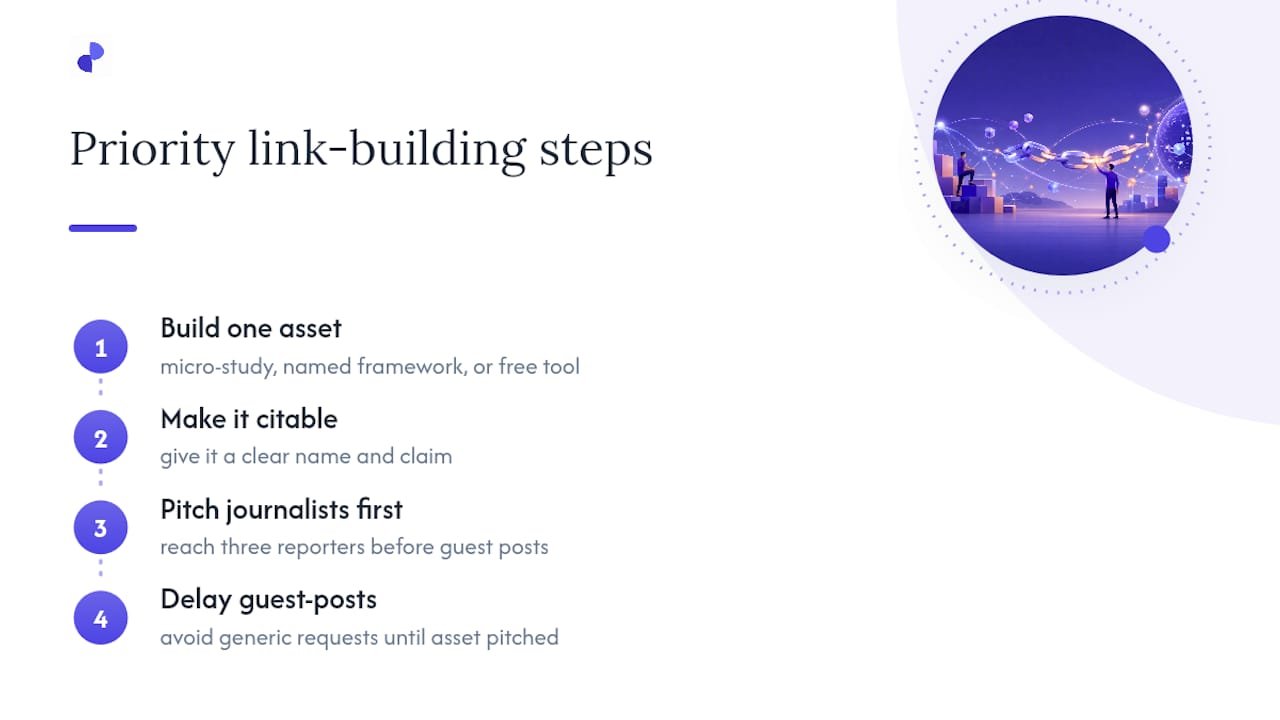
If I had one action to recommend this week, it’s this: build one small, citable asset (a micro-study, a named framework, a free tool) and pitch it to three journalists before you send a single generic guest-post request. Editorial links still matter, but the brands showing up in AI answers a year from now are the ones building citation magnets today, not the ones still chasing DA thresholds on a spreadsheet.
— Danish
How StartupSubmit Fits Into Your Link-Building Plan
If you’re a founder still building your first wave of backlinks, StartupSubmit gets you cited across 220+ vetted directories with a manual process, not a bot dumping your URL into every list it can find.
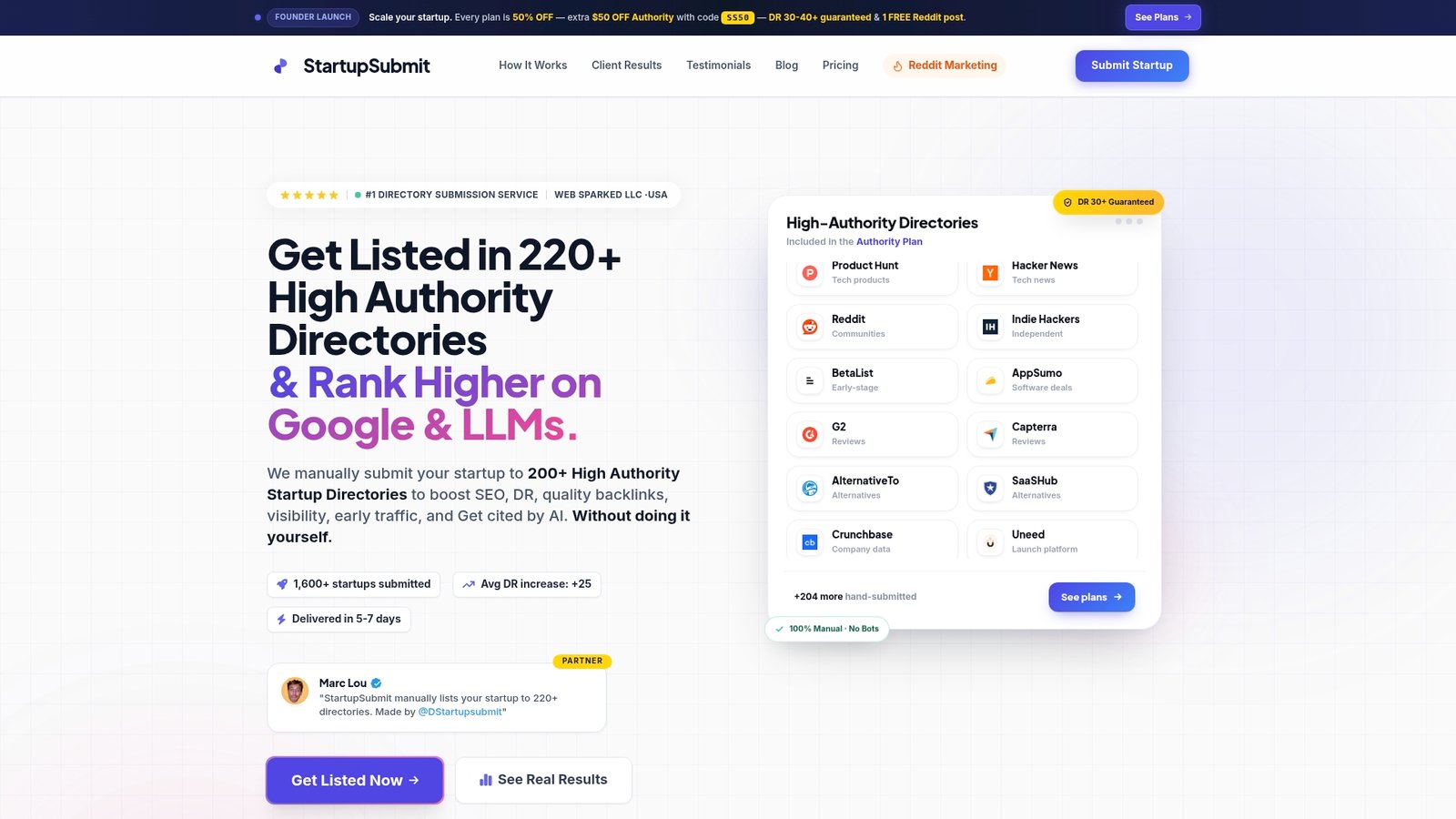
Submissions typically include duplicate checking, category selection, and custom listing copy written by an actual person, which is the kind of editorial care that can separate a placement search engines trust from one that reads as spam. This approach fits best in the early stage, before there is significant traffic or reputation to land unprompted press coverage. Once your directory footprint is established, layer in journalist outreach and original data campaigns on top of it rather than replacing it.
Compare your options directly on the StartupSubmit vs. LaunchDirectories breakdown if you’re weighing services, or browse the full list of 220+ directories to see where your startup could show up first. When you’re ready to move, submit your startup and get your listings placed by a real team, not an automated queue.
Sources
- 7 Strategies to Get High Quality Backlinks in 2026
- What makes a high-quality backlink? | Help Center – Ahrefs
- High DA — Complete Guide 2026 | Orbink