How to Get Backlinks for a Startup (Without a Big Budget or PR Team)
Most startups spend months building a great product — then watch it sit invisible on page four of Google. The reason is almost always the same: not enough backlinks. If you’re trying to figure out how to get backlinks for a startup, you’re already asking the right question. Backlinks are the single strongest signal Google uses to decide whether your site deserves to rank. Without them, your SEO stalls before it starts.
The challenge is that most link-building advice assumes you already have traffic, a content team, or a PR budget. Early-stage founders rarely have any of those. What you need are strategies that actually work from day one — and that’s exactly what this guide covers.
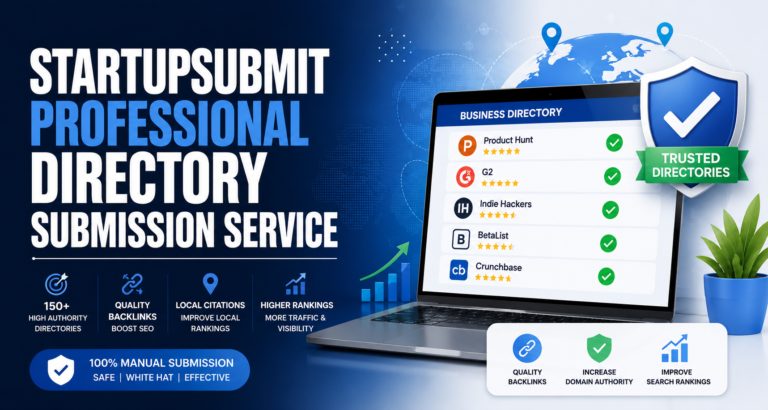
Services like StartupSubmit help founders solve the cold-start problem by submitting their product to 250+ high-authority directories manually, giving new sites an immediate foundation of legitimate backlinks before organic growth kicks in. But there are also plenty of tactics you can run yourself. Here’s how to approach all of it.
Why Backlinks Matter More for Startups Than Anyone Else
How Backlinks Signal Trust to Google
Google treats backlinks like votes of confidence. When a high-authority site links to yours, it tells Google that your content is credible and worth surfacing. One strong backlink from a trusted domain can move the needle more than dozens of pages of thin content.
For startups specifically, backlinks solve a structural problem. New domains start with zero authority. Without external links pointing at your site, Google has no signal to rank you — even if your product is genuinely excellent. Consequently, building backlinks early is not optional. It’s foundational.
The DR Baseline Problem New Startups Face
Domain Rating (DR) is an Ahrefs metric that measures the strength of a website’s backlink profile on a scale from 0 to 100. Most new startups launch with a DR of 0 to 5. To rank competitively for even medium-difficulty keywords, you typically need a DR above 20 to 30.
According to Moz’s explanation of Domain Authority, new sites with few or no external links are treated with much lower trust signals, regardless of content quality. Closing that gap quickly requires a deliberate startup backlinks strategy — not just waiting for organic links to arrive.
The 8 Best Ways to Get Backlinks for a Startup
1. Submit to Startup Directories (The Fastest Way to Start)
Directory backlinks are the lowest-friction way to build your first 50 to 100 backlinks. Hundreds of legitimate directories exist specifically for SaaS products, AI tools, and early-stage startups. Many of them carry strong domain authority and pass genuine link equity.
The challenge is volume. Submitting to 200+ directories manually takes weeks of repetitive work. Founders who go through this process find that it eats time they should be spending on product or customers. That’s why many teams offload it early. For reference, check out this startup directory submission guide to understand the full scope of what’s involved.
2. Get Listed on Product Hunt and Indie Hackers
Product Hunt and Indie Hackers are two of the highest-value platforms a startup can get listed on — both for backlinks and for visibility. Product Hunt carries a DR above 90. A listing there is one of the strongest directory backlinks available to any early-stage product.
Indie Hackers is equally valuable for SaaS and bootstrapped founders. Both platforms allow you to build a product profile, post updates, and engage with an active founder community. Beyond the SEO benefit, these platforms send real traffic. Check this guide on the best startup directories to submit to for a broader list of high-authority platforms worth targeting.
3. Use HARO and Journalist Outreach
HARO (Help a Reporter Out) connects journalists with expert sources. When a reporter publishes your quote, you typically earn a backlink from a news or media domain — often with very high authority.
Set up HARO alerts for your industry and respond quickly with specific, data-backed insights. Generic responses rarely get picked up. Journalists want founders who speak plainly and can provide a real perspective on a trend or problem. UK-based founders can also explore similar platforms like Sourcebottle and ResponseSource for regional media coverage.
4. Write Guest Posts for SaaS and Tech Blogs
Guest posting remains one of the most effective ways to earn editorial backlinks. Find SaaS blogs, startup newsletters, and industry publications that accept contributor content. Pitch a specific angle — not just “I want to write something” — and make sure the post delivers genuine value to their audience.
The best guest posts educate first and mention your product only when it’s directly relevant. Focus on getting one or two guest posts published per month in your niche. Over time, this compounds. According to Ahrefs’ guide to link building, editorial links from relevant domains consistently rank among the highest-impact link types for growing organic traffic.
5. Create Link-Worthy Resources (Original Data, Tools, or Guides)
Publishing original research or a genuinely useful free tool is one of the few tactics that earns backlinks passively. If you survey your users, compile industry stats, or build a free calculator relevant to your niche, other bloggers and journalists will link to it naturally over time.
This strategy takes more upfront effort, but the ROI is long-term. A single data-driven post can accumulate dozens of backlinks over twelve to twenty-four months without any active outreach. Australian and Canadian SaaS founders have had particular success with region-specific benchmark reports that get picked up by local tech media.
6. Build Backlinks Through Partnerships and Integrations
Every tool you integrate with is a potential link source. When you build an integration with another SaaS product, reach out and ask to be included on their integrations page. Similarly, if you partner with an agency or reseller, ask them to mention you on their site.
These partnership backlinks often come from high-DR domains and require no content creation. They also tend to be contextually relevant — Google treats relevance as a quality signal alongside authority. Most SaaS teams discover that a handful of integration-page backlinks can move their DR faster than months of directory work alone.
7. Get Featured in “Best of” and Alternatives Lists
Search Google for “best [your category] tools” or “[competitor] alternatives.” You’ll find dozens of listicles ranking in the top ten that could include your product. Reach out to the authors directly and make a clear case for why your tool belongs on the list.
Keep the pitch short, specific, and founder-to-founder in tone. Include a free trial offer or a brief demo link. Many bloggers running these comparison posts actively want to keep their lists updated. Understanding how Google evaluates backlink quality helps clarify why these contextually relevant placements carry such weight in your overall profile.
8. Use a Startup Directory Submission Service
For founders who want results fast without the manual grind, a directory submission service handles the entire submission process at scale. StartupSubmit’s data across 1,500+ startup submissions shows an average Domain Rating increase of +25 points within the first few months — driven almost entirely by directory backlinks from high-authority platforms like G2, BetaList, Capterra, AlternativeTo, and Crunchbase.
The key distinction is manual versus automated. Automated submission tools often produce low-quality or duplicate listings that Google discounts. Manual submissions — where a human verifies each listing — result in clean, accepted profiles that pass genuine link equity. Plans start at $99 as a one-time payment, and results typically arrive within 7 to 14 days, making it one of the fastest ways to establish a backlink foundation.
How Many Backlinks Does a Startup Actually Need?
There’s no universal number, but a useful benchmark is reaching a DR of 20 to 30 before targeting competitive keywords. To understand what that requires in your specific niche, check this guide on how to increase your Domain Rating.
In practical terms, most new startups benefit from:
- 50 to 100 directory backlinks in the first 30 to 60 days
- 5 to 10 editorial or guest post links over the first six months
- Ongoing link acquisition at a pace of 10 to 20 new backlinks per month
Quality matters more than quantity. Ten backlinks from DR 50+ domains outperform 200 links from low-authority or spammy sites.
What to Avoid: Backlink Tactics That Can Hurt Your Startup
Not all backlinks help. Several practices actively damage your site’s standing with Google:
- Buying links in bulk from link farms — Google’s spam algorithms detect these patterns quickly
- Private Blog Networks (PBNs) — high risk of manual penalty
- Irrelevant directory spam — submitting to hundreds of unrelated directories adds noise, not signal
- Exact-match anchor text overuse — a backlink profile filled with “best SaaS tool” anchors looks manipulative
The safest approach is building links that a human editor would approve. If a link placement feels artificial, Google’s systems are increasingly likely to agree.
How to Track Your Startup’s Backlink Growth
Tracking your backlinks is as important as building them. Use Semrush’s backlink tracking tools or Ahrefs to monitor new links, lost links, and changes to your DR over time.
Key metrics to watch:
- Domain Rating (DR) — overall backlink profile strength
- Referring domains — number of unique sites linking to you
- New vs. lost links — shows whether your profile is growing or eroding
- Anchor text distribution — confirms your link profile looks natural
Set a monthly review cadence. Even fifteen minutes of backlink monitoring per month gives you enough data to adjust your strategy and catch any toxic links before they cause damage.
Frequently Asked Questions
How do I get backlinks for a new startup with no traffic?
Start with startup directories and platforms like Product Hunt, BetaList, and Indie Hackers. These accept new products regardless of traffic levels and provide immediate, legitimate backlinks. Directory submissions are the standard starting point for early-stage startup SEO backlinks.
How long does it take to see results from backlink building?
Most founders see measurable DR increases within 30 to 90 days of consistent backlink building. Directory backlinks tend to index and register faster than editorial links. Services that complete manual submissions report visible results in as little as 7 to 14 days.
Are directory backlinks good for SEO?
Yes — when the directories are legitimate, high-authority, and relevant to your industry. Platforms like G2, Capterra, Product Hunt, and AlternativeTo pass strong link equity. Low-quality link directories with no editorial standards are worth avoiding.
What is a good Domain Rating (DR) for a startup?
A DR of 20 to 30 is a practical early target. At that level, you can begin competing for long-tail keywords in your niche. Most established SaaS competitors operate between DR 40 and DR 70, so closing the gap incrementally is the realistic approach.
How many backlinks does a startup need to rank on Google?
It depends on your niche and keyword competition. For low-competition keywords, even 20 to 30 quality backlinks can be enough to rank on page one. Competitive keywords may require hundreds of referring domains. Focus on DR growth as a proxy metric rather than raw backlink count.