Founders: List Your SaaS to Get Activated Users in 10–25 Directories
Pick a targeted shortlist of directories that actually match your ideal customer and the intent behind that platform, then build one compact listing kit you can adapt across all of them. Submit with UTMs on every link so you can trace signups back to the source, and give each listing four to eight weeks before judging it on activated users rather than raw clicks. Your first move today: write a one-line positioning statement and set up a UTM-tagged landing page before you touch a single submission form.
TL;DR:
- Building a customized listing kit with positioning, assets, proof, and UTMs saves time and ensures consistency across top directories.
- Prioritize directories that match your target customer and product type, and use a spreadsheet to evaluate their relevance and visibility features before submitting.
- Wait four to eight weeks to assess directory performance based on activated users and qualitative signals, rather than clicks or impressions alone.
- Manual, tailored submissions yield higher acceptance and relevance than automated bulk tools, especially for early-stage startups with limited time.
- Services like Startupsubmit offer human-reviewed, targeted listings across over 220 directories, ideal for broad but quality coverage without the grind.
How to List a SaaS Startup: Prepare Your Listing Kit First
Most founders skip straight to submission forms and pay for it later with rejected listings or copy that converts nothing. A listing kit fixes that. Build it once, reuse it everywhere, and you cut submission time by half while keeping every profile consistent.
Here’s what belongs in it:
- A one-line positioning statement naming your ideal customer and the specific outcome you deliver, written in buyer language rather than internal jargon.
- A short description (50 to 150 words) and a longer version for directories that support extended profiles.
- A square logo in PNG or SVG, two to four screenshots, and a short demo GIF or video if you have one.
- A founder bio or LinkedIn link, since several directories ask for a named human behind the product.
- Proof elements: user counts, integration partners, a short testimonial, or a recognizable customer name.
- A dedicated landing page with UTMs baked into every directory link, so traffic from Directory A never gets confused with traffic from Directory B.
Guides that cover listing a SaaS business consistently point to the same failure mode: founders who skip positioning and assets end up with generic listings that neither convert nor rank. Do the kit once and every submission afterward takes minutes, not hours.
Which Directories Should You Actually List On?
Not every directory does the same job, and treating them as interchangeable is the fastest way to waste a weekend. Product Hunt exists for launch-day attention and early adopters. G2 and Capterra exist for buyers already comparing tools. Wellfound and Crunchbase exist for hiring and investor visibility. GitHub and Hacker News exist for developer credibility and technical validation, according to platform recommendations for early-stage startups.
Score each candidate directory against four questions before you submit:
- Does its audience match your ideal customer profile, or is it a generalist list that will not send anyone likely to buy?
- Does the category fit your product precisely, rather than forcing you into an adjacent bucket that misrepresents what you sell?
- Does it offer visibility mechanics worth chasing, like featured slots, a newsletter mention, or a badge you can display?
- Can users leave reviews there, and is the effort to submit proportional to the traffic or authority it realistically sends?
Pro Tip: Build a spreadsheet with those four columns before you submit anywhere. It takes twenty minutes and stops you from wasting a submission on a directory that will never send a qualified visitor.
Start with a targeted shortlist of 10 to 25 listings, mixing a few broad, high-authority directories with several niche ones your buyers actually browse. Practical playbooks for listing a SaaS business recommend exactly this range instead of blasting hundreds of low-relevance sites that dilute your time and rarely convert.
Step-by-Step: How to Submit a Correct, High-Quality Listing
A rejected or half-finished listing wastes the review cycle and sometimes the goodwill of a directory’s moderators. Follow the same five steps every time and you’ll avoid both.
- Claim or create the profile and verify your contact details. Some directories require an email match to your company domain, so use a work address, not a personal one.
- Select the precise category, then paste your one-line positioning first. Category accuracy affects whether the right buyers ever see you, and leading with positioning stops reviewers from guessing what you do.
- Add the short description, three feature-as-result bullets, your assets, and any proof items. Write each bullet as an outcome, not a feature name: “cuts onboarding time in half” beats “onboarding module.”
- Set a CTA that matches the platform’s audience and apply consistent UTMs. A developer-heavy directory might warrant a “view docs” CTA, while a buyer-focused one warrants “start free trial.”
- Complete any available verification and save screenshots of the live listing. Some marketplaces support a read-only billing connection through Stripe, Paddle, or Chargebee that pulls trailing revenue metrics, and this kind of “Revenue Verified” signal accelerates buyer trust on platforms where it’s offered.
Common submission errors worth flagging separately:
- Pasting the exact same description everywhere, which reads as lazy to both moderators and buyers.
- Choosing a CTA that doesn’t match the visitor’s intent, like sending Hacker News traffic straight to a demo booking form.
- Forgetting UTMs on even one listing, which breaks your ability to compare channels later.
How to Measure Whether a Directory Listing Actually Works
Clicks feel good and mean almost nothing on their own. Track four numbers per directory instead: clicks, signup conversion rate, activation rate (the percentage who hit first value), and total activated users. That last number is the one that tells you whether a listing is worth keeping.
- Tag every directory link with a unique UTM so traffic never gets mixed up in your analytics.
- Add a one-question “how did you hear about us” field to onboarding when you can, since not every visitor arrives through a trackable link.
- Give each listing four to eight weeks before judging it, since directory traffic often trickles rather than spikes.
- Weigh qualitative signals too: a demo request or partnership inquiry from a niche directory can matter more than fifty low-intent clicks from a generalist one.
Guides on treating startup listings as a channel frame this correctly: a directory earns its place in your stack when it produces activated users or high-value leads on a consistent basis, not when it produces impressive-looking traffic that never converts. Tools built for content analytics in SaaS growth can help you attribute which channels actually move users toward that first-value moment, which is the number that should decide whether you keep submitting to a given directory or drop it.
Mistakes That Waste a Listing, and Fixes That Improve It
The single biggest waste of effort is submitting before your positioning is settled. If you rewrite your tagline three weeks after listing on fifteen directories, you now have fifteen stale profiles to fix by hand.
Avoid these:
- Identical copy across every directory, which signals low effort to both moderators and prospects.
- Listing before your one-line positioning is locked, guaranteeing rework later.
- Skipping UTMs, which makes every downstream measurement decision a guess.
- A CTA mismatched to the platform, like pushing a paid trial on a developer-only community.
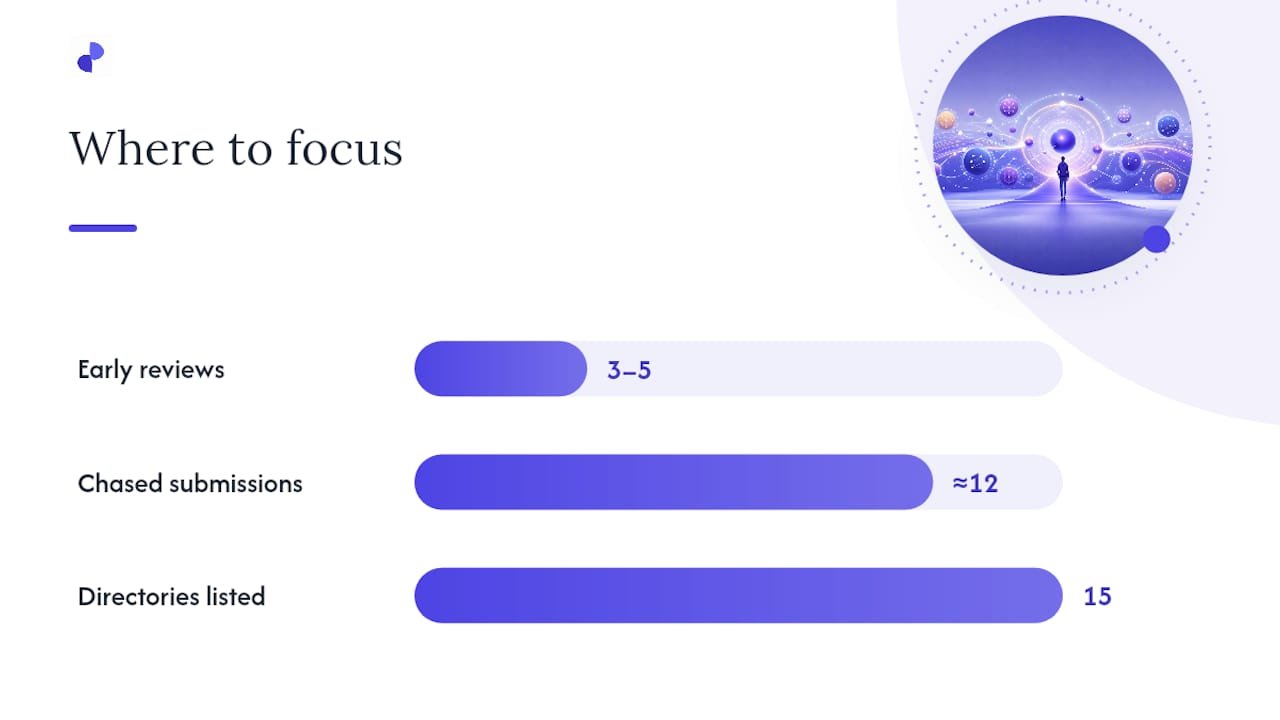
Pro Tip: Request featured placement wherever it’s offered, refresh your screenshots right after a product update or launch, and prioritize collecting three to five early reviews over chasing a dozen new submissions.
One nuance worth flagging: if public exposure on a marketplace could unsettle your team or tip off competitors before you’re ready, some platforms support stealth or unlisted submission modes. Use them when visibility would cost you more than it earns.
Why Manual Listings Outperform Automated Blasts
Automated submission tools promise scale, but scale isn’t the bottleneck for most early-stage founders. Acceptance is. A bot filling out fifty forms with the same generic paragraph gets flagged, rejected, or buried in low-quality categories, because most directories moderate for relevance and accuracy, not just volume.
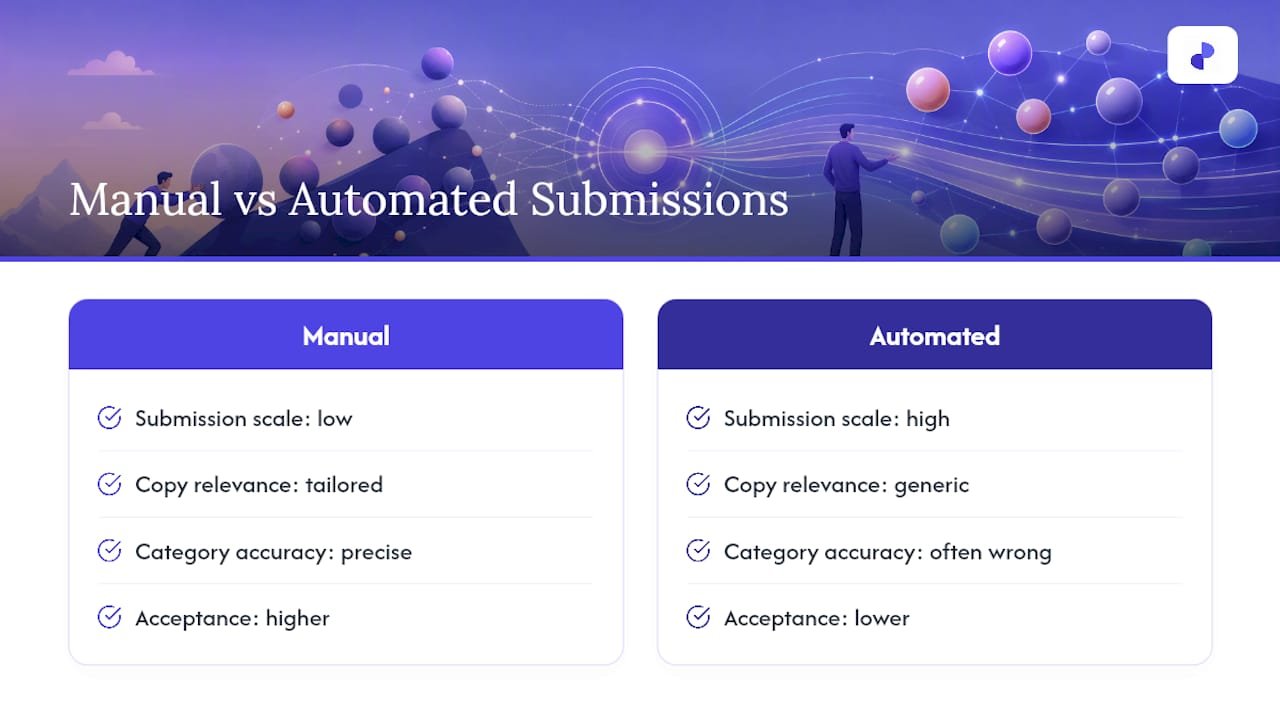
A broad but realistic view of directory marketing puts this in context: directories deliver steady referral traffic, some credibility, and occasionally search visibility, but they’re a supporting channel, not your growth engine. That means the return on each listing depends heavily on whether the copy and category are right the first time, since you don’t get many free swings at a directory’s review queue. Manual, tailored submissions consistently earn higher acceptance rates than automated ones for exactly that reason. Founders who are strapped for time, or who want a broad rollout with tracked, reported results, tend to be the ones who eventually hand this off to a SaaS directory submission service rather than doing all 25 by hand.
A Concise Option: What Startupsubmit Offers
Startupsubmit is the alternative to grinding through submission forms one by one: a team of SEO professionals manually writes and places your listing across 220-plus high-authority directories, checking for duplicates and picking the right category so your profile doesn’t get buried or rejected. No bots, no copy-paste blasts. Every submission gets a human review before it goes live, and you get placement reporting so you can see exactly where your listing landed.
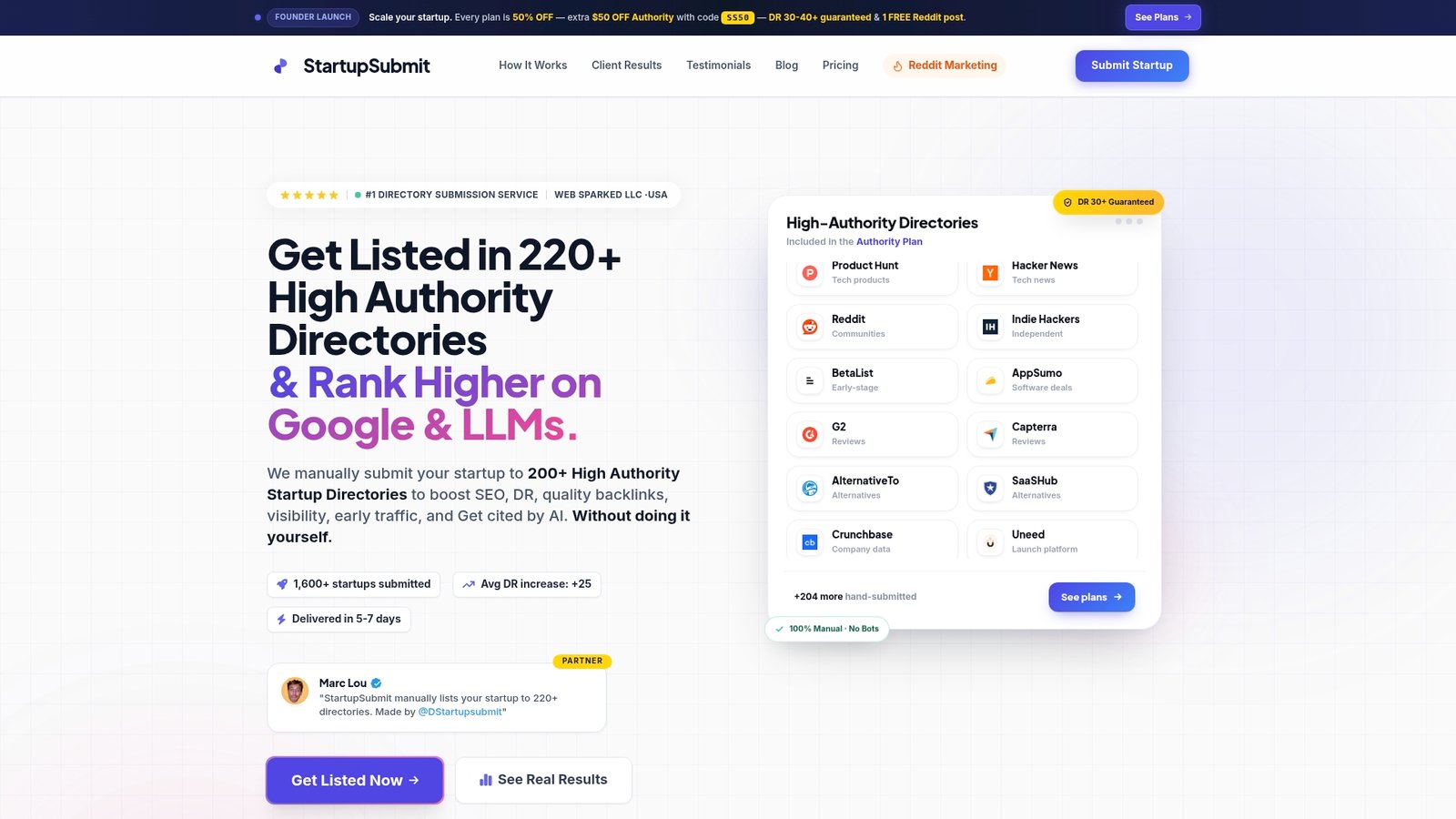
This fits best if you’re short on the hours it takes to research multiple directories properly, or if you want broader coverage without sacrificing acceptance quality. The Starter, Growth, and Authority plans cover different scopes of submission volume and reporting depth, starting at $199 one time for the Starter tier. If Reddit visibility matters for your launch, targeted Reddit posts are available separately at $100 per post. Check the plan pages for the scope that matches where you are right now, then decide if handing off the legwork is worth the time it buys back.
Sources
- Startup Directory Submission Checklist (Get Early Users)
- List Your Startup in Directories: Submit Checklist & Lasting Traffic
- Where to List Your Startup for Free in 2026 – Startupik
- KeyQuire — Sell SaaS
FAQ
How Many Directories Should a New SaaS Startup List On?
Start with 10 to 25 directories that match your ideal customer and category, rather than submitting to hundreds indiscriminately. Playbooks for listing a SaaS business recommend this range specifically because it’s wide enough to test performance but narrow enough to track properly.
What Should Go in a SaaS Directory Listing?
A strong listing needs a one-line positioning statement, a short description in buyer language, a logo, two to four screenshots, and proof elements like user counts or integrations. A dedicated landing page with UTMs lets you trace which directory actually sends activated users.
How Long Should I Wait Before Judging a Directory’s Performance?
Give each listing four to eight weeks before deciding whether to keep it. Judge it on activated users and qualitative signals like demo requests, not on raw click volume.
Does Startupsubmit Handle the Whole Submission Process?
Yes. Startupsubmit’s team manually writes, categorizes, and submits your listing across 220-plus directories, checking for duplicates along the way. Pricing starts at $199 one time for the Starter plan, with Growth and Authority tiers covering broader scope and reporting.
Is It Worth Verifying Revenue or Metrics on a Listing?
Where a platform supports it, connecting billing tools like Stripe or Paddle for verified revenue metrics speeds up buyer or partner trust considerably. It’s most relevant on marketplaces and investor-facing directories rather than general launch platforms like Product Hunt.