Software Review Sites List: 10 Platforms Compared for 2026
You hit the front page, screenshots go in Slack, traffic spikes before lunch, and by Thursday the graph is flat again. That's not a failed launch. That's what a one day channel does.
Review directories work differently. A buyer who finds you on a category page, a comparison page, or an alternatives to search six months later didn't come for novelty. They're shortlisting, checking pricing, reading complaints, and deciding who gets a demo.
That behavior isn't new. In a 2014 survey of 386 B2B software buyers covered in the Upland Software B2B online review study, 75% consulted online reviews before making a purchase and 63% used reviews when creating a shortlist. Among buyers who used reviews, 78% said they were satisfied with their eventual purchase.
Use this software review sites list as a post submission guide, not a trophy list. I judge each platform on what happens after you hit submit, how fast moderation moves, whether it feeds comparison searches, and whether an early stage SaaS or AI product gets value before it has fifty happy customers ready to write paragraphs for you.
Start with free profiles. Paid upgrades only make sense after the profile is accurate, categorized correctly, and collecting reviews you didn't beg friends to write.
Table of Contents
- 1. G2
- 2. Capterra
- 3. TrustRadius
- 4. Gartner Peer Insights
- 5. Software Advice
- 6. GetApp
- 7. SourceForge
- 8. PeerSpot
- 9. SaaSworthy
- 10. AlternativeTo
- How the 10 software review sites compare on entry cost, paid upsells and buyer audience
- Where to Start Your Submission Queue This Week
1. G2
G2 is the default starting point for most B2B SaaS. Claim the free profile, lock your primary category, add deployment, integrations, pricing notes and screenshots, then leave the paid pitch alone until buyers can compare you.
What happens after submission
Your value comes from category listings and comparison pages, not from someone landing on G2's homepage. Buyers search your name against a competitor, or browse a grid and filter you out because a field is blank.
- Best for: Broad B2B SaaS that fits an existing category cleanly
- What to complete first: Product description, screenshots, integrations, support and pricing details
- Don't expect: A paid plan to move your score. G2 says paid plans don't change organic rankings, review scores, or report inclusion
The demand is real for larger buyers. In the G2 2025 Buyer Behavior Report, 56% of buyers at organizations with 1,000 to 5,000 employees identify review sites among their top two software research sources, and software review sites rank at 15.1% for influence on vendor shortlists, ahead of vendor websites at 12.8%.
Practical rule: Ten specific reviews that mention onboarding, limits and support beat thirty generic five star blurbs.
For an early team, claim it, keep facts consistent with your site, and build reviews slowly. If form filling across this and nine other sites is the bottleneck, you can submit your startup with StartupSubmit and spend your own time on review requests instead.
2. Capterra
A small business owner with three tabs open will land on Capterra before they ever read your homepage. Capterra rewards profiles built for category browsing and side by side comparison, with price, ease of use and setup time visible at a glance.
Submit a vendor listing, manage it through the vendor account, and monitor reviews there. A free profile does not buy leads, and paid lead generation stays separate from profile completeness. Fix the product page first, then decide if paid distribution makes sense.
Capterra, GetApp and Software Advice are all part of Gartner Digital Markets, and reviews may be shared across those three sites. Treat that overlap as reach, not as three separate proof points for investors.
Buyers use this kind of site all through the journey. In a 2023 survey of 411 U.S. B2B software buyers summarized by MarketingProfs, 89% relied on reviews frequently or consistently, with use during awareness at 64%, consideration and shortlisting at 68%, and final decision making at 54%.
Where founders waste time
They pick a fashionable category instead of the one buyers browse. Category placement follows platform rules, so map features to the established taxonomy before you submit. I recommend Capterra early for SMB SaaS with clear pricing. Skip paid promotion until the profile answers cost and implementation questions without forcing a click back to your site.
Keeping descriptions, screenshots and pricing consistent across the network is repetitive work. That coordination is handled through StartupSubmit directory submissions, which frees your time for review requests that move conversion.
3. TrustRadius
TrustRadius filters for intent before it gives you traffic. Reviewers have to describe use cases, pros, cons and lived product experience. That friction slows volume, and it raises the value of each published review for buyers comparing options.
A free listing covers the basics. Claim it, merge duplicates, lock product names and canonical URLs to one version, and answer reviews with specifics. Eligible vendors can also use a free review verification program when they follow representative sourcing practices. Paid demand and review programs sit above that layer.
The buyer case for the work is clear. A 2025 TrustRadius survey of 2,058 technology buyers in the TrustRadius Bridging the Trust Gap media kit found 77% consulted user reviews before purchasing software, while only 14% used analyst reports.
For an early-stage SaaS or AI product, the trade-off is review depth versus review speed.
- Strength: Detailed reviews show trade-offs and failed use cases, which shortens sales back-and-forth
- Integrity angle: Reviewer authentication and source disclosure are described in its integrity policy
- Cost note: Premium subscriptions sit well above a typical early-stage budget, so start with the free listing and earn reviews first
That pricing tells you who the paid tier serves. Established B2B vendors buy distribution and sourcing scale. Founders should invest in five strong customer reviews that name a workflow, a prior tool, and a measurable outcome. One concrete story beats ten vague five-star ratings when a buyer opens an alternatives comparison.
Handled that way, TrustRadius becomes a place to build backlinks through directory listings that also carries buyer-facing proof, not just a link. Moderation takes time. Plan your invite sequence around it.
4. Gartner Peer Insights
This is the enterprise credibility play, not the indie hacker traffic play. Gartner Peer Insights covers enterprise technology and services, with validation checks on reviewer identity, role, organization and conflicts of interest.

You can create a vendor profile and list products without a Gartner license. Separate marketing and review sourcing tools exist, but a listing doesn't guarantee Gartner research inclusion or favorable placement. Reviews may be one of many inputs to research.
Set expectations before you invite reviewers
Validation means publication may not be immediate. Tell enterprise customers that upfront, or you'll get support tickets asking why their review vanished. It didn't. It's being checked.
Credibility checks matter more broadly now. The transparency discussion summarized on SpotSaaS online review statistics notes Tripadvisor found about 8% of reviews submitted in 2024 were fraudulent, compared with 4.4% in 2022. Different market, same lesson. Buyers look for verification, recency and visible downsides.
I recommend Peer Insights when you sell to IT buyers who recognize the name during procurement. If your customers are five person teams, put effort elsewhere first. Pairing enterprise review sites with AI specific coverage is where teams get your SaaS listed on AI directories as part of a wider footprint.
5. Software Advice
Software Advice adds a human layer most directories don't. Buyers can get advisor help narrowing options, which means your listing may influence a shortlist even when the buyer never browses your profile page directly.
Vendors can apply for a listing or explore lead generation. A free listing may be available for qualifying products, and review collection may share reviews across Capterra, GetApp and Software Advice.
Don't apply with a waitlist page and hope. Products generally need to be publicly available, fit an established category, and be packaged solutions rather than bespoke software.
Vetting may take over six weeks. Submit early, keep selling through other channels, and don't put a launch date on this approval.
- Good fit: Established business software categories where buyers want guided shortlisting
- Profile essentials: Clear audience, deployment, pricing model and support information
- Review stance: Publishes guidelines and accepts both positive and negative reviews
That last point helps you. A profile with only praise looks managed. Specific negative feedback about implementation or a missing integration gives advisors and buyers something concrete to match against requirements.
For early products, I put Software Advice in the second batch. Ship publicly, get category fit clear, collect a few detailed reviews elsewhere, then apply with a complete profile instead of a promise.
6. GetApp
GetApp wins or loses on filters. Buyers narrow by category, features and business needs, so a vague profile with clever marketing copy disappears while a plainer competitor with complete feature data stays visible.
Profiles sit under the G2 Digital Markets umbrella, alongside Capterra and Software Advice. Sponsored profiles are a paid visibility option, separate from organic discovery. Don't confuse the two in your reporting.
Fill the fields buyers filter on
Say you sell project management for agencies. Listing yourself as AI powered productivity won't help if buyers filter for time tracking, client permissions and invoicing integrations. Match the language in the category, not the language in your pitch deck.
- Check before submission: Category, feature list, pricing model, company size fit
- Check after submission: Whether filters surface you for your core use case
- Avoid: Copying a homepage headline into every field
Eligibility and profile content are subject to platform guidelines, so keep claims verifiable. Screenshots should show the actual workflow buyers are filtering for, not a cropped hero image.
GetApp is rarely a standalone strategy. I treat it as network coverage that becomes valuable when your Capterra data is already clean. If your product maps neatly to CRM, accounting, project management or a similar established need, claim it in the same pass and keep all three profiles in sync.
Boost Your Startup's Traffic & SEO with up to 200+ Directory Listings
Skip the grind. Our team manually submits your product to relevant, high-authority directories, with screenshot proof for every submission, so you get real users, feedback and lasting backlinks without lifting a finger.
Get Listed Today7. SourceForge
Founders underestimate SourceForge because they remember downloads. Buyers still use it for software category listings, profiles, reviews and comparisons, and vendors can manage a basic listing for free.
Paid plans add enhanced profile features, review widgets, marketing assets and buyer intent tools. Listings may also include partner directory exposure. Start free and measure referral quality in your category before paying for intent data you can't act on yet.
The download heritage cuts both ways. Downloadable software, developer tools and hybrid products feel natural here. A pure SaaS with no downloadable component can still list, but you need to make deployment obvious in the first lines so buyers don't bounce looking for an installer.
SourceForge also fits the boring part of SaaS SEO. In an Ahrefs backlink growth study covering 10,000 non branded keywords, most number one ranking pages acquired followed backlinks from new referring domains at roughly 5% to 14.5% per month. That doesn't prove one directory link moves rankings. It does support steady referring domain growth from reputable sources instead of a one day submission blast.
Judge this one on indexed profile, referral visits and branded search impressions after sixty days. If it sends nothing in your niche, keep the free profile accurate and move paid budget elsewhere.
8. PeerSpot
PeerSpot is narrower and more enterprise focused than the big general directories. That's useful if you sell infrastructure, security, IT operations or other complex technology where buyers read long reviews before talking to sales.
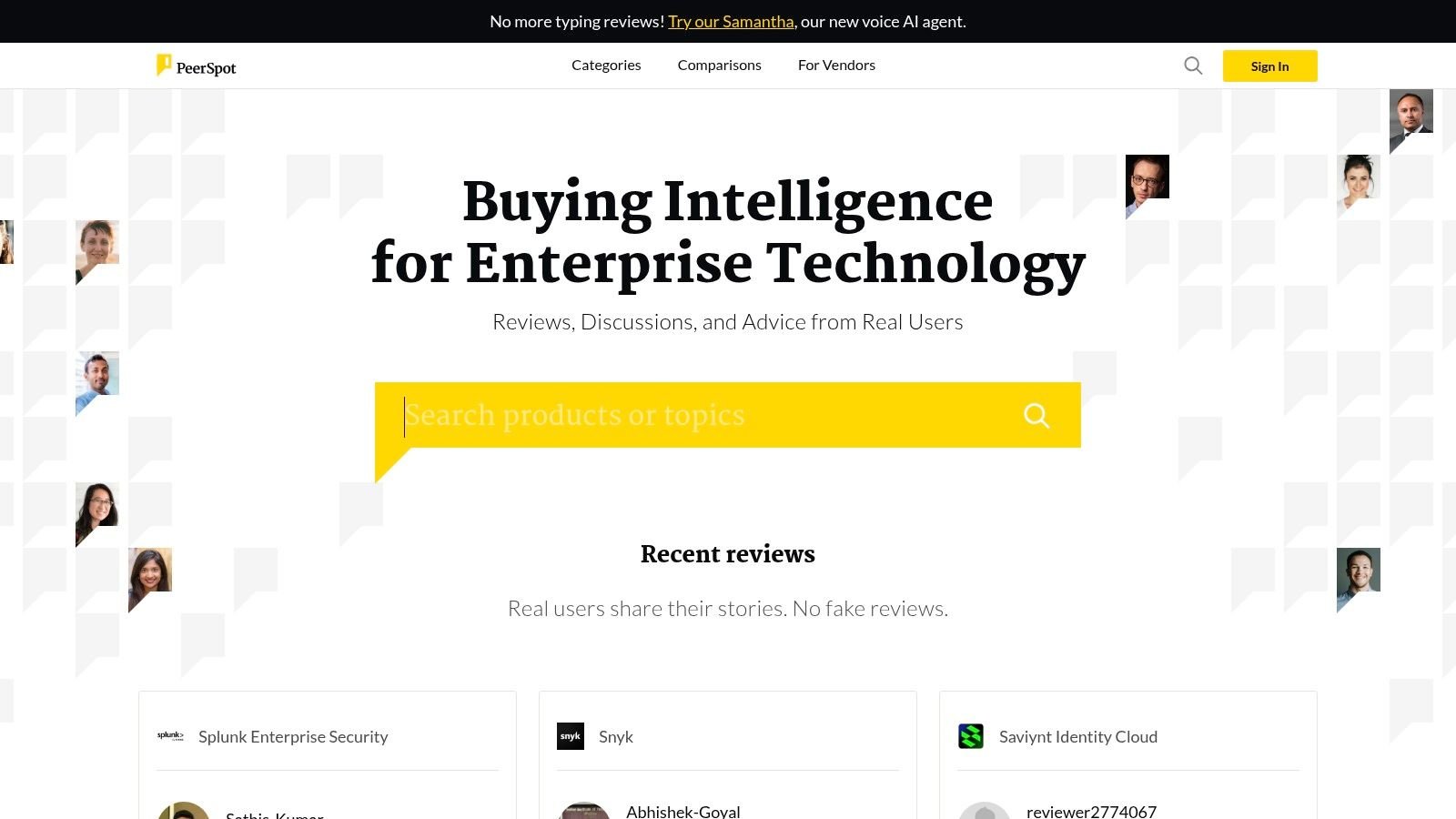
Its published methodology describes ranking factors such as ratings, review depth, review count, views and comparisons, plus review validation and reviewer relationship disclosures. Read that methodology before you complain about category placement. Depth counts, so one line endorsements won't carry you.
- Audience: Enterprise IT and technology buyers making complex decisions
- Eligibility: Vendors should offer an enterprise class solution with real customers
- Commercial model: Paid vendor services aren't a simple public self serve plan
That eligibility bar is the filter. If you're pre revenue with pilot users, wait. If you have named enterprise deployments and customers willing to discuss implementation, PeerSpot reviews can do work your case study page can't, because the trade offs are visible.
I recommend asking customers after a successful rollout, not after a demo. Prompt them on migration, support response and what they compared you against. Those details feed comparison pages and give prospects a reason to trust the rating.
9. SaaSworthy
SaaSworthy is exactly what the name says, a SaaS specific discovery and comparison platform. Non SaaS tools may not qualify, which saves everyone time if you check first.
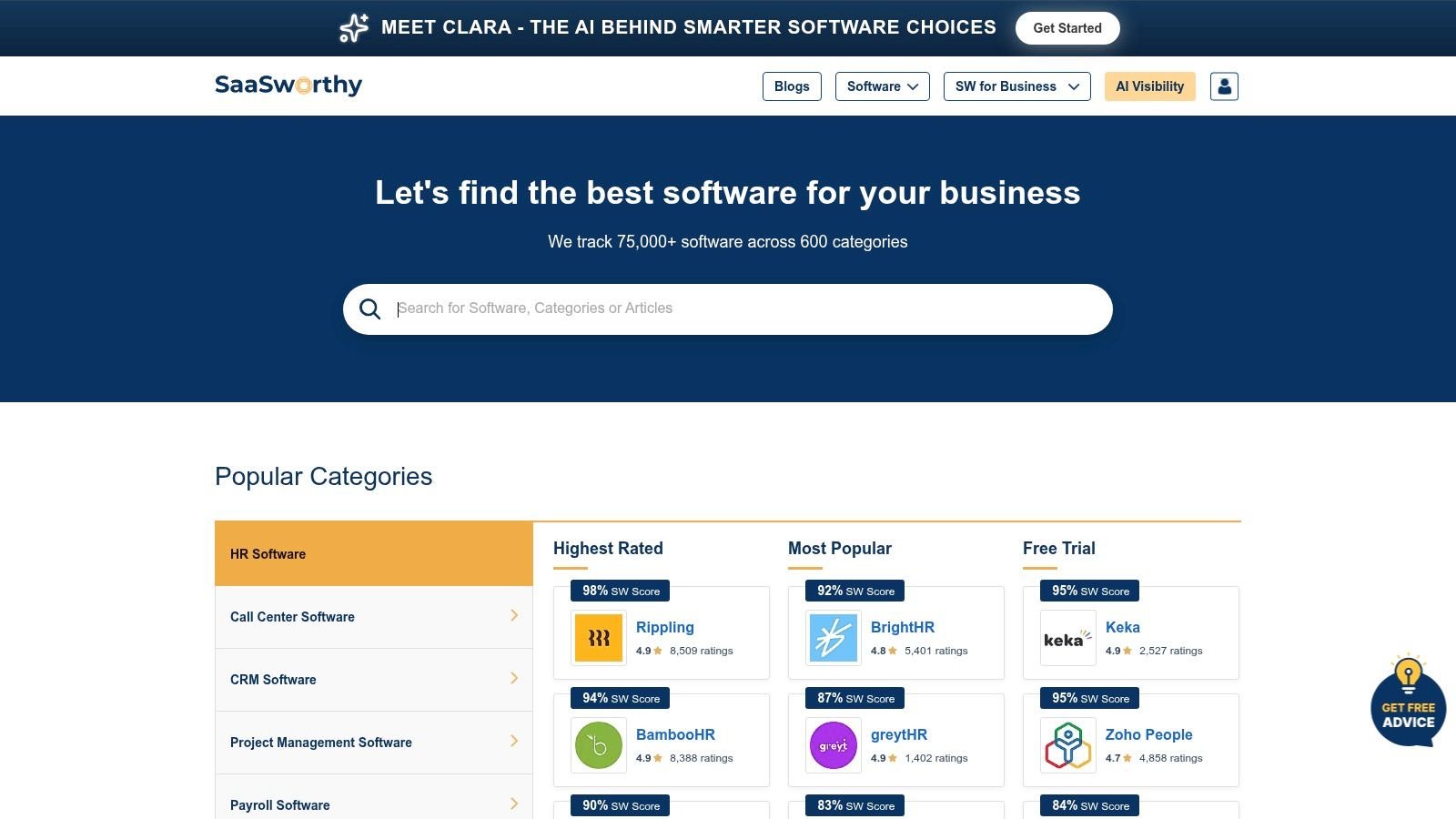
Vendors get a portal and basic profile offering, with optional review capture, review syndication, paid visibility and buyer intent offerings. Paid options are custom priced, so confirm listing terms, link treatment and expected visibility before you invest.
Why a smaller SaaS directory still helps
Consistent product facts across crawlable profiles help search systems understand what you are. Google's AI features documentation says AI Overviews and AI Mode can surface a wider and more diverse set of helpful links than classic search, and sites don't need special AI files or new schema markup to appear in AI features.
That kills a lot of fake LLM SEO advice. You don't need proprietary markup. You need complete descriptions, consistent company names, clear categories and links to authoritative pages.
I use SaaSworthy as supplemental coverage after G2 and Capterra, especially for cloud products that need more comparison surfaces. Keep pricing and integrations identical everywhere. Conflicting facts across directories hurt buyer trust and make AI generated summaries less reliable about you.
10. AlternativeTo
AlternativeTo captures a search intent the B2B review networks often miss. Someone isn't browsing a category. They're fed up with a specific incumbent and typing that product's name looking for an exit.
Listings are community driven, with filters for platform, pricing model, license and other attributes. Community recommendations and opinions shape discovery, and access is free for buyers and makers.
Don't expect verified B2B reviews, sales qualified leads or buyer intent data. Coverage and detail vary with community contributions. That's fine if you position it as an alternative for a defined use case, operating system or pricing preference.
This intent now overlaps with AI shortlists. Reporting on buyer behavior linked from G2's AI first era announcement notes nearly eight in ten software buyers say AI search has changed their research behavior, and 29% say they now begin research with large language models more often than Google.
AI answers still need validation through trials, demos and detailed reviews. AlternativeTo helps you enter that consideration set when a human or a model asks what replaces a known tool.
Submit it early, it's low effort, but maintain attributes carefully. Wrong platform or license data gets you filtered out. For broader launch coverage, this pairs well with directory outreach for AI launches.
How the 10 software review sites compare on entry cost, paid upsells and buyer audience
| Item | Best For | Free Entry Point | Paid Options | Primary Audience |
|---|---|---|---|---|
| G2 | Category visibility and structured review programs | Claim a free product profile | Enhanced profiles, review campaigns, and buyer insights | B2B software buyers and vendors |
| Capterra | Software discovery in established business categories | Submit and manage a product listing | Lead generation and promotion | Small and midsize business software buyers |
| TrustRadius | Detailed, contextual product reviews | Free vendor listing and eligible review verification | Demand generation and review programs; premium subscriptions start at $20,000 per year | Business technology buyers and vendors |
| Gartner Peer Insights | Enterprise technology credibility and peer feedback | Complimentary vendor profile and product listing | Marketing and review-sourcing tools | Enterprise IT buyers and technology vendors |
| Software Advice | Advisor-assisted software shortlists | Free listing may be available for qualifying products | Lead-generation programs and qualified leads | Business software buyers seeking advisor support |
| GetApp | Filtered software comparisons by category and features | Free for software buyers; vendor profiles are subject to eligibility | Sponsored profiles | Businesses comparing category-specific software |
| SourceForge | Software discovery, downloads, and reviews | Free basic listing and profile management | Enhanced profiles, review tools, marketing assets, and buyer-intent data | B2B SaaS buyers and downloadable software users |
| PeerSpot | Enterprise technology reviews and comparisons | Vendor listing may be available for qualifying products | Vendor marketing programs; no simple public self-serve plan stated | Enterprise IT buyers and technology vendors |
| SaaSworthy | Supplemental visibility for SaaS products | Basic vendor profile | Custom-priced visibility, review, and lead-generation services | SaaS buyers and cloud software vendors |
| AlternativeTo | Discovery for products positioned as alternatives | Free discovery access | No standard paid vendor plan stated | Users seeking alternatives to existing software |
Where to Start Your Submission Queue This Week
Don't submit to ten sites on Monday and call it a strategy. Pick three that match your buyer, claim them properly, and learn each platform's review rules before you ask a single customer for anything.
For most early B2B SaaS, I start with G2 for category and comparison visibility, Capterra for SMB buyers, and AlternativeTo for incumbent replacement searches. Add TrustRadius when customers can write detailed use case reviews. Add Gartner Peer Insights or PeerSpot when enterprise procurement is a real motion, not an aspiration in your deck.
Build one source document first. Product name, short and long descriptions rewritten per platform, primary and secondary categories, pricing model, deployment, integrations, support options, screenshots, logo files and the correct canonical URL. Inconsistent facts across profiles create duplicate listings, confuse buyers, and weaken the entity signals that help with Google AI Overview and ChatGPT visibility.
Review collection without creating a compliance problem
Ask genuine users for honest feedback. Don't condition incentives on positive sentiment, don't suppress negative reviews, and disclose material relationships.
The FTC updated Endorsement Guides announcement covers procuring, suppressing, boosting, organizing, publishing, upvoting, downvoting or editing reviews in ways that distort perception. The practical rule is simple. Representative participation beats manufactured praise.
Disclosure needs to be clear too. The FTC Endorsement Guides FAQ says a material connection must be disclosed when a significant minority of consumers wouldn't reasonably expect it and it could affect evaluation, and a platform's built in disclosure tool may not always be sufficient.
Time your asks after value, not after signup. A customer who finished onboarding, migrated data or renewed can describe quality, ease of use, cost effectiveness and security in concrete terms. A day one user can only repeat your homepage.
What to track after profiles go live
Log submission date, moderation status, live URL, category, link treatment and owner verification steps for every profile. Some platforms publish instantly, others review for days or weeks, and each sets its own timeline. We check listings before and after submission, and a person checks each field before submitting, because fixing a wrong category later is slower than choosing it correctly once.
Then track what matters monthly.
- Discovery: Profile impressions, category rank, branded search impressions
- Traffic quality: Referral visits, demo starts, trial signups, assisted conversions
- Proof health: Review count, recency, rating distribution, share describing a specific use case
- SEO effect: New referring domains, indexation of profile pages, rankings for alternatives and comparison queries
This is more important as AI buying spreads. According to G2's 2024 Buyer Behavior Report, 56% of surveyed B2B decision-makers reported purchasing AI software within the previous three months in 2024. Those buyers still need third party evidence to separate a working product from a demo with good copy.
Do the free profiles first, spend two weeks making them complete, then start a steady review cadence you can sustain. Paid directory tools amplify a profile that already converts. They don't rescue an empty one.
If you would rather not fill out ten or more forms yourself, we manually submit SaaS products to 220+ high authority software directories including G2, Capterra, Product Hunt, SaaSHub and AlternativeTo, check for existing listings, skip duplicates, and pick each listing's category by hand for your product. That frees you to do the part only you can do, earning reviews worth reading.
StartupSubmit manually submits your SaaS or AI product to software review sites like G2, Capterra and AlternativeTo, with categories picked by hand and a final report listing each directory with its status, screenshot proof and live links where available. If you want those lasting listings built without spending your week on forms, visit StartupSubmit and choose the submission tier that fits your launch.
Ready to build high-quality backlinks?
We'll manually submit your product to 60 to 200+ directories in 5 to 7 days, with screenshot proof for every submission. No bots, no boring forms, just more time for selling and building.
See pricing & get started →