
What Are Web Directories? A 2026 SEO Guide
Your launch went well, the sign-ups looked promising, and then the spike faded faster than you wanted. That's usually the point where founders realize traffic isn't the same thing as durable discovery. A free business website listing strategy gives you a steadier layer of visibility, because the right profiles can keep showing up in branded search, reviews, and AI-assisted answers long after launch day.
The trick is not submitting everywhere. It's choosing the right mix of directories for the job you need done. A launch page on Product Hunt behaves very differently from a trusted company profile on Crunchbase or a review-heavy page on G2. If you treat every listing like the same asset, you'll waste time and end up with thin profiles that don't help much.
What works in practice is a simple split. Use launch directories for attention, review platforms for social proof, and authority profiles for long-term search presence. Keep your company name, site URL, and product description consistent across all of them, because consistency is part of what keeps profile data coherent across major platforms and search systems, as the directory-coverage guidance from Business.com recommends in its free listing targets Business.com's directory coverage guidance.
One more thing founders usually learn the hard way. Free listings only matter if the profile is complete. A 2026 roundup reports that complete free listings generate 28% more customer calls than incomplete profiles, while 63% of free listings appear on the first page of SERPs for branded searches the 2026 free and paid business listing statistics roundup. That's why profile quality beats raw volume every time.
Product Hunt
Product Hunt is the fastest way to get in front of people who care about new software. For SaaS and AI founders, it's less like a directory and more like a launch event with a searchable footprint. A solid page can drive early-adopter traffic, comments, maker feedback, and the kind of branded search presence that keeps paying off after the launch window closes.
The platform works best when your goal is launch buzz. If you have a sharp positioning statement, a clean gallery, and a founder who can answer comments quickly, Product Hunt can do a lot of heavy lifting. The public page also gives search engines and LLMs more entity-level context, which matters if you care about Google AI Overviews and ChatGPT visibility.
What you need before submitting is straightforward:
- A tight one-liner, not a paragraph of feature soup.
- Screenshots or a short demo video, because the launch page needs visual proof.
- A founder account ready for replies, since comments are part of the product experience.
- A clear CTA, because many visitors will decide fast.
The trade-off is that the traffic spike is time-boxed. If your product page isn't ready, or the launch messaging is muddy, the audience moves on quickly. I've seen founders treat Product Hunt like a one-and-done checkbox, then wonder why the page doesn't keep converting. It's a launch asset, but only if you keep the profile live, polished, and linked from the rest of your ecosystem, including your broader startup directory strategy like the one outlined at StartupSubmit's best startup directories resource.
Practical rule: use Product Hunt when you need momentum, not when you need passive lead generation.
Best fit: new SaaS products, AI tools, developer tools, and products with a clear launch story.
Not a fit: quiet local businesses, offline services, or products with no visual proof yet.
G2
G2 is where B2B buyers go when they want to compare tools without talking to sales too early. That makes it one of the best free business website listing options for founders who care about social proof and search visibility at the same time. A free profile can include product details, screenshots, pricing info, and a review layer that helps you show up like a real category contender instead of a brand-new unknown.
The value here is credibility. Buyers trust a profile with real reviews more than a homepage that says “best in class” six times. G2 also has a strong SEO footprint, so category pages and product pages can help you capture people researching software comparisons, especially in crowded categories where generic brand pages don't rank well on their own.
What to prepare before you submit:
- A clean product name and category fit, because category placement affects how buyers find you.
- Screenshots that show the product UI, not stock-style marketing art.
- Pricing details, if you can publish them without hurting your sales motion.
- A review plan, because review velocity matters if you want the profile to stand out.
The downside is competition. In strong categories, everyone is there, and the profile with no reviews looks thin next to vendors that invested in customer advocacy early. Advanced promotional options exist, but those are separate from the basic free profile and usually matter later, not on day one. That's why founders should think of G2 as a compounding asset, not a quick win.
If you're building a B2B SaaS company, G2 often belongs near the top of your priority list. It helps your company look established, and it gives sales teams a page they can send after a demo. For founders using a directory submission service like StartupSubmit's SaaS directory submission service, G2 is usually one of the first profiles worth getting right.
Capterra
Capterra is one of the cleanest ways to reach buyers who are actively comparing software. It sits inside Gartner Digital Markets, which gives it a credibility layer that matters when your buyer is doing serious vendor research. For founders, the free listing is valuable because it can support long-tail category searches and help your product appear in a comparison environment where intent is already high.
This platform is strongest for long-term SEO and purchase-intent traffic. If someone is looking for alternatives, pricing, or shortlist candidates, Capterra is exactly the kind of place they'll land. That makes the profile less about hype and more about clarity. Your copy has to explain what the product does, who it helps, and why it exists without sounding like a landing page stuffed with claims.
A good Capterra submission usually needs:
- A precise product description, written for evaluators rather than casual browsers.
- Screenshots that explain workflow, because buyers want to understand the product fast.
- Pricing visibility, if the business model allows it.
- A review collection plan, since the profile gets stronger when buyers can compare feedback.
The hard part is that the channel is competitive. Paid clicks exist, and that means hot categories can get expensive if you go beyond the free listing. The upside is still real. If your software solves a known problem and buyers search for that problem by category name, Capterra can become a stable source of qualified discovery.
I like Capterra for founders who need a page-one presence without trying to game search. It's a direct answer to the question, “What tools should I look at?” If your startup sells into SMB or mid-market teams, the directory often deserves a permanent place in your startup SEO plan.
GetApp
GetApp is useful when your buyer likes comparison shopping but doesn't want a clunky marketplace experience. The directory has a cleaner, filtering-heavy layout that helps users sort software by features, pricing, and use case. For a founder, that means your profile needs to make sense in a buyer's skim-first workflow, not in a polished brand deck.
This is a strong choice for SaaS SEO and category discovery. I've found GetApp works best when the product has a clear niche and a practical use case. It's less about broad fame and more about being found by people who already know they need a tool like yours. That's a good trade if you're trying to intercept high-intent search traffic.
Before you submit, make sure your assets are useful in a directory context:
- Feature bullets that are plain and specific, not slogan-heavy.
- Screenshots that show the product in action, especially core workflows.
- Pricing language that matches your site, so buyers don't hit mismatch friction.
- A description without CTAs or personal data, because the content rules are stricter than a normal homepage.
Keep the copy factual. Directory pages fail when founders try to make them feel like ads.
The downside is obvious. Premium visibility is paid, so the free profile alone won't magically dominate a category. Still, the free listing is worth it if you want another authoritative page in the mix, especially when a searcher is comparing alternatives and your homepage isn't enough to carry the conversation. GetApp can support a broader authority stack without requiring a heavy lift from your team.
Software Advice
Software Advice is a better fit for founders who want guided buying intent, not just directory traffic. The platform is built around helping prospects narrow choices, request demos, and move toward a shortlist. That makes the free listing useful for businesses that sell a packaged product, especially when the buyer journey is longer and more consultative.
This directory pulls weight in B2B software positioning because it sits close to the decision moment. If your category needs explanation, or if buyers usually compare three to five tools before they act, Software Advice can give you a more structured entry point than a generic listing site. It also adds another credible page that can rank for brand and category terms.
The practical assets are similar to other review directories, but the intent is different:
- A clear product category, because the platform is built around matching.
- Accurate product information, especially feature and pricing basics.
- A concise positioning statement, since buyers are reading for fit.
- Review momentum, if you want the listing to stand out against similar tools.
The limitation is eligibility. Not every product type fits the platform, and the paid lead and featured-placement programs exist for teams that want more reach. For founders, that means you shouldn't treat Software Advice as a universal directory. It's more selective than that.
I usually recommend it to SaaS founders who sell to teams that expect some evaluation support before purchase. If your product is off-the-shelf and easy to explain, the listing can reinforce trust. If your offer is highly custom or hard to categorize, your time may be better spent on other authority profiles first.
AlternativeTo
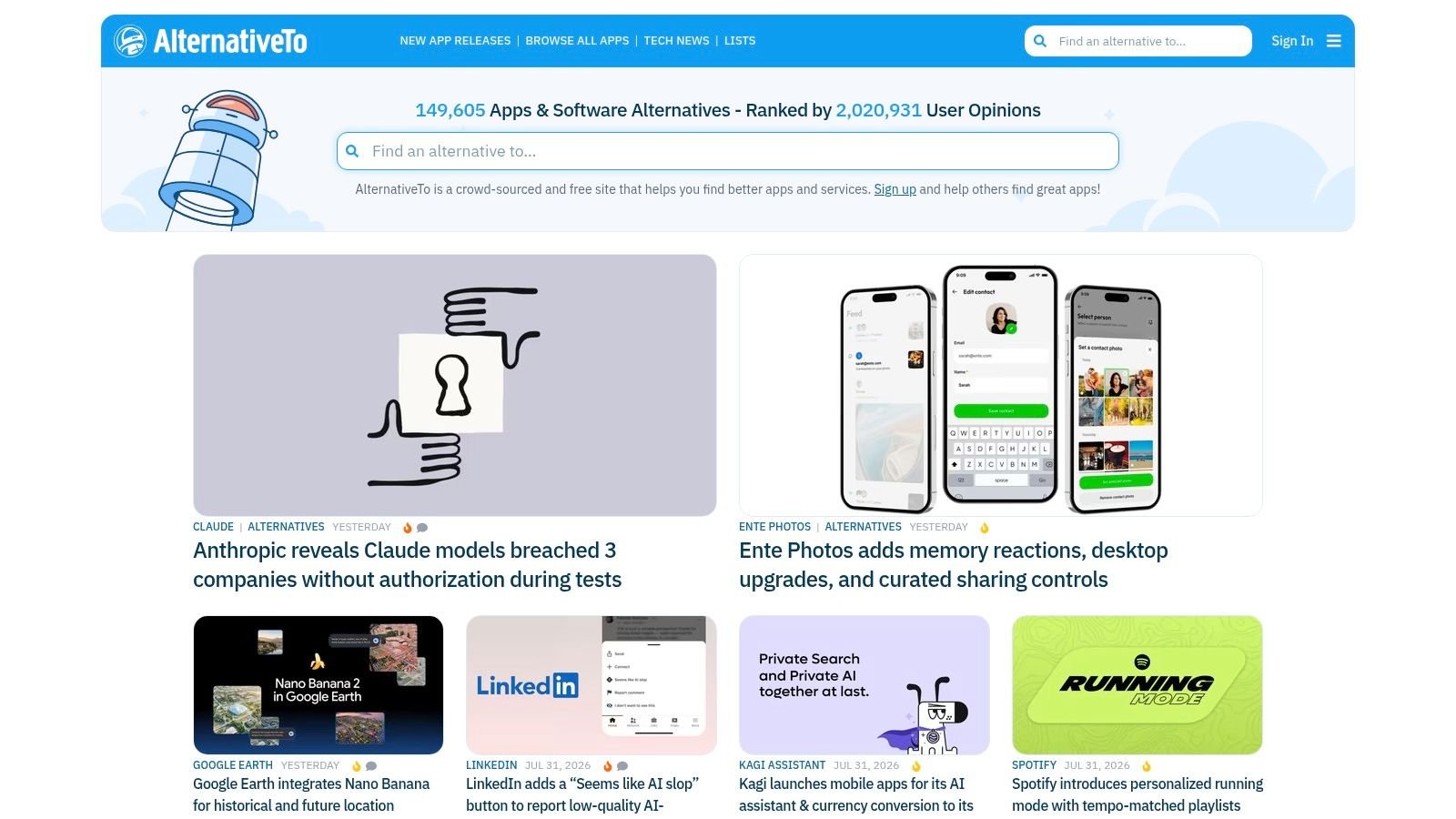
AlternativeTo is one of the best places to show up when users are already comparing you with competitors. That's why it belongs in the niche positioning bucket. The directory is built around “alternatives to” graphs, which means your listing can catch people who are actively looking for a replacement, not just browsing software casually.
For indie hackers and SaaS founders, that's valuable because intent is already there. You're not trying to create demand from nothing. You're stepping into an existing comparison. The platform also has a long memory, so a decent listing can keep sending referral traffic and brand mentions well after the initial submission.
The opening move is simple, but the details matter:
- Structured metadata, including platforms, license, and tags.
- A product description that fits comparisons, not a home page pitch.
- Clean account history, since moderation can slow new submitters.
- Patient expectations, because approvals aren't instant.
The benefit here is durability. AlternativeTo is not a launch rocket. It's a slow-burn discovery source for users who know they need an alternative and are already scanning options. That makes it especially useful for open-source tools, developer products, privacy-focused apps, and other software that competes on a clear point of difference.
One thing founders get wrong is trying to make the listing too promotional. That usually backfires. The page works better when it sounds factual and helps the user compare. If you want a channel that supports backlinks, product mentions, and comparison-based discovery, AlternativeTo is one of the better free submissions to prioritize, especially when paired with a broader free startup directories workflow.
SaaSHub
SaaSHub is a good fit when you want a focused SaaS audience without the noise of giant marketplaces. The submission process is efficient, which matters when you're already juggling launch, product, and customer calls. For founders, this is the kind of directory that can add another credible surface area without requiring a massive content project.
Its strength is clean discovery. SaaSHub tags products by category and surfaces them through top and new listings, so it's useful for tools that need targeted visibility more than broad consumer reach. That makes it a smart pick for niche SaaS, developer tools, and products that can be explained in a sentence or two.
The assets you need are lighter than for some bigger directories, but they still have to be sharp:
- A short product summary, written for fast scanning.
- Accurate category tagging, because the directory is organized by relevance.
- A concise feature set, without filler.
- Screenshots that show utility, not just branding.
The trade-off is reach. SaaSHub won't match the audience size of the biggest directories, and visibility depends on quality and approval. Still, that smaller scale can be a plus if you're early and want a cleaner profile before you chase heavier review platforms. It's the kind of directory that helps round out your footprint instead of dominating it.
I've found SaaSHub works especially well for founders who are tired of bloated marketplaces and want a practical listing that doesn't look over-marketed. It's one more place where your product can appear in search, get indexed, and support your broader SEO profile. If you're building a disciplined directory stack, it belongs in the mix, alongside a directory submission service approach that keeps the work organized.
Crunchbase
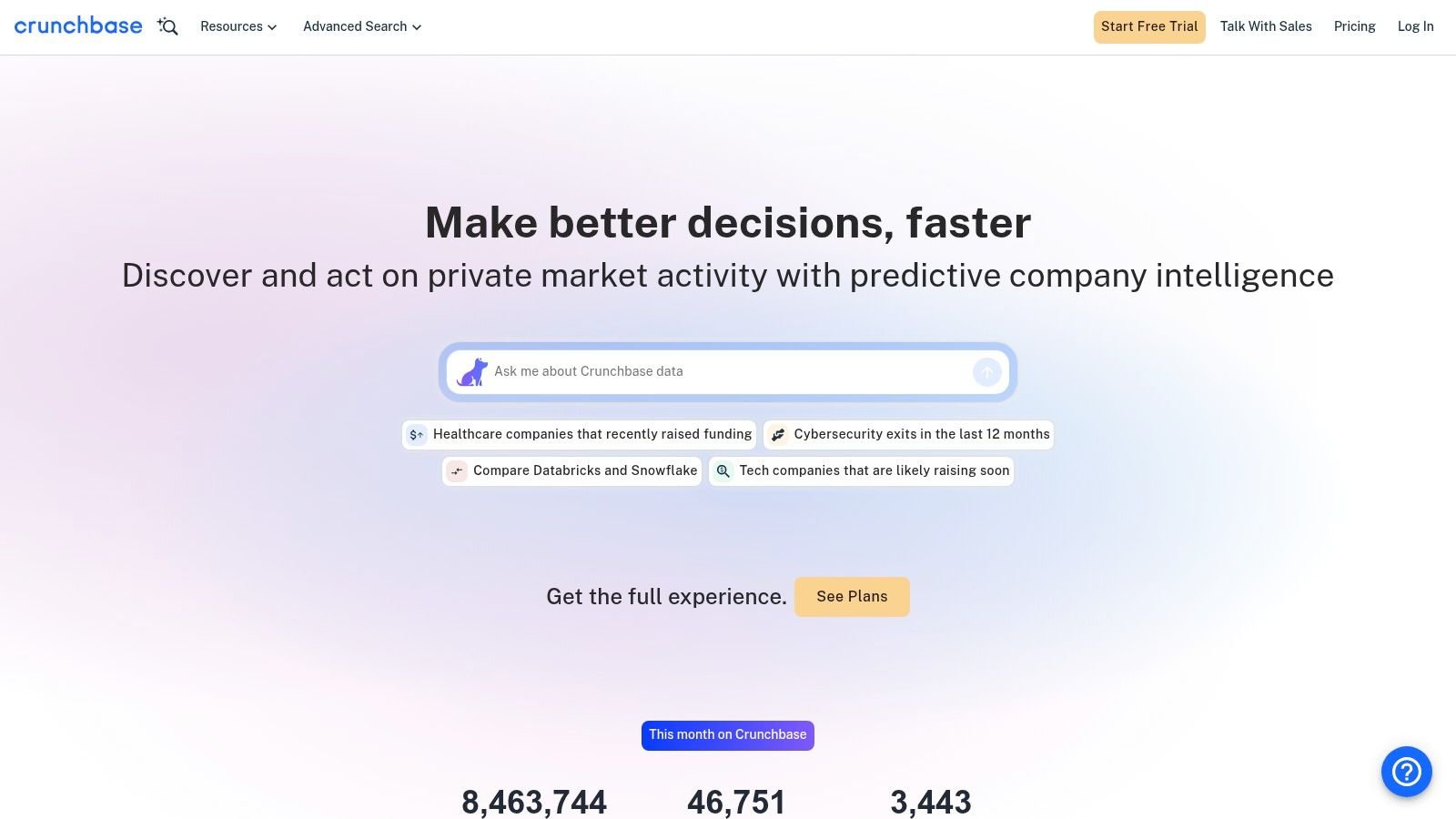
Crunchbase is the default public company profile source for a lot of startups, and that's exactly why it matters. When investors, partners, journalists, or prospects search your brand, a clean Crunchbase profile often shows up near the top. For founders, that makes it one of the most important foundational authority listings you can claim.
This is not a review marketplace and it's not a launch-buzz channel. It's a credibility asset. A well-maintained profile can include your company description, website, founders, funding history, and milestones, which helps establish your startup as a real entity rather than a thin website with no external context. That matters for both trust and branded search.
The profile works best when you treat it like a data source:
- Keep company details current, especially the site link and basic description.
- Claim and maintain the page, so unauthorized edits don't create confusion.
- Use it as a brand anchor, because it often appears in search and news discovery.
- Make the wording consistent with your website and other listings.
The upside is authority. The downside is that it isn't designed to solve every marketing need. It won't give you review volume like G2 or a launch spike like Product Hunt. What it will do is give you a reliable company page that supports trust signals across the web. That's especially useful if you're trying to strengthen page-one results around your brand name.
For AI startups and SaaS founders, Crunchbase also pairs nicely with an AI directory submission service when you're trying to build a broader trust stack around the company.
Trustpilot
Trustpilot is one of the most recognizable review platforms in the market, and it earns its place because buyers understand it quickly. A claimable profile gives you public review space, a branded search result, and a reputation-management layer that can help when prospects search your company name before they buy. That makes it useful for both consumer-facing software and B2B products with a visible customer base.
The main job here is trust. If your product has happy users, Trustpilot turns that into a visible asset. If your support is weak, the platform will expose that too. That's why I think founders should treat it as a customer-feedback channel, not just a marketing channel. The profile works best when you invite real users to leave honest reviews and then respond like a human when issues come up.
What to set up first:
- Claim the profile early, so your company controls the brand page.
- Invite actual customers, not random email lists.
- Keep review responses measured, especially when feedback is negative.
- Use the profile to support search snippets, where ratings can reinforce trust.
The trade-off is moderation. Trustpilot has a strong content integrity system, and that means sloppy review practices can create headaches. Advanced widgets and marketing tools also sit behind paid plans, so the free profile is mainly about reputation and visibility rather than full-stack conversion tooling.
For founders, this is one of the best profiles to keep clean because it affects how your company looks during online searches. It doesn't replace deeper SaaS directories, but it strengthens the trust layer around them. If you want your page-one presence to look credible, Trustpilot belongs in the mix.
TrustRadius
TrustRadius is built for buyers who read carefully. That's why it works well for mid-market and enterprise SaaS, where technical evaluators want detailed feedback instead of star ratings alone. A free claimable profile gives you an authoritative place to showcase product information, gather qualitative reviews, and support the kind of research process that takes longer than a casual consumer purchase.
The platform's strength is depth. Reviews tend to be more detailed, which helps buyers understand trade-offs instead of just seeing a summary score. For founders, that means a TrustRadius page can support category terms, brand queries, and trust-building at the same time. It's a strong asset if you want to look legitimate to a serious software buyer.
The practical setup looks like this:
- Claim the product or company page, so the listing reflects your current positioning.
- Focus on review quality, not just review count.
- Keep product details complete, because technical evaluators notice gaps.
- Use the profile as a proof layer, especially for enterprise conversations.
Don't ask for vague praise. Ask customers to describe the problem, the workflow, and what changed.
The limitation is effort. To stand out, you need real reviews and a maintained profile. Some advanced lead capture and analytics features are paid, so the free version is best thought of as an authority anchor rather than a full demand engine. Still, for B2B founders trying to build trust with bigger accounts, TrustRadius is often worth the manual work.
It's especially useful when your product needs to survive comparison against established incumbents. A thoughtful profile can give you another page-one asset that supports both startup SEO and sales enablement. That makes it one of the best free business website listing options for companies that sell into serious evaluation cycles.
Top 10 Free Business Listing Sites Comparison
| Directory | Key features | UX & quality metrics | Value proposition | Best for | Price / Accessibility |
|---|---|---|---|---|---|
| Product Hunt | Free product pages; gallery, videos, comments; leaderboards | High engagement; community moderation; strong branded search presence | Launch visibility, early‑adopter traffic, press discovery | SaaS/AI startups launching products | Free submission; time‑boxed exposure |
| G2 | Free product/vendor profiles; review collection; category badges; syndication | Trusted B2B SEO footprint; review‑driven visibility; conversion lift | Social proof, buyer trust, higher conversions | B2B SaaS selling to buyers/procurement | Free profile; paid promotional/review tools |
| Capterra | Vendor portal; category filters & comparisons; review syndication | Strong domain authority; purchase‑intent traffic | Capture SMB/mid‑market buyers researching software | SMB & mid‑market software vendors | Free listing; paid PPC/promoted placements |
| GetApp | Product profiles with features/screenshots; robust filters; networked reviews | Good for "best [category] apps" searches; clear comparison UX | Improve discovery in buyer comparisons | SMB‑focused SaaS products | Free listing; paid promotion options |
| Software Advice | Editorial categorization; buyer guides; demo/shortlist support | Analyst‑style authority; guides referenced by buyers | Guide buyers to shortlists and demos; trusted recommendations | B2B buyers seeking guided shortlists | Free listing; paid lead/featured programs |
| AlternativeTo | Crowdsourced alternatives graph; structured metadata; likes | Evergreen referral traffic; community moderation | Capture competitor‑comparison traffic and referrals | Users evaluating alternatives to incumbents | Free submission; moderated approval delay |
| SaaSHub | Free submission with category tags; top/new listings; editorial curation | Clean, focused UX; quick editorial review | Niche SaaS discovery; fast listing for relevant tools | Niche SaaS tools and early‑stage founders | Free submission; smaller overall reach |
| Crunchbase | Claimable company pages; funding, team, milestones; links | High authority for brand queries; press & investor signal | Foundational public company profile and credibility | Startups seeking investor/press/partner visibility | Free account; paid tiers for data & analytics |
| Trustpilot | Claimable profile; TrustScore and review feed; widgets | Strong consumer trust; SEO & rich snippets for branded searches | Reputation management and public social proof | Businesses needing public review presence | Free plan to collect reviews; paid marketing widgets |
| TrustRadius | Claimable product/company profiles; in‑depth reviews; awards | Deep qualitative reviews valued by technical buyers | Authoritative review assets for enterprise evaluation | Mid‑market & enterprise‑targeted SaaS | Free listing; paid analytics/features |
Your Next Steps Turn Listings Into Assets
You've got the list, but the advantage comes from execution. The founders who get results don't submit randomly. They build a small system, keep the data consistent, and focus on the platforms that match their current marketing goal.
Start with an asset kit. Put your canonical company name, a tight one-liner, a longer description, logo files, screenshots, and your preferred links into one document. That sounds boring, but it saves a huge amount of time once you're filling in profiles across multiple platforms. It also lowers the odds of inconsistent NAP-style data, which can weaken the trust signal across listings.
Then pick your Big 3. A common starter set for SaaS founders is one launch channel, one review channel, and one authority profile. Product Hunt can handle launch buzz, G2 can handle social proof, and Crunchbase can handle foundational authority. If your product is comparison-friendly, Capterra or TrustRadius may be a better second move than Product Hunt. The right mix depends on whether you're trying to create awareness, win evaluation traffic, or strengthen branded search.
After that, make the work repeatable. Manual submissions take time, and the time sink is usually the same thing founders underestimate. The best shortcut isn't rushing. It's standardizing your inputs so every new listing gets the same core facts, the same positioning, and the same visual assets. That keeps the profile quality high and makes later updates much easier.
For teams that don't want to spend a week doing form-filling, StartupSubmit is built for this exact problem. It handles manual directory submissions across a large network of startup and software directories, then returns a report so you can track what got placed and where. If your launch has already happened and you want the next layer of visibility without turning your team into data-entry support, it's worth visiting StartupSubmit and seeing how it fits your directory plan.