8 Proven Startup Growth Hacks to Scale in 2026
Your launch went great. The Product Hunt spike was real, the replies felt encouraging, and then a week later the graph flattened out. That post-launch plateau is brutal because it makes a good launch look like a one-day event instead of the start of real discovery. Free company listing sites are one of the fastest ways to build durable visibility, especially when you need search presence, trust signals, and backlinks that keep working after the launch buzz fades. If you're trying to build online products and you want the market to be able to find them later, these listings matter more than most founders think.
The mistake I see most often is treating every directory the same. A founder submits to a pile of generic sites, gets a few weak profiles, and wonders why nothing changed. The better approach is to prioritize the platforms that shape branded search, B2B trust, and AI-era discovery, then add niche directories that match how buyers compare tools. That's especially true for SaaS and AI startups, where people check search results, reviews, and comparison pages before they ever fill out a form.
1. Google Business Profile
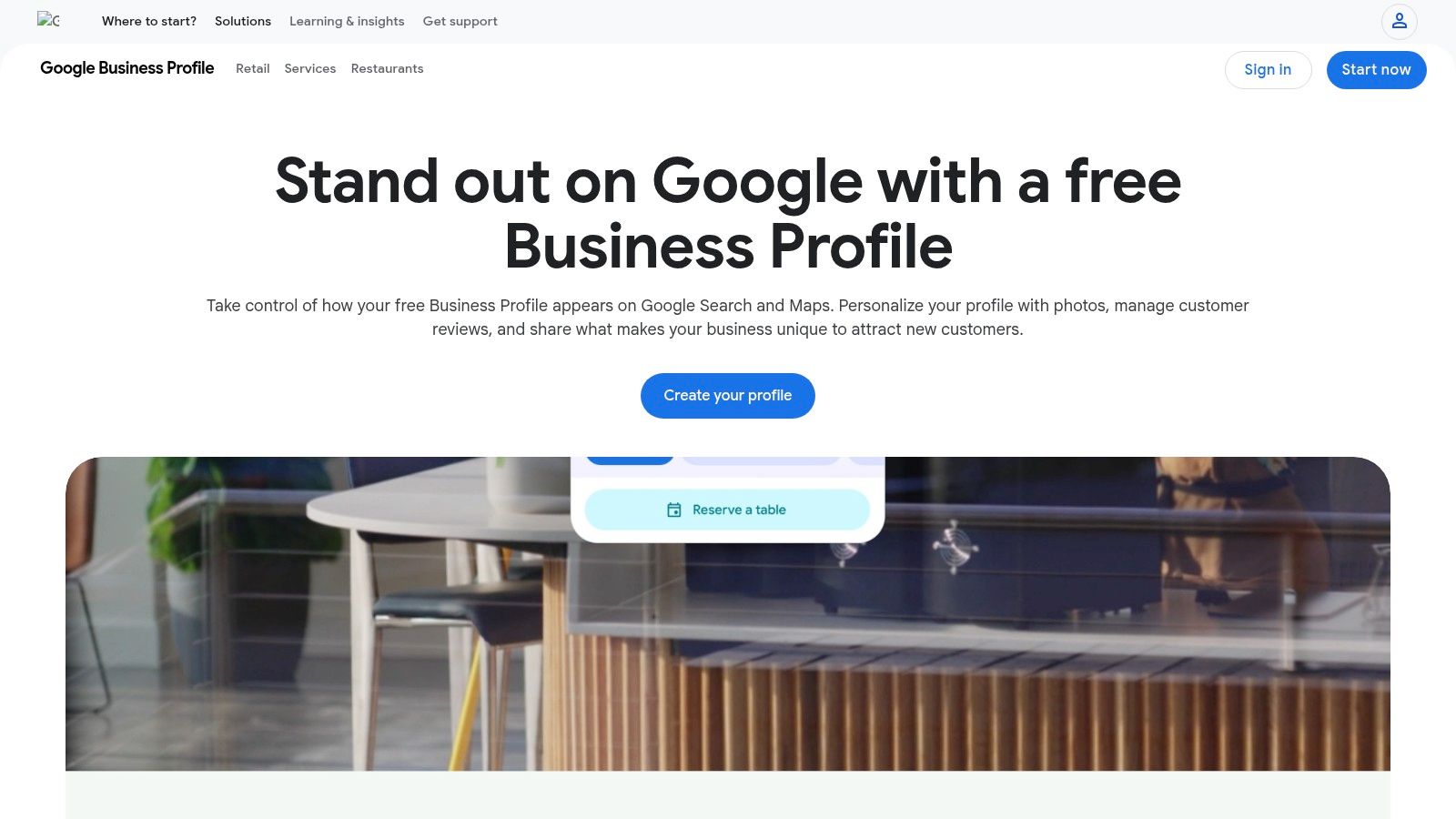
Google Business Profile is the first profile I'd claim for almost any startup with a real operating footprint, even if the business is remote-first. It's the default discovery surface for a huge share of branded searches, and it gives you control over what people see in Google Search and Maps when they look up your company. Google's own business listing product is built for that exact purpose, with a free profile at Google Business Profile.
The reason it matters goes beyond local SEO. A clean, verified profile can help your brand look established when someone searches your name, and it gives you a place to publish updates, photos, hours, and other business details that reinforce legitimacy. Google's free business listings also matter because the platform can surface product-related information across Google surfaces, not just Maps, which makes it useful even for SaaS teams that don't sell in a storefront format.
What works and what doesn't
A lot of SaaS founders try to force Google Business Profile into a local-business mold. That usually creates friction. If you're remote-only, think of it as a brand control surface first, and a local citation second.
Practical rule: keep the profile accurate, verified, and boring. Overstuffed descriptions and awkward keyword repetition usually look worse than a plain profile with real details.
Use it for the basics, then keep it current. Seasonal hours, product photos, and short updates help more than founders expect because they show the profile is active. Reviews also matter, but they require ongoing moderation, so don't treat the setup as a one-time task.
2. Apple Business Connect
Apple Business Connect is the profile I'd claim next if your audience uses iPhone, Mac, or Apple Maps regularly. It gives you control over how your business appears across Apple Maps, Siri, Wallet, and related Apple surfaces through the official platform at Apple Business Connect.
For startups, the main value is brand consistency. You're not chasing clicks so much as making sure your business card in the Apple ecosystem looks correct when someone searches your company name. That matters in founder-led sales too, because buyers often check a brand on their phone before they ever open a browser tab. The platform also supports photos, hours, and promotions through Showcases, which gives you a clean way to keep the listing current.
A physical location helps here, but it's not the only use case. I've seen early-stage teams use a registered office or a legitimate operating address just to make sure the profile exists and matches the rest of their web footprint. That's less about gaming the system and more about making your brand look coherent across platforms.
Where Apple helps most
Apple matters most when your buyers are mobile-heavy or design-conscious, because the listing often becomes part of a quick credibility check. It also gives you another place where your company name can appear cleanly in a branded search.
- Brand consistency: Keep name, address, and category aligned with your website and other listings.
- Phone-user visibility: Make sure the place card looks polished on iOS, where many people first check a brand.
- Operational updates: Use photos and current hours so the profile doesn't look abandoned.
3. Bing Places for Business
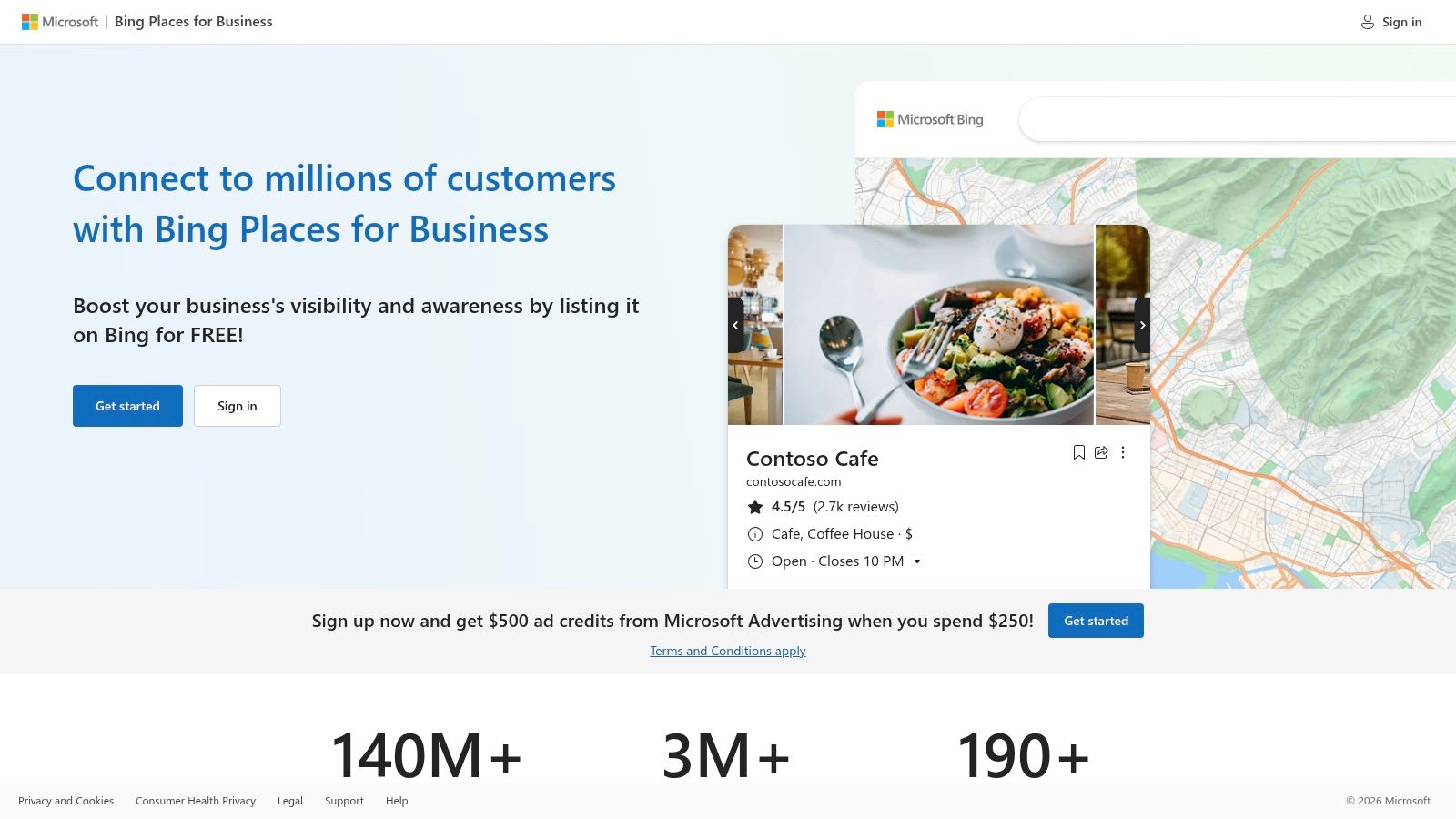
Bing Places is easy to overlook, which is exactly why it's worth claiming. Microsoft's free listing for Bing Search and Bing Maps gives you another branded results surface, and it's especially useful if your customers use Windows defaults, Microsoft products, or Copilot-adjacent experiences. The official platform is Bing Places for Business.
The upside isn't just extra visibility. It's also control. If someone searches your company name and Bing is part of their workflow, you want the right profile showing up there instead of an incomplete third-party listing. Bing Places also supports importing data from Google Business Profile, which saves time if your Google profile is already clean.
The trade-off is simple. Bing doesn't usually drive the same volume as Google, so founders sometimes skip it. That's short-sighted. For startup SEO, the win is often less about raw traffic and more about owning another trusted surface where your company can be found, verified, and clicked.
A practical submission sequence
If you're short on time, do these in order.
- Claim Google first: It usually has the biggest immediate impact on branded search.
- Mirror the data in Bing: Import or manually sync the same company details.
- Check your category wording: Keep it aligned with how buyers would describe you.
- Review the map pin: Wrong map data makes the whole profile look sloppy.
4. Crunchbase
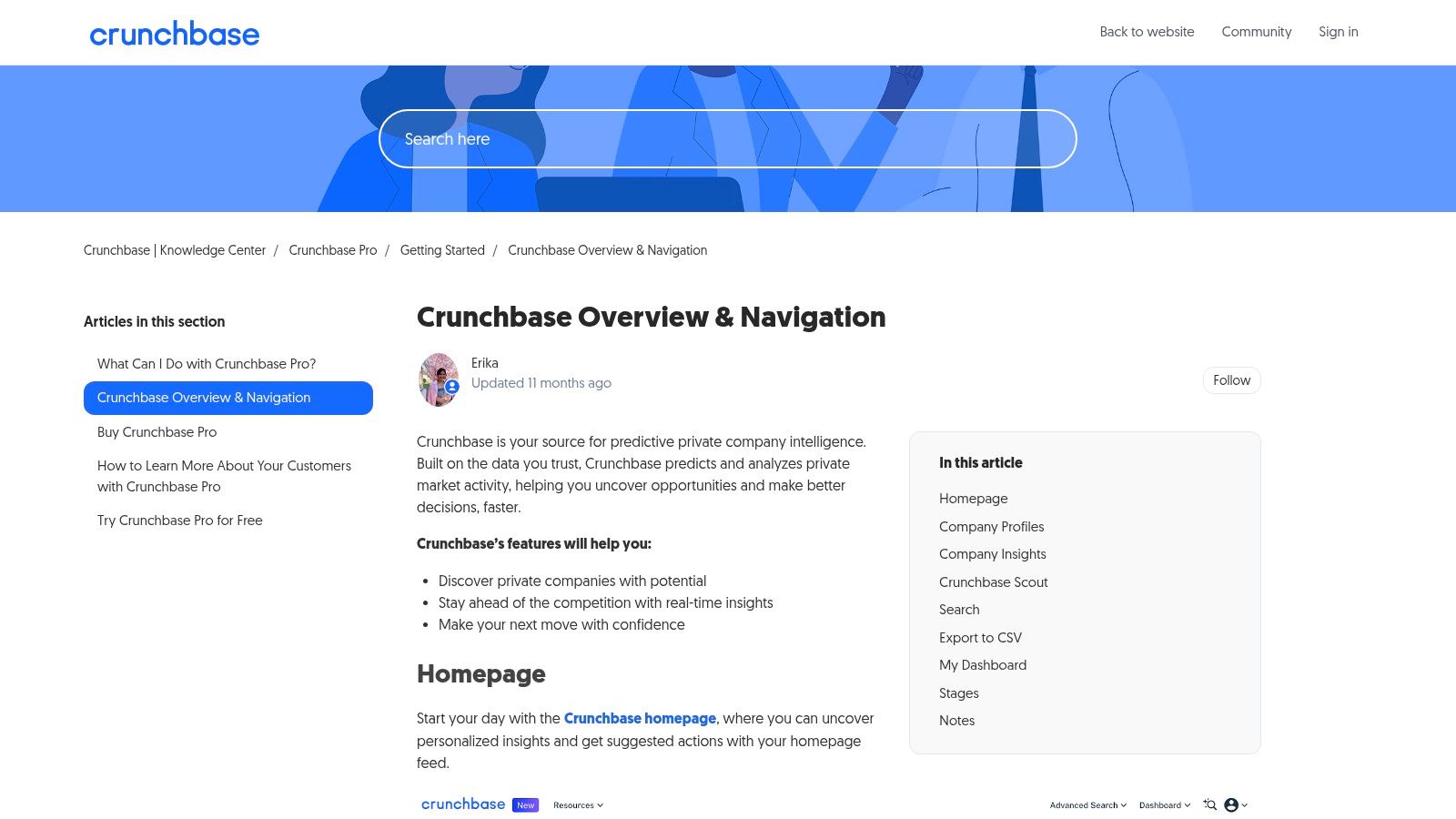
Crunchbase works differently from the local profile tools above. It's a company database, and for startups that's the point. A clean profile can function like a public-facing company card for investors, analysts, buyers, and even journalists who use it to sanity-check a brand. Start here at Crunchbase.
For SaaS and AI founders, this is one of the most useful free company listing sites because it sits closer to market research than local discovery. When someone sees your name in a pitch deck, in a press mention, or in a comparison article, a structured Crunchbase profile helps validate that the company exists and has a real footprint. It's also a linkable asset that can support brand search results.
This is also one of the first places where I'd point founders to a curated directory workflow. A service like StartupSubmit's startup directory list is useful when you don't want to research every directory by hand or guess which ones are worth your time. Crunchbase belongs on the shortlist because it tends to sit near the center of how people vet young companies.
Why founders keep it updated
Crunchbase can play a trust role that generic directories don't. If your team changes, your positioning shifts, or you get covered in a new market, the profile should reflect that.
- Firmographic clarity: Keep your company description short, specific, and current.
- Search credibility: Make sure the profile matches what people see on your website.
- Public proof: Treat it like a lightweight public record, not a marketing flyer.
5. G2
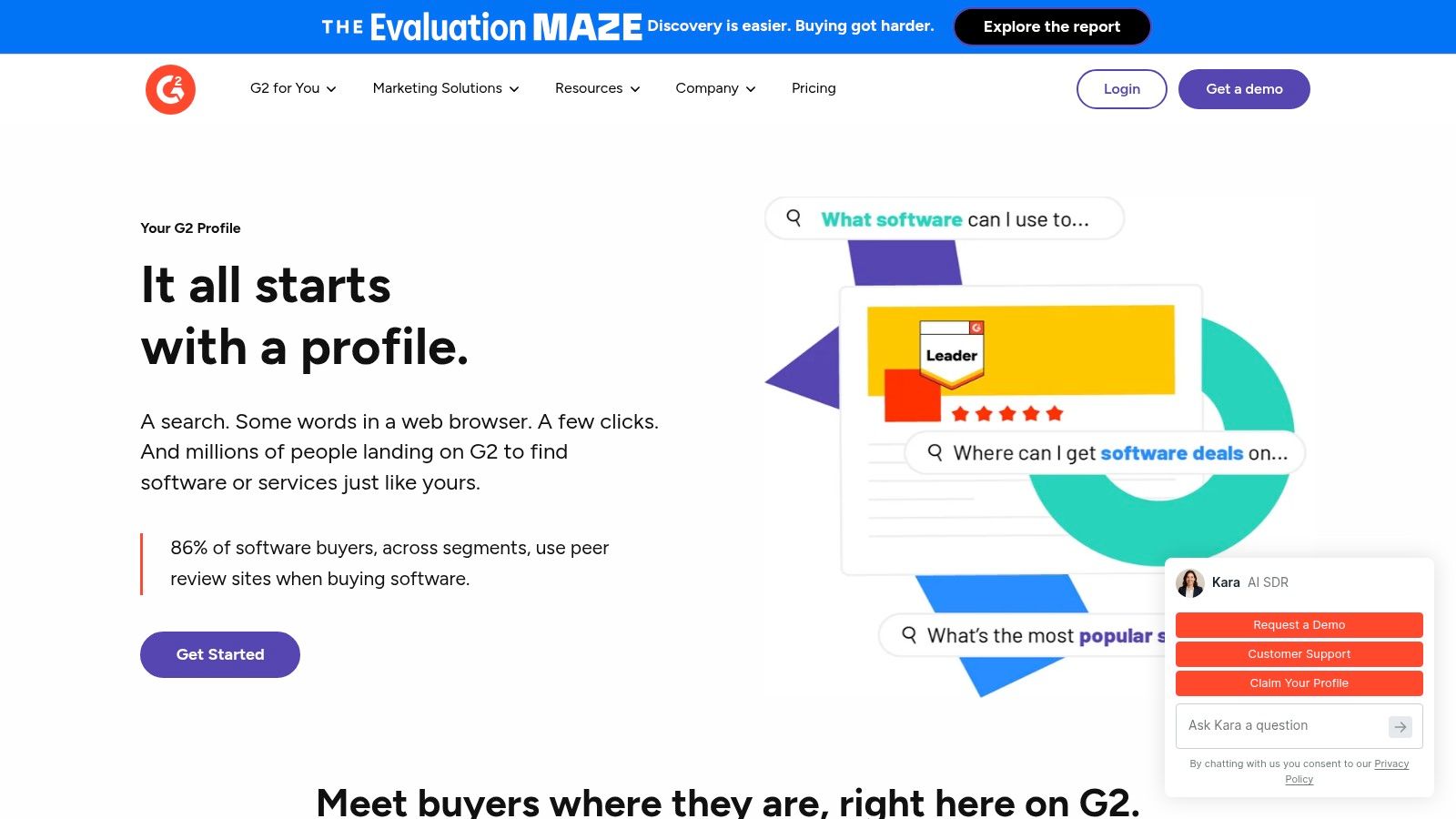
G2 is where B2B buyers go when they're comparing software, not just browsing brands. That makes it one of the highest-value free company listing sites for SaaS teams that sell to businesses. The free profile flow starts at G2 vendor profiles, and the platform is built around review-driven discovery.
The value here is buyer intent. People on G2 are already in evaluation mode, which means a decent profile can support demos, trial signups, and retargeting later on. It also adds social proof in a format buyers trust, especially when your startup doesn't yet have enough brand familiarity to win on name recognition alone. If you're weighing whether to spend time on directory submission service work, G2 is one of the first listings I'd pay attention to.
The downside is that G2 is not casual about participation. Category inclusion can take time, vendor audits can be slow, and the platform pushes premium options hard. That doesn't make it less valuable, it just means founders need patience and clean positioning from day one.
Review platforms work best when the company already has a simple, sharp value proposition. If your homepage confuses people, your G2 profile usually won't rescue it.
For founders who want help getting through the submission stack, StartupSubmit's directory submission service is a sensible way to offload repetitive profile work while keeping the targeting focused on relevant software sites.
6. GetApp
GetApp is a strong fit when your product needs to be discovered by buyers comparing software options side by side. It sits inside Gartner Digital Markets, which gives it a credibility layer that matters in B2B buying. The listing guidelines are public at GetApp listing guidelines, and that transparency is part of the appeal.
What I like about GetApp for SaaS SEO is that it forces structure. You need a proper description, public offers, and a page that can support comparison-style evaluation. That discipline helps search visibility because it gives the listing a clearer shape, and it helps sales because the buyer sees a better-organized product story.
The trade-off is control. If you're the kind of founder who likes to tweak copy every few days, GetApp can feel rigid. Edits follow guidelines, and that slows changes. Still, that rigidity is often useful because it keeps low-quality submissions out and makes the directory more trustworthy.
Why it belongs in a launch stack
GetApp works best when you already know your category. If you're still changing your positioning every week, the listing will lag behind the product. But if the product story is stable, it becomes a solid comparison asset.
- Structured positioning: The listing forces tighter copy.
- Marketplace visibility: It puts you alongside other software evaluation surfaces.
- SERP utility: A clean profile can help when buyers search for alternatives.
Teams that want a managed workflow often use StartupSubmit's SaaS directory submission service to keep the effort from turning into spreadsheet fatigue.
7. Product Hunt
Product Hunt is still one of the best places to launch a new product for free if you want early adopters, feedback, and visible momentum. The launch flow is self-serve at Product Hunt launches, and the platform is built around maker participation rather than passive directory browsing.
For startups, Product Hunt is less about evergreen search and more about generating a sharp first impression. A strong launch page can drive referral traffic, create backlinks, and give you social proof that helps later conversations with users, partners, and investors. It also has long-tail value because people often rediscover products through categories, collections, and follower feeds after the launch day window closes.
The catch is that Product Hunt rewards preparation. A weak launch with no community engagement can fade fast. Also, company accounts can't post directly, so the launch has to come from a personal account, which catches some founders off guard.
How to make it work
Treat Product Hunt like a campaign, not a filing task. If you show up with a polished post, strong visuals, and a plan for engagement, it can do real work for discovery. If you post and disappear, the outcome is usually forgettable.
- Use strong visuals: Gallery assets and video matter more than many founders expect.
- Prepare support: Early comments and replies help the post stay alive.
- Think beyond launch day: The page can keep attracting attention after the spike.
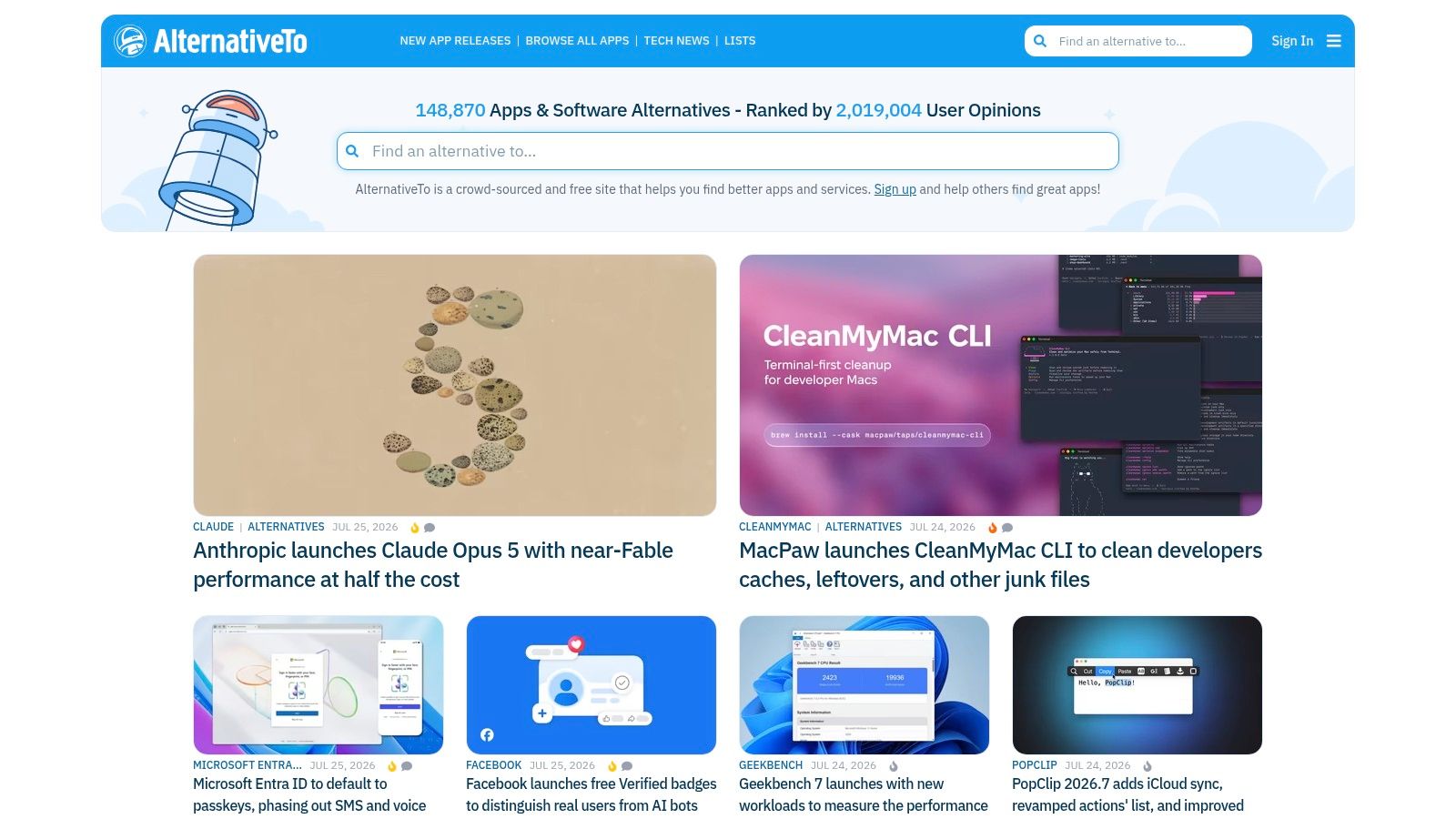
8. AlternativeTo
AlternativeTo works well for category and competitor adjacency because people land there while actively comparing software. That kind of intent is hard to fake. The free submission path opens after a short account-age threshold, and the listing flow sits at AlternativeTo.
For startup marketers, that matters because the audience is already shopping. Someone searching for alternatives to a known product is usually past the awareness stage and close to deciding what to test next. A good listing can catch that traffic and put your product on a shortlist it might never reach through general discovery alone.
The trade-off is control. Community moderation keeps the directory useful, but edits can move slowly or be adjusted by other contributors. That works if you care about quality and SEO value. It is less comfortable if you want every line locked down the way it would be on your own site.
Best use cases
AlternativeTo fits best when your product can be framed as an alternative to a familiar tool. That makes it useful for SaaS founders who want competitor discovery without spending on ads.
A practical approach is to treat the listing as part of your comparison strategy, not just another directory entry. Use it for products with a clear category, clear replacement language, and a buyer who is already evaluating options. If your positioning is fuzzy, the site will not fix that. If your positioning is sharp, it can reinforce the exact terms buyers use while comparing tools.
- Competitor targeting: Put your product where buyers already compare software.
- SEO support: Listings often appear on alternatives searches.
- Community signals: Likes and contributions can improve visibility over time.
9. SaaSHub
SaaSHub works well if you want a directory that is already shaped around software discovery. It focuses on SaaS products, comparisons, and backlinks, so the listing tends to support search behavior that matters to early-stage teams. The submission flow is at SaaSHub submissions.
For founders, the main value is fit. SaaSHub is built around software categories rather than broad company discovery, which makes it more useful when your product has a clear use case and a buyer who is comparing options. A strong listing can help a new visitor move from a vague search to a real shortlist, especially if your page copy already matches the way customers describe the problem.
The trade-off is reach. A smaller audience means fewer eyeballs than a large review marketplace, but that can be fine if the traffic is more qualified. In practice, a focused directory often beats a larger platform that brings attention without serious intent.
Use it early if your category is already clear and your positioning is tight.
When I'd prioritize it
I'd put SaaSHub higher on the list when the product category is easy to understand and the homepage copy already does the heavy lifting. If the message is fuzzy, the directory will not clean that up. If the message is sharp, the listing can reinforce the exact terms buyers use while comparing tools and checking alternatives.
It also fits a practical submission strategy. For SaaS and AI startups, I'd treat SaaSHub as part of the comparison layer, not a generic directory task. That makes it a better use of time for products that need to show up where people are actively evaluating software.
- Category relevance: Strong fit for software companies with a clear use case.
- Comparison visibility: Useful when buyers are already shopping and comparing tools.
- Submission efficiency: Easier to justify than a broad directory push with weak audience overlap.
10. Trustpilot
Trustpilot is the profile I want on page one when reputation matters. It's a free business account at Trustpilot signup, and it gives you a public review history that buyers, investors, and AI systems can check when they look at your brand.
For SaaS founders, Trustpilot is less about casual consumer feedback and more about visible proof that real customers are willing to stand behind the product. A clean profile with legitimate reviews can strengthen how your company appears in search results, especially when someone finds you after reading about the product somewhere else. It can also keep surfacing in branded searches long after the launch push is over.
The trade-off is simple. Trustpilot is strict about policy enforcement, and you have to be ready to deal with criticism in public. That trade-off is still worth it for many startups, because a credible review profile usually does more for buyer confidence than a stack of low-value directory entries.
A buyer comparing two vendors often notices the difference right away. One company has no reviews, the other has an active profile with real feedback. The second one usually feels safer, even if the review count is modest.
Set it up early, before you need it. Invite customers in a way that follows the rules, then treat response management as part of your normal workflow. Prompt replies matter because unanswered criticism tends to shape the story around your brand.
Keep the profile useful, not decorative.
- Use it for trust: Treat it as a public reputation asset.
- Monitor regularly: Critical reviews need attention.
- Match it to your brand search: Make sure the profile supports, not undermines, the search result set.
Top 10 Free Company Listing Sites Comparison
| Directory | Key features | UX & Trust | Value proposition | Best for | Price / Notes |
|---|---|---|---|---|---|
| Google Business Profile | Verified listing, hours, photos, posts, Merchant Center product modules | Highest SERP prominence, strong knowledge-panel signals | Dominant branded visibility on Google Search & Maps | All SaaS brands; useful for name queries (remote SaaS with expectation management) | Free |
| Apple Business Connect (Apple Maps) | Place card edits, Showcases, API/partner integrations for multi-location | Strong visibility in Apple ecosystem (Maps, Siri, Wallet) | Control presence for iOS/macOS users, centralized brand management | Companies targeting iOS users or multi-location brands | Free |
| Bing Places for Business | Claim/verify, Maps, announcements, import from GBP, multi-location support | Supplemental SERP control, Windows/Copilot ties | Extend branded coverage beyond Google, integrates with Microsoft surfaces | Brands with Windows/Bing audiences or enterprise users | Free |
| Crunchbase | Company profile, firmographics, claim/update, paid enrichment & exports | Highly authoritative for investors/journalists, indexes quickly | Credible knowledge-like profile and fast backlink signal | Startups seeking investor/press discovery and firmographic visibility | Free profile; paid tiers for advanced data |
| G2 (Free Vendor/Product Profile) | Claim product/vendor profiles, reviews, badges, optimization guides | Trusted review ecosystem with buyer intent | Boost conversions via social proof and review-driven discovery | B2B SaaS targeting buyers and procurement workflows | Free profile; paid lead-gen & analytics available |
| GetApp (Gartner Digital Markets) | Editorial product pages, marketplace exposure, structured content | Credible comparison flows, strong buyer traffic | High-intent marketplace visibility and comparison placement | SaaS targeting buyers researching tools | Free listing; paid programs for leads/exposure |
| Product Hunt | Self-serve launches, gallery/media, category feeds & collections | High-signal early-adopter audience; variable outcomes | Generate early traction, backlinks, and press/viral discovery | New product launches seeking makers and early adopters | Free |
| AlternativeTo | App listings, community rankings, "alternatives" SEO focus | Strong domain authority for alternatives/competitor queries | Capture competitor-adjacent search traffic and category relevance | Tools competing in established categories | Free after short account age (≈7 days) |
| SaaSHub | SaaS-focused listings, comparisons, similar-tools cross-links, featured slots | Niche SaaS audience, indexing for comparison queries | Relevant backlinks and niche discovery within SaaS buyers | Niche or category-specific SaaS products | Free listing; paid featured placements |
| Trustpilot (Free Business Account) | Claim profile, invite/manage public reviews, moderation framework | High-authority review presence, often ranks on page one | Independent social proof to validate brand for users/investors | Companies seeking transparent customer reviews & trust signals | Free account; paid features for review management |
Your Next Step Building Your Digital Footprint
You've got the list, and the priority is clear. Claim the profiles that shape branded search first, then move into the B2B marketplaces and comparison sites where buyers evaluate software. If you try to tackle every directory at once, you'll waste time on low-value listings and stall on the ones that matter.
Start with the Big 3, Google Business Profile, Apple Business Connect, and Bing Places. Then add one trust profile, usually Crunchbase or Trustpilot, and one buyer-intent marketplace such as G2 or GetApp. That sequence gives you the fastest path to visible proof across search, maps, and software discovery without spreading your effort too thin.
For founders with limited bandwidth, a managed workflow makes sense. A service like StartupSubmit can handle manual submissions across relevant startup and software directories, which saves you from the repetitive form-filling that slows most launches down. The point isn't just to collect links. It's to build durable profiles that keep supporting search visibility, brand trust, and AI-era discovery long after the launch spike disappears.
If you're ready to turn your launch into a lasting footprint, claim your core profiles this week, clean up your company data, and get your startup into the directories that influence how buyers find and judge software.