Free Business Listing: 2026 Playbook for SaaS & AI
89% of entrepreneurs reported positive expectations for their startup's future, yet the same survey still put the expected exit timeline at 3 to 5 years. That gap is exactly why founders keep getting blindsided, optimism feels healthy, but without a reality check it turns into expensive forecasting noise.
I've watched this play out after launches more times than I can count. A Product Hunt spike looks like momentum, the team celebrates, and then the graph decays hard while everyone tells themselves the next push will be different. It usually isn't, unless the plan was built on evidence instead of hope.

The Founder Optimism Trap and Why It Costs You
Founders aren't reckless because they're careless. They're reckless because they're committed, and commitment makes it easy to confuse ambition with probability. The Techstars survey makes that tension obvious, 89% of entrepreneurs said they felt positive about their startup's future, but the expected exit timeline still sat at 3 to 5 years Techstars survey on entrepreneur optimism.
The launch-day high fades faster than the slide deck suggests
A common early pattern is a sharp launch spike, then a steep drop once the first wave of attention passes. That's why a founder can feel certain the product is “taking off” after day one, then spend the next few weeks wondering why traffic, demos, or signups didn't hold.
A Product Hunt win can create a burst of visibility, but bursts are not businesses. They're signals that the message landed once, not proof that the acquisition engine works repeatedly. That matters because founders often budget time, hiring, and channel spend off the spike instead of the underlying baseline.
If you want the traction to last, you need durable surfaces, not just launch theater. That's one reason founders keep turning to directory profiles, earned mentions, and structured listing work, including services like StartupSubmit's free startup directories, which are designed to keep visibility from collapsing the moment launch week is over.
Optimism is useful for starting. It's dangerous for planning.
Why this becomes a money problem, not just a mindset problem
Over-optimism doesn't only distort your mood. It distorts sequencing. If you believe growth will arrive faster than it does, you hire too soon, spend too aggressively, or assume a channel is “working” before it has enough time to prove itself.
That's why how to set realistic expectations matters so much for startups. You're not trying to become pessimistic. You're trying to keep your runway, team, and channel bets aligned with what happens after launch, not what you hoped would happen on the call.
The practical shift is simple. Treat optimism as motivation, then force the forecast to earn its place with evidence. If the plan still looks good after that, great. If it doesn't, you just saved yourself from a very expensive surprise.
Understanding the Planning Fallacy in Startup Contexts
The planning fallacy explains why capable founders miss dates they believed. In one study, people expected to finish a task in 33.9 days on average, while completion took 55.5 days, about 64% longer than expected PMI reference class forecasting overview.
Small tasks and huge projects fail for the same reason
The same bias appears in major infrastructure work. Average cost forecasts missed by 44.7% for rail projects, 33.8% for bridges and tunnels, and 20.4% for roads. Rail passenger forecasts were underestimated by 51.4% on average, and 84% of rail projects missed forecasts by more than ±20%.
Startup founders should treat those findings as a planning warning. If people underestimate time and cost in familiar, highly visible work, a new SaaS launch, SEO program, or backlink campaign will not escape the same bias just because the team is small.
The pattern shows up in everyday growth work. Content gets published, but indexing takes longer. Outreach goes out, but replies arrive slowly. Directory submissions go live, but authority develops over time. A founder plans for momentum, then discovers that search engines, buyers, and referring sites each follow their own schedule. AI Overviews can compress the traffic available from search visibility, making a promising ranking less valuable than the forecast assumed.
Why internal estimates are usually too confident
Founders often forecast from effort and intent. Search engines, buyers, and directories respond to output, consistency, and history. Those inputs matter, but they do not produce results on the same timetable.
Reference classes provide a better starting point. Ask, “How long did comparable startups need before meaningful traction?” rather than, “How quickly should this work?” Compare teams with similar markets, budgets, channels, and product maturity. A backlink plan or a directory strategy using services such as StartupSubmit should be judged against comparable timelines, not a launch-week spike.
External benchmarks may be less flattering, but they usually beat an internal best case.
Practical rule: when a plan depends on speed, check comparable timelines before trusting your own estimate.
The planning fallacy is bypassed by replacing intuition with reference classes, then building milestones that can withstand slower indexing, delayed replies, and uneven acquisition. That discipline protects runway without requiring the founder to abandon ambition.
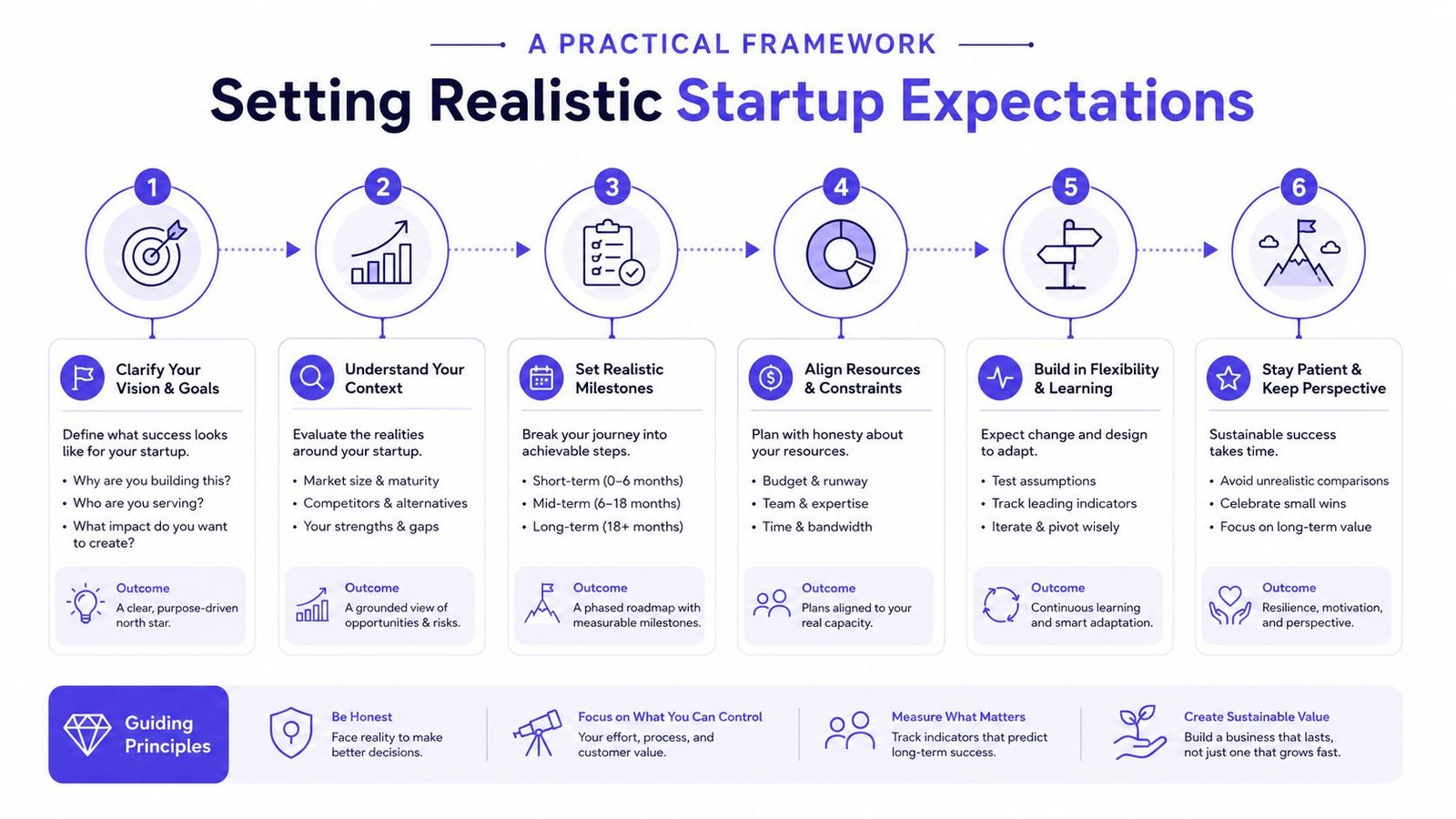
A Practical Framework for Setting Realistic Startup Expectations
Build a reference class before writing the forecast
Start with three to five startups that resemble yours in category, price point, buyer, and channel mix. Record how long they needed to reach first users, first paying customers, and meaningful SEO traction. Exclude unicorn stories. Their budgets, distribution advantages, and brand recognition make them poor planning references for an early-stage company.
For a niche SaaS product, comparable companies provide a more useful baseline than an ambitious calendar. Their timelines reflect constraints closer to yours, including limited cash, a small team, slower trust-building, and the time required for search visibility or partner responses. If directory exposure is part of the acquisition plan, assess a SaaS directory submission service against comparable outcomes rather than assuming publication creates immediate demand.
Set scenario bands, not one number
A single forecast hides uncertainty. Write a conservative case, a likely case, and a stretch case. Label the stretch case as an aspiration, not as the result you expect to fund.
Stretch targets still have a place in team management. They can raise effort and clarify what exceptional execution might produce. They should not determine runway, hiring, cash commitments, or board promises. Those decisions need to rest on the likely case, with enough room for the conservative case.
Use a planning system that keeps goals separate from forecasts. OKRs for startups can organize ambitious objectives and measurable results, provided the operating plan continues to use evidence-based assumptions.
Stress-test each assumption
For every timeline, write down the evidence supporting it and the event that would disprove it. Weak assumptions become visible quickly when they are stated plainly.
A content plan may assume that useful articles will produce organic growth. Test the competitiveness of the target queries, the authority of the site, the time needed for indexing, and whether AI features reduce the clicks available even when rankings improve. A partnership plan may assume fast referrals, while the partner may first require customer proof, a public directory profile, or stronger third-party validation.
Review expectations on a fixed cadence
Run a short monthly expectation-versus-actual review. Compare planned users, leads, revenue, rankings, replies, and conversion rates with the observed results. Then revise the next forecast using the new evidence.
Monthly review prevents a missed assumption from becoming a quarterly surprise. It also distinguishes a temporary delay from a channel that is failing, which helps founders decide whether to wait, change the tactic, or stop spending.
Keep motivation separate from forecasting
The 2025 University of Chicago study found that goals largely reflected existing expectations, while asking people to set a goal did not change expectations in the baseline and no-goal treatments. Its conclusion was that expectations matter more than goal difficulty University of Chicago study on goals and expectations.
Keep stretch targets, but do not let them rewrite the operating forecast. Goals direct effort. Evidence sets hiring plans, cash use, and milestone commitments.
For example, a founder may want 500 organic sign-ups in 3 months, while comparable companies indicate that this level of traction usually takes longer. Build the budget and staffing plan around the slower path. Treat the three-month result as upside, not as a promise.
Make realistic expectations an operating asset
Accurate expectations give founders room to choose. They support better decisions about what to build, which channel to fund, which experiment to extend, and which activity to stop before it consumes runway.
The goal is not cautious growth for its own sake. It is a forecast that remains useful when indexing slows, replies arrive late, acquisition costs rise, or the market responds differently than planned. That standard produces milestones the team can manage.
Applying the Framework to SEO and Linkbuilding Timelines
SEO exposes unrealistic expectations quickly. Search visibility can rise while usable traffic falls. Google's AI Overviews appeared in 47% of search results in a large study, and on mobile they occupied up to 48% of screen space, according to coverage of the AI Overviews study.
More visibility does not mean more clicks
Organic click-through rate fell from 15% to 8% when an AI Overview appeared. On AI Overview queries, click-through rates fell from 1.76% to 0.61% between June 2024 and September 2025, according to the DemandSphere AI Overviews report.
That changes the forecast a founder should build around. A page can improve its position and still produce fewer visits because the search page answers more of the question before the user reaches a result. If the previous plan expected 3,000 organic clicks a month from a position 4 page, the team may need stronger rankings, narrower query targeting, better conversion paths, or all three to produce the same business result.
Track more than rankings. Review impressions, clicks, qualified sessions, sign-ups, and revenue by query group. A ranking milestone is useful only when it connects to the outcome the company needs.
Query intent changes the timeline
Search intent also changes exposure to AI-generated answers. A study found AI Overviews triggered for 98% of informational queries, compared with 40% of commercial, 35% of navigational, and 0% of transactional queries, as reported in the Northwestern AI Overviews study.
Founders should set separate expectations for each intent group. Educational content can build awareness and authority, but informational searches face tougher click economics. Commercial and transactional pages may have different opportunities, yet they still require relevant rankings, a credible offer, and a conversion path. Treating all organic traffic as interchangeable produces a weak forecast.
Mentions and directories support discovery
Independent reporting on a 75,000-brand correlation study found branded web mentions correlated 0.664 with AI Overview visibility, stronger than traditional backlink metrics, in the Parse AI Overview brand impact analysis. The finding does not make links irrelevant. It shows that search discovery increasingly depends on how widely and consistently a brand appears across credible sources.
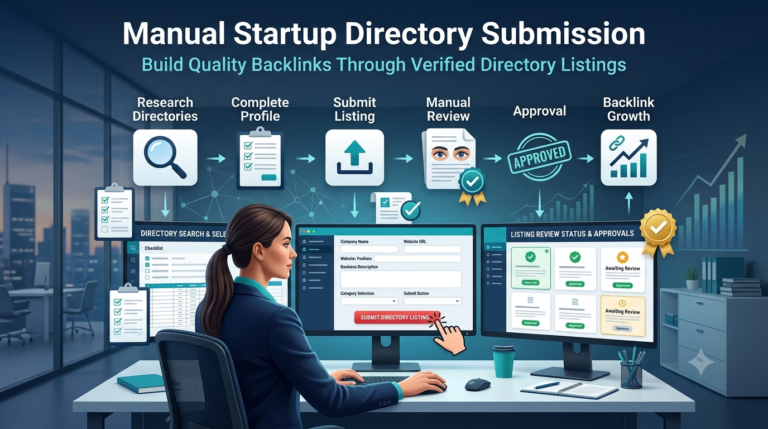
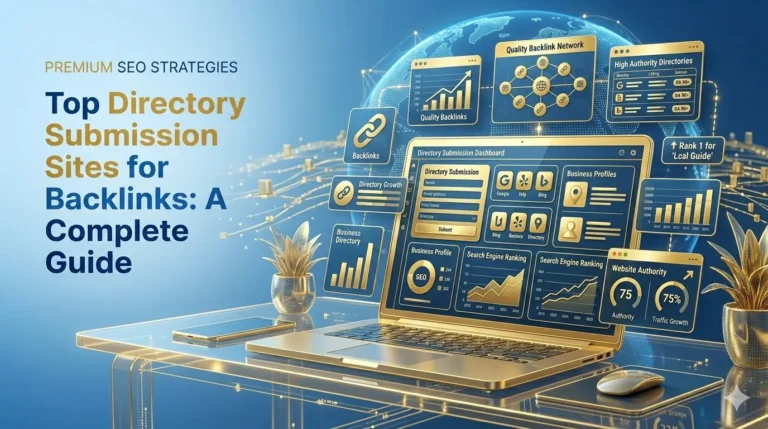
Directory work can support that broader footprint. A service such as StartupSubmit's directory submission service fits a longer-term distribution plan when submissions are relevant, accurate, and connected to a real product. The objective is not to collect arbitrary links. It is to create additional brand references that search systems and potential customers can encounter over time.
A directory profile will not fix a weak product or unclear positioning. It can give a new company a steadier starting point than a short-lived launch spike.
Aggressive SEO promises usually fail on timing
A 90-day promise to rank for a competitive SaaS keyword is usually wishful thinking unless the query has low competition and the site already has trust. A more defensible forecast is often a 6 to 10 month window for content production, authority building, technical work, and deliberate distribution to work together.
Use that window as a planning range, not a guarantee. Set early milestones around publishing consistency, indexed pages, qualified impressions, relevant mentions, and conversion quality. Review the forecast when evidence changes, rather than defending an original date that no longer fits the channel.
| Milestone | Aggressive Timeline | Realistic Timeline | Key Evidence Factor |
|---|---|---|---|
| Competitive SaaS keyword visibility | 90 days | 6 to 10 months | AI Overviews can compress search-result space and reduce clicks when they appear |
| Brand discovery through mentions | Immediate | Ongoing accumulation | Branded mentions correlate strongly with AI Overview visibility |
| Organic traffic from informational content | Fast spike | Gradual compounding | Informational queries are frequently affected by AI Overview triggers |
What Happens When You Get Expectations Wrong
Unrealistic expectations create more than missed deadlines. They weaken trust, distort hiring decisions, and make every later forecast harder to believe. Project research found that 10% of projects were canceled because expectations were unrealistic, while overall success was 35%, compared with 89% in high-performing organizations PMI expectation alignment research.
The downstream cost shows up in people first
A founder can absorb a missed target. Teams struggle when the target was never plausible. If a CMO promises page-one rankings in 60 days, then has to explain a six-month miss, the main cost is not the delay. It is the loss of confidence in the next plan, whether that plan covers SEO, hiring, or revenue.
Startup pressure makes weak forecasts more expensive. A European founder survey found that 72% of founders described building a startup as the hardest thing they had done, 75% worked over 60 hours a week, and 73% felt their dedication went unrecognized Maddyness founder survey. Optimistic timelines do not reduce that workload. They add another burden when the promised result stays out of reach.
The practical consequence is predictable: teams rush content, cut useful experiments, and treat weak early signals as emergencies. That can lead to poor channel choices, including chasing clicks after AI Overviews reduce search traffic or treating a directory listing as a substitute for sustained distribution.
Launch hype can become investor disappointment
A launch-day spike can look like product-market fit on a dashboard. Investors will ask whether the demand repeats after attention fades. If the spike came from launch platforms, Reddit, or directories rather than a dependable acquisition process, the next update becomes an explanation of the gap.
Use channels such as Reddit marketing strategies as inputs to a broader system. Track qualified visits, returning users, signups, and conversion quality instead of presenting one burst of attention as proof that the funnel works. The same discipline applies to backlink outreach and directory submissions. These activities can support discovery, but their value usually needs time and repeated evidence.
A missed forecast affects the calendar, runway, and morale at once. A defensible range gives the team room to learn without pretending that hard work should produce instant results.
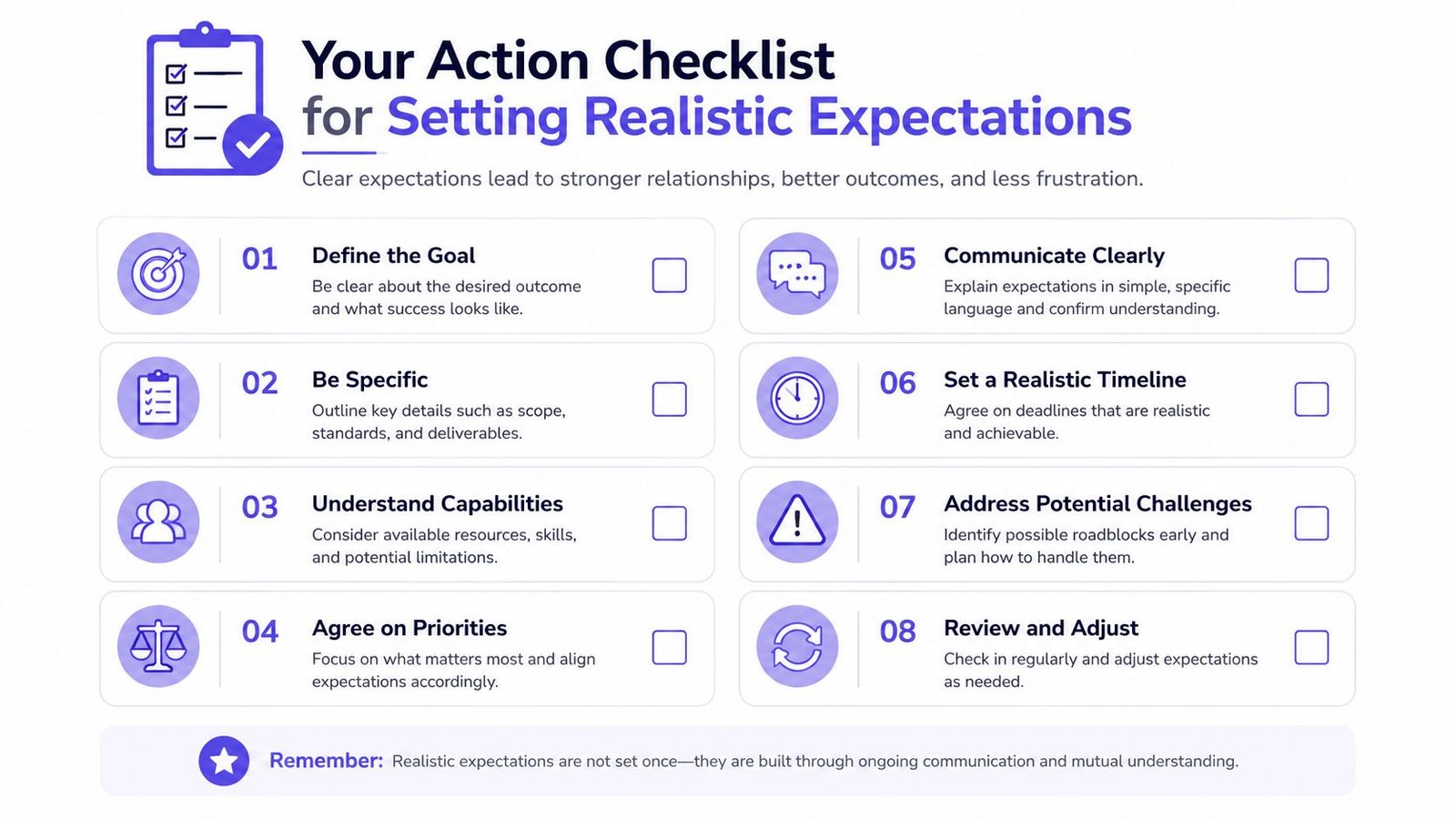
Your Action Checklist for Setting Realistic Expectations
Use this before writing your next forecast
- Start with a reference class. Compare your startup with similar companies before choosing a timeline. Internal estimates often ignore the delays those companies faced.
- Set scenario bands, not one date. Define a base case, downside case, and stretch case. Ranges expose runway risk earlier than a single confident deadline.
- Test every assumption. Record the evidence behind each forecast. Unsupported assumptions belong in the stretch case, not in the operating plan.
- Compare forecast with actual results monthly. Review traffic, qualified visits, signups, conversion quality, and spending. Early variance gives you time to adjust channels or hiring.
- Keep goals separate from forecasts. Ambitious targets can motivate the team, but they should not determine cash commitments or staffing decisions.
- Include AI search in SEO projections. AI Overviews can compress available clicks, so model visibility and traffic according to the search results users see.
- Plan for slow link and discovery cycles. Backlinks and brand mentions rarely produce immediate results. Use manual submissions to the best startup directories alongside other distribution work, then measure whether qualified discovery improves.
- Track trust signals as well as clicks. Listings, mentions, and third-party validation can make an unfamiliar startup easier to evaluate before branded demand becomes consistent.
Keep the forecast useful under pressure. A founder whose ranges survive missed assumptions earns more trust from investors, teammates, and customers than one who repeatedly revises optimistic promises.
StartupSubmit can help organize launch distribution through directory coverage and persistent brand profiles. Treat it as one input to a visibility plan, not as proof that a single launch spike will continue. Review the resulting traffic and conversion quality against the forecast, then update the next planning cycle with what the evidence supports.