
10-Step SaaS Product Launch Checklist for 2026 Success
Most founders still treat every directory as the same SEO asset. Submit the logo, paste a short description, collect a backlink, and move on. That approach confuses launch exposure with durable search value, and it ignores the difference between a buyer comparing software, an investor checking company facts, and an early adopter looking for something new.
The best listing website depends on the job it needs to perform. Evaluate each platform by search intent, audience quality, profile durability, acceptance requirements, review potential, cost, and manual effort. A launch board may create a sharp burst of attention, while a review marketplace can support bottom-funnel discovery for much longer. An entity profile may help people verify your company, even if it produces little direct referral traffic.
The ranking below organizes platforms by their strategic role across a startup lifecycle. It covers launch discovery, SaaS reviews, comparison searches, company identity, backlinks, reputation, and AI search optimization. That distinction matters as search becomes more fragmented. One industry analysis estimates that 67% of local searches now start with AI tools, while horizontal consumer directories declined about 31% year over year from 2023 to 2024 according to recent directory analysis. Founders need profiles that work for humans, search engines, and machine-readable discovery.
For teams that don't have time to manage repetitive submissions, StartupSubmit offers manual submission, duplicate checking, accurate categorization, and final placement reporting across a broader directory set.
1. Product Hunt
Product Hunt is the strongest choice when your immediate goal is launch-day discovery among early adopters, makers, and technology buyers. It isn't a durable acquisition channel by itself, but a well-prepared product page can keep earning branded visibility after the initial launch activity fades.
The platform supports free product submissions, community voting, comments, and maker tools for planning launch assets and promotion. You can also update the listing over time with changelog entries and later launches, which gives the page more staying power than a one-time announcement.
Product Hunt pages frequently rank for branded product searches because they combine a clear company identity with public engagement. They can also become useful references for search engines and large language models when someone looks up what your product does, who built it, or how it compares with alternatives. That doesn't guarantee AI visibility, but it gives your brand a public, crawlable source with context.
Best use during the startup lifecycle
Use Product Hunt when the product is stable enough to demonstrate, the landing page converts, and your team can respond to comments quickly. A vague “coming soon” page usually wastes the launch window. Prepare a concise positioning statement, product screenshots, a founder comment, and answers to likely objections before submitting through Product Hunt.
- Strength: High discovery among early adopters and builders.
- Trade-off: Moderation and community response affect reach, and the biggest impact can be short-lived.
- Operational requirement: Coordinate launch timing, community engagement, and follow-up rather than treating submission as the whole campaign.
Founders comparing launch options can also use this free startup directories resource to build a wider launch sequence around Product Hunt.
2. G2
G2 is the best listing website for B2B software that needs buyer trust, category visibility, and review-led sales support. Product Hunt introduces a tool. G2 helps a buyer decide whether that tool belongs on a shortlist.
A free vendor or product profile gives software companies a place to claim their identity, describe capabilities, and manage core information. Verified reviews, category taxonomy, reports, badges, pricing details, packages, and trial CTAs all support a more complete buying journey. Paid packages add review-generation tools, buyer-intent data, additional calls to action, and analytics.
G2 works particularly well for SaaS SEO because category pages and product profiles target commercial queries. A prospect searching for project management software, customer data platforms, or security tools isn't browsing casually. They're usually evaluating vendors, and the review context can reduce the trust gap that a new startup faces.
The cost of competing in crowded categories
The trade-off is operational. You need a compliant process for requesting reviews, responding to feedback, monitoring profile accuracy, and understanding how badges or reports affect sales conversations. In competitive categories, free presence may establish credibility without giving you enough prominence to stand out.
Practical rule: Don't send every customer to G2 at once. Build a steady, compliant review process and ask users to describe their actual experience, not to repeat marketing language.
Claim the profile early, align the product category with your website terminology, and connect G2 traffic to a dedicated comparison or demo page. For most B2B startups, G2 belongs after the product has active customers and before the sales team depends heavily on third-party validation. Explore the platform at G2.
3. Capterra
Capterra serves a different role from launch-focused directories. It is a comparison-stage listing for buyers who already understand their category and are weighing vendors. Its connection to the Gartner Digital Markets family gives the profile added context alongside related software marketplaces, while an acquisition agreement with G2 makes the broader review-market relationship more closely connected. Treat the Capterra profile as its own asset, however, with separate content, review, and lead tracking.
A free listing can provide a searchable product page with reviews and core information. Vendors can also buy pay-per-click lead generation, with sponsored placements labeled accordingly. Keep those channels distinct in reporting. Paid visibility may produce inquiries, but it does not prove that organic category discovery is working.
Capterra fits a SaaS company once three conditions are in place: a defined category, a specific use case, and enough product proof to answer comparison questions. Paying for leads too early can waste budget if the landing page, onboarding experience, or sales follow-up is not ready.
Use the platform selectively:
- Free profile: Establishes a searchable presence and communicates core product details.
- Review layer: Credible feedback can support buyer confidence and eligibility for badges or reports.
- Paid acquisition: Pay-per-click programs may create opportunities, but assess them against qualified pipeline rather than raw lead volume.
A useful Capterra test is post-click quality. Track whether inquiries match your ideal customer profile, reach a sales-qualified stage, and justify the time required for follow-up. A smaller set of relevant conversations can outperform a larger stream of poorly matched contacts.
For a broader SaaS citation plan, this SaaS directory submission service can help coordinate profile preparation alongside Capterra. Review the platform's listing and advertising options directly at Capterra.
4. GetApp
GetApp is a strong supporting platform for SaaS companies that want to expand their review footprint and long-tail category visibility. Its value often comes from complementing Capterra and Software Advice rather than replacing them. A buyer may encounter one site while researching a category and another while comparing a specific product, so consistent information across the network matters.
The platform supports free listings, verified reviews, vendor guidelines, and programs that help companies collect feedback compliantly. Its Top Rated and FrontRunners content can provide additional discovery surfaces for products that maintain relevant, recent reviews.
Why it belongs in a review marketplace mix
GetApp is most useful when you already have a repeatable customer-feedback process. A profile with stale information or a thin review base won't communicate the same confidence as an actively maintained vendor page. The platform's moderation and compliance expectations also mean that founders should prepare honest review requests instead of incentivized or scripted submissions.
The main limitation is attribution. Overlapping audiences across sister sites can make it difficult to identify which profile created demand, especially when prospects see several marketplace pages before converting. Use campaign parameters where the platform permits them, and ask new leads how they discovered your company.
Buyers don't need another empty profile. They need accurate categories, current screenshots, clear pricing context, and reviews that explain who the product is for.
GetApp can be a practical middle step between launch exposure and a mature review program. It gives a young SaaS company another place to explain its use case while building a reputation that isn't dependent on its own website. Review the platform at GetApp.
5. Crunchbase
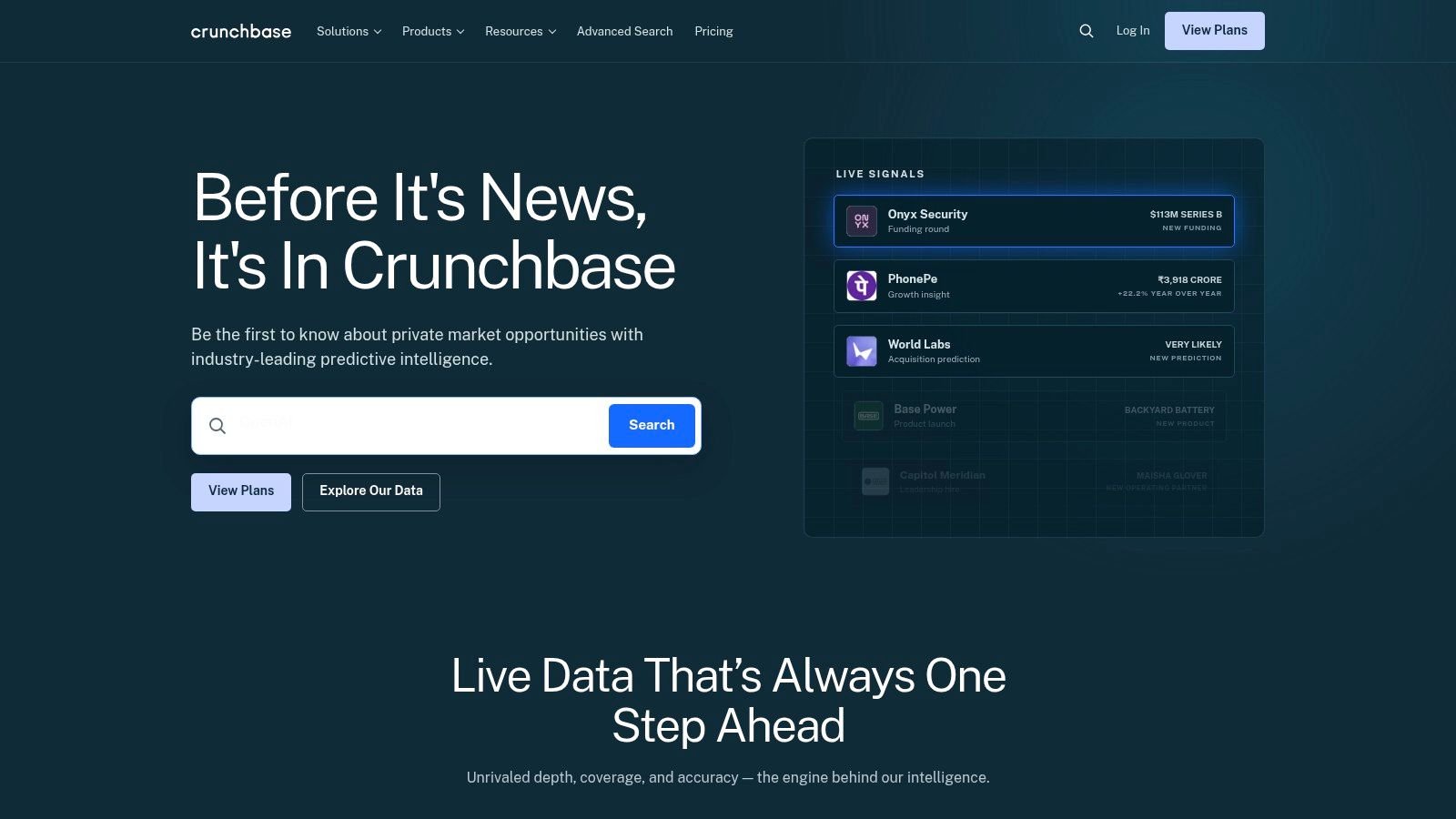
Crunchbase plays a different role from launch and review platforms. It is the company identity and firmographic record that journalists, investors, partners, candidates, and data products may consult to verify what your startup does, who founded it, and where it fits in the market.
Claim a free profile, then treat it as a controlled record rather than another promotional listing. Add core company information and connect the company to the software brand buyers see. Crunchbase Pro and Business plans provide research, alerts, and prospecting features, but those subscriptions are not required to establish a public profile.
A well-maintained page can support branded search and keep company facts consistent across external references. It cannot replace press coverage, customer evidence, or a product directory built for active software comparisons. Its value is strongest when your company name is new, descriptions vary across the web, or the team is preparing for fundraising.
Set a clear ownership process before publishing:
- Company description: Align the core positioning with your homepage and investor materials.
- Founding and team details: Confirm names, titles, links, and dates.
- Funding and status information: Publish changes only after confirmation and when disclosure is appropriate.
- Product connection: Explain how the company relates to the software brand buyers encounter.
One person should manage edits. Verification may take time, and conflicting information can lead to corrections or delays.
For reputation management, Crunchbase works best as a durable identity result, not as a direct lead source. Add it after the launch listing is live, then review it whenever your company facts change.
6. AlternativeTo
Use AlternativeTo when the buyer already has a shortlist. Its strongest role is comparison intent and named-competitor discovery. Visitors may be replacing a familiar product, checking compatibility with an operating system, or looking for a tool that supports a specific workflow.
The platform connects products through community submissions, tags, votes, and an alternatives graph. That network can associate your product with relevant categories and competitors, while community edits mean your team will not control every description or tag.
Make the comparison specific
A vague claim such as “better software” gives buyers little reason to click. State the difference AlternativeTo users can verify, such as your deployment model, target audience, integration, workflow, or pricing approach. Strong candidates include developer tools, productivity software, AI applications, and products with a clear replacement use case. A company without a live product, screenshots, or a defined category is a poor fit.
Keep the profile accurate after submission. Check tags, feature details, and community edits so outdated information does not shape the comparison.
AlternativeTo visitors can arrive closer to evaluation than general directory browsers. Send them to a dedicated alternatives or comparison page that answers the replacement question immediately, then provide one clear next action. Track referral visits, comparison-page engagement, and sign-ups separately from broader directory traffic.
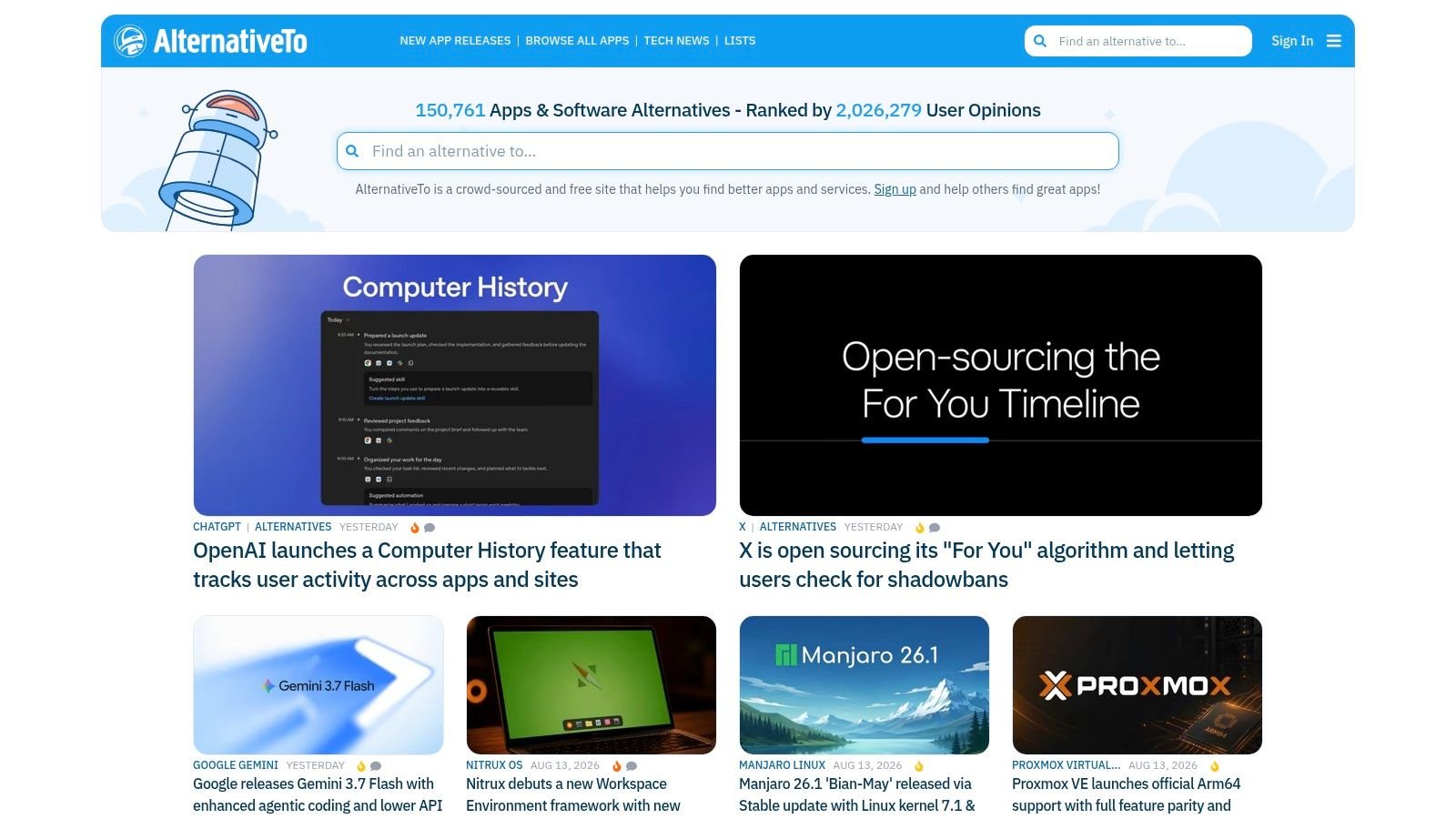
For AI startups, AlternativeTo fits a broader AI directory submission service when the product replaces established software. Submit through AlternativeTo with accurate tags and a concise explanation of the product's role. This makes it a comparison listing, not a substitute for launch, review, or company-identity profiles.
7. SaaSHub
SaaSHub is a founder-friendly option for software discovery, alternatives, backlinks, and technically oriented buyer research. Its audience overlaps with SaaS builders and developers, which makes it more useful for a live software product than for an idea that has no usable experience behind it.
The platform supports free product submissions, verification for priority, competitor and category information, and optional featured placements. Its submission tracker and resources can also help founders coordinate cross-posting without losing track of where a product has already been submitted.
What makes the profile useful
SaaSHub's clean structure gives a startup room to explain the product, list alternatives, and connect the brand with a defined category. That context can support search discovery and provide another machine-readable reference for AI search systems. It won't fix weak positioning, and a backlink alone won't replace useful product content, but it can strengthen the consistency of your external footprint.
SaaSHub requires a solid live website. Pre-launch placeholders are likely to perform poorly or be rejected because the platform needs enough information to assess the product and categorize it accurately.
A directory submission should point to a product that can survive the click. If the landing page doesn't explain the audience, problem, and next step, more listings only multiply the weakness.
Use the profile to test your category language. If you can't describe the product in a way that fits a category and a competitor set, your positioning may not be ready for broad submission. Founders who need help coordinating the workflow can review this directory submission service, then manage the live profile at SaaSHub.
8. SourceForge Business Software Directory
SourceForge began with open-source software, yet its business directory now serves technical B2B discovery, reviews, comparison pages, and promotional content. It fits products evaluated by developers, IT teams, engineering groups, and other technically informed buyers.
Treat SourceForge as a marketplace channel, not a launch announcement. A profile can support category discovery and review collection, while review widgets and content programs add work beyond a basic company listing. Partner co-listing and demand-generation options may extend that role, and a central dashboard helps vendors manage listings and related partner properties.
A practical fit for technical buying journeys
The platform is useful when prospects compare features, integrations, deployment choices, security, or implementation requirements. A developer platform, infrastructure product, security tool, open-source business, or technical SaaS can present information in the format its buyers already expect.
The trade-off is ongoing participation. SourceForge is less suitable for founders seeking a quick launch mention with little maintenance. Prepare accurate technical documentation, feature details, screenshots, and a process for requesting reviews before paying for additional programs.
Track the channel by review engagement, referral quality, assisted conversions, and technical category-page performance. Those measures show whether the listing supports qualified evaluation, rather than merely adding another profile to the submission spreadsheet.
Start with the free presence at SourceForge Software. Review the resulting traffic and engagement before choosing paid content or demand-generation tools. That sequence keeps the directory aligned with the startup's stage: establish technical context first, then expand only when the marketplace contributes measurable acquisition value.
9. BetaList
BetaList has a narrower job than a review or company database. It suits pre-launch and newly launched internet startups that need early-adopter feedback, positioning signals, and initial discovery before a wider release. Founders should treat it as a launch-stage channel, not a permanent acquisition engine.
The platform applies editorial review and charges for submissions. Optional Boost upgrades may add homepage or newsletter exposure, but they do not solve weak audience fit. A product still needs a clear user problem, a working experience, and a landing page that explains the offer quickly.
Match the listing to the product stage
Submit once an early adopter can understand the product in one sentence and decide whether to try it. Make the current stage explicit: early access, waitlist, private beta, or public availability each sets a different expectation. If signups would strain onboarding or support, delay the submission.
BetaList can generate early mentions and backlinks, yet timing determines whether those visits help. A pre-launch product may gain useful reactions, while a mature SaaS company with established customers may get more commercial value from a review platform or comparison directory.
Use the channel as one step in a measured sequence:
- Before wider launch: collect reactions and refine positioning.
- Alongside Product Hunt: reach early adopters on BetaList, then coordinate broader launch activity when onboarding is ready.
- After submission: track visits, signups, feedback quality, and assisted conversions rather than treating exposure as the outcome.
Review the best startup directories to map BetaList against launch, review, comparison, entity, and reputation platforms. Submit through BetaList only after checking its current editorial criteria and confirming that the team can handle resulting questions and feedback.
10. Trustpilot
Trustpilot earns its place later in the startup lifecycle. It addresses public reputation, review credibility, and legitimacy checks, not launch-day discovery. A prospect may search the company after seeing an ad, reading a comparison page, or receiving a sales email. A maintained profile gives that prospect an independent record of customer experiences.
Its practical value depends on how the team manages reviews. Trustpilot offers a public company profile, review collection tools, TrustBox widgets, marketing assets, analytics, integrations, and customization through tiered business plans. Widgets can add social proof to a website or campaign, while paid tiers may be relevant for advanced features, larger usage, and additional integrations.
Build a review record buyers can trust
Invite relevant customers through a consistent process and make clear that honest feedback is welcome. Asking only satisfied customers, scripting responses, or ignoring negative reviews weakens credibility. Respond publicly with specific actions, then follow up privately when resolving the issue. A high rating carries less weight when the review process appears selective or unmanaged.
Use Trustpilot as the reputation layer in a broader listing plan. Product Hunt can support launch discovery, G2 can capture software reviews, and Crunchbase can strengthen the company's public entity record. Trustpilot helps connect those surfaces when prospects check the brand before starting a trial or booking a call.
Measure the profile against buyer behavior:
- Review volume and recency: Do new customers see current experiences?
- Response quality: Does the team address concerns clearly?
- Conversion use: Do TrustBox placements assist demos, trials, or purchases?
- Reputation coverage: Does the profile answer questions raised during due diligence?
Visit Trustpilot to assess profile requirements and business options for the target market.
Top 10 Listing Websites Comparison
| Directory | Primary value | Target audience | Visibility & SEO impact | Key features | Pricing / cost notes |
|---|---|---|---|---|---|
| Product Hunt | Launch-day discovery & social proof | Early adopters, makers, founders | Often strong organic ranking for launch pages; high initial traffic | Community voting, maker tools, updatable listing | Free submissions; reach tied to featuring |
| G2 | B2B purchase intent & verified reviews | B2B buyers, sales/rev teams | Strong SEO for buyer queries; badges boost credibility | Verified reviews, analytics, review-gen tools | Free profiles; paid tiers for insights & lead tools |
| Capterra | Category discovery & PPC lead generation | In-market buyers, SMB procurement | High buyer traffic; trusted badges and category pages | Free listings, PPC lead programs, sponsored labels | Free listing; pay-per-click lead options |
| GetApp | Complementary SaaS review surface | Bottom-funnel buyers, category researchers | Strong long-tail category SEO; complements sister sites | Verified reviews, review collection programs | Free listing; visibility tied to review volume or paid programs |
| Crunchbase | Company profile & firmographic authority | Investors, media, partners, recruiters | High domain authority; profiles often appear on page one | Claimable profile, enrichment, Pro research plans | Free profile; Pro/Business paid features |
| AlternativeTo | Comparison intent & alternatives SEO | Users searching “X alternatives”, comparison shoppers | Ranks well for "alternatives" queries; drives long-tail traffic | Community voting, alternatives graph, free suggestions | Free submissions; community-moderated updates |
| SaaSHub | Curated marketplace for SaaS & developers | Developers, SaaS buyers, founders | Niche SEO and steady referral traffic; good AI discovery signals | Verified submission, submission tracker, optional featured placement | Free listing; paid featured placements |
| SourceForge (Business) | Technical buyer traffic & B2B credibility | Technical buyers, enterprise users, OSS community | Longstanding DA; category traffic and widgets index well | Vendor listings, review widgets, central dashboard | Free base listings; optional promotional features |
| BetaList | Pre-launch exposure & early feedback | Pre-launch startups, early adopters, builders | Newsletter and backlink exposure; early-stage signals | Editorial review, Boost upgrades, curated launch board | Paid-only submissions; paid exposure upgrades |
| Trustpilot | Consumer trust signals & reviews | Consumers, e-commerce, enterprises managing reputation | High consumer trust; profiles and ratings rank well | Review collection tools, TrustBox widgets, governance | Free profile; tiered paid plans for advanced features |
Turn Directory Listings Into a Repeatable Growth System
The right directory mix changes as the startup matures. A pre-launch product with no customers shouldn't spend its first marketing budget chasing enterprise review programs. An established SaaS company shouldn't rely on a launch board as its main trust signal.
Use BetaList when you're eligible and need early-adopter feedback. Use Product Hunt for a coordinated launch with a prepared audience, working onboarding, and a team ready to engage. Add G2, Capterra, GetApp, and SourceForge when buyer intent and customer reviews can support the profile. Maintain Crunchbase as the company identity record. Use AlternativeTo and SaaSHub for comparison discovery, category associations, and software-specific backlinks. Add Trustpilot when reputation checks and customer proof influence conversion.
The business directory market itself is no longer niche. One industry summary estimates a global market of about USD 7.9 billion in 2025, up 13% from 2024, with a projected 10.2% compound annual growth rate through 2032 and a projected value of roughly USD 15.5 billion. The same summary estimates that nearly 87% of small and local businesses across the U.S., U.K., and Western Europe appear on at least one digital directory, which reflects how mainstream listings have become. See the directory market summary for that context.
A practical submission checklist
Before creating profiles, prepare one source-of-truth document. It should contain the official company name, product name, founder information, website, contact details, logo files, screenshots, social links, category choices, short descriptions, long descriptions, and approved claims.
Then work through the operational details:
- Check duplicates first: Search each platform for old profiles, alternate spellings, founder-created pages, and automatically generated records.
- Use category-specific copy: Keep the facts consistent, but adapt the description to the audience and taxonomy of each platform.
- Make the destination page convert: Send visitors to a page that explains the use case, proof, pricing or access path, and next action.
- Add tracking links: Use platform-specific parameters where permitted so referral traffic and assisted conversions aren't blended together.
- Record acceptance status: Note submission dates, editorial requirements, profile owners, rejection reasons, and required follow-ups.
- Request reviews compliantly: Ask real users for honest feedback, without incentives or scripted language that could compromise credibility.
- Update durable profiles: Refresh product descriptions, screenshots, pricing context, categories, and team information when they change.
Why directory SEO needs more than backlinks
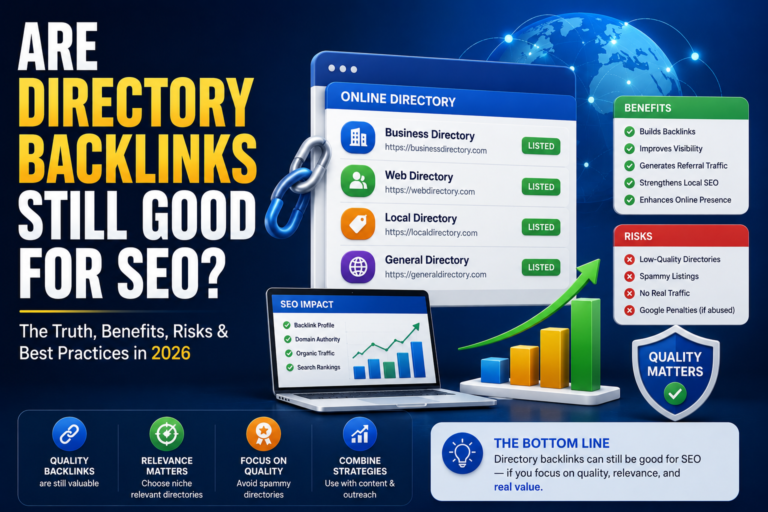
A directory link can support discovery, but it isn't a guaranteed ranking lever. The stronger value comes from the combination of a relevant page, consistent company facts, a credible domain, buyer reviews, and a destination page that satisfies the visitor.
That combination is increasingly relevant to AI search optimization and LLM SEO. Google AI Overviews appear at the top of search results and can cite source links, so authoritative mentions and backlinks can help a brand become part of the supporting information ecosystem, as explained in this overview of AI Overviews and SEO. A separate study found that AI Overviews appeared for 30% of U.S. desktop keywords, and 97% of AI Overviews cited at least one source from the top 20 organic results, according to SEOClarity's research. Strong organic SEO still matters to AI visibility.
The click risk is real. Google AI Overviews have been associated with lower organic visibility and clicks, especially for top-ranking non-branded keywords, according to Search Engine Land's coverage. That means founders should measure more than sessions. Track branded searches, assisted conversions, qualified leads, review activity, backlink acquisition, and whether authoritative profiles occupy the results page for the company name.
When manual execution is worth outsourcing
Manual submission is worth considering when founder bandwidth is the bottleneck, the startup has many duplicate risks, or every platform requires different categories and descriptions. It also makes sense when the team needs a clean record of what was submitted, what was accepted, and which live URLs can be monitored.
StartupSubmit describes a 200+ directory coverage, no-bot workflow, duplicate checking, categorization, and a typical five-to-fourteen-day execution window. Its stated deliverables include a final report with backlink URLs, acceptance notes, and screenshots. Those operational details are useful because directory work often fails through incomplete records rather than through a lack of available platforms.
The service should still receive accurate source material from the founder. Outsourcing form completion doesn't remove the need for good positioning, a conversion-ready website, or a compliant review process. It shifts repetitive execution away from the core team while preserving a trackable submission plan.
FAQ for startup directory submissions
Are free listings enough?
Free listings are enough to establish a presence on many platforms, especially when the profile is complete and the audience fit is strong. Paid packages can add lead-generation, analytics, buyer-intent data, review tools, or featured placement, but they should be evaluated against qualified pipeline rather than visibility alone.
Do directories help startup SEO?
Relevant, maintained profiles can support branded search results, backlinks, entity consistency, comparison discovery, and referral traffic. They won't compensate for a weak website or unclear positioning. Prioritize platforms where the page serves a real search or buyer intent.
When should a startup submit?
Use BetaList for an eligible pre-launch or early product, Product Hunt for a coordinated public launch, and review marketplaces after customers can provide genuine feedback. Create the Crunchbase profile once your company facts are stable enough to publish and maintain.
How can founders keep reviews compliant?
Invite real customers to share honest experiences, avoid scripting positive language, don't restrict requests to only satisfied users, and respond professionally to criticism. Follow each platform's current review policies before launching a collection campaign.
Should one person submit to every platform manually?
A founder can handle a focused set of priority profiles. Broad submission becomes harder when platforms require different categories, duplicate checks, editorial follow-up, and proof of acceptance. Manual support can be useful when the team needs 200+ placements managed without bots and documented in a final report.
Start with the platforms that match your current stage. Select the priority set, prepare the source-of-truth profile, create tracking links, and record every submission and outcome. Review referral traffic, branded-search activity, backlinks, profile acceptance, review growth, and qualified-lead signals over time. That turns “the best listing website” from a generic ranking question into a measurable startup marketing system.
StartupSubmit offers manual directory submission for SaaS and AI startups, including duplicate checking, categorization, profile management, and final reporting with live listing details. If you want to build a structured listing plan without spending founder time on repetitive forms, visit StartupSubmit and review the available submission options.