
Local Citation Building Service: Pricing and How to Choose
You bought a citation package last quarter. The report arrived, the spreadsheet looked full, and a week later ChatGPT still described the company with last year's name. A dental practice I ordered the same kind of work for had three spellings and two phone numbers, and nobody on the team could say which version search engines trusted.
That's the core purpose of a local citation building service. The listing count rarely changes what people or assistants believe. A matching record does. I've paid for this work for clients and for software products, and I would not buy another pack until the name, phone, URL, and category are identical on the profiles that already rank.
Table of Contents
- What a Local Citation Building Service Actually Delivers
- Why Citations Still Move Local and AI Rankings
- Manual Versus Automated Citation Building Compared
- Deliverables and Timelines You Should Expect
- Pricing Benchmarks by Model and Volume
- Vendor Evaluation Checklist Before You Sign
- Common Pitfalls That Waste Citation Budgets
- Frequently Asked Questions About Local Citation Building
- Choose Your Citation Path Before You Pay
What a Local Citation Building Service Actually Delivers
A citation is any online mention of a business name, address, and phone number, usually paired with a website and a category. A local citation building service places and cleans those mentions across relevant directories, one location at a time.
Treat each listing like a copy of the same ID card. The more trusted desks that show the same details, the easier it is to confirm who you are. Conflicting copies do the opposite. They give search engines and assistants two businesses to choose from.
The work is narrower than a full SEO retainer. We match directories to the location and the industry, then build listings across general, local, industry, review, and map platforms, including the citation and map-style listings that help a nearby business get found. You should leave with a report of what was placed, not a vague "submitted" total.
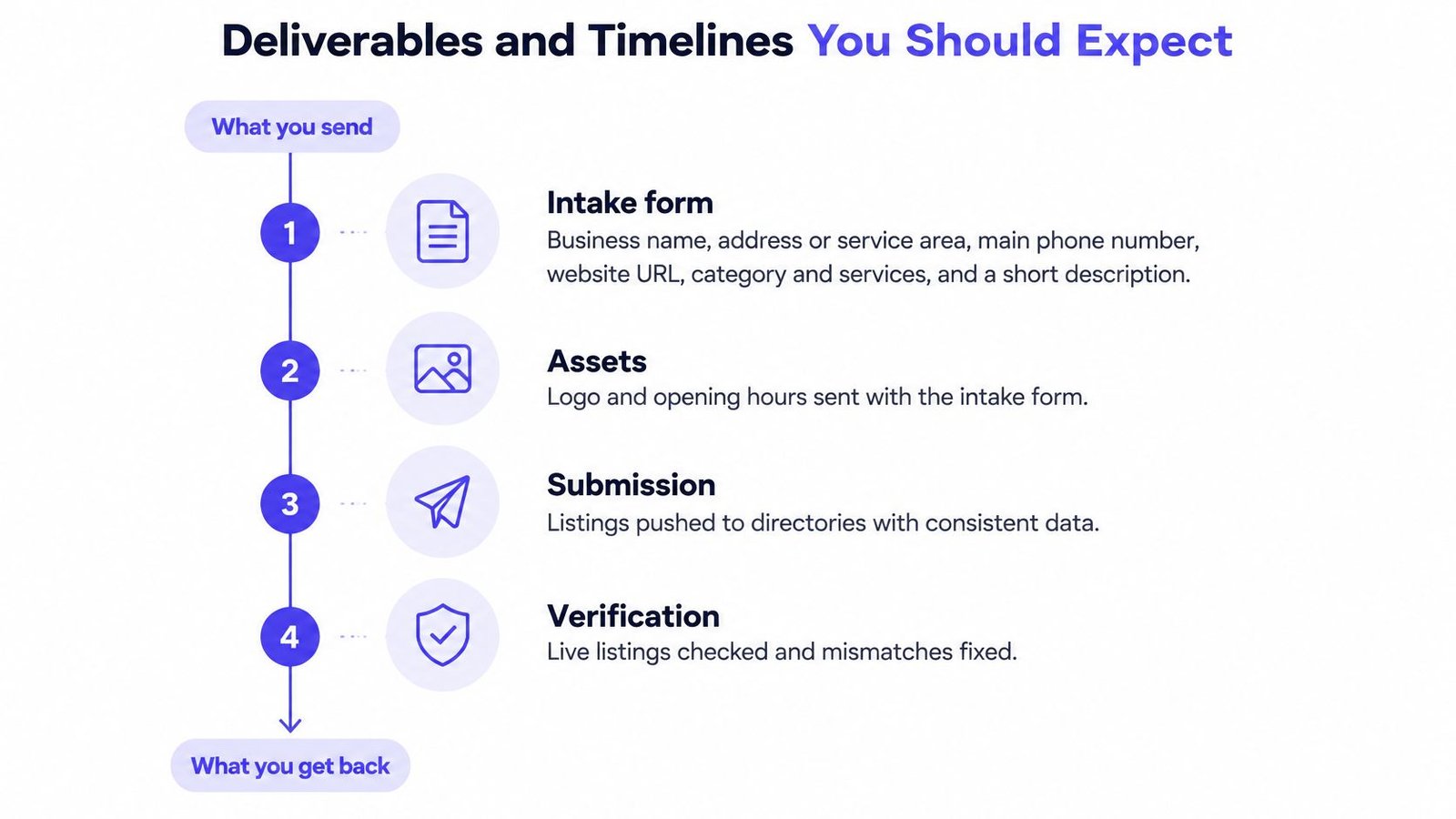
Most providers, including us, run the same four steps. You choose a plan and pay once. You send the business details in one short form. The team researches and submits by hand. You receive a report.
Who the order is for
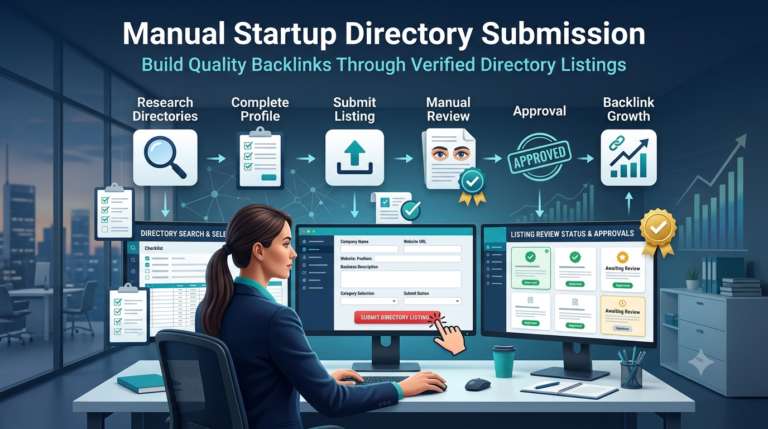
We build these listings for local and small businesses, service-area businesses, multi-location brands, home services, professional services, healthcare practices, restaurants and retail, franchises, and agencies ordering for clients. If customers or assistants could find you under two different names, you already need this work. A startup with no storefront needs a narrower cut, product profiles rather than map pins, which is a different order from a city-level pack. The directory submission workflow is the manual version of that placement work.
Why Citations Still Move Local and AI Rankings
Google's local ranking rests on three factors: relevance, distance, and prominence. Relevance is how closely a profile matches the search. Distance is the searcher's location. Prominence is how well known the business is. Citations mostly feed the first and the third. They confirm what you are, where you operate, and that other sites agree.

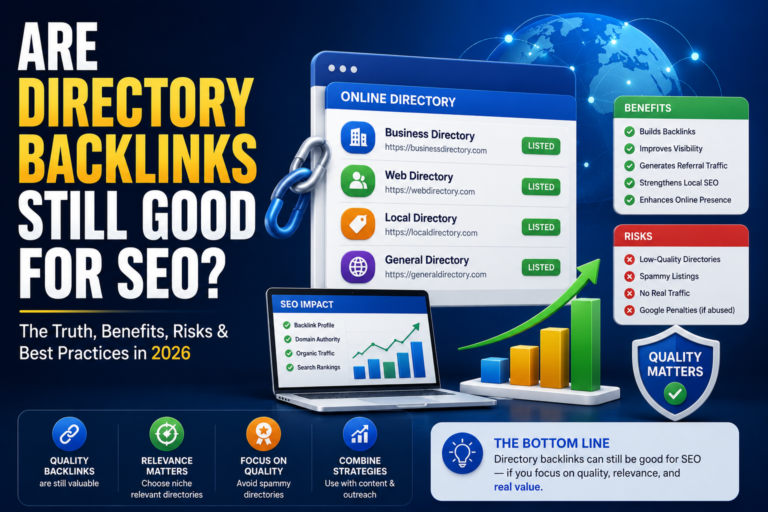
Prominence, in Google's own framing, can be influenced by how many sites link to a business and how many reviews it has. More reviews and positive ratings can help local ranking. A directory profile is not a ranking guarantee. It is an identity reference that search and review platforms can cross-check.
The weighting has moved, and the old surveys are history, not a target. In Moz's 2017 Local Search Ranking Factors survey, citation signals were 13.31% of the thematic ranking weighting, while review signals rose from 10.80% in 2015 to 13.13% in 2017. I read that as a shift in emphasis, not a reason to abandon accurate profiles. Reviews got heavier. Sloppy directories did not get a free pass.
What an indexed profile can and can't do
Google's AI features documentation says AI Overviews and AI Mode surface relevant links so people can check the answer. A page doesn't need special AI markup, an AI-specific file, or new schema. It has to be indexed and eligible to appear in Search with a snippet, and any structured data has to match the visible page. A directory profile helps only on those terms. If it isn't indexed, or it describes the wrong category, it doesn't become an AI citation because you paid for it.
On the consumer side, BrightLocal's 2025 survey of 1,026 U.S. adults found that 74% check reviews on at least two platforms when researching local businesses. People already leave Google to verify you. Assistants do a version of the same check against whatever profiles they can read.
Practical rule: Match the description and category on the credible sites first. A startup is easier for people and machines to place when those fields agree, and harder when they don't.
If you want the wider local program around those profiles, Baikou's guide on how to improve your local search visibility is a useful companion. It won't replace a clean identity record.
Manual Versus Automated Citation Building Compared
An automated tool maps your business data to templates and pushes it through connected feeds or an API. That's fast, and it's cheap to repeat when hours or phone numbers change often. A manual service has a researcher read each directory's rules, search for listings that already exist, type the data, and capture a screenshot of the live page. We submit every local citation by hand, with no bots at any step, which is the reference point for the comparison below.
| Criterion | Manual service | Automated tool |
|---|---|---|
| Directory selection | Chosen by category, country, and buyer fit | Pulled from a preset directory database |
| Duplicate handling | Existing listings checked and reconciled before submitting | Often detected after publishing, if at all |
| Data entry | Written per platform against one approved record | Mapped to templates and synced by API |
| Proof of placement | Screenshot and live URL for each listing | Dashboard status, so verify URLs yourself |
| Moderation risk | Low when each site's rules are followed | Higher when a feed ignores site rules |
| Cost model | One-time fee per business location | Recurring subscription |
| Ongoing edits | Needs a new order after the build | Updates push across connected sites |
| Best fit | Startups building a clean baseline | Multi-location brands with frequent changes |
Which workflow fits the risk
There isn't a single winner. A single-location startup that needs a clean baseline usually benefits from manual work, because a researcher can skip directories that don't match the category. A multi-location brand that changes hours or phone numbers every month needs the sync that platforms such as Yext or Semrush Listing Management provide. Manual work is slower and costs more per listing, so it pays off when placement quality matters more than speed.
I would not automate the first pass if the category is easy to get wrong. A project tool pushed into a generic "software" bucket on forty sites is harder to unwind than a slow, correct first build. Teams that want the broader manual placement model, including non-local sites, can compare it with a directory submission service before they lock a local-only plan.
Deliverables and Timelines You Should Expect
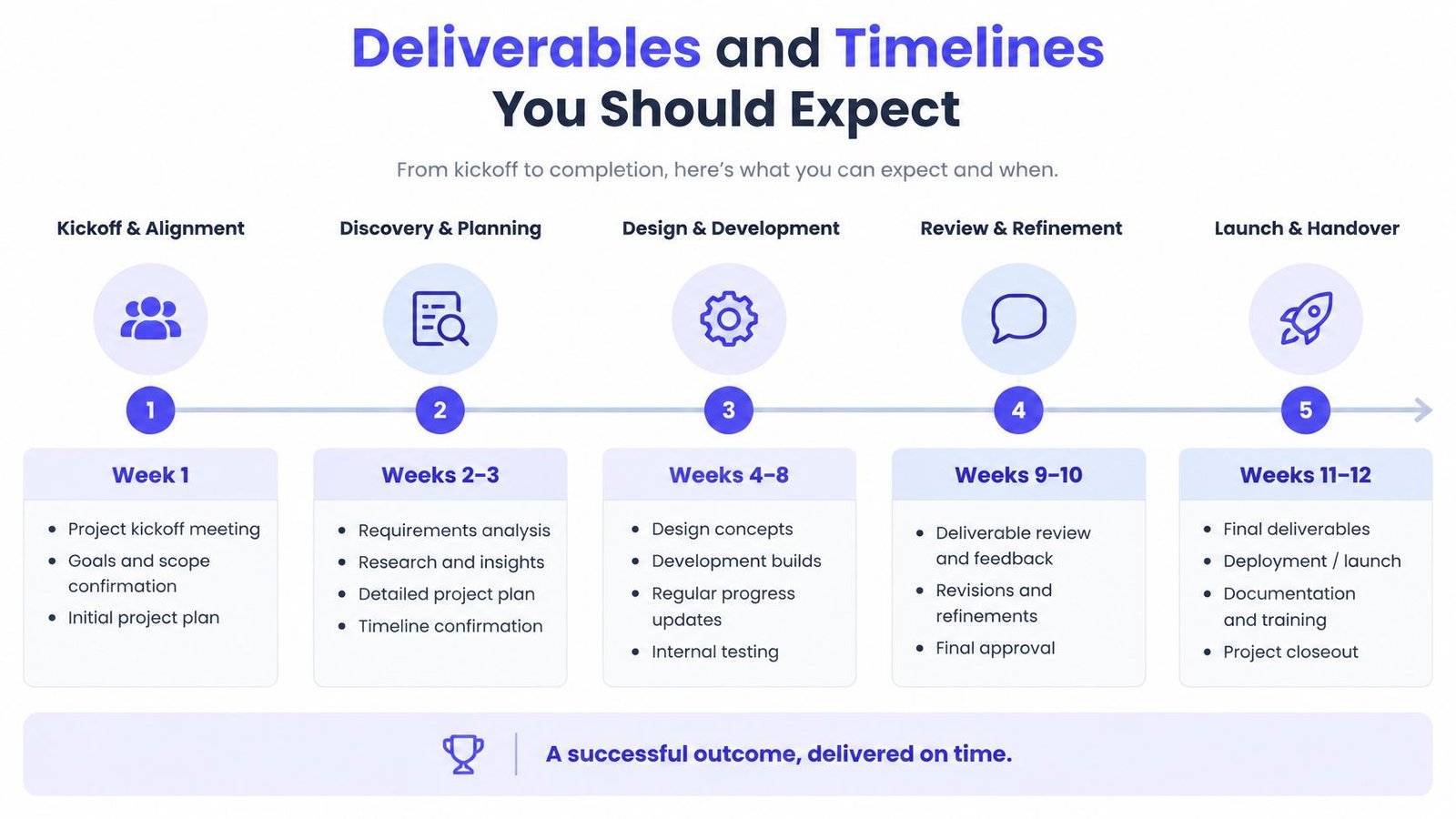
Local citation orders are delivered within 5 to 7 days, with a report of every submission and its status. That window is the commitment. The phase split below is a typical shape of the work, not a published hour-by-hour schedule.
You start by sending a business name, address or service area, main phone number, website URL, category and services, and a short description. Logo, opening hours, social profiles, and existing listings are optional. Sending them shortens the duplicate check, because the researcher isn't guessing which Facebook page or old Yelp card is yours.
| Phase | What happens | Typical duration | What you receive |
|---|---|---|---|
| Intake | Business details, category, and optional logo and hours | Same day | Confirmed business record |
| Research | Platform checks by country, region, and category | 1 to 2 days | Directory shortlist |
| Duplicate check | Existing listings found and flagged | 1 day | Audit of current profiles |
| Submission | Manual entry, one listing at a time | 2 to 3 days | Submission log |
| Verification and report | Status checked and screenshots captured | 1 day | Final report with URLs |
| Total order | End to end | 5 to 7 days for local orders | Full report of every submission |
Pending listings and later changes
Some directories hold a listing for moderation. A placement can be submitted and still not live when the window closes. Ask how pending status appears in the report, and whether a pending row counts as delivered. I treat a live URL as delivered and a moderation note as unfinished until the page resolves.
A manual citation build is a one-time job. Changes require a new update.
If you expect a move, a rebrand, or a new phone line in the next quarter, time the order or budget a second build. Paying for 100 profiles in March and changing the number in April means you bought a cleanup project.
Pricing Benchmarks by Model and Volume
Plans are a one-time payment per business location, and each location gets its own set of citations. A five-location brand pays for five builds. Unit cost falls as the pack grows.
| Option | One-time price | Citations included | Cost per citation |
|---|---|---|---|
| StartupSubmit Starter | $79 | 50 | $1.58 |
| StartupSubmit Growth | $109 | 100 | $1.09 |
| StartupSubmit Authority | $259 | 300 | $0.86 |
| Freelance manual build | One written quote per location | Volume named in the quote | Quote divided by listings with live URLs |
| Agency monthly retainer | Monthly fee for a defined scope | Ongoing edits, not a fixed pack | 12-month total compared with a one-time build |
| Automated listing subscription, such as Yext or Semrush Listing Management | Recurring fee on the vendor's current price page | Coverage set by that network | 12-month invoice divided by live listings |
The Starter plan is $1.58 per citation, Growth is $1.09, and Authority is $0.86. The 300-citation Authority plan is $68 less than three Growth plans, which is the clearest value signal on the price list. Every plan includes general business and local directories. Growth and Authority add industry, niche, regional, and review platforms. Starter is the core set for a single location.
Volume is a competitor problem, not a price problem
BrightLocal's citation study covered 122,125 businesses and 18,580 related keywords. Businesses in Google's top three local results averaged 85 citations, compared with 75 for businesses in position 10. The study doesn't treat that gap as proof that more listings cause higher ranks. A 50-citation plan can still fall short in a competitive city. I benchmark against the three to five competitors already above you in the same area and category, not against a universal target such as 200.
Pay for relevant, accurate listings. A bigger headline number with the wrong categories is a maintenance bill.
Freelancers, agency retainers, and automated subscriptions are priced by scope and by period. Request line-item quotes, check whether duplicate cleanup and screenshots are included, and compare annual totals rather than a monthly sticker. If the business has no local pack to win, look at free startup directories before you fund a city-level build.
Vendor Evaluation Checklist Before You Sign
Score each vendor on eight criteria. A red flag on data control, proof, or link claims is a stop, not a negotiation point. Data control decides whether the work helps, because the rest of the checklist can't rescue conflicting names.
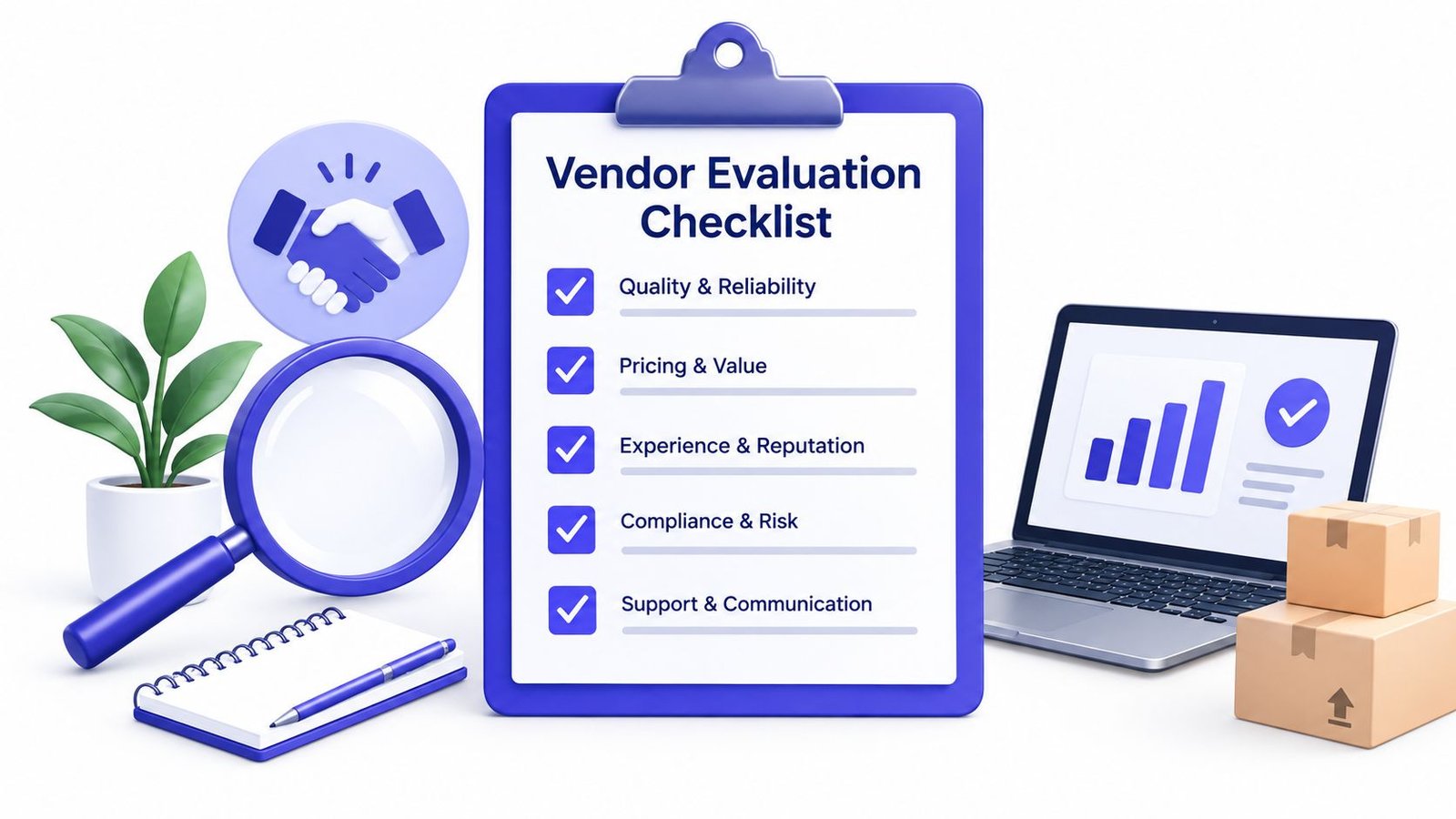
In BrightLocal's expert local citation survey, 90% of local-search specialists rated accurate citations as important to ranking, and 86% said quality matters more than quantity, with industry relevance ahead of raw directory count. Ask whether the vendor keeps one approved record and reuses one description, one category set, and one URL. Phone numbers should match exactly. City, postal code, and URL should be correct everywhere.
| Criterion | What good looks like | Red flag |
|---|---|---|
| Directory list | Named platforms matched to your country and category | A generic list with no country or category match |
| Data control | One approved record and one approved description | Free-form text rewritten for each site |
| Duplicate handling | Existing listings checked before any submission | No mention of duplicates |
| Proof | Screenshot and live URL for every placement | Summary totals with no URLs |
| Submission method | Stated plainly and documented | Proprietary automation described vaguely |
| Link expectations | States that listings aren't guaranteed backlinks | Promises a fixed domain rating gain |
| Update policy | Clear rule for changes after delivery | Silence on edits, mergers, or removals |
| Guarantee | Written refund or redo terms | None stated |
The three checks that should decide it
Proof. Our local plans include a duplicate check before submitting and a screenshot of every submission. Ask any other vendor to meet that standard. Read a sample report for URLs, not for totals.
Link claims. We don't promise a backlink from every listing, because citation building isn't a link-building service. A vendor that promises a fixed domain rating gain is selling a number.
Updates and refunds. A one-time build doesn't cover a later rebrand. If the contract is silent on edits, mergers, and removals, assume you'll pay again. The same standard applies if you're comparing a startup directory submission service for a product with no storefront. Screenshots still matter, and so does a written redo policy.
Common Pitfalls That Waste Citation Budgets
The expensive mistake is chasing listing count. A 200-listing build that carries three versions of the company name creates conflicting identity signals and spends the budget on noise. Search engines don't average those versions into the right one. They keep the conflict.
AI answers make the same mess stickier. A 2025 Soci analysis of roughly 3,000 multi-location brands and 350,000 locations reported ChatGPT data at 65.5% accuracy and Perplexity data at 69.8%, while Gemini reached 99.2% when it drew directly from Google Maps. Those systems use a broad set of sources and don't reliably reconcile conflicts. An outdated directory can keep shaping answers after your own website is fixed.
- Category mismatch: A project tool sits under generic software on one site and a niche category on another. You pay for both, and assistants pick the broader, less useful label. Write one primary category this week and reuse it.
- Stale data after a change: A rebrand, price change, office move, or new phone number lands on the website and nowhere else, because nobody owns the update. Assign one person to push the new record to the profiles that already rank.
- Counting submissions, not live pages: The report says 100 submitted, and 40 are pending, rejected, or unindexed. Judge success by listings that are live, indexed, and accurate.
- Duplicates after a rename: The old name and the new name both stay live, so you look like two companies. Search the old name, claim or close those cards, and don't submit the new name on top of them.
Fix the profiles that already rank for your name before you buy another hundred submissions.
For a software company, that audit often starts on the best startup directories your buyers already open, not on a random local list from another country.
Frequently Asked Questions About Local Citation Building
Which citations should I correct first?
Start with the profiles that feed search and assistants most directly: your Google Business Profile, Apple Business Connect, and Bing Places, then the two or three directories that rank for your category. Fix the name, phone, and URL before the description. Mismatches in those three fields cause the most damage.
What if directories disagree on category?
Pick one primary category from the platform's own list. Copy the category the top three competitors use when it honestly fits, and reuse that wording everywhere. Don't let each site invent a friendlier label.
How do I check whether assistants use the updated data?
Ask ChatGPT, Perplexity, and Google once a month what your company does. Save the answer with the date, and note which URLs it cites. Expect a lag of weeks, not days. A stale answer usually means an old profile still carries weight.
Does a directory listing guarantee AI visibility?
No. A listing is one indexed, accurate reference among many. It helps only when that page is eligible to appear in search. It doesn't guarantee a mention in ChatGPT or an AI Overview.
Do I need new schema for AI Overviews?
I wouldn't add a schema type just to chase an AI answer. Google's structured data guide treats markup as a way to classify what's already on the page, and it points you to the Rich Results Test and URL Inspection after you deploy it. Visible facts and markup have to match. Extra properties won't repair a wrong phone number on other sites.
Choose Your Citation Path Before You Pay
If you have a physical location or you serve customers in a defined area, a local citation plan fits. It matches directories to your country, region, city, and category. Our local plans cover the US, UK, Canada, Australia, and New Zealand, using directories that serve that country and area.
If you run a SaaS or AI product without a storefront, a local plan is the wrong tool. We offer four lines: local citation, general directory submission, startup directory submission, and AI directory submission. The startup and AI lines belong on product profiles such as Product Hunt, G2, Capterra, BetaList, Indie Hackers, AlternativeTo, and SaaSHub. Those are product pages, not map pins. A general directory submission service also exists for a website that isn't a startup.
A mixed case is common. A SaaS company with a registered office and a remote team can buy a local plan for the office and a startup directory build for the product. Agencies and SEO consultants can order for client businesses and ask for an unbranded report to share as their own.
Listings still aren't editorial links. After the identity work, if you need referring domains, Keyword Kick's roundup of backlink building sites is a separate purchase. Don't let a citation vendor fold that promise into the same invoice.
- Claim your Google Business Profile if you have a location.
- Write one approved record with the name, URL, category, and description.
- Search your exact name and address.
- Audit the top 20 listings you find.
- Choose the local path or the product-directory path using the checklist above.
- Request a sample report before you pay, and read it for URLs.
- Review the record every quarter, or after any move, rebrand, or phone change.
StartupSubmit runs a manual local citation service for businesses with a real service area, plus directory submission for SaaS and AI products that shouldn't buy map listings. If your name, category, and URL still don't match on the profiles people and assistants read most, start with one approved record and a plan sized to your competitors, not to a headline count. Visit StartupSubmit when you're ready to place the order or to see which service line fits.