10 Directory Submission Sites for SaaS Startups in 2026
You've shipped the product, fixed the onboarding bugs, and opened a spreadsheet of directory submission sites. Now you're deciding whether to spend launch week filling out profiles or getting your next customer.
The usual approach is to copy a long list and submit everywhere. Later, you're left with missing profiles, duplicate entries, questionable backlinks, and no reliable record of what went live. A submission count doesn't tell you whether a buyer can find your product.
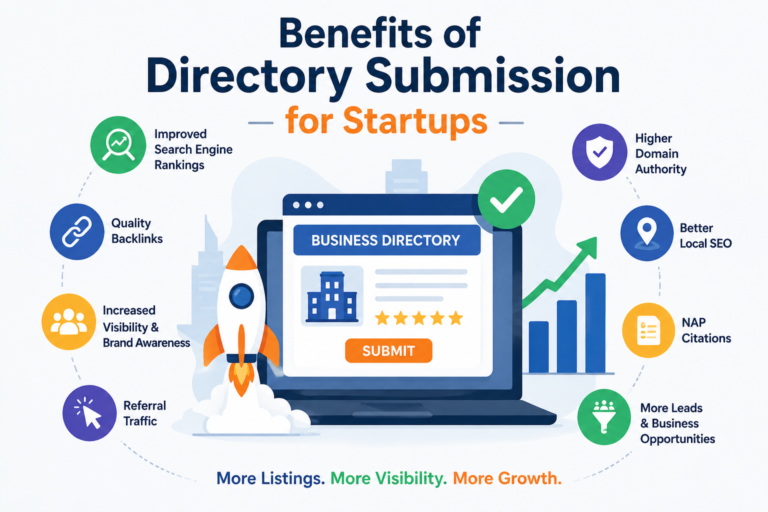
A useful directory footprint starts with accurate, durable company profiles. Those profiles give prospects public references to check and create a foundational entity layer for search and AI discovery. They don't guarantee rankings, recommendations, or permanent placement.
Choose a directory because your buyer belongs there, not because someone put its domain score in a spreadsheet.
The platforms below serve different jobs. Some help buyers compare software. Others support launches, community participation, or open-source distribution. StartupSubmit is a submission service rather than a directory, so judge it on execution and reporting instead of audience reach.
Apply the same filter throughout: authority and evidence of traffic, editorial review, category fit, and listing eligibility. Look at actual category pages, recent activity, and existing profiles, not just the homepage.
You don't need every platform on this list. You need the ones where your product belongs, a clear description, and a process for checking what happens after you press submit.
Table of Contents
- 1. StartupSubmit
- 2. Product Hunt
- 3. G2
- 4. Capterra
- 5. BetaList
- 6. AlternativeTo
- 7. SaaSHub
- 8. Indie Hackers
- 9. GetApp
- 10. SourceForge
- How the ten sites differ by audience, cost model, and submission route
- Your Next Week of Directory Work
1. StartupSubmit
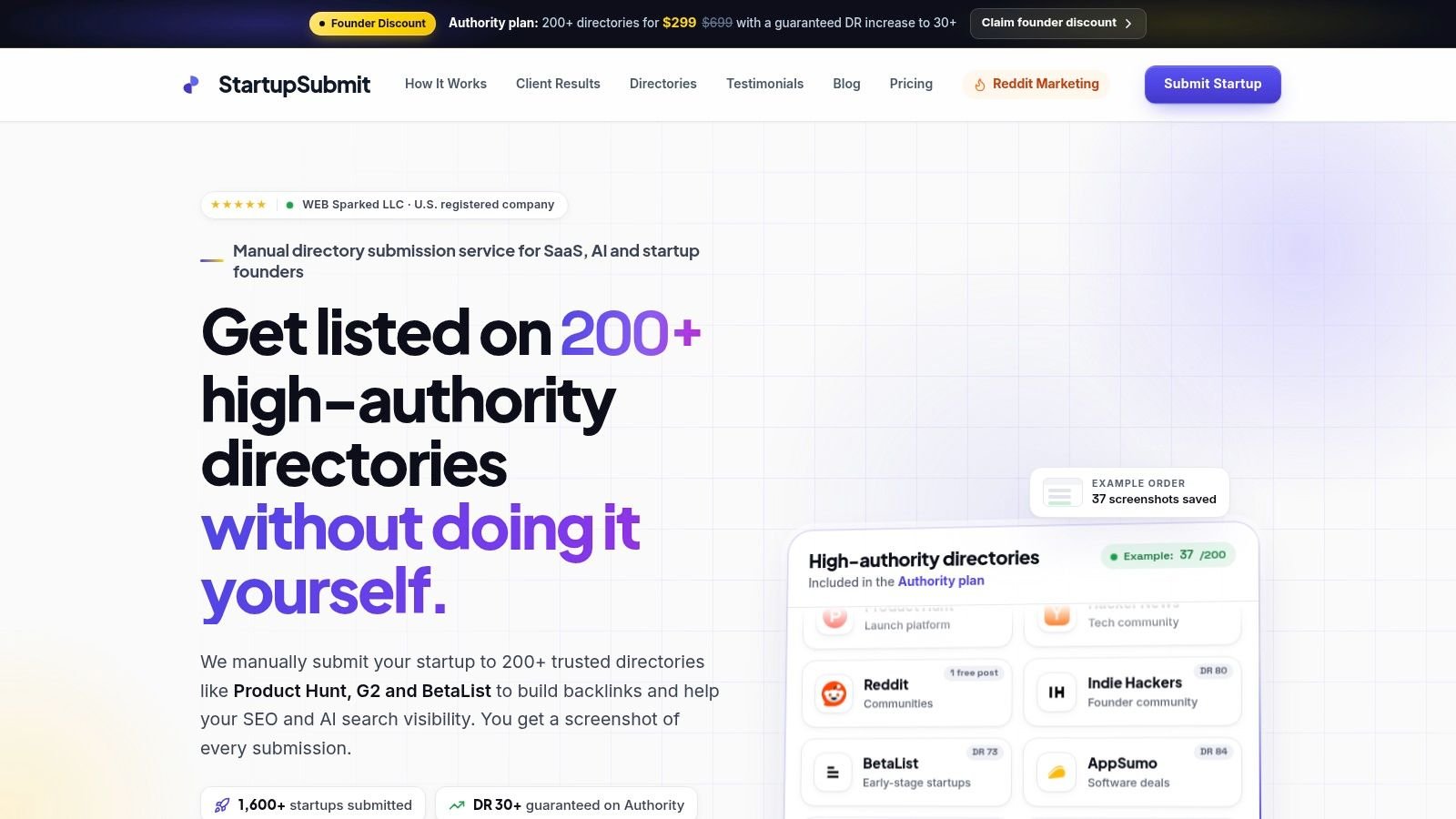
The product here is time: founder hours moved off repetitive forms while the name, tagline, category, description and links stay consistent. StartupSubmit runs separate startup, SaaS and AI submission tracks, plus general directory and local citation work for businesses outside the startup category.
A team of about 20 SEO professionals does the work manually, with no bots and no automated footprint. Submissions stay inside curated, editorially reviewed directories; link farms and spam networks are excluded. One-time pricing scales by coverage: AI directory plans are $99 for 60+ directories and $199 for 150+, while the startup Authority plan is $299 for 200+ directories with a stated DR 30+ guarantee.
What the campaign should prove
- Documented placement: The report lists every submitted backlink URL with screenshot proof for each directory, plus acceptance notes where available.
- Cleaner data: Duplicate checks catch existing listings, and profiles are matched to accurate tags, categories, descriptions and links.
- Controlled coverage: If the business is already listed, that directory is skipped and another relevant one is used where available.
- Real limits: Submission does not mean approval. Rankings, referral traffic, directory decisions and AI citations are not guaranteed.
Apply the same filter you would use for any directory: visible authority and traffic, editorial review, category fit, and rules that suit the product. A declined category leaves no listing there. A closed directory leaves a dead URL. The record should show either outcome and name the replacement when a relevant one exists.
The trade-off is control for attention. Delegating form-filling buys back launch week, but you still own positioning, categories and factual claims. Treat the DR guarantee as a delivery threshold, not a Google ranking promise. Most listings should be durable because the submission follows each directory's guidelines and passes review.
2. Product Hunt
Product Hunt is a launch platform, not a passive business registry. It suits SaaS, AI, and developer products with a clear story, prepared assets, and a maker who can participate in the discussion.
Launching is free, and makers can submit their own products without finding a third-party hunter. The product page can remain a public reference afterward, but homepage featuring is an editorial decision, not an entitlement attached to submission.
Prepare a launch, not just a listing
You'll need a name, tagline, description, logo, images, and category tags. Write a maker comment that explains the problem, who the product serves, and what feedback you want.
- Best fit: A working product that people can understand and try.
- Main advantage: Product discovery and direct feedback from a technology-focused audience.
- Main cost: Preparation and active participation, even when the submission itself is free.
- Hard boundary: Buying upvotes or manufacturing engagement is prohibited.
For a product that needs a demonstration, AI-generated video for your startup launch can help explain the workflow. Show the actual task and output instead of using animation to hide an unclear value proposition.
If you plan to submit your AI product to directories, keep the same factual positioning across those profiles, but give Product Hunt its own launch narrative. A directory description explains what exists; a launch story explains why someone should care now.
Choose Product Hunt for feedback and launch awareness. Don't treat a submitted page as a promise of exposure or confuse launch-day visits with sustainable acquisition.
3. G2
A buyer comparing business software needs more than a polished tagline. G2 is most relevant when you have a defined B2B category and customers who can explain how your product performs.
Eligible vendors can create or claim a free profile, collect genuine reviews, and respond to them. Paid seller packages add marketing features, but a basic presence and a paid vendor program are different decisions.
Start by checking whether your product qualifies and whether a profile already exists. G2 focuses on B2B software and rejects duplicates, so creating another entry to refresh your positioning is the wrong approach.
Reviews matter more than profile polish
A detailed profile helps buyers understand your product. Customer reviews help them judge whether your claims match real use.
- Prepare: Category, supported integrations, deployment details, target customer, screenshots, and pricing context.
- Build trust: Invite genuine users to describe their own experience without scripting positive sentiment.
- Maintain: Respond constructively to reviews and correct outdated product information.
- Budget carefully: Paid packages can add costs beyond maintaining a basic profile.
G2 says vendors can't pay to remove reviews or improve organic rankings. Profiles may qualify for reports and awards under its criteria, but those aren't automatic benefits of signing up.
The practical weakness is an empty review profile. It may establish that your company exists without offering much reassurance to someone comparing vendors.
Choose G2 when customer evidence can support your B2B positioning. If you're still validating the product and don't have active users, prioritize an accurate profile over an elaborate review campaign you can't yet sustain.
4. Capterra
Capterra suits software that solves a recognizable business problem. Buyers can browse categories, compare options, and read customer reviews, while vendors have a route to create and manage product listings.
Say you sell scheduling software for service businesses. A useful listing explains appointment rules, calendar integrations, reminders, and who manages the schedule. Calling it a productivity platform makes comparison harder.
Category accuracy is the first decision. A broader category may look attractive, but it can place your product beside tools serving different buyers and budgets.
Profile rule: Write enough detail for an unsuitable buyer to rule your product out. Qualified discovery is more useful than vague attention.
Separate the listing from lead generation
Capterra's vendor offerings include customized listings and optional lead-generation programs. Those paid opportunities need their own acquisition economics; they shouldn't be justified merely because you wanted a directory backlink.
- Strong fit: Business software with a clear use case and enough product detail to support comparison.
- Useful evidence: Genuine reviews, supported workflows, integrations, and accurate pricing context.
- Main limitation: A listing doesn't guarantee reviews, leads, or sales.
- Buying decision: Evaluate paid programs against qualified opportunities and customer acquisition costs.
Review platforms deserve maintenance, not a submit-and-forget approach. BrightLocal's 2025 consumer review survey emphasizes how consumers consult different review channels, although that audience shouldn't be treated as a proxy for SaaS conversion performance.
Choose Capterra when a business buyer can identify your category and compare your capabilities. Keep claims specific, especially around security, compliance, and integrations, because buyers may use the profile to form a shortlist.
5. BetaList

BetaList is built around discovering new internet startups. It's a better match for an early product seeking testers than an established vendor trying to build a large review library.
Eligible pre-launch, beta, and live products can apply. Submissions are reviewed, and the landing page and signup experience matter, so don't send visitors to an unfinished page that leaves them guessing what happens next.
Make the early-access promise explicit
A pre-launch product should say whether visitors are joining a waitlist, requesting access, or signing up for something they can use immediately. That distinction prevents disappointed visitors and makes feedback easier to interpret.
- Prepare the page: Explain the problem, show the product, and make the signup path obvious.
- Understand the cost: Submission is paid, with no free option stated.
- Expect review: Payment doesn't remove eligibility requirements or guarantee acceptance.
- Separate promotion: Advertising packages are a different exposure decision from ordinary submission.
The trade-off is timing. Submit before the product is understandable and you may waste attention; submit after you've moved beyond early adopters and the audience may no longer match your growth goal.
When comparing directory options for your product launch, distinguish free profiles from paid editorial consideration. They solve different budget and distribution problems.
Choose BetaList when early-user learning is valuable enough to justify the submission cost. Track activated testers and useful feedback, not just visits or waitlist entries.
6. AlternativeTo
What does your product replace? If you can answer that without stretching the comparison, AlternativeTo deserves attention.
The community-driven site helps people find alternatives to software they already know. Product pages include descriptions, supported platforms, licenses, and tags, giving visitors practical ways to decide whether a replacement fits.
That makes it useful for focused positioning. An open-source note-taking app can explain its privacy model, offline support, and import options rather than claiming to replace every workspace tool.
Match the comparison to the actual workflow
Users can suggest applications and alternatives, contribute corrections, and help maintain entries. New submissions require a verified email and go through administrator review, with no guaranteed review timing.
- Best fit: Products with a recognizable replacement, alternative, or open-source use case.
- Useful detail: Operating systems, hosting model, license, export support, and migration limitations.
- Common mistake: Choosing a famous competitor whose core workflow your product doesn't support.
Don't hide material differences. A browser-only service isn't an equivalent replacement for an offline desktop application just because both organize notes.
The same positioning discipline should apply when preparing directory listings with StartupSubmit. Category matching should describe what the product does, not whichever comparison looks most popular.
Choose AlternativeTo for comparison intent. Its value depends on whether visitors can make an honest connection between their existing tool and yours. If that connection needs a long explanation, refine the positioning before submitting.
Boost Your Startup's Traffic & SEO with up to 200+ Directory Listings
Skip the grind. Our team manually submits your product to relevant, high-authority directories, with screenshot proof for every submission, so you get real users, feedback and lasting backlinks without lifting a finger.
Get Listed Today7. SaaSHub
SaaSHub combines software discovery with a product-management flow and a tool for finding other submission sites. Product promotion is described as free, making it a practical starting point for founders doing their own directory work.
Submit and verify your product before treating the profile as complete. Then check the description, comparison set, website destination, and product details from a visitor's perspective.
The discovery tool is useful, but it's described as a work in progress. A suggested directory is a candidate to evaluate, not an automatic recommendation.
Apply the filter to every suggested site
- Authority and traffic: Inspect relevant pages and recent activity rather than trusting a domain metric alone.
- Editorial review: Look for submission standards and signs that someone maintains the listings.
- Category fit: Confirm that comparable products serve a similar audience.
- Listing rules: Check eligibility, required assets, paid-placement terms, and ownership verification.
Google explicitly identifies low-quality directory links and automated link creation as examples of link spam in its Search spam policies. Paid links should be appropriately qualified with rel="nofollow" or rel="sponsored".
That's the boundary when you build backlinks through SaaS directories. Don't select a site solely because it offers a followed link.
Watch for cloned directory designs, unrelated listings, empty categories, mandatory link exchanges, and promises to manipulate rankings. Instant publication alone isn't proof of spam, but combined with no meaningful moderation it deserves scrutiny.
Choose SaaSHub for a relevant software profile and further discovery. Keep responsibility for vetting any additional sites it suggests.
8. Indie Hackers
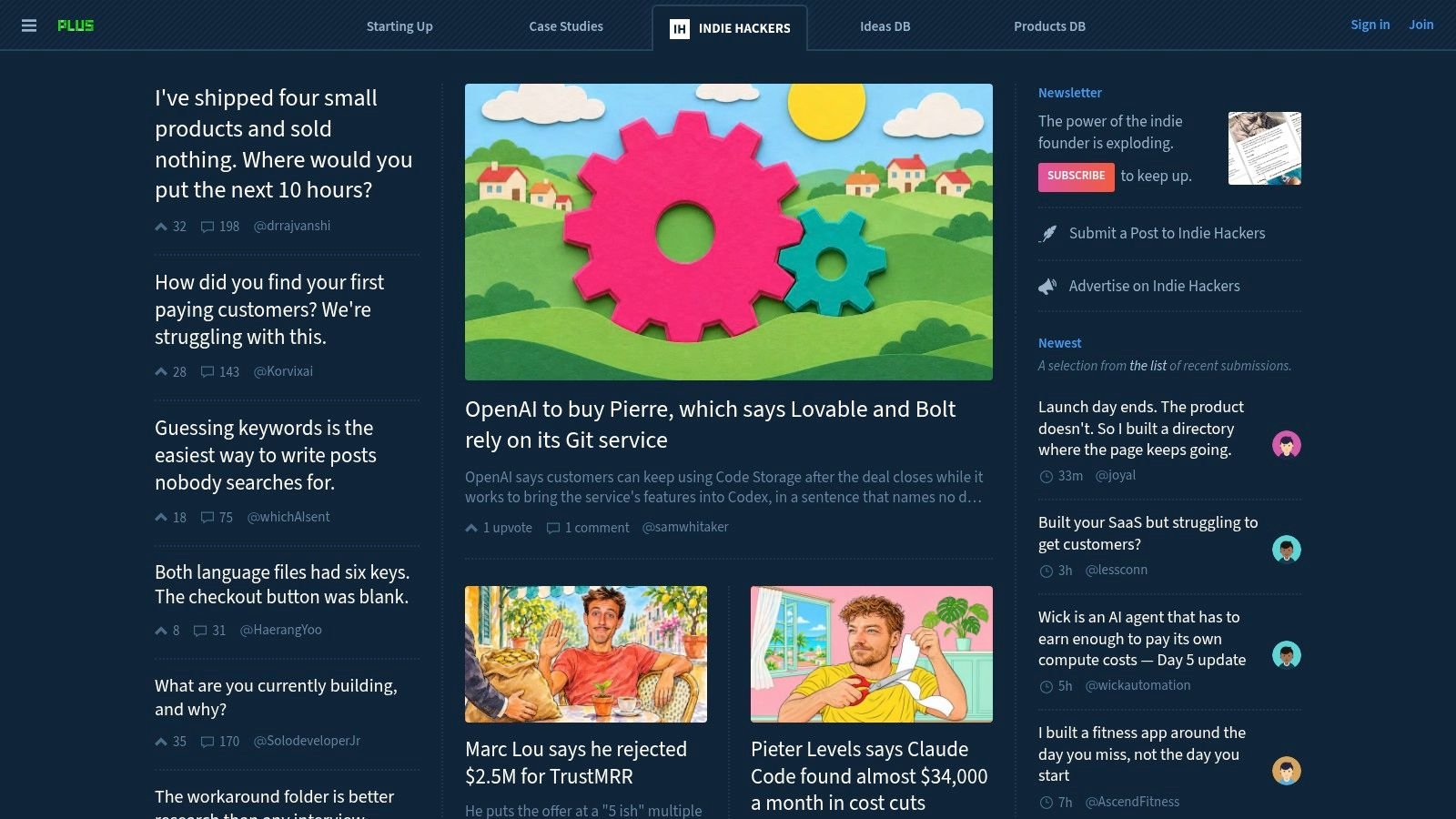
Indie Hackers is a founder community first. Its strongest use isn't dropping a product link and leaving; it's discussing a problem with people who might understand, test, or buy what you're building.
Bootstrapped SaaS, solo-founder tools, and side projects can fit naturally. A product aimed at enterprise procurement teams may need a different primary distribution channel.
Confirm the current product-sharing and listing options after signing in. Community interfaces change, and an old tutorial isn't reliable evidence that a particular submission flow still exists.
A community announcement earns attention by being useful before it asks anyone to click.
Bring a discussion worth having
Say you're building a support tool for solo founders. Explain how you're deciding which messages need a human response, share the workflow, and ask a specific question about the trade-off.
- Contribute context: Describe the customer problem and the decision you're trying to make.
- Make the ask narrow: Request feedback on a workflow, onboarding step, or pricing assumption.
- Stay present: Answer questions and acknowledge limitations instead of treating comments as a promotion channel.
A bare product post may be overlooked, and neither reach nor ongoing discovery is guaranteed. The time commitment is also different from maintaining a conventional directory profile.
For manual startup listings with StartupSubmit, we match niche and community placements to the product's category. That doesn't replace the founder's own participation.
Choose Indie Hackers when peer discussion has value alongside product visibility. Don't outsource a personal founder conversation and expect it to feel authentic.
9. GetApp
A business buyer should be able to understand your product without booking a demo. GetApp is a software discovery and comparison platform where a clear category, buyer profile, and useful product information matter.
It can complement other review-site profiles, but copying a vague description across platforms won't make the underlying positioning better. Start with the business task and identify who owns it.
For example, employee scheduling software should explain availability management, shift changes, permissions, and relevant integrations. Broad claims about transforming operations don't help someone compare products.
Submit when you can support a real comparison
- Buyer fit: Define the team, company type, and problem the software serves.
- Product evidence: Provide current screenshots, supported capabilities, and implementation context.
- Vendor terms: Check current eligibility, free options, and paid features directly.
- Maintenance: Assign an owner to update the profile when pricing or capabilities change.
GetApp is less suitable for a consumer app or a very early concept without a working product. A listing also doesn't guarantee visibility, reviews, or buyer leads.
For measurement, distinguish referral visits from qualified activity. Use tagged destination links where permitted, review conversions in your analytics, and record which opportunities mention comparison sites during sales conversations.
Choose GetApp when buyers can meaningfully compare your software with an established category. Don't purchase additional vendor features until you understand what the basic presence contributes and how any paid program will be measured.
10. SourceForge
SourceForge belongs on this list for a specific reason: eligible open-source products may need distribution infrastructure as well as discovery. It isn't a general promotional directory for closed-source SaaS.
Project registration supports software pages, repositories, issue tracking, file hosting, download statistics, and a GitHub import option. Free managed file-download hosting is offered, which makes the platform materially different from a short company listing.
The eligibility filter is decisive. Projects must be open source and use a compliant license. Don't create an empty project solely to obtain a backlink.
Treat the page as a software handoff
A visitor should be able to determine what the project does, whether it supports their environment, and how to install or evaluate it.
- Prepare: License information, project description, releases, documentation, and support routes.
- Show maintenance: Keep versions and download instructions current.
- Explain the relationship: If the project supports a commercial service, distinguish the open-source component from paid features.
- Avoid mismatch: A closed-source hosted product doesn't become eligible because its marketing site describes it as developer-friendly.
The setup effort is higher than a standard directory submission, but the page can serve a practical purpose for users downloading and evaluating software. That usefulness is the reason to create it.
Choose SourceForge when you have a qualifying project to distribute and maintain. If your startup only offers a proprietary web application, put your effort into software comparison platforms that accept that business model instead.
How the ten sites differ by audience, cost model, and submission route
| Item | Best for | Cost model | Submission requirement | Listing review |
|---|---|---|---|---|
| StartupSubmit | Startups seeking broad directory coverage without submitting manually | One-time plans from $99 | Provide business details for tailored manual submissions | Directory approval is not guaranteed |
| Product Hunt | Tech-focused launches seeking awareness and feedback | Free to launch | Prepare a product page and engage with users | Homepage featuring is editorial |
| G2 | B2B software targeting business buyers | Free profile; paid packages and add-ons | Eligible vendors can create or claim a profile | Eligibility rules apply; duplicates are rejected |
| Capterra | Business software seeking comparison-site exposure | Vendor programs may include paid options | Create a vendor listing and manage product details | Listing does not guarantee leads or reviews |
| BetaList | New startups seeking early adopters | Paid submission; no free option stated | Meet eligibility criteria, including landing-page and signup requirements | Submissions are reviewed; acceptance is not guaranteed |
| AlternativeTo | Products positioned as alternatives to established tools | Cost not stated | Submit with a verified email and clear product details | Admin review backlog; timing is not guaranteed |
| SaaSHub | Software makers seeking a product listing and directory suggestions | Product promotion is described as free | Submit and verify the product | Submission does not guarantee discovery or traffic |
| Indie Hackers | Indie makers seeking founder feedback and community | Cost not stated | Share the product and participate in the community | Listing flow should be confirmed after signing in |
| GetApp | SaaS products with a clear business category and buyer use case | Free and paid options should be checked directly | Provide product information for a vendor profile | Eligibility and visibility are not guaranteed |
| SourceForge | Eligible open-source software projects | Free managed file-download hosting; other listing costs not stated | Set up a project that meets open-source and license requirements | Projects must meet eligibility requirements |
Your Next Week of Directory Work
Start with two or three platforms that match your category and stage. A B2B SaaS company with customers might prioritize review profiles, while a new developer tool might benefit more from a launch page and a credible comparison listing.
Write one master description and prepare a clean logo set. Include your canonical product name, homepage, target buyer, core use case, supported platforms, and verifiable claims, then adapt the presentation to each site.
Submit in batches and verify the result
Keep a record of the directory, submission date, category, account owner, status, and published profile URL. Separate submitted, approved, published, rejected, and unavailable so a full spreadsheet doesn't disguise an incomplete campaign.
- Check the live page: Confirm the name, destination link, category, images, and description.
- Check discoverability: Look for the profile in search, while recognizing that a search query isn't a definitive indexation test.
- Record exceptions: If a site declines your category or closes, document the reason and choose another eligible platform.
- Measure outcomes: Track referral conversions, genuine reviews, branded-search coverage, and qualified trial or demo starts.
For an AI product, the AI Tool Seekers submission page is another candidate to evaluate using the same standards. Don't lower the bar because a directory uses AI in its name.
Frequently Asked Questions
Do directory backlinks improve SEO?
Relevant profiles can contribute to discovery and a credible public footprint, but there's no proportional relationship between submission volume and rankings. Avoid low-quality placements created mainly to manipulate search, and don't treat a high domain score as proof that every page is valuable.
Can directory submissions improve AI search visibility?
Accurate public profiles provide references that people and search tools may encounter. For AI search optimization, LLM SEO, and Google AI Overview monitoring, track observed mentions and factual accuracy rather than promising inclusion.
Are fewer clicks a sign that listings have failed?
Not necessarily, although visibility without clicks still needs evidence. Digiday's reporting on AI search describes reduced outbound clicking around AI summaries, which supports measuring more than referral sessions without assuming directories caused an AI mention.
Should you submit manually or delegate?
Submit yourself when you're still testing positioning and want direct control over every field. Delegate repetitive execution when your information is stable, but keep your own review of categories, claims, and published results.
Today, choose one action: audit the profiles you already have, or shortlist three directories and draft your tagline. Finish that before adding another long list to your spreadsheet.
StartupSubmit handles manual directory submissions for SaaS and AI startups, with category matching, duplicate checks, submitted URLs, and screenshot proof. Visit StartupSubmit to choose coverage that fits your product and hand off the repetitive form-filling while keeping control of your positioning.
Ready to build high-quality backlinks?
We'll manually submit your product to 60 to 200+ directories in 5 to 7 days, with screenshot proof for every submission. No bots, no boring forms, just more time for selling and building.
See pricing & get started →