10 Business Listing Sites Worth a Startup’s Time in 2026
The usual advice about business listing sites is to submit everywhere and collect backlinks. That's how founders end up with outdated logos, vague descriptions, duplicate profiles, and a spreadsheet of submissions that never became public pages.
A thin listing can be worse than no listing when it contradicts your website. If a buyer finds an old company name, a broken signup link, or a category you no longer serve, you've created another objection instead of another reason to trust you.
The better approach is to choose platforms by buyer fit, profile quality, and approval requirements. A launch community, a software-review marketplace, and a company database serve different purposes. Treating them as interchangeable wastes time.
Before submitting, prepare the essentials:
- Identity: Your consistent company name, tagline, logo, website, and social profiles.
- Positioning: An accurate description, primary category, intended customer, and concrete use case.
- Evidence: Product screenshots, current pricing information where relevant, and authentic customer feedback.
- Ownership: A company-controlled account and someone responsible for keeping the profile current.
For branded search, I'd prioritize recognizable profiles on Product Hunt, G2, Crunchbase, and Trustpilot. Those are sensible candidates for accurate page-one coverage, not guaranteed placements.
The sites below earn their place for different reasons. Start with the ones that match your product's stage and the questions prospective customers ask.
Table of Contents
- 1. StartupSubmit
- 2. Product Hunt
- 3. G2
- 4. Capterra
- 5. BetaList
- 6. SaaSHub
- 7. AlternativeTo
- 8. Crunchbase
- 9. Trustpilot
- 10. Software Advice
- How the top business listing sites compare on fit, cost and approval
- Next Steps for Building a Listing Footprint That Holds Up
1. StartupSubmit
StartupSubmit is a submission service, not another directory. It suits SaaS founders, AI teams, and indie hackers who want someone else to handle repetitive forms while keeping product information consistent.
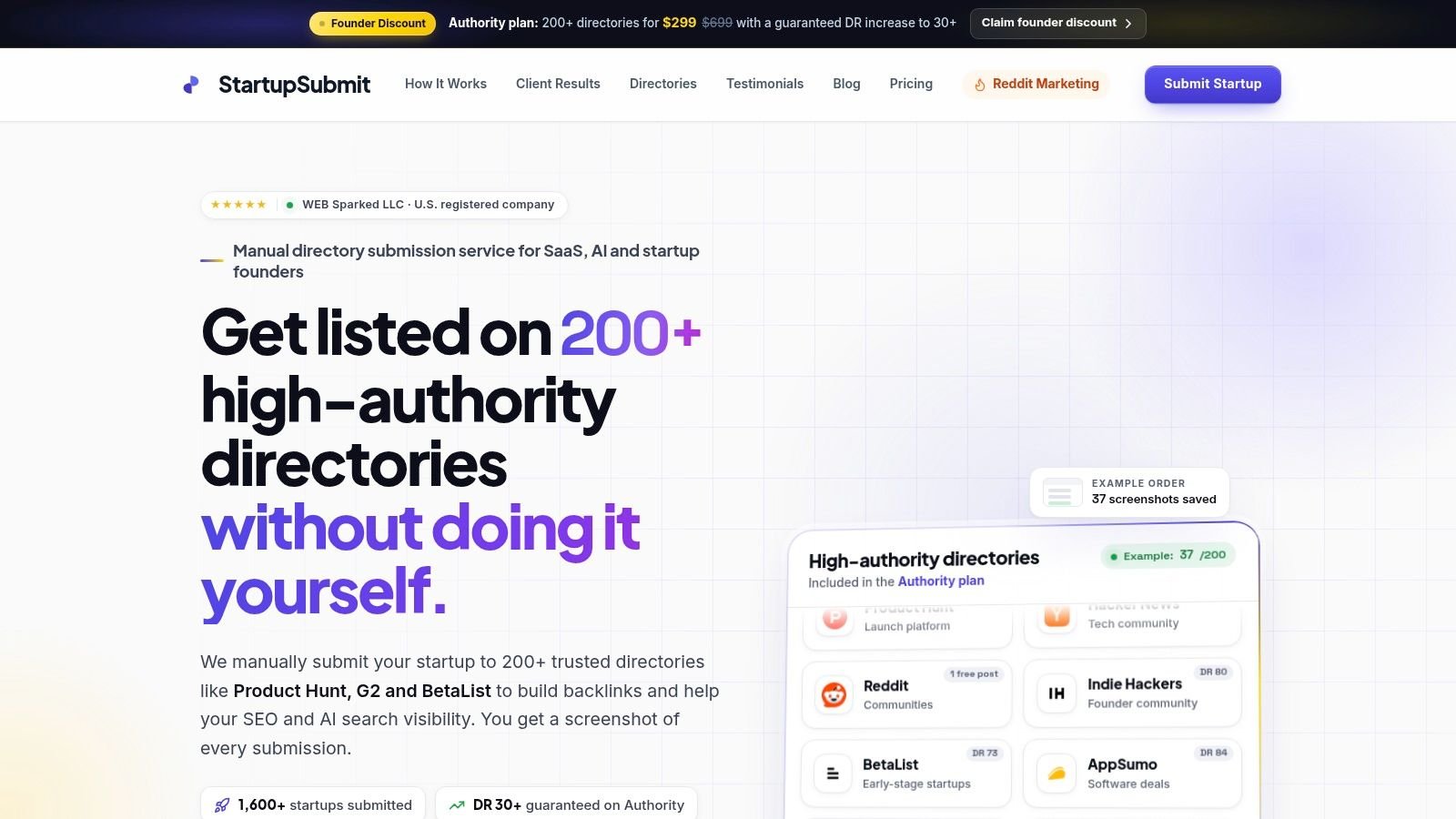
Our team manually submits SaaS products across 220+ software directories, including Product Hunt, G2, Capterra, SaaSHub, and AlternativeTo. The useful distinction is category matching: an AI product needs relevant AI and software listings, not an indiscriminate collection of business directories.
StartupSubmit advertises one-time plans covering 60+ directories for $99, 150+ for $199, and 200+ for $299, with Stripe payment and no subscription. Its Authority plan includes a stated DR 30+ guarantee, express delivery, a dedicated account manager, and a Reddit post; published reporting windows are typically 5–7 days, or 3–7 days for Authority.
Judge the report, not just the submission count
We check for existing listings before submitting, skip duplicates, and use another relevant directory where available. We don't claim credit for profiles a customer already had.
- Strengths: Manual category matching, customized descriptions, duplicate checks, and documented submission URLs, status notes, and screenshot proof.
- Trade-offs: Submission isn't approval. Third-party directories decide whether and when to publish, and DR is a third-party SEO metric, not customer demand or revenue.
- Credibility: The service describes a team of about twenty SEO professionals, founder testimonials, a Transync AI case study, and a money-back guarantee. Its published customer results aren't typical or guaranteed.
Keep company formation separate from directory work. The Gust Launch pricing and features review addresses a different operational need, not a substitute for maintaining public profiles.
2. Product Hunt
Product Hunt makes sense when you've built something people can understand quickly and try immediately. It's a product-discovery community with a lasting product page, not a passive company-registration form.
Makers can submit their own products for free, add descriptions, media, and tags, and participate in discussions. The strongest reason to launch is the opportunity to explain the product to early adopters and hear where your positioning confuses them.
Make the product page useful after launch day
Use screenshots that demonstrate the workflow rather than decorative graphics. Your tagline should explain the job the software performs, while the description should clarify who it's for and what makes it different.
For an AI meeting assistant, show the recording-to-summary workflow and explain where the output goes. A page that says only that it boosts productivity gives visitors little reason to investigate.
Treat launch-day attention as the introduction. Your permanent product page should still make sense when someone finds it months later.
The trade-off is participation. Rankings, a homepage feature, and sustained visibility aren't guaranteed, and a launch requires preparation and genuine maker involvement.
For choosing between launch communities, how StartupSubmit picks launch directories offers a useful starting point. I'd prioritize a prepared Product Hunt launch over publishing an unfinished page just to obtain another backlink.
3. G2
A clear software category and real customer experience make G2 more useful. If you're still changing your target buyer every week, refine that positioning before asking reviewers to describe the product.
G2 combines product profiles, software categories, comparison pages, and customer reviews. A free profile provides a starting point, while enhanced seller, campaign, and profile features require paid plans.
Build around the buyer's evaluation
The profile should answer practical questions: What does the product do? Which teams use it? What does it integrate with? What will implementation involve?
- Complete the identity fields: Use the same company name, logo, website, and tagline buyers see elsewhere.
- Choose the right category: An adjacent category with more apparent attention isn't useful if visitors expect a different product.
- Request honest reviews: Ask customers who've used the software enough to discuss strengths, limitations, and actual workflows.
The advantage is decision context. Detailed customer reviews can address concerns that vendor copy can't resolve. The disadvantage is that a useful review base requires ongoing customer outreach; creating a profile alone won't guarantee leads.
Consistency also matters for startups with a local operation. The principles behind building consistent NAP listings apply to company identity, but a remote SaaS product shouldn't invent a local presence merely to obtain citations.
For branded search, G2 is a sensible profile to maintain because buyers may actively search for your product alongside reviews and comparisons.
4. Capterra
Capterra is worth considering when buyers already recognize your software category. Someone comparing appointment scheduling platforms or accounting tools needs different information from someone casually browsing new startups.
Its listings combine product details, features, pricing information, comparison tools, and verified customer reviews. Free profile creation is available, with optional sponsored placement and lead-generation services.
Accuracy beats a longer feature list
Use the profile to help a buyer establish fit before visiting your website. Explain your pricing model, intended customer, supported workflows, and meaningful limitations.
Say your analytics product supports ecommerce reporting but doesn't offer enterprise data governance. Listing every adjacent analytics feature may attract the wrong evaluation, while a precise description helps the right buyer shortlist it.
- Best fit: Business software with a defined category, a live product, and customers able to provide substantive feedback.
- Main advantage: A marketplace built around software research rather than general startup announcements.
- Main limitation: Established categories can be competitive, and paid placements may receive prominent exposure.
Don't confuse verified reviews with permission to stop checking review quality. Look for specific descriptions of how customers used the product, and respond constructively when feedback identifies a real limitation.
Capterra is strongest as a maintained buying resource. If your pricing, integrations, or onboarding process changes, update the listing instead of leaving prospects to discover the mismatch during a sales call.
5. BetaList
BetaList is an editorial submission, not an automatic directory entry. That distinction makes BetaList relevant to early-stage technology companies with a clear proposition and a working website on their own domain.

The platform features pre-launch, beta, and live startups for an audience that includes early adopters, founders, and investors. Submissions are editorially reviewed and hand-edited, with paid, one-time options offering different featuring timelines.
Prepare the destination before applying
Your website needs to explain what visitors can do next. For a beta product, make access requirements clear; for a live tool, ensure the signup or purchase route works.
A vague landing page can undermine an otherwise relevant application. Replace broad claims about transforming work with a specific explanation of the task, user, and outcome.
The upside is a curated startup context and a permanent featured listing if accepted. Some faster plans also include newsletter placement.
The downside is that there's no free submission option, payment doesn't guarantee acceptance, and your startup needs its own working domain. Unsuccessful submissions are refunded according to the published policy.
I'd choose BetaList when the product has a coherent story but is still early enough to benefit from exploratory users. I wouldn't use it as a substitute for testing whether the landing page explains the offer.
Boost Your Startup's Traffic & SEO with up to 200+ Directory Listings
Skip the grind. Our team manually submits your product to relevant, high-authority directories, with screenshot proof for every submission, so you get real users, feedback and lasting backlinks without lifting a finger.
Get Listed Today6. SaaSHub
Your competitor list can be more useful than your slogan on SaaSHub. The platform organizes software discovery around categories, alternatives, and comparisons, so accurate positioning matters more than broad startup language.
Submission and verification are free. Vendors can add product information, select categories and competitors, and verify ownership to help maintain current details.
Explain the switch, not just the product
A founder should be able to complete this sentence: buyers consider our product instead of an existing tool because they need a specific capability or workflow.
- Category fields: Choose the function buyers recognize, not the most fashionable label.
- Competitor fields: Include credible substitutes, even when they're larger or better known.
- Profile evidence: Use current screenshots and a description consistent with the live product.
Verification can provide a verified-product badge and visibility in competitor contexts. Optional featured promotion is paid, and neither verification nor promotion guarantees referrals.
Approval is the main practical constraint. SaaSHub doesn't accept unreleased products, waitlist-only pages, or sites hosted on free subdomains. A polished description won't overcome a product that fails those eligibility requirements.
For founders comparing submission workflows, a software directory listing service is relevant only after those basics are ready. I'd finish the live product page and competitor positioning before investing effort in wider alternatives-based coverage.
7. AlternativeTo
AlternativeTo works best when a buyer already knows what they want to replace. Your product needs a credible relationship to familiar software, not just a place in a broad industry.
The community-contributed platform lets users suggest applications, contribute alternatives, and update entries. Product details can include platforms, license, descriptions, and tags, which makes factual completeness especially useful.
Give reviewers enough detail to evaluate the entry
Describe the actual overlap with the software you're proposing as a comparison. If your browser-based diagramming tool replaces a desktop application for lightweight collaboration, explain that narrower use case instead of claiming complete equivalence.
An honest comparison can qualify the right user. An exaggerated comparison creates expectations your product can't meet.
Basic submission is free, but the normal review queue can be very long and has no promised review date. Paid priority review is available, yet it still doesn't guarantee approval.
The strength is discovery through an existing product category and recognizable alternatives. The limitation is that unreleased products and tools without a clear comparison are harder to position convincingly.
Keep a record of the submission and any moderator feedback rather than repeatedly creating new entries. The workflow in how to submit your site to directories is useful preparation, especially when different platforms require different descriptions of the same product.
8. Crunchbase
Crunchbase answers a different question from a review marketplace: what is this company, and who is behind it? That makes it relevant beyond niche software directories.
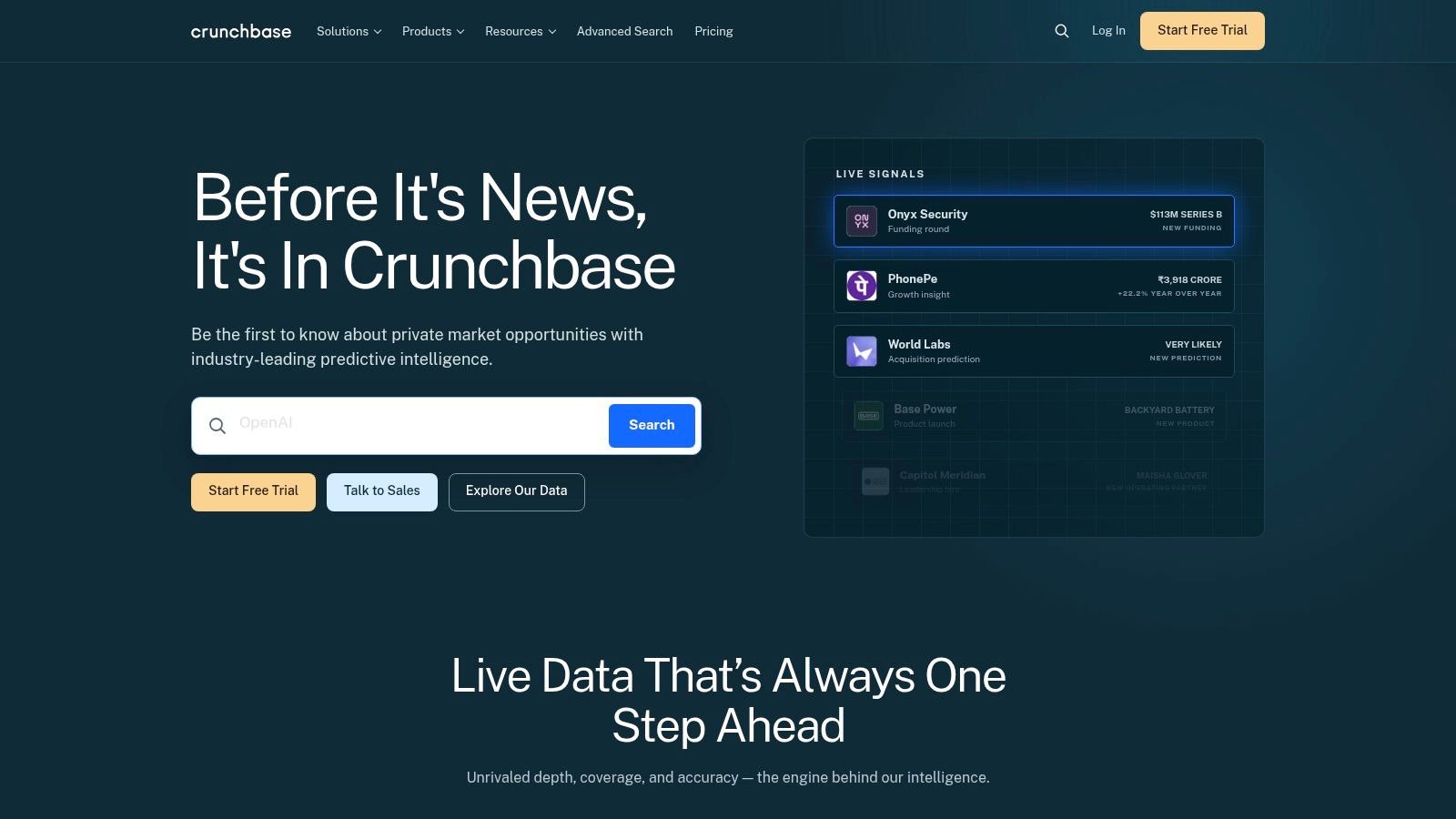
Its company, people, and investor database supports research by potential partners, customers, job candidates, and investors. Registered users can create or edit company profiles, with basic profile creation and editing available at no cost; some research features require paid access.
Separate company facts from product marketing
Start with the company name, website, logo, industry, founder information, and an accurate description. Add funding or organizational information only when you can substantiate it.
A bootstrapped startup doesn't need to imitate a venture-backed company. Clear founder and company details are more useful than vague language designed to imply scale.
- Best use: Company verification, fundraising context, and a recognizable branded-search result.
- Weak use: Direct customer-review acquisition or detailed software evaluation.
- Maintenance priority: Founder roles, company status, website changes, and public funding information.
I'd place Crunchbase high on the list for founders concerned about what investors or partners find when searching their company name. A complete profile is a stronger destination than a skeletal entry, but recognition of the platform doesn't guarantee that your page will rank.
Search for existing company and former-name profiles before creating anything new. Duplicated identities make verification harder for the people you're trying to reassure.
9. Trustpilot
Trustpilot creates a public reputation record, which means founders need to be comfortable with feedback they don't control. Claiming a business profile enables management and responses, not control over customer sentiment.
Basic profile-management features are available at no cost after claiming. Paid subscriptions add tools such as advanced insights and widgets.
Put response ownership in place first
A complete profile should identify the business clearly, link to the correct website, and explain what customers are reviewing. Assign someone to monitor feedback and coordinate with support when a reviewer describes an unresolved problem.
Trust deserves more attention than raw review volume. In a European consumer study published by Euroconsumers, 66% of surveyed consumers had encountered fake reviews, and 75% said fake reviews damage trust.
- Request fairly: Invite honest feedback without steering customers toward a predetermined rating.
- Respond specifically: Address the issue raised rather than posting interchangeable apologies.
- Challenge carefully: Use the platform's reporting process for suspicious reviews rather than publicly accusing reviewers without evidence.
The advantage is visible third-party feedback for prospective customers researching your brand. The trade-off is ongoing reputation work, including negative reviews that may be uncomfortable but legitimate.
You can get your startup listed manually, but submission support can't replace accountable customer service. I'd claim the profile only with a clear plan for maintaining it.
10. Software Advice
Software Advice belongs on the shortlist for established B2B products whose buyers research software by category. Its mix of listings, comparisons, reviews, research, and advisor-led recommendations serves a more deliberate buying process than a launch community.
The platform offers free buyer-advisor consultations and says it lists providers whether or not they pay for promotion. Sponsored profiles and referral opportunities are paid services.
Prepare for a qualified evaluation
A useful listing explains implementation requirements, pricing structure, supported use cases, and the customer segment you serve. For business software, those details often matter more than a short list of attention-grabbing features.
Say you sell workforce scheduling software for multi-location retailers. Explain the relevant scheduling workflow and operational fit rather than presenting the product as a universal productivity application.
Its advantage is buyer research context. Its limitation is that catalog inclusion doesn't guarantee visibility, advisor recommendations, or lead volume.
Before considering paid referrals, define what makes a prospect commercially suitable:
- Customer fit: Industry, company type, and workflow requirements.
- Buying readiness: Whether the prospect needs a live solution rather than general information.
- Economics: Whether likely contract value supports the acquisition cost.
This is less compelling for a consumer app or an early concept without a working product. I'd establish accurate category coverage first, then evaluate paid opportunities against qualified opportunities and customers, not just inquiry counts.
How the top business listing sites compare on fit, cost and approval
| Item | Best for | Free listing | Approval or review |
|---|---|---|---|
| StartupSubmit | Hands-off directory submissions for startups | No; paid plans start at $99 | Team submits manually; directories decide approval and timing |
| Product Hunt | Launching to early adopters and gathering feedback | Yes | Community-driven launch; visibility is not guaranteed |
| G2 | B2B software profiles and customer reviews | Yes | Vendors can claim or create profiles; review collection takes ongoing outreach |
| Capterra | Business software profiles and verified reviews | Yes | Reviews are verified; organic visibility is not assured |
| BetaList | Early-stage startups seeking curated exposure | No | Editorial review; acceptance is not guaranteed |
| SaaSHub | Live software with clear competitors | Yes | Products must pass approval |
| AlternativeTo | Software that replaces or competes with known products | Yes | Review queue can be long; approval is not guaranteed |
| Crunchbase | Company profiles for research and fundraising context | Yes | Registered users can create or edit profiles |
| Trustpilot | Businesses building a public customer-review record | Yes, after claiming | Public feedback is not controlled by the business |
| Software Advice | Established B2B software targeting active buyers | Yes | Catalog listings are available; visibility is not guaranteed |
Next Steps for Building a Listing Footprint That Holds Up
Start with the sites that match your category, buyer, and product stage. For company verification, prioritize Crunchbase; for software evaluation, consider G2 and Capterra; for alternatives discovery, assess SaaSHub and AlternativeTo; for a prepared launch, consider Product Hunt or BetaList.
Use the same name, tagline, logo, website, and social links throughout. Tailor the explanation to each platform's audience without changing the underlying facts.
Which profiles should you complete first?
Choose profiles that answer an immediate buyer question. A founder preparing fundraising needs a different public footprint from a SaaS team collecting implementation-focused customer reviews.
Recognized profiles can help populate branded search results with accurate information, but check the actual results rather than assuming domain reputation guarantees page-one visibility. Search your company name, product name, and former names before submitting, then repair or claim existing entries where possible.
If you want the submission work handled, our coverage includes 220+ software directories, including Product Hunt, G2, and SaaSHub, with every submitted URL reported. Verify each listing after publication and review it again every quarter.
Do directory backlinks improve startup SEO?
Useful placements can support discovery and referral traffic, but backlink quantity isn't a defensible goal by itself. Google's spam policies explicitly identify low-quality directory or bookmark-site links as link spam.
Track submission, approval, publication, and indexing separately. Then measure referral visits and meaningful conversion events, rather than treating every submitted form as an acquired customer or ranking improvement.
Practical rule: A good listing should help someone understand or verify your business even if its backlink passes no ranking credit.
Can listings improve AI search visibility?
Consistent product facts can support AI search optimization and LLM SEO, but directory publication doesn't guarantee Google AI Overview inclusion or ChatGPT visibility. Google's AI-search documentation explains that its systems automatically select supporting links and may search across related subtopics.
Keep your product category, pricing model, integrations, and company identity clear across your website and reputable profiles. Add substantive comparison and implementation content on your own site so buyers have evidence beyond repeated descriptions.
Build a master profile document, identify existing listings, and assign an owner to each priority platform. Publish fewer placeholders, verify more live pages, and maintain the profiles buyers encounter.
StartupSubmit offers manual directory submissions for SaaS and AI startups, with category matching, duplicate checks, and documented submission reports. Visit StartupSubmit to build a relevant listing footprint without handling every form yourself, while keeping approval and performance expectations realistic.
Ready to build high-quality backlinks?
We'll manually submit your product to 60 to 200+ directories in 5 to 7 days, with screenshot proof for every submission. No bots, no boring forms, just more time for selling and building.
See pricing & get started →