SaaS SEO Agency Comparison: 10 Options Compared
Say your launch brings a few thousand visitors on day one. You refresh analytics, answer comments, and start thinking about your next feature. Within a fortnight, traffic has flatlined.
That's the post-launch traffic cliff. A launch produces attention, but it doesn't automatically create durable referring domains, useful review profiles, or consistent signals explaining what your company does.
This is usually when founders start searching for a SaaS SEO agency. The proposals arrive quickly, but a content subscription, a technical engagement, and a directory submission service solve different problems.
Match the spend to the bottleneck, not to the agency's case studies.
A $10,000/month content retainer is the wrong first purchase for a pre-revenue product. A $299 one-time directory batch is the wrong only purchase for a Series A company with a technical debt problem.
Most agency roundups rank vendors by prestige. These options are organized around stage, budget, and the work you need, rather than a claim that the first provider beats every other provider.
Read the comparison table by entry price, engagement model, stage fit, and AI-search scope. Prices reflect published offers where available; reported estimates are identified separately, and final scope always follows an audit.
The useful question behind SEO agencies in the AI Overviews era isn't who promises the most visibility. It's who can remove your next constraint without selling you work your team can't use.
Table of Contents
- 1. StartupSubmit
- 2. Embarque
- 3. Arole SEO
- 4. ESA Digital
- 5. TripleDart
- 6. Growfusely
- 7. Skale
- 8. Omniscient Digital
- 9. SimpleTiger
- 10. DemandSage Agency
- SaaS SEO agencies side by side
- Turn the Shortlist Into a 30-Day Plan
1. StartupSubmit
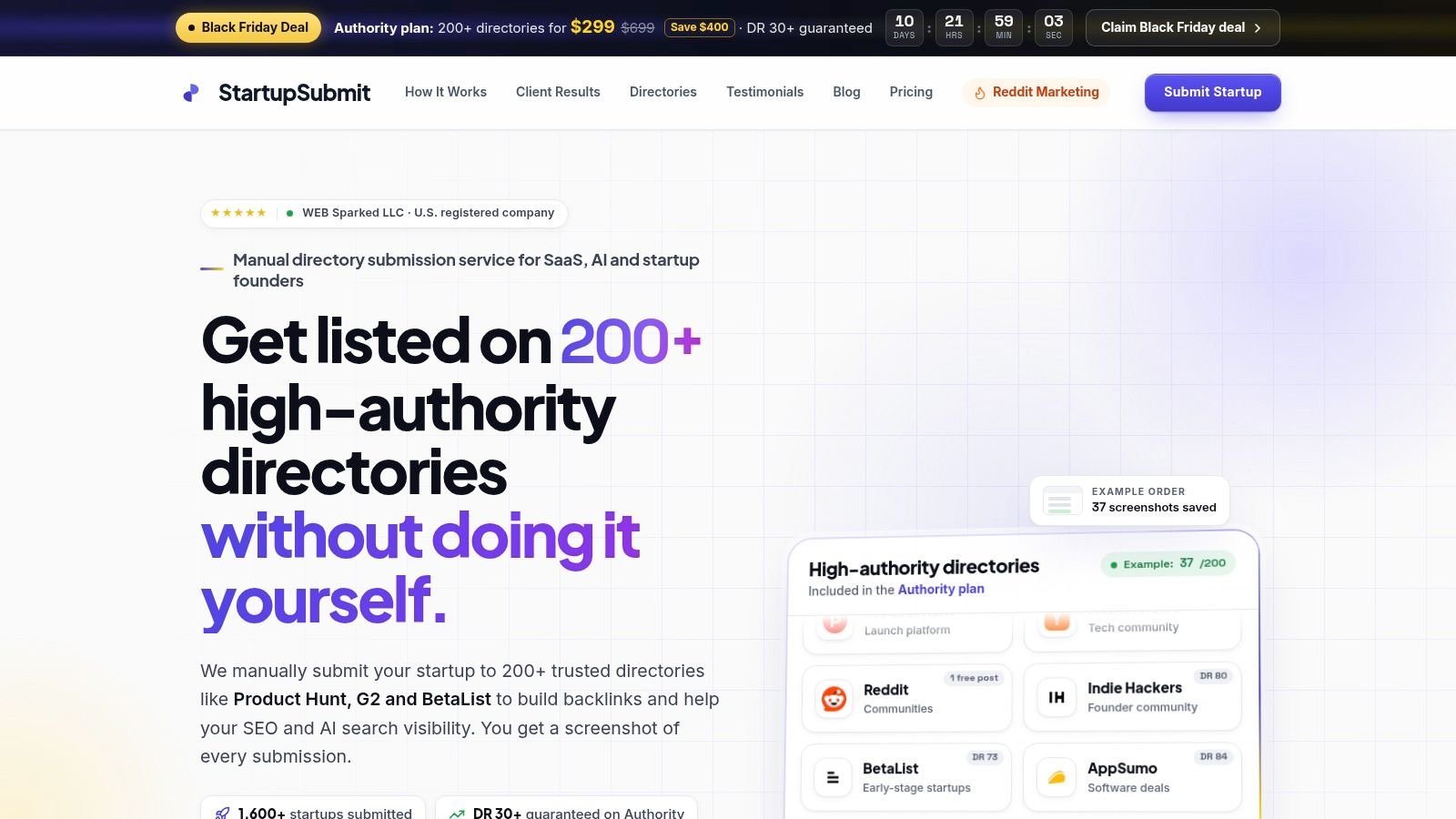
Best fit: Newly launched SaaS and AI products with a limited external footprint, plus agencies outsourcing listing execution.
We publish this comparison, and our service is narrower than a full-service SEO retainer. A team of 20 in-house SEO professionals handles every submission by hand, with no bots or auto-fill at any step. That covers category matching to each platform's own rules, a unique description written for each directory, and duplicate checks against listings that already exist.
Coverage spans Product Hunt, G2, Capterra, BetaList, Indie Hackers, AlternativeTo, SaaSHub, and review sites that rank for "alternatives to" searches. AI-powered products get general software profiles plus AI-specific directories in the same campaign, rather than an identical list for every business.
What the one-time purchase buys
The high-authority directory listings service is sold as one-time plans through Stripe, including Growth and Authority tiers, with manual submission to 200+ startup and software directories and a typical execution window of roughly 5–14 days. Work is targeted to begin within 24 hours of completed onboarding.
Authority adds a free Reddit post, badge management, and a dedicated account manager. A money-back guarantee is stated, but read the eligibility and remedy terms rather than treating it as a performance promise.
- Execution proof: The final report lists every submitted URL, two screenshots per directory as placement proof, and listing status including anything needing your action.
- Agency handoff: White-label submissions and unbranded reports let consultants and agencies deliver the work to clients under their own name.
- Operational limits: A submitted profile isn't necessarily approved, indexed, or live when the report arrives.
Published customer results include Transync AI reporting organic traffic growth from 67.2K to 285.2K sessions across two months (+338%), with 37,000+ new organic keywords after a 220+ directory Authority campaign, and Mediafast reporting DR growth from 11 to 26 in three months. Outcomes like these have multiple causes and aren't typical-result guarantees.
Directory listings are the entity layer you build before content, digital PR, or technical SEO, not a substitute for them. They support discovery and reputation, but they don't guarantee approval, rankings, traffic, or AI citations. Domain Rating is a third-party metric, not evidence that a business has grown.
2. Embarque
Best fit: Startups with a clear market, a functioning website, and enough demand to justify recurring page production.
Embarque sells a productized monthly service rather than making every engagement a completely custom retainer. That makes it easier to compare production capacity against your budget and your team's ability to review drafts.
Its offer includes a dedicated strategist, revenue-oriented prioritization, technical SEO, and a free sample page before engagement. Use that sample to test product understanding, not just writing quality.
- Published commercial terms: Embarque lists Starter at $2,500/month, Engine at $4,995/month, and Managed from $9,500/month, with approximately 15 and 40 monthly pages in Starter and Engine; plans require a three-month minimum paid upfront, while an editorial-link add-on costs $2,000/month for 5–7 links.
When page volume helps
A defined production package works when your site lacks useful comparison, integration, and use-case pages. It works less well when your existing pages aren't indexed or your positioning changes whenever a founder reviews a draft.
The advantage is operational clarity. A small marketing team gets a named senior strategist and a predictable publishing process without assembling separate freelance roles.
The downside is that link building and PR aren't included in the base plans. Don't compare the headline retainer with an integrated agency quote until you've separated those exclusions.
I'd choose this model when content execution is the constraint. If engineering fixes or customer research must happen first, buying page capacity creates an approval backlog rather than a growth channel.
3. Arole SEO
Best fit: SaaS teams that want founder-led research and a defined content program, with authority work included.
Arole starts with market and competitor research instead of treating your keyword export as the strategy. Its program combines content planning and production, technical SEO, authority building, AI-search work, and monthly reporting.
That combination is useful when a founder knows the product well but needs help translating it into buyer-facing search pages. Founder involvement in planning also gives you a clear person to challenge when priorities drift.
Published program: Arole SEO lists a six-month engagement, with the first month at $3,900 including research and a 40-topic plan, followed by months two through six at $2,600/month, with eight new pages monthly alongside updates, authority building, and AI-search work.
Evaluate the plan before the cadence
The valuable deliverable isn't a long topic list. It's a defensible explanation of which pages address buying questions, which support them, and where each page sends a qualified visitor.
Say you sell support software for Shopify merchants. A comparison page addressing migration and order-data access deserves different treatment from a broad article about customer service.
- Strength: Content and authority work sit inside the same program rather than requiring separate coordination.
- Trade-off: The defined program reduces flexibility if your real problem turns out to be a migration or broken site architecture.
- Contract detail: Get the authority-building scope in writing, including placement selection, editorial standards, and reporting.
Arole fits a company ready to commit to a content-led direction. It's a weaker match for a team that primarily needs technical implementation or still hasn't settled on its customer category.
4. ESA Digital
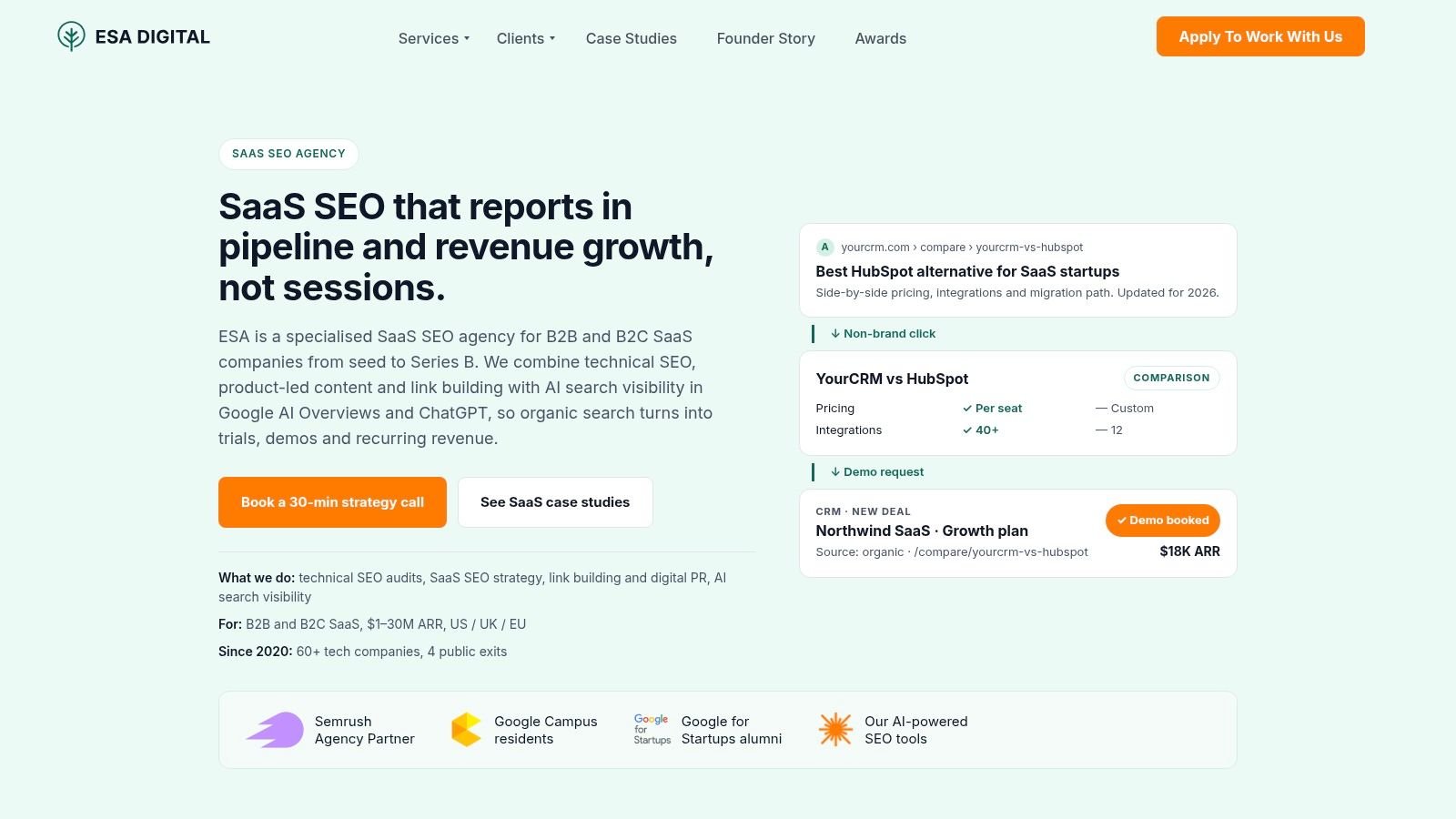
Best fit: B2B or B2C SaaS companies deciding between a discrete foundation project and an ongoing growth retainer.
ESA Digital offers technical SEO, product-led content, link building, digital PR, and AI-search visibility. Its standalone strategy, foundation, and technical setup projects matter because not every company needs recurring production immediately.
- Published budget bands: ESA Digital lists Start at $3,000–$5,000/month, Growth at $7,000–$10,000/month, and Scale at $12,000–$17,000/month; the entry plan has a three-month minimum, weekly Slack access, and monthly reporting, with final pricing confirmed after an audit.
Buy implementation, not an issue inventory
A technical project is useful only if somebody owns the fixes. Before signing, separate what the agency implements in your CMS from what it documents for your developers.
For example, identifying incorrect canonicals is diagnosis. Updating the template, testing rendered pages, and checking subsequent indexation is execution.
ESA's range of engagement types makes it worth considering when the bottleneck isn't yet obvious. The downside is that a broad service menu can conceal a content-heavy scope unless the proposal names the technical work explicitly.
Its citation work also needs context. Our explanation of how local citation building works concerns consistent business information across relevant platforms; a global SaaS product needs software-category profiles, not irrelevant map listings.
Confirm which content, PR, and AI-visibility deliverables solve your actual problem. A package organized around company stage is useful, but stage alone doesn't tell an agency whether your next job is fixing templates or explaining the product.
5. TripleDart
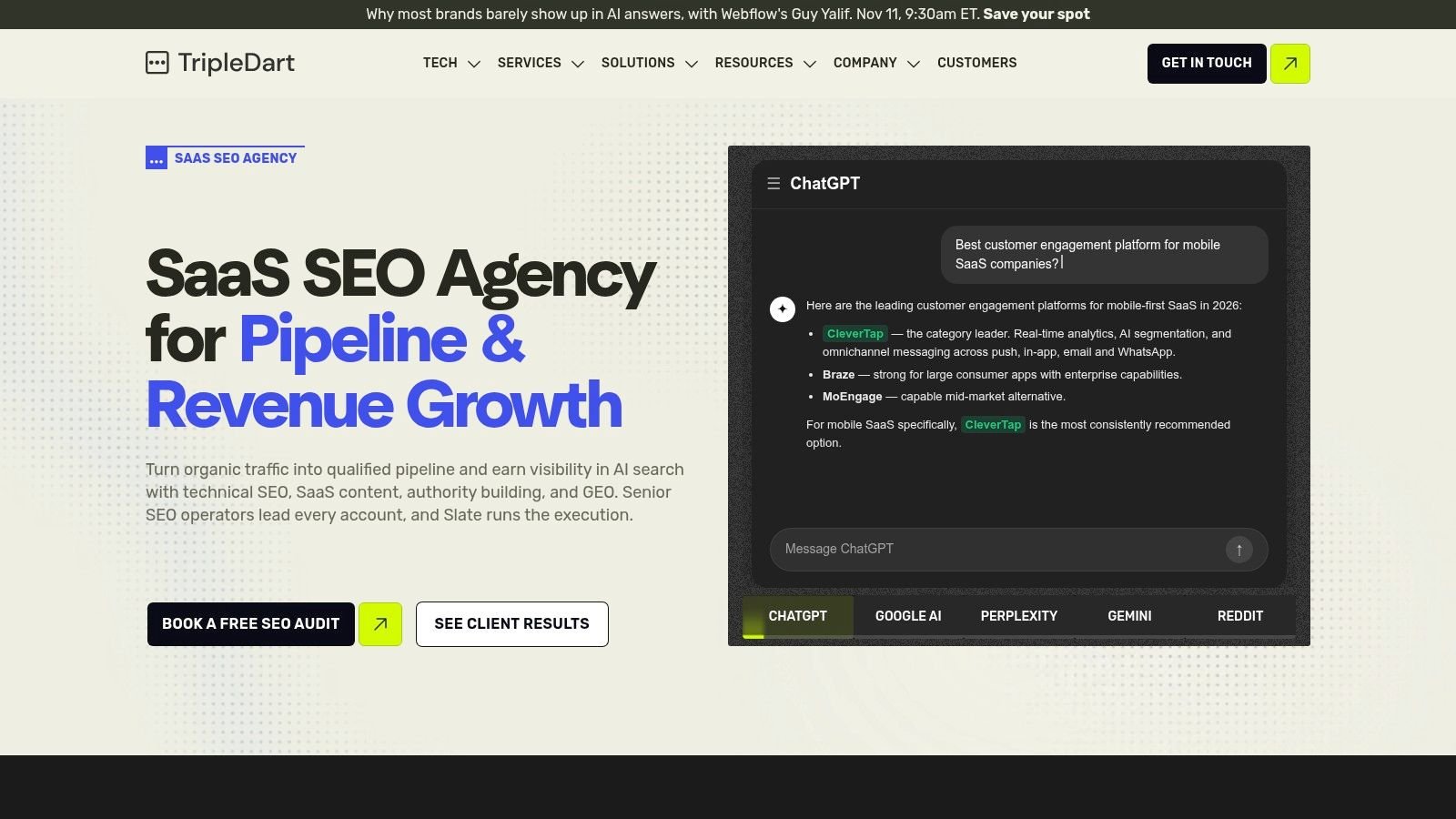
Best fit: SaaS teams with a working CRM that want search activity reported against commercial outcomes.
TripleDart combines content, technical optimization, link acquisition, and AI-search visibility. Its reporting emphasis includes marketing-qualified leads, sales-qualified leads, closed-won deals, and recurring revenue rather than stopping at organic sessions.
Published scope: TripleDart starts at $5,000/month with no long-term commitment stated, and describes capacity of up to 30 monthly content assets and 5,000 tracked prompts alongside SEO, GEO/AEO strategy, technical SEO, content engineering, and citation monitoring.
Make the dashboard earn its place
Pipeline reporting is valuable when the underlying definitions are sound. A downloaded guide isn't automatically a qualified lead, and an influenced opportunity isn't automatically revenue caused by SEO.
Ask for a sample report that connects a landing page to a conversion event and then to a CRM stage. It should also explain missing attribution, duplicate contacts, and sales-assisted journeys.
- Useful breadth: Dedicated strategy support and CMS publishing integrations can reduce vendor coordination.
- Real constraint: Production capacity can exceed a small team's ability to review technical claims and product screenshots.
- Budget risk: The starting price isn't the final scope; work expands after the audit.
For a new brand, manual directory submissions for startups can establish profiles before a broader demand-capture program starts. That foundation doesn't replace the conversion pages or customer evidence an integrated agency needs.
TripleDart makes more sense after your team can define a qualified signup. Without that definition, even an attractive revenue dashboard becomes another activity report.
6. Growfusely
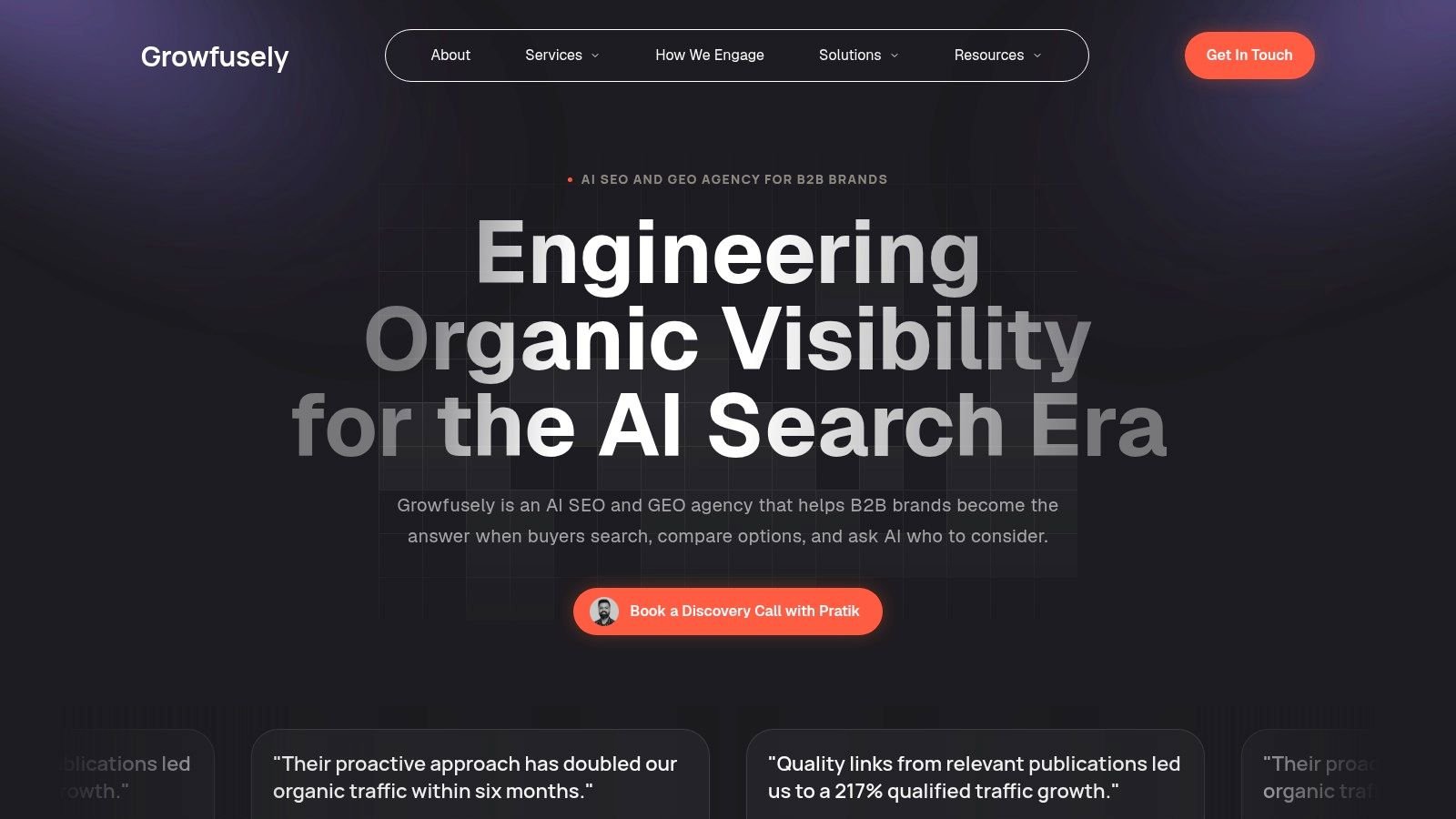
Best fit: SaaS companies seeking a specialist content and authority partner, with budget for a custom proposal.
Growfusely focuses on SaaS content strategy, production, search foundations, topical authority, and external visibility. It also includes AI-search discoverability in its positioning.
Pricing isn't clearly listed in the available agency materials. Treat it as a custom-budget option rather than assuming it belongs beside a lower-priced productized plan.
Judge the content against your buyer
SaaS specialization matters when the writer must explain implementation, integrations, switching costs, or internal approval. A technically accurate article can still fail commercially if it never answers why someone should change software.
Growfusely's research, guidance, and case studies give you material to inspect before a call. Evaluate whether its examples resemble your category and sales motion, not merely whether recognizable logos appear.
- What works: Combining on-site content with external authority avoids treating the blog as the entire acquisition strategy.
- What doesn't prove fit: The agency's own comparison article isn't independent evidence that it outranks competitors on quality.
- What to request: A relevant content brief, finished page, revision process, and explanation of who supplies product expertise.
For AI work, insist on specifics. Google's AI-features documentation says AI Overviews and AI Mode don't require special markup or a separate optimization system; supporting pages must be indexed and eligible for a search snippet.
That makes crawlability, useful product explanations, and credible evidence better purchases than an unexplained LLM SEO surcharge. Growfusely belongs on the shortlist when editorial depth is the need, not when you're shopping for a fixed-price task.
Boost Your Startup's Traffic & SEO with up to 200+ Directory Listings
Skip the grind. Our team manually submits your product to relevant, high-authority directories, with screenshot proof for every submission, so you get real users, feedback and lasting backlinks without lifting a finger.
Get Listed Today7. Skale
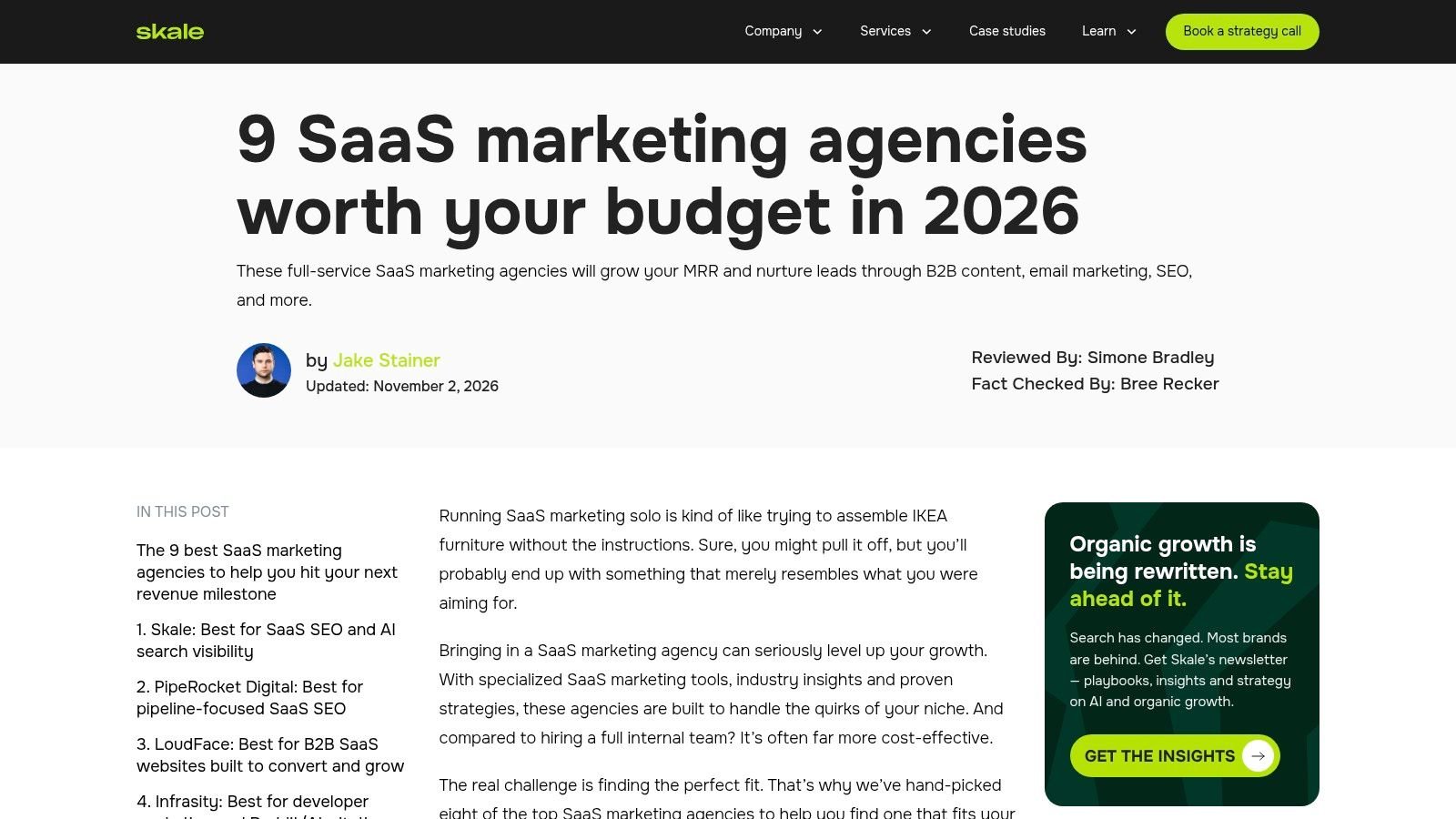
Best fit: Growth-stage SaaS and technology companies that need an integrated organic program.
Skale combines technical SEO, content, link acquisition, GEO, and AI brand mentions. Its positioning emphasizes signups and revenue, making it more relevant to a company building a repeatable channel than a founder outsourcing occasional articles.
Budget reference: Skale's published agency comparison reports a starting price of $4,000, with exact retainers and deliverables dependent on scope.
Inspect what sits behind the results
Published SaaS case studies include Maze and Holded. Use them to examine the work and measurement method, not as a forecast for your own acquisition curve.
A useful case study explains the starting condition, pages changed, external work performed, and conversion definition. Agency-reported outcomes still need attribution scrutiny, especially when product changes or other marketing campaigns ran alongside SEO.
Buying rule: An integrated retainer is worth paying for when it removes coordination work you'd otherwise have to own.
Skale's inclusion of external authority work distinguishes it from content-only production. That breadth suits a team without in-house SEO capacity, but it doesn't make the service a low-cost launch purchase.
For safe directory submission for SaaS startups, relevance and manual review matter more than a large placement count. Google's spam policies classify automated link creation, excessive reciprocal exchanges, and buying links for ranking purposes as link spam.
Apply that standard to every authority proposal. Link farms, bots, missing screenshot proof, and guaranteed rankings or live placements are reasons to stop the sales process and inspect the method.
8. Omniscient Digital
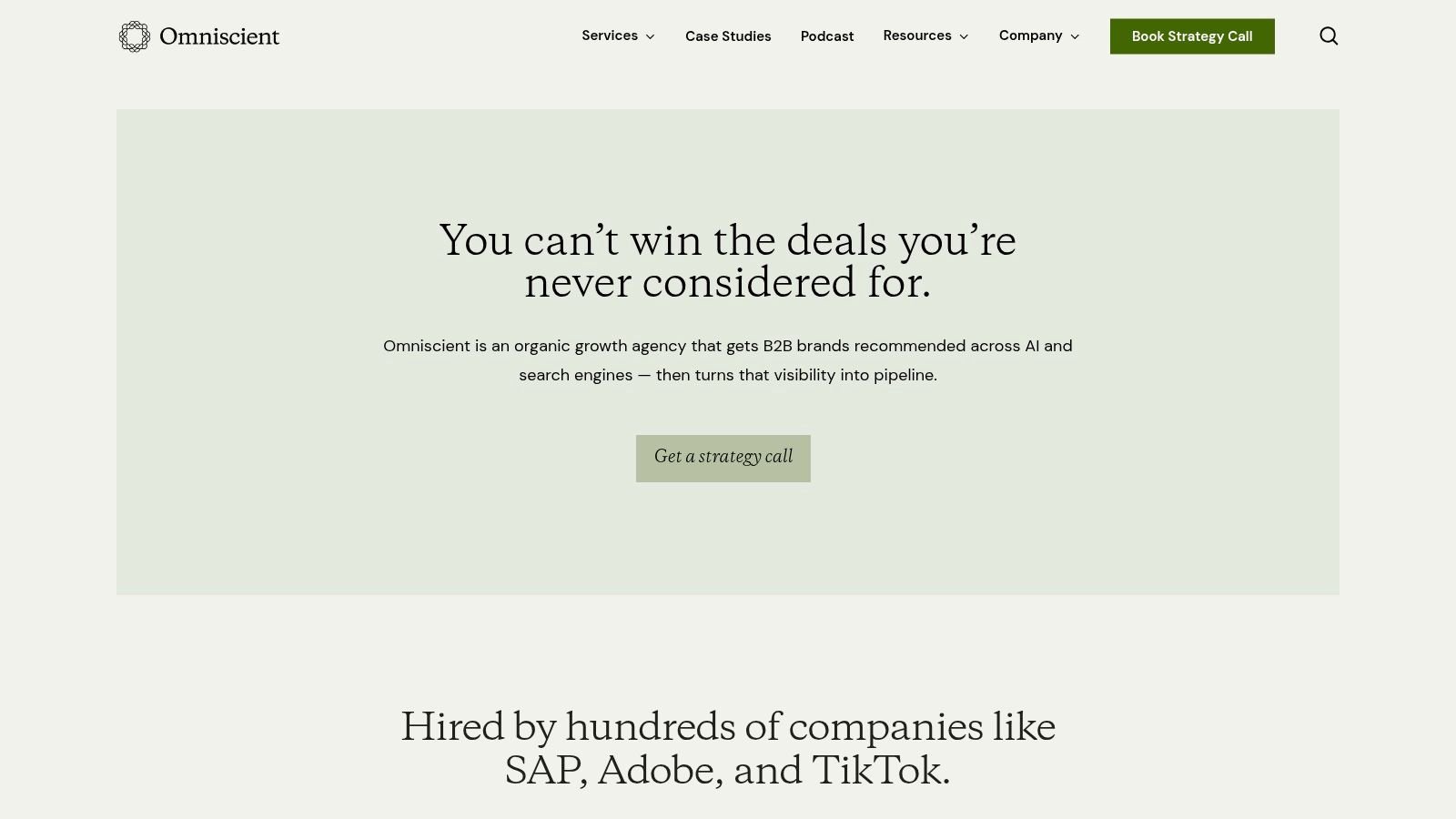
Best fit: Established B2B software companies whose products need expert explanation and editorial differentiation.
Omniscient Digital is a content-led organic-growth agency, not a cheap article factory. Its approach emphasizes research, subject-matter expertise, thought leadership, and authority-building content alongside SEO and generative engine optimization.
Budget expectation: Full-service engagements from Omniscient Digital are reported to start around $10,000/month; treat that as an entry reference, not a finalized quote.
Your experts remain part of the production process
Publicly discussed client work includes Jasper, Loom, and Hotjar. Those examples provide useful evaluation material, but the relevant question is whether the editorial process can explain your product accurately.
Say you sell security software to infrastructure teams. A writer needs access to technical specialists, real workflows, and defensible product claims, not just competitor headings and an SEO tool.
- Strong fit: Complex products where expertise and a distinctive point of view matter to the buying decision.
- Internal cost: Your subject-matter experts still need to provide input and review drafts.
- Scope boundary: Paid acquisition sits outside the core organic offering described.
This approach can support both search acquisition and brand authority. It also requires patience and a marketing owner who can keep interviews, reviews, and publishing moving.
Don't hire a premium editorial partner if your team can't make experts available. You'll pay for a refined process and then starve it of the information that makes the output worth buying.
9. SimpleTiger
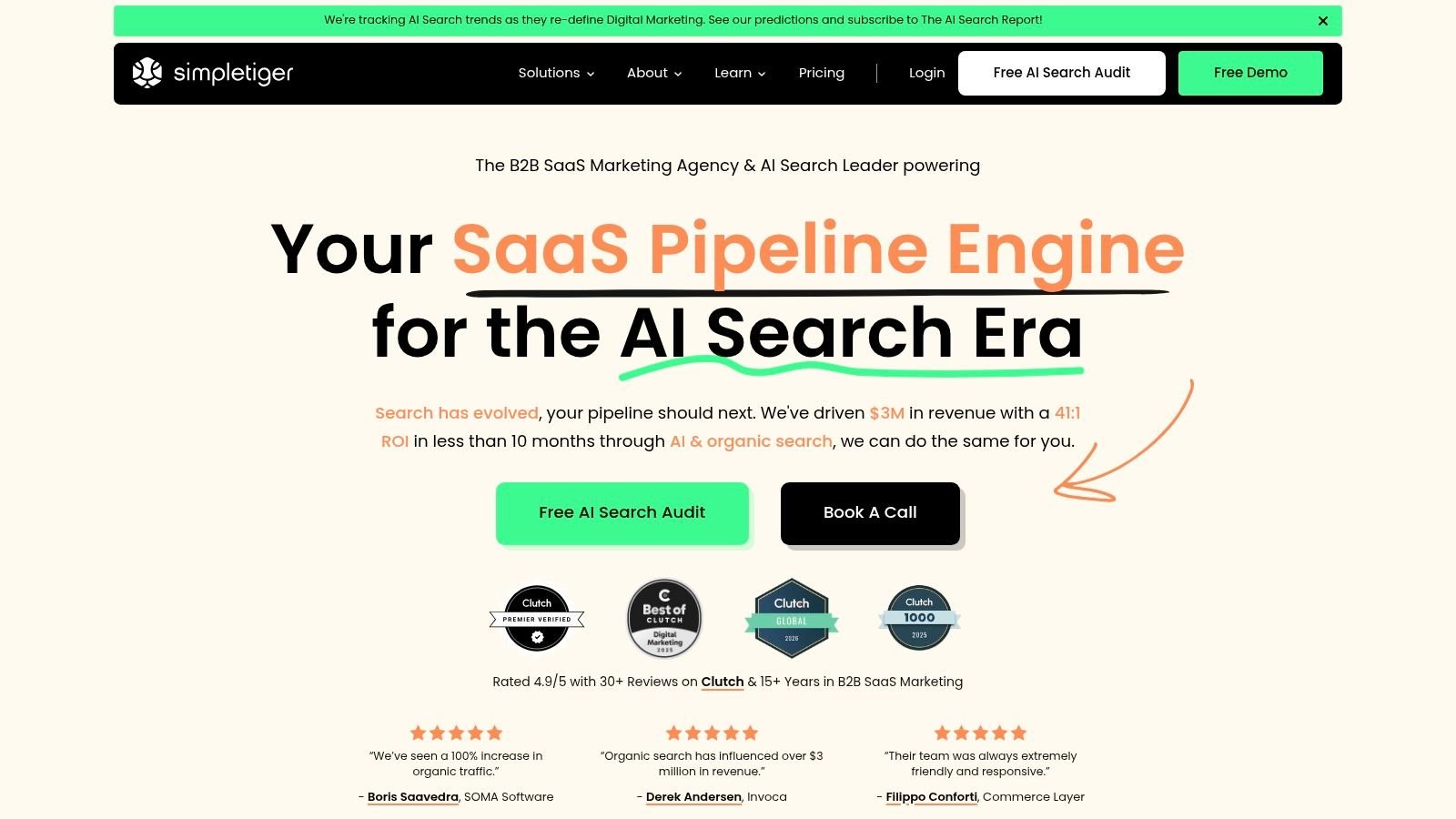
Best fit: Product-led SaaS companies that want organic acquisition connected to trials, activation, and paid search.
SimpleTiger offers technical SEO, keyword research, content, link building, and paid-search support. That combination is useful when the marketing team needs coordination across search channels rather than isolated blog production.
Commercial caveat: SimpleTiger uses custom pricing, with published estimates often starting around $4,000–$5,000/month and differing by source; its stated 90-day ranking guarantee needs a separate review of terms and eligibility.
Optimize beyond the trial-start button
For a product-led business, a signup is an intermediate event. The more useful question is whether the person reaches the product action that predicts continued use.
An agency working on trial-to-paid journeys should distinguish informational traffic from visitors seeking a specific workflow. Otherwise, you can grow registrations while attracting users who never activate.
- Advantage: SaaS and PLG experience can help align landing pages with product usage.
- Coordination benefit: SEO and paid search can share messaging tests and conversion definitions.
- Downside: Exact implementation responsibilities and current minimum pricing require a scoped proposal.
Use our top directories for startups to identify relevant profile surfaces, not to create accounts indiscriminately. The right review and software-category pages can complement product-led acquisition without becoming the whole strategy.
SimpleTiger is worth considering when your next problem is channel coordination. If you only need a crawl audit or a listing campaign, its broader marketing scope is more than the immediate job requires.
10. DemandSage Agency
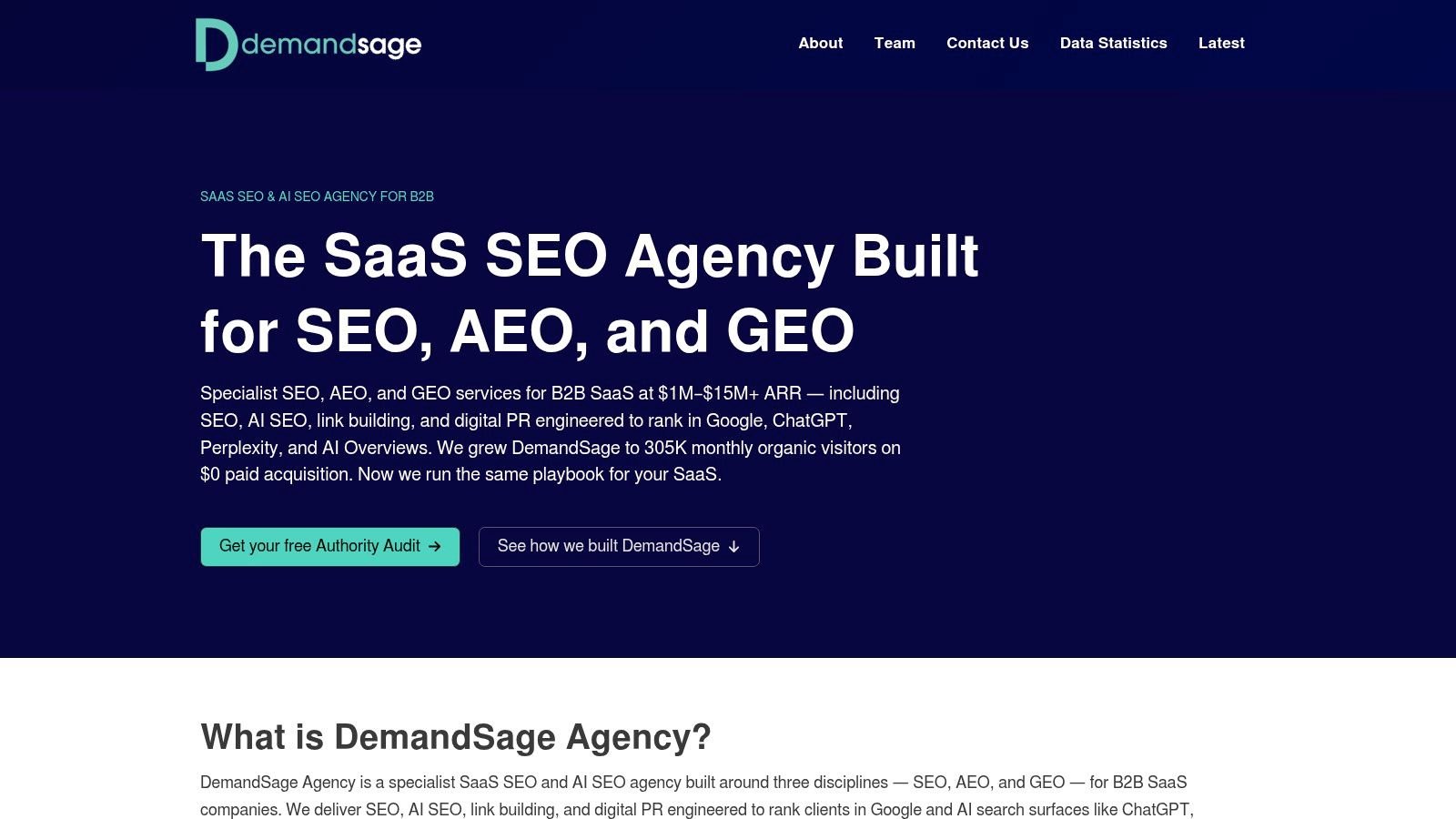
Best fit: Revenue-generating B2B SaaS companies evaluating a combined content, technical, and off-site authority program.
DemandSage Agency is the services arm of its research and media property. It says it applies the organic-growth playbook used for that publication to client work.
That gives buyers an in-house example to inspect. It doesn't establish that a software product with a narrower audience will reproduce a publisher's traffic pattern.
Published positioning: DemandSage Agency publishes three service tiers without exact tier prices and describes a target range of roughly $1M–$15M+ ARR; its broad public industry pricing range isn't an agency-specific quote.
Separate publisher growth from SaaS demand
The service combines technical SEO, content, programmatic SEO, internal linking, link acquisition, digital PR, and AI-search optimization. Its stated client range includes bootstrapped and venture-backed businesses.
The relevant test is whether it can turn research-led publishing into commercially useful product discovery. Request comparable SaaS examples and references rather than accepting publication traffic as sufficient proof.
- Potential advantage: Content and off-site authority work can be planned together.
- Budget limitation: Consultation is necessary before you can compare its proposal with a published retainer.
- Evidence limitation: Traffic-growth claims are self-reported and need context.
Programmatic SEO deserves particular scrutiny. It works when each page answers a distinct, useful question with meaningful product or market information; it doesn't work merely because a CMS can generate template variations.
DemandSage fits a company ready to evaluate a broad growth program. Very early products with unsettled positioning are a less obvious match for its stated revenue profile.
SaaS SEO agencies side by side
Sort this table by fit, not by rank: entry cost, minimum commitment, stage, and whether AI-search work is a named deliverable or folded into a broader scope.
| Agency | Entry price | Pricing model | Best-fit stage | AI search work |
|---|---|---|---|---|
| StartupSubmit | $99 one-time | One-time directory submission plans | Early-stage startups seeking directory listings | Directory placements aimed at search and LLM visibility |
| Embarque | $2,500/month | Productized monthly plans; three-month minimum | Startups and SaaS teams seeking defined SEO deliverables | No separate AI-search line item in its published scope |
| Arole SEO | $3,900 first month | Six-month program; then $2,600/month | SaaS companies seeking content-led SEO | Included in ongoing scope |
| ESA Digital | $3,000–$5,000/month | Stage-based monthly tiers; three-month minimum | B2B or B2C SaaS at different growth stages | Included in plans |
| TripleDart | From $5,000/month | Managed service; no published minimum term | SaaS teams focused on pipeline and revenue reporting | GEO/AEO strategy and citation monitoring |
| Growfusely | Custom quote | Custom pricing scoped per engagement | SaaS companies seeking SEO and content support | AI-search visibility included in its positioning |
| Skale | Reported from $4,000 | Retainers scoped to needs | SaaS teams seeking integrated organic growth | GEO and AI brand mentions |
| Omniscient Digital | Around $10,000/month | Full-service engagement; custom scope | B2B companies with complex products and editorial needs | Generative engine optimization |
| SimpleTiger | Estimated $4,000–$5,000/month | Custom-scoped services | SaaS companies focused on product-led growth | Product-led SEO scope; no named AI-search service |
| DemandSage Agency | Pricing via consultation | Three service tiers; custom pricing | B2B SaaS companies across funding stages | AI-search optimization |
Read each row as a commitment, not a sticker price. Embarque's entry point is really $7,500 once the three-month minimum applies, and Arole SEO's program runs roughly $16,900 across its six-month term. Set against those figures, a fixed-scope directory campaign is a different category of spend: a bounded asset purchase rather than an open-ended retainer.
Turn the Shortlist Into a 30-Day Plan
Pick the bottleneck and protect the budget
Start with the problem you can name. No referring domains calls for a directory and citation batch first. Thin pages call for content. Slow or broken templates call for technical work. The cheapest retainer is the one aimed at the right bottleneck, so match the agency to it before you compare anything else.
Shortlist only two agencies whose published entry price fits the next twelve months of budget. For custom-priced providers, get an entry scope in writing before you sit through a detailed pitch. Include your internal costs in that math: the hours your team spends reviewing drafts and the engineering time implementation will need both come out of the same budget as the retainer.
One caution on sequencing. Do not postpone urgent crawl or rendering fixes while directory profiles are being created. The entity layer can come first in your authority-building sequence without becoming a reason to leave the website broken.
Test a deliverable before signing
Ask each shortlisted agency for one sample deliverable in your category. A content brief, a technical ticket, or a redacted placement report tells you more about working quality than another walkthrough of headline results.
Confirm what the three-month minimum covers: research, production, implementation, revisions, publishing, and reporting. Name the person responsible for every handoff, including anything your developers must complete on their side.
Build the entity layer and then contextual authority
Create accurate manual directory submissions and review-site listings first. Keep the company name, product description, category, and destination URLs consistent across every profile, then layer content, guest posts, and press placements alongside the technical SEO work.
Directories produce profiles. Content and PR produce the useful pages, explanations, and evidence that earn contextual links. You need both, but the profiles are faster to complete and they give the rest of the program a consistent entity to point at.
ChatGPT visibility also has a technical prerequisite: OpenAI's publisher FAQ says sites must allow OAI-SearchBot for inclusion in ChatGPT search results, separately from GPTBot's training controls. Check robots.txt and CDN rules instead of assuming Google indexation covers every discovery system.
Define acceptable proof before work starts
Require every submission URL, a screenshot per directory, account credentials, and a status for each listing, including anything that needs your action. If an agency or consultant is running submissions for a client, StartupSubmit offers an unbranded report they can hand over as their own.
For the wider engagement, find a reliable keyword position tracker, connect Search Console and analytics, and record qualified signups by landing page. Keep AI mentions, citations, referral visits, and pipeline as separate measures so each channel gets judged on what it produces.
Treat guarantees about rankings, live links, or Domain Rating as a reason to slow down, not speed up.
Most SaaS content programs take six to nine months to compound. Any agency promising the whole outcome in a quarter is selling something else.
Set a keep-or-switch checkpoint at 90 days. Review delivery quality, implementation, early commercial movement, and attribution limits rather than demanding mature returns from unfinished work.
One question settles the review: are qualified signups moving, and can the agency show the specific pages and listings that caused the movement, with evidence strong enough to distinguish contribution from coincidence?
StartupSubmit handles manual, category-matched directory submissions for SaaS and AI products, with screenshot proof and itemized reporting. If your next bottleneck is an incomplete external footprint rather than a content backlog, visit StartupSubmit to compare the one-time submission plans.
Ready to build high-quality backlinks?
We'll manually submit your product to 60 to 200+ directories in 5 to 7 days, with screenshot proof for every submission. No bots, no boring forms, just more time for selling and building.
See pricing & get started →