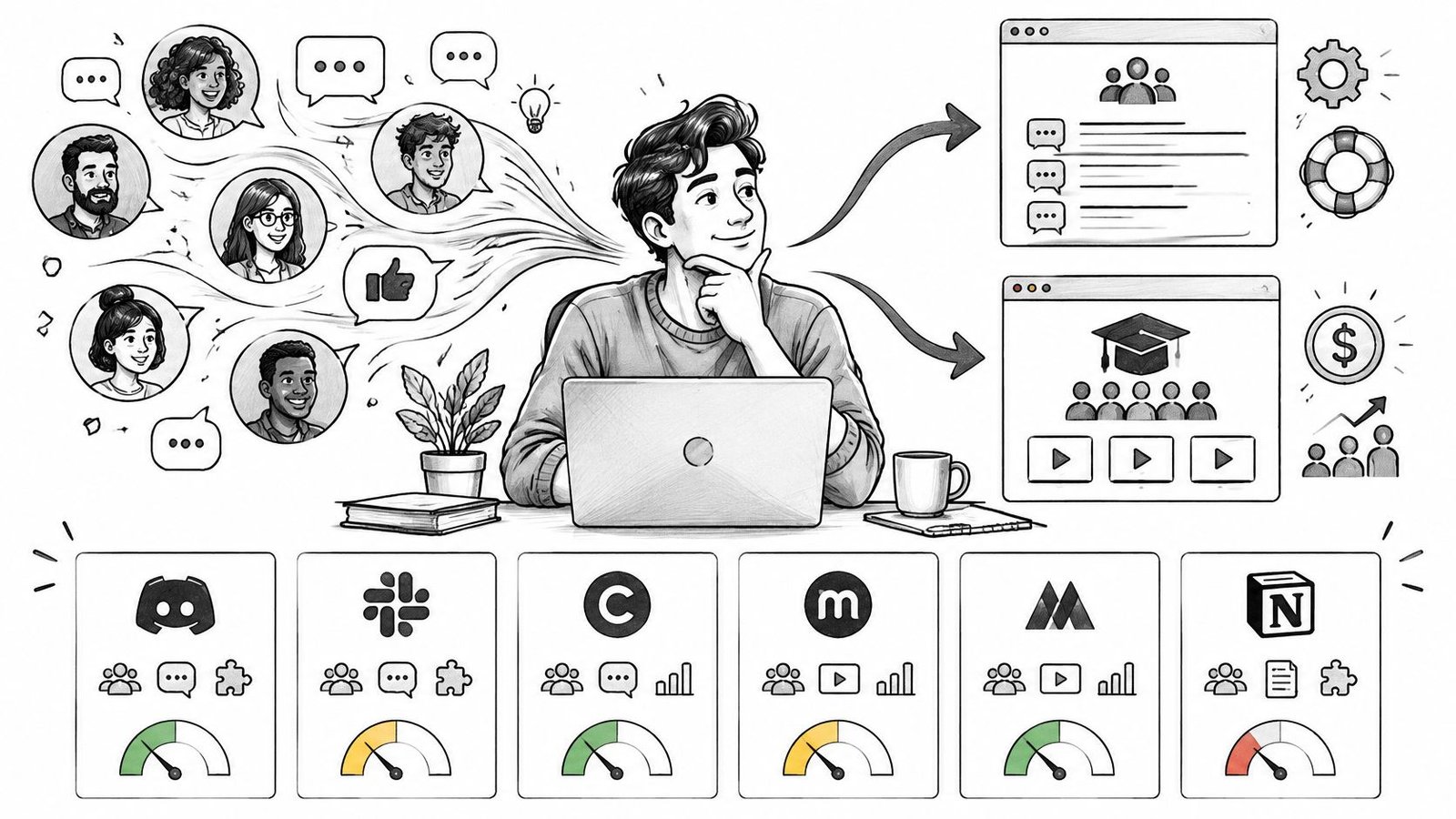
Community Engagement Tools: 10 Platforms Compared
You launch a Discord server on Monday. By Friday, forty people have joined, introduced themselves, and dropped questions across three wrong channels. By week four, you spend an hour every morning pasting the same onboarding answer into chat because nobody can find the reply you wrote two Tuesday afternoons ago.
That pattern kills more startup communities than bad products do. Founders pick community engagement tools by staring at feature checklists instead of measuring weekly maintenance. Moderation load, search quality for recurring support answers, and how painfully you'll lose member history if you leave matter far more than whether a platform has custom emoji reactions.
Tool sprawl compounds the drag fast. In its Community Digital Compass report, the European Commission's Joint Research Centre flagged fragmented platform ecosystems and over-engineered software as core community failures, and noted that only 6% of surveyed community builders had no plans to consolidate tools in 2025.
A community tool isn't a one-time setup. It's a recurring calendar item on a founder's week.
Most platform roundups also mash two completely different software categories together. A creator-economy platform sells courses, paid memberships, and live cohorts. A customer support and feedback community deflects help-desk tickets, collects feature requests, and builds public pages Google can index. Comparing them side by side leads founders to buy a course app when they needed a searchable forum, or a chat room when they needed structured discovery.
Below, eleven platforms are judged strictly on what a small SaaS or AI team has to maintain every week.
1. Bazzly
A buyer asks for software recommendations in a subreddit while your own forum sits empty. Bazzly targets that conversation: it helps founders find relevant Reddit threads and prepare replies rather than recruit members into a new community. Among dedicated Reddit marketing tools, its role is acquisition inside existing communities, not hosting customer support or selling memberships.
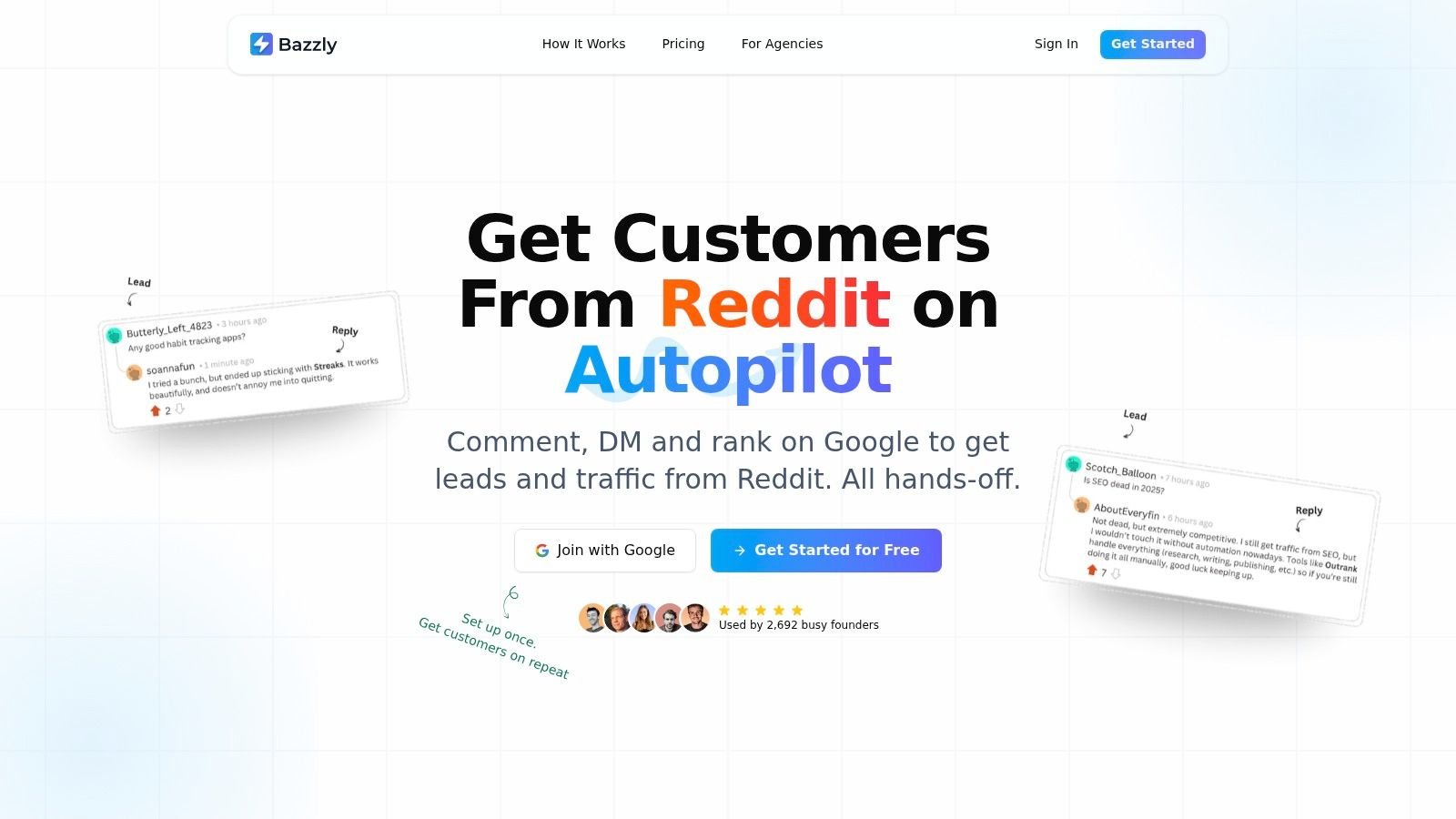
Where Bazzly fits in a lean growth stack
Bazzly monitors selected subreddits, scores new posts for buying intent and product fit, and surfaces older threads ranking for target keywords. For a small SaaS or AI team, that shifts the weekly work from searching manually to checking whether suggested conversations deserve a reply.
Relevance still needs human judgement. A thread can mention your category without welcoming a product recommendation, and a useful draft still needs checking against the discussion and subreddit rules.
The search angle also needs boundaries. AI Search Optimization and ChatGPT visibility are reasons to consider public discussions, not promises of placement. OpenAI's ChatGPT search publisher FAQ distinguishes OAI-SearchBot, used for search discovery, from GPTBot, used for model training. That distinction does not establish that a Reddit reply will appear in an answer.
- Context-aware reply drafts: Review suggested replies for accuracy, relevance, and whether mentioning your product helps.
- Flexible posting paths: Choose between posting through your own Reddit account using the Chrome extension and Bazzly-managed accounts. Check the applicable posting costs and subreddit rules before using either route.
- Controlled Autopilot: Posting pace and relevance thresholds provide controls, but scheduled activity still needs review. Treat upvote options cautiously rather than as a substitute for useful answers.
- Lead outreach and Brand Signals: Direct messaging and brand or competitor monitoring support follow-up. Keep outreach tied to the conversation instead of treating every mention as permission to pitch.
Pricing, credits, and trade-offs
Bazzly sells paid, credit-based plans with a free trial. Confirm current rates, included credits, per-action costs, and removal-refund terms before committing. Budget for reviewing replies as well as paying for them.
Check the technical fit too. Its API and MCP server are relevant for custom workflows; confirm whether its integration options cover your Slack or CRM handoff.
The ongoing cost is participation oversight, not running your own forum. Support answers remain spread across Reddit threads, and leaving the tool does not turn those discussions into an owned knowledge base. Choose Bazzly for finding buyer conversations when you can maintain that review habit. Use a dedicated customer community when searchable support history and control over member content are the priority.
2. Bettermode
Bettermode is built for SaaS and B2B companies that want a branded customer hub for product education, support Q&A, feedback boards, and release announcements. Unlike chat apps where useful answers sink out of sight, Bettermode organizes content into modular spaces on your own custom domain.
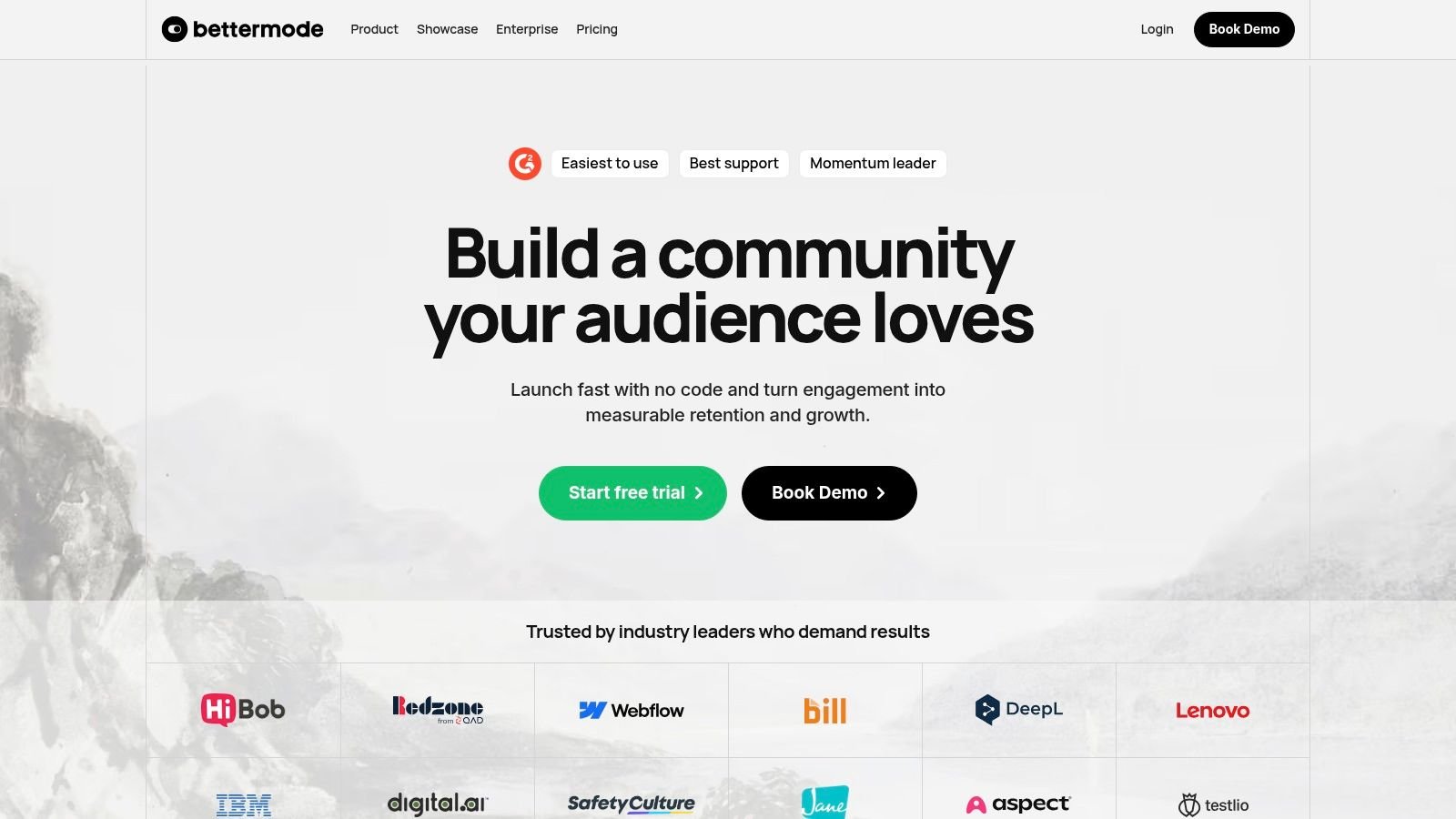
Its Starter plan lists at $149 per month on annual billing or $199 per month billed monthly, with a 14-day trial requiring no credit card. Out of the box, you get Q&A threads, discussions, events, polls, member profiles, private messaging, chat, basic analytics, and API access.
Weekly maintenance and stack fit
For a small SaaS team, Bettermode's biggest advantage is tying community activity back to real customer workflows instead of tracking vanity member counts. That business-first category is growing quickly: Market Research Future values the broader community engagement software market at USD 27.73 billion in 2024, projected to reach USD 62.49 billion by 2034 at an 8.46% compound annual growth rate, with CRM connectivity highlighted as a key way to tie member activity to support cases and revenue outcomes.
Founder check: Before building a custom layout in Bettermode, verify which API limits and third-party integrations sit on Starter versus higher tiers so you don't hit an unexpected upgrade wall at 500 users.
Bettermode can feel heavy if you only have twenty beta users and haven't nailed your onboarding docs yet. Weekly upkeep is moderate because you'll moderate posts, update pinned guides, and manage permissions across spaces. Exit friction is lower than closed chat apps thanks to API access, though migrating customized page layouts still takes planning.
3. Discourse
Say a developer hits an error code in your API at midnight. They paste the error into Google, land on a thread from six months ago with a green "Solved" badge, copy the fix, and never open a support ticket. That's the exact job Discourse has perfected over the past decade.
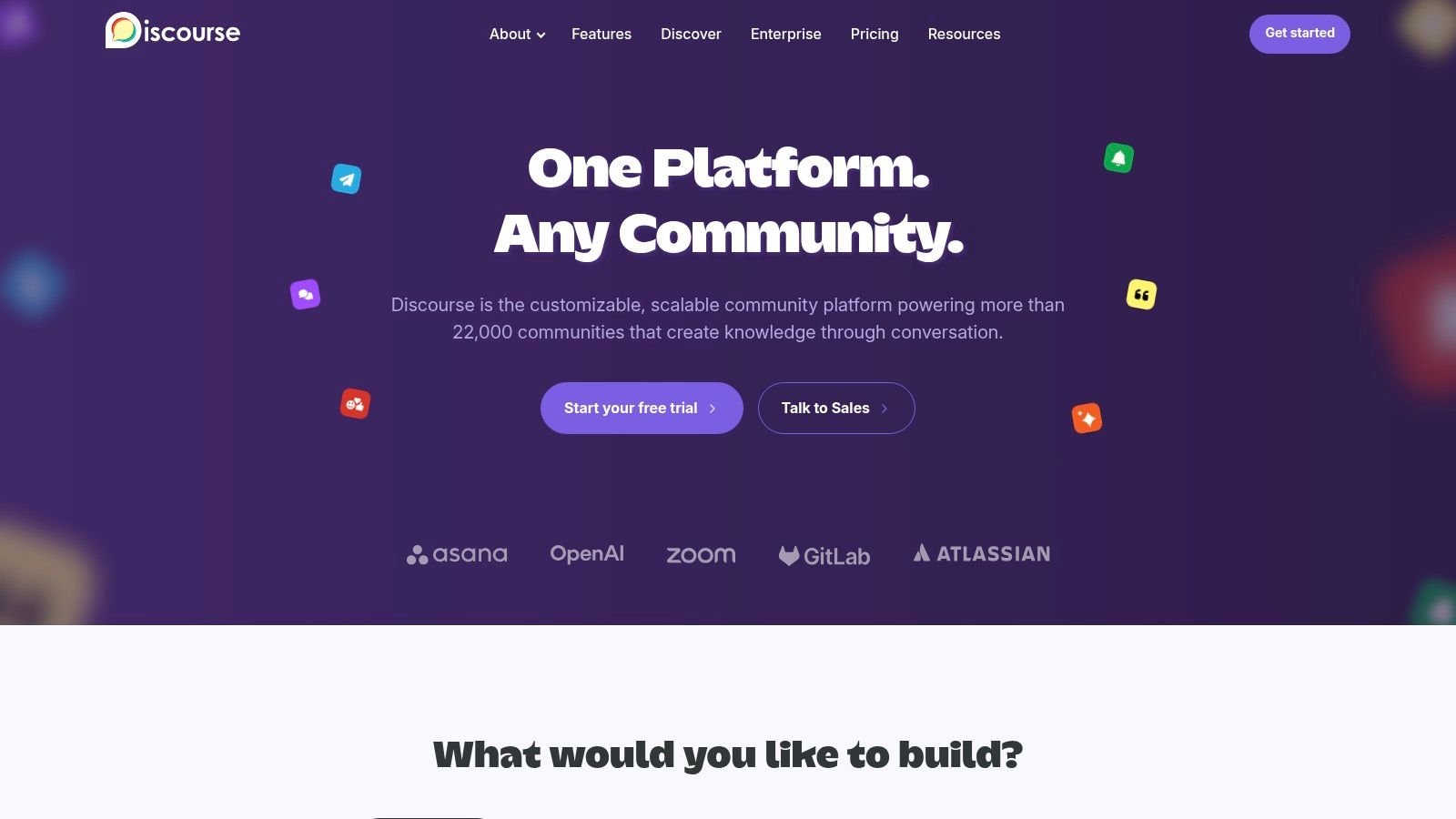
Discourse is an open-source forum built around categorized, long-form threaded discussions and serious search quality. You can run it two very different ways:
- Self-hosted open source: The software is free and gives you total control over your server, custom plugins, and full database backups, which makes leaving or migrating painless later. The trade-off is DevOps upkeep, email deliverability setup, and security updates.
- Hosted plans: Discourse offers Free, Pro, Business, and Enterprise tiers with mobile apps and push notifications included, letting small teams skip server administration while comparing plan limits closely.
- Structured moderation: Trust levels gradually give reliable regulars light moderation powers, cutting down the hours founders spend deleting spam or recategorizing messy posts.
Why Discourse wins on SaaS SEO
Because every public topic generates clean HTML on your own domain, Discourse doubles as a long-term SaaS SEO asset. According to Google's documentation for AI features, appearing in Google AI Overviews and AI Mode doesn't require invented AI-only markup; standard crawlable text, clear structure, and internal links still govern eligibility. Solved Discourse threads naturally provide the exact question-and-answer text search engines reward.
Discourse is a poor match if you want to sell video courses or build a slick creator storefront. It shines when durable answers and search visibility matter most. Pairing an indexed Discourse support hub with external software listings helps early-stage products build domain authority faster, and founders mapping that launch layer can browse StartupSubmit's startup directory guide to pick high-signal platforms alongside their forum.
4. Circle
A paid mastermind, founder cohort, or product-led academy makes forum software feel cold. Circle sits in the creator and education camp, bundling discussions, courses, events, live streams, live rooms, paid memberships, and a searchable member directory on your own custom domain.
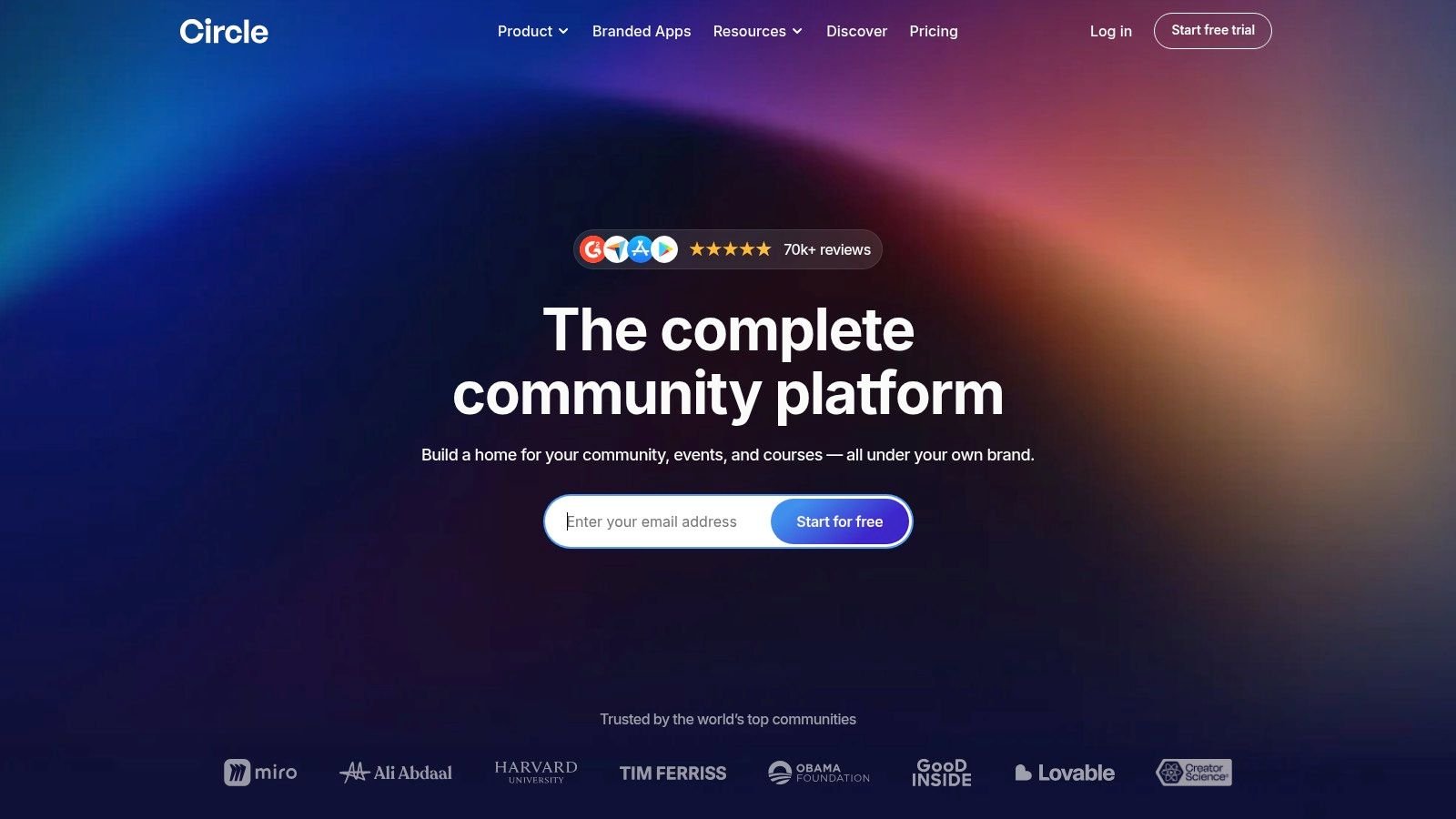
Weekly maintenance is the decisive test. A small SaaS or AI team has to keep prompts fresh, moderate member spaces, answer questions, and decide what stays searchable. Circle gives those teams one place to run that work, which matters when the community is part of the product experience rather than a support archive.
Events are where Circle earns its keep for lean teams. In the Hivebrite Community Growth Benchmark Report, 76.9% of surveyed community professionals identified online or in-person events as the strongest driver of meaningful participation, far ahead of peer-to-peer support at 40.8% and discussion forums at 37.4%. That same report found that 53.7% of teams never compare behavior or outcomes between members and non-members, which makes having events, discussions, and member analytics in one place practical.
Costs and migration reality
Circle offers tiered paid plans and a trial, so check Circle for current figures before budgeting. The trade-off is that creator features cost founder time as well as money. You are buying a structured member experience, not just a place to answer tickets.
- Feature mismatch for support: Circle is overkill if you just need bug reports and searchable troubleshooting threads.
- Tier-gated automation: Workflows, API access, and deeper branding sit on higher plans, and payment-related fees or add-ons matter if memberships drive revenue.
- Higher exit friction: Moving courses, recurring billing subscriptions, and nested member spaces out of an all-in-one creator tool takes far more effort than exporting a flat forum database.
I would choose Circle when the community is a product in itself: cohorts, paid access, events, and member identity. For technical support where search answers dominate, a forum usually asks less of the team each week.
5. Mighty Networks
Pricing climbs quickly once you add mobile apps and paid courses to a community wishlist. Mighty Networks targets membership businesses and educators with monthly plans starting at $79 for Launch, $179 for Scale, and $354 for Growth, while Mighty Pro provides fully branded mobile apps and dedicated services at custom pricing.
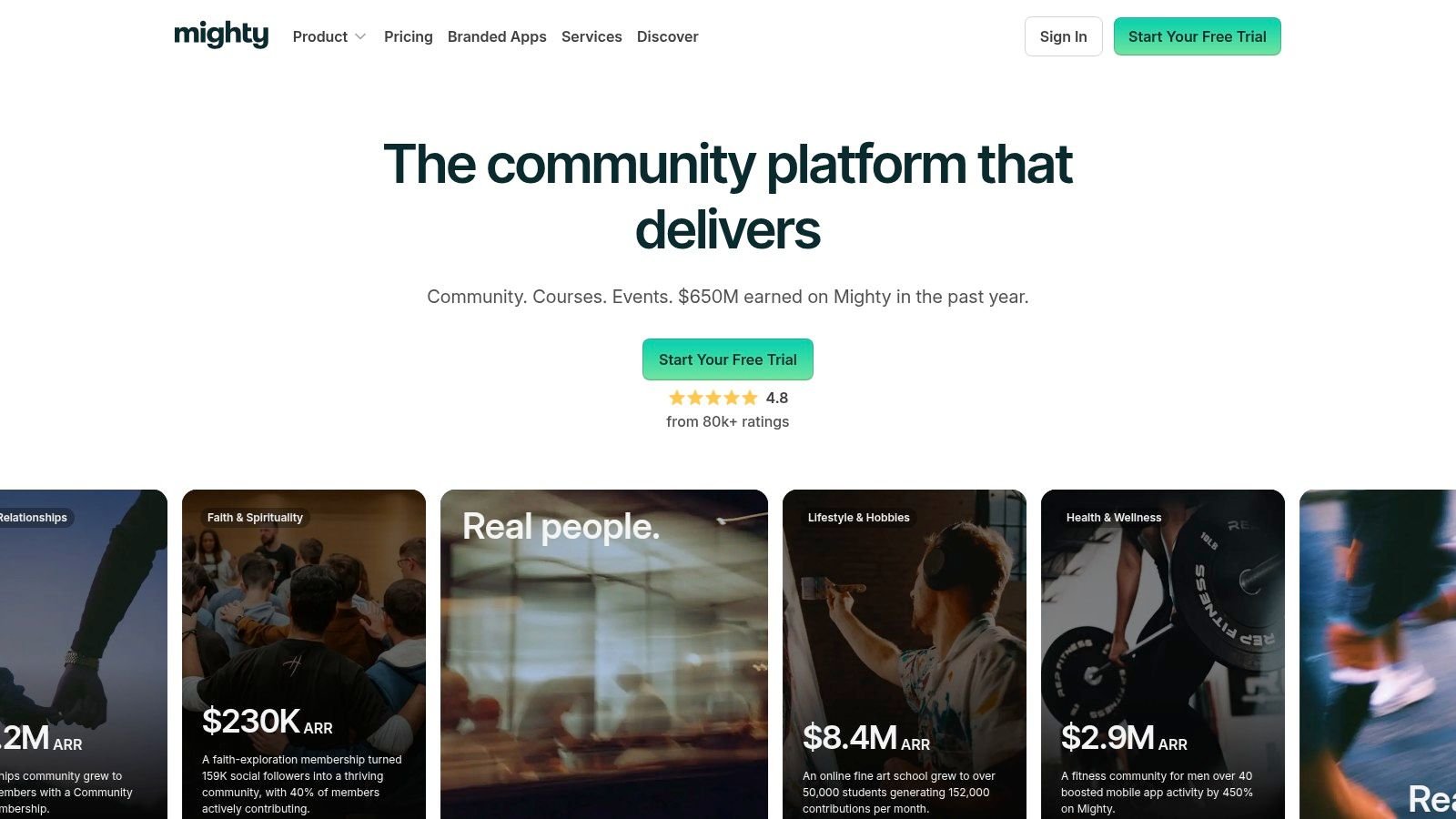
The platform combines community spaces, course hosting, and paid membership gating inside one system, adding stronger automations and integrations as you move up tiers. Where it differs from support-first software is its focus on member-to-member connection rather than ticket deflection or Google-indexed documentation.
When Mighty Networks makes sense
For an indie hacker selling a standalone utility app, Mighty Networks usually brings too much structure and too steep a bill on higher tiers. Weekly founder time goes into programming events, refreshing prompts, and managing course modules rather than answering technical support tickets.
- Best use case: Paid education businesses, coaching communities, or SaaS companies running a dedicated, revenue-generating certification academy.
- Poor use case: Lightweight beta feedback groups or developer Q&A forums where users expect fast Google search results.
- Exit consideration: Because courses, member profiles, and recurring access live together, test member data export options during your evaluation so you aren't locked in if your business model pivots.
6. Higher Logic Vanilla
Once a SaaS product crosses into mid-market or enterprise accounts, basic forums break down around permissions, gamification, and account-level reporting. Higher Logic Vanilla serves that upper segment of the dedicated community platform market, a category Cognitive Market Research valued at USD 581.2 million in 2024.
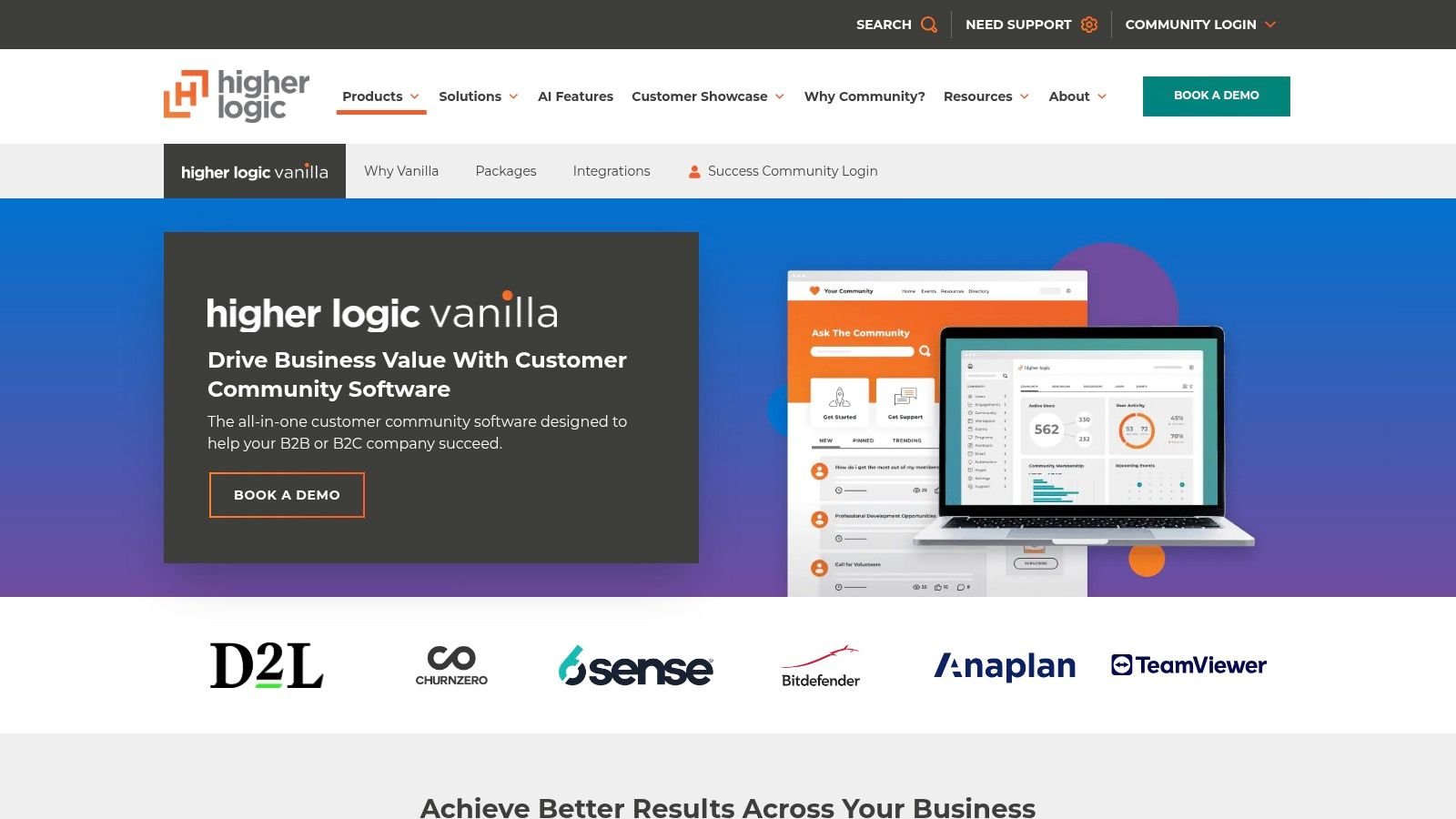
Vanilla is purpose-built for customer and support communities rather than creator subscriptions. Its toolkit includes:
- Structured support discussions: Category hierarchies and community management tools built to keep large volumes of customer posts organized.
- Participation mechanics: Native polls, points, badges, and leaderboards designed to reward power users who answer peer questions.
- Enterprise integrations: Connections intended to sit alongside established CRM, ticketing, and identity stacks.
The hidden time cost for small teams
Pricing is custom, which immediately slows down founders who just want to spin up a test space over a weekend. Getting a clear answer on budget requires a sales cycle, and you have to verify line by line which integrations and modules are included in the proposal versus sold as add-ons.
For a five-person AI startup, Vanilla is too heavyweight. You'll spend more time configuring roles and onboarding with an enterprise vendor than talking to early adopters. Keep it on your shortlist for the day you hire a dedicated community manager and need a vendor-supported support hub at scale.
7. Hivebrite
Online groups started as practical coordination networks long before modern SaaS existed. A landmark October 31, 2001 survey by the Pew Internet & American Life Project found that 84% of internet users (an estimated 90 million Americans) had contacted an online group, and 26% of online Americans used the internet to strengthen ties to local communities through sports leagues, charity groups, and neighborhood meetings. Hivebrite is built directly for that structured membership lineage: alumni networks, professional associations, nonprofits, and chapter-based organizations.
Structure built for rosters, not sprints
Hivebrite replaces scattered spreadsheets and chat apps with a branded member portal built for long-term administration. Instead of optimizing for casual product banter, it prioritizes directories, regional chapters, member networking, and event management for large rosters.
- Strong match for institutions: Formal organizations that manage annual dues, regional events, and structured member directories get far more control than a chat server allows.
- Opaque startup pricing: Pricing isn't publicly listed, so founders have to request a quote and weigh whether an institutional rollout fits an early-stage budget.
- Heavy for early product feedback: A fast-moving startup shipping weekly updates rarely needs chapter hierarchies or formal membership governance.
Regional chapters, local associations, and service businesses using Hivebrite also depend on accurate public records outside their member portal so prospective members can find them on maps and search engines. If your organization operates across cities or regions, our team can help you fix inconsistent business citations with manual verification and duplicate checks across local, regional, and industry directories.
Boost Your Startup's Traffic & SEO with up to 200+ Directory Listings
Skip the grind. Our team manually submits your product to relevant, high-authority directories, with screenshot proof for every submission, so you get real users, feedback and lasting backlinks without lifting a finger.
Get Listed Today8. Discord
A small SaaS or AI team can open Discord fast, invite early users, and start talking the same day. Basic use is free, with optional paid Nitro subscriptions, and many developers already keep the app open. That makes it useful for validating whether users want to talk to each other before the team pays for a more structured community platform.
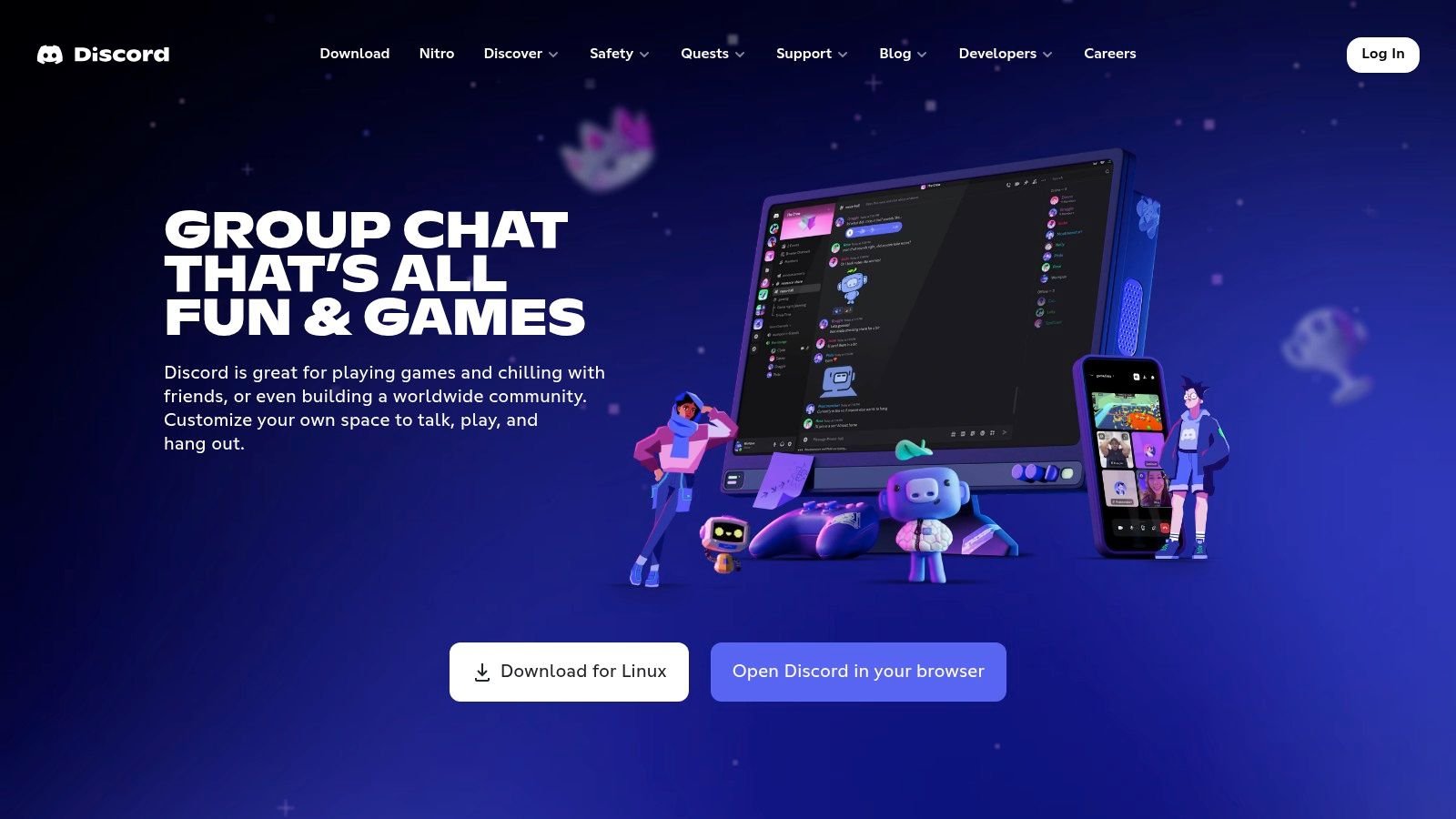
Text channels, voice rooms, video calls, and role-based permissions support live bug bashes, office hours, and quick feedback loops. The trade-off is moderation load. Channels stay lively while the team is present, but the same speed that makes launch-week conversation easy also makes unanswered questions pile up. Support answers get buried in daily chat, and search is weak for multi-step troubleshooting.
Rule of thumb: Treat Discord as a live hallway, never as your documentation library. If an answer matters next month, copy it onto your own domain immediately.
The founder tax grows as the server grows. Busy communities need channel rules, role cleanup, spam control, and someone to move useful answers into docs. You also do not own the domain or native CRM analytics. Leaving Discord is awkward because members rarely want to change habits and logins once a server becomes active. For a small team, that makes Discord strong for conversation and weak as a durable support archive.
Discord also has an SEO blind spot. A detailed troubleshooting reply typed in a private channel sends no organic traffic to your website. Google cannot index private server channels, so Discord-first startups often end up with thin Startup SEO and slow Backlinks growth after launch week fades. The practical fix is to keep Discord for real-time discussion and put durable, indexable profiles elsewhere.
Building that external visibility means avoiding shortcuts. Google's Search Spam Policies treat paid links meant to manipulate rankings as link spam, while distinguishing authentic business profiles and properly tagged ads (rel="nofollow" or rel="sponsored"). At StartupSubmit, a team of 20 SEO specialists submits by hand with no bots across 220+ software and AI directories. That gives founders a way to pair an active Discord server with safe directory submissions for SaaS that search engines can index.
9. Slack
When your customers are B2B marketers, sales ops leaders, or agency owners, asking them to install Discord usually fails. They already spend eight hours a day inside Slack, which makes a shared workspace feel effortless on day one.
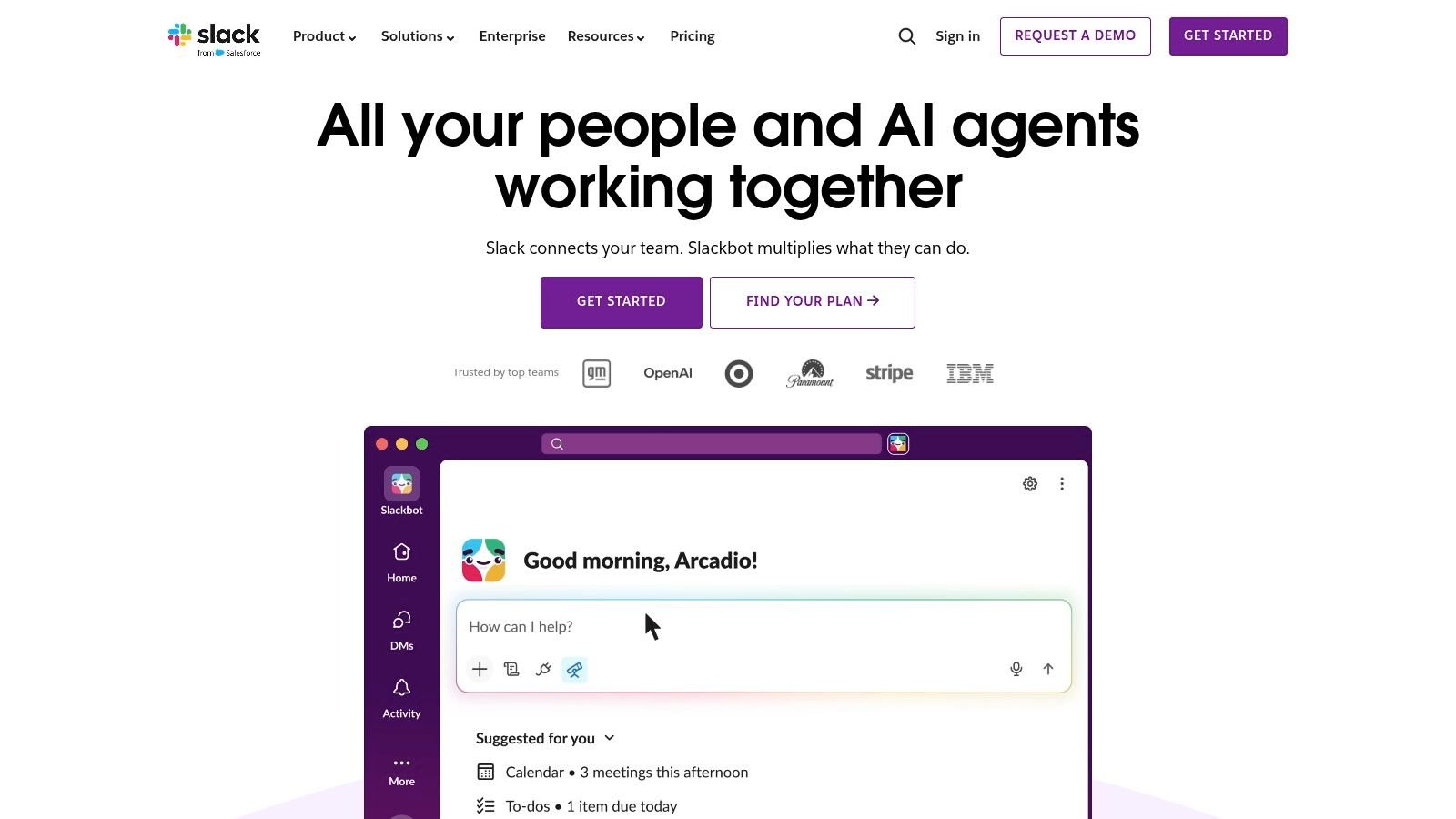
Slack shines for tight, high-touch partner groups, design-partner cohorts, and private customer channels where real-time back-and-forth matters. Topic channels, direct messages, huddles, and a deep integration ecosystem let you pipe signups or support alerts straight into the exact workspace your team already watches.
The catch is structural ephemerality. Real-time chat buries long-term proposals and answers under daily chatter. Contrast that with structured participation platforms: a 2025 academic analysis of Latvia's ManaBalss platform documented 2,030 submitted initiatives collecting 2,020,904 total signatures, with 568 initiatives still active and publicly accessible over time. Durable public records accumulate value; Slack threads vanish unless someone manually archives them.
- Noise scales fast: Once a few hundred members join, channels turn overwhelming and lurkers mute notifications permanently.
- Pricing traps for external members: Free plans restrict message history, while paid per-user pricing and guest-access rules need careful math before inviting hundreds of non-employees.
- Minimal search deflection: Customers can't Google a Slack answer before opening a ticket, so support load stays pinned to your team.
10. Skool
Skool strips community software down to three simple parts: a discussion feed, a classroom tab for courses, and a calendar, held together by points and leaderboards. Third-party comparisons report plans at $9 and $99 per month, though you should verify current pricing and any transaction fees directly with Skool before signing up.
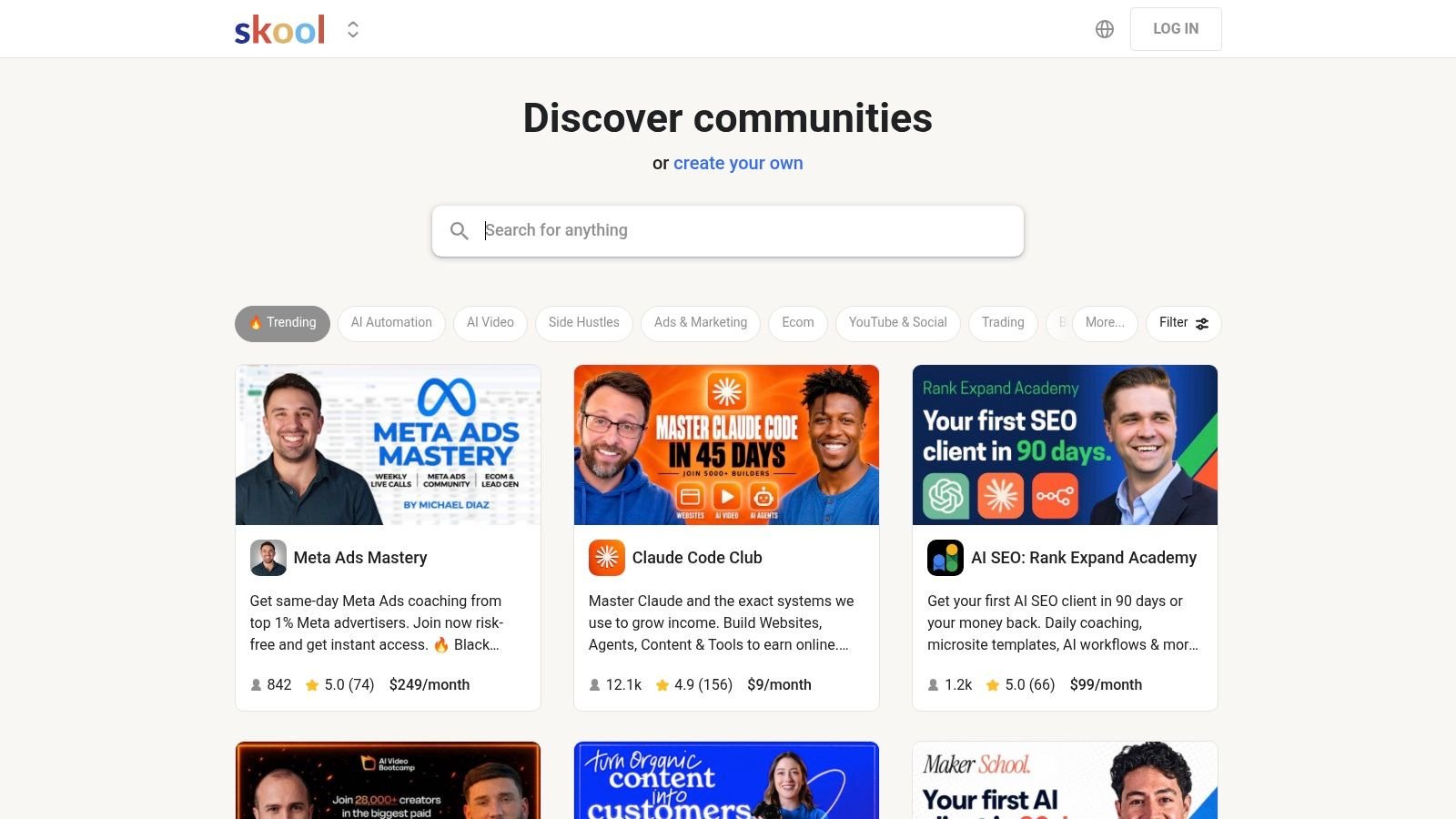
Setup takes an afternoon, which explains why coaches, educators, and indie founders running small paid masterminds like it. Members understand the interface immediately, and gamification nudges early signups to post and comment without you building complex automations.
What Skool leaves out for SaaS teams
Simplicity cuts both ways once a software company tries to use Skool for product support. Layout customization is rigid, technical documentation doesn't belong in a social-style feed, and you can't build a deep, searchable help center on your own domain.
A closed Skool group also does nothing for Startup Marketing in organic search. An Ahrefs study of approximately 920 million web pages found that most pages ranking in position one gained new followed backlinks from new referring domains at roughly 5% to 14.5% per month. If your community lives behind a login wall, you still need an external engine bringing steady referring domains and branded search profiles, which is why many founders submit your SaaS to directories like G2, Capterra, Product Hunt, and BetaList right after launch.
11. GroupApp
A founder running a paid onboarding bootcamp has a different job than a founder running open product support. GroupApp is built for the first job. It connects community channels with lessons, events, and cohort workflows, so questions sit close to the module being taught.
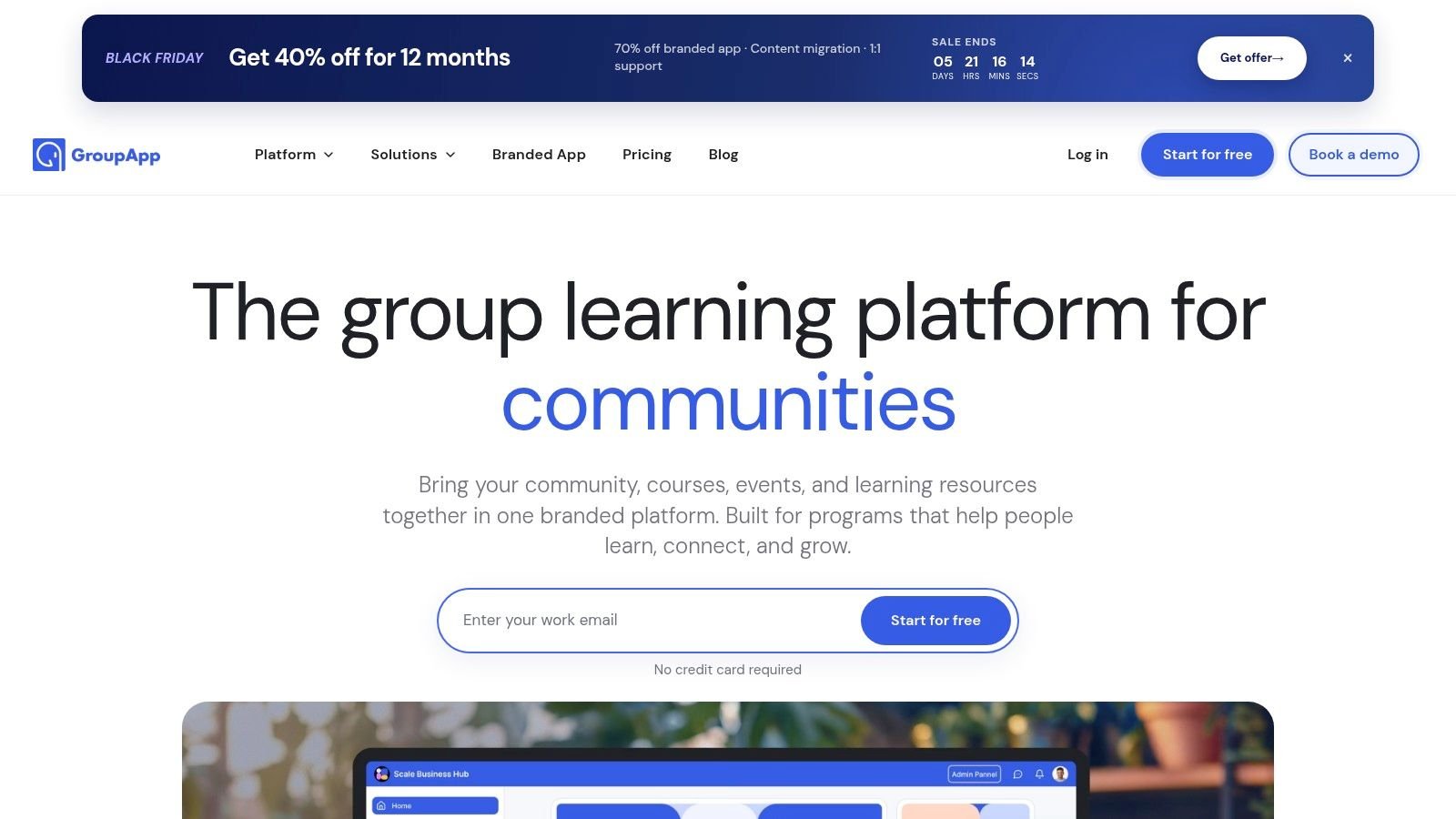
That structure is its key value. A small team does not need to stitch together a classroom, a discussion space, and a live session calendar. Its reported entry tier is aimed at smaller training programs and bootcamps, not enterprise community budgets. The weekly cost is mostly moderation: answering lesson-level questions, keeping cohorts moving, and making events useful rather than ceremonial.
Its practical strengths are narrow and clear:
- Connected learning spaces: Discussions attach to lessons and cohorts, which keeps student questions beside the relevant module.
- Accessible entry cost: The reported starting tier sits below heavier platforms for small training programs.
- Event coordination: Live sessions and community threads stay in one dashboard, which reduces setup work.
Avoiding feature mismatch
GroupApp becomes a poor fit when a SaaS founder tries to use it for customer support or feature voting. You end up ignoring the course builder while missing the ticketing integrations, public SEO indexing, and API depth that software support teams need. Search quality also suffers when support answers live inside a private classroom instead of a public, organized help source. Leaving later takes planning too, because lessons, threads, and event history are tied to the learning structure.
A paid onboarding bootcamp for agencies using your software fits well. An early-stage product trying to appear in comparison searches needs a different base. Build external directory listings for early-stage startups first, so prospects can find the brand before they are asked to join a private classroom.
Listed starting prices, free options, and best-fit use cases at a glance
| Item | Listed Starting Price | Free Option or Trial | Best Fit |
|---|---|---|---|
| Bazzly | $199/month per project | 7-day free trial; free Chrome extension | Founders seeking repeatable Reddit growth |
| Bettermode | $149/month with annual billing | 14-day trial | Branded business and customer communities |
| Discourse | Free self-hosted software; hosted pricing varies | Free self-hosted option; hosted Free tier | Searchable, organized discussion forums |
| Circle | $89/month | 14-day trial | Communities combining discussions, courses, and events |
| Mighty Networks | $79/month | Trial status not listed in the table | Paid communities that include courses or memberships |
| Higher Logic Vanilla | Custom pricing | Trial or free-plan status not listed in the table | Enterprise customer and support communities |
| Hivebrite | Not publicly listed | Trial or free-plan status not listed in the table | Alumni networks, associations, and professional communities |
| Discord | Free basic use | Free basic use | Informal, real-time communities and developer groups |
| Slack | Price not listed in the table | Free plan | Groups that already use Slack for frequent conversation |
| Skool | Reported plans at $9/month | Trial or free-plan status not listed in the table | Coaches and educators running paid groups |
| GroupApp | Reported starting price of $18/month with annual billing | Trial or free-plan status not listed in the table | Cohort-based programs, training, and coaching |
Use the table as a shortlist filter, not a final verdict. A low monthly price can still cost more founder time if moderators answer the same support question every day. A free plan can also be expensive when search results are hard to find or leaving the platform means losing context.
For a small SaaS or AI team, judge each option by three maintenance jobs. First, check moderation load. Real-time chat tools demand quick replies, while forums can absorb slower, searchable answers. Second, check whether support answers are easy to find through search. That matters more than visual polish when members arrive with repeat bugs. Third, check how hard it is to leave later. If exports, URLs, and history are awkward to move, the tool becomes a dependency.
The cleanest split is by job. Bazzly suits teams focused on external Reddit visibility. Bettermode, Discourse, and Higher Logic Vanilla fit support and feedback communities. Circle, Mighty Networks, Skool, and GroupApp fit courses, paid groups, and cohorts. Discord and Slack fit fast conversation, especially when the team already lives there. Hivebrite fits associations and professional networks. Slack fits best when a group already uses it for frequent conversation, while Discord suits informal developer groups. Treat creator-economy platforms and support forums as different categories, even when their feature lists overlap.
Frequently Asked Questions About Community Engagement Tools
How do community engagement tools help SaaS SEO and AI search visibility
Public, crawlable forums like Discourse generate indexed question-and-answer pages on your own domain, which helps capture long-tail troubleshooting searches and surface clear context for Google AI Overviews. Tools like Bazzly target external visibility instead by helping founders contribute helpful replies to Reddit threads that already rank on Google and get cited by AI assistants, strengthening LLM SEO without maintaining a private server.
What is the difference between a support community and a creator community
A support and feedback community (such as Bettermode, Discourse, or Higher Logic Vanilla) focuses on searchable answers, bug triage, ticket deflection, and CRM links. A creator or cohort platform (such as Circle, Mighty Networks, Skool, or GroupApp) focuses on paid memberships, courses, live streams, and recurring programming. Picking across categories usually leaves founders paying for features they don't use while missing the search or monetization workflows they need.
How much founder time does a new community take each week
Expect at least three to five hours a week during the first ninety days to welcome members, answer questions quickly, seed conversations, and clean up off-topic posts. Real-time chat rooms like Discord and Slack demand faster daily response times than asynchronous forums like Discourse, where a thoughtful reply a few hours later still feels helpful and stays useful for future readers.
Choose the Platform Your First 100 Members Will Actually Use
Buying software won't create engagement if members feel like their input disappears into a void. In a 2025 PublicInput survey of more than 1,000 voting-age residents, 94% agreed that local governments should report how community input was used in decision-making. SaaS users behave the same way: whether you run a Discourse forum, a Bettermode hub, or a 50-person Slack cohort, publishing a simple "you asked, we shipped" update every month beats any gamification badge.
Start by matching the platform to the single job you need done right now:
- Customer acquisition and AI search visibility: Start with Bazzly to join buying-intent Reddit threads before building your own hosted space.
- Searchable support deflection and SaaS SEO: Pick Discourse (self-hosted or hosted) or Bettermode so solved questions live on your own domain.
- Fast beta testing with technical or B2B users: Spin up Discord for developers or Slack for B2B buyers, and document recurring answers on your website every Friday.
- Paid cohorts, courses, and recurring memberships: Shortlist Circle, Mighty Networks, Skool, or GroupApp based on your event load and budget.
Your 30-day pilot plan
Don't sign an annual contract on day one. Shortlist two platforms from the same category, invite twenty to thirty real users into your top pick, and track three numbers for 30 days: how many hours you spent moderating, whether new members found answers without asking you directly, and how cleanly you can export member emails and posts if you decide to move.
Run the exit test during your free trial. Export a sample thread and member list before you ever put a credit card on an annual plan.
While you test which community platform deserves your weekly attention, don't let your startup's broader search footprint stall after launch day. At StartupSubmit, we recommend building your directory footprint first as a durable entity layer across Startup Directories before layering on heavier community management, because high-authority profiles keep working in Google and AI search even on weeks when you're too busy shipping code to moderate a feed.
Ready to pair your community strategy with steady organic discovery? Let StartupSubmit handle the repetitive launch work for you: our team of 20 SEO professionals manually submits your SaaS or AI product (zero bots, ever) to 200+ high-authority startup and software directories including Product Hunt, G2, Capterra, AlternativeTo, and SaaSHub in roughly 5 to 14 days, backed by a full itemized report with live links and screenshots, plus optional human-written Reddit outreach through our Reddit Growth Engine. Visit StartupSubmit to pick your one-time submission plan and start building durable search visibility within 24 hours.
Ready to build high-quality backlinks?
We'll manually submit your product to 60 to 200+ directories in 5 to 7 days, with screenshot proof for every submission. No bots, no boring forms, just more time for selling and building.
See pricing & get started →