
Get Listed Today: Proven Playbook for Startup Directories
You’re probably in the same spot a lot of SaaS and AI founders hit after launch. The post-Publish rush looks healthy, the inbox fills up, and then the new signups slow to a crawl while you’re still answering support questions and watching your product disappear from view.
That drop-off is exactly why directory submission works better when you treat it like launch infrastructure instead of a box-ticking SEO task. Google’s early reliance on backlinks and page-level authority, going back to the original PageRank system, is part of why reputable citations still matter for discovery at scale, especially after search engines were already handling billions of queries per day by the late 2000s (Forbes Advisor). In practice, the startup that gets listed today with clean, consistent profiles usually has a much better shot at showing up in category searches long after the launch spike is gone.
The Launch Spike Problem Every SaaS Founder Knows
Launch week usually feels louder than it is. You post on Product Hunt, LinkedIn, X, maybe Hacker News if the timing lines up, and you get that short burst of attention that makes everyone on the team feel like the market is finally paying attention.
Then the spike fades. The launch platforms stop being the main discovery engine, and the brand starts relying on whatever evergreen footprint you built while everyone was busy shipping. That’s the part most founders underestimate, because they assume discovery will somehow continue if the product is good enough.
Why the spike dies so fast
The launch channel is built for attention, not durability. It rewards novelty, community activity, and a strong first impression, then moves on to the next thing.
Directories behave differently. A well-built profile on a platform like Google Business Profile, Yelp, LinkedIn, Apple Maps, or Yellow Pages can keep feeding discovery through branded searches, category searches, and review surfaces because those pages keep existing after launch day. The long list of more than 100 free business directories compiled for local visibility shows how broad that ecosystem is, with major platforms spread across trusted, high-traffic properties.
Practical rule: if a launch channel disappears in 48 hours, treat it as a spark, not a system.
For SaaS and AI startups, the question isn’t whether to submit. It’s whether the submission work happens early enough to standardize the brand footprint before the first wave of mentions, reviews, and crawler visits starts fragmenting your identity. That’s why I’ve seen the best results from teams that use launch week to seed the canonical profiles first, then expand into supporting directories later.
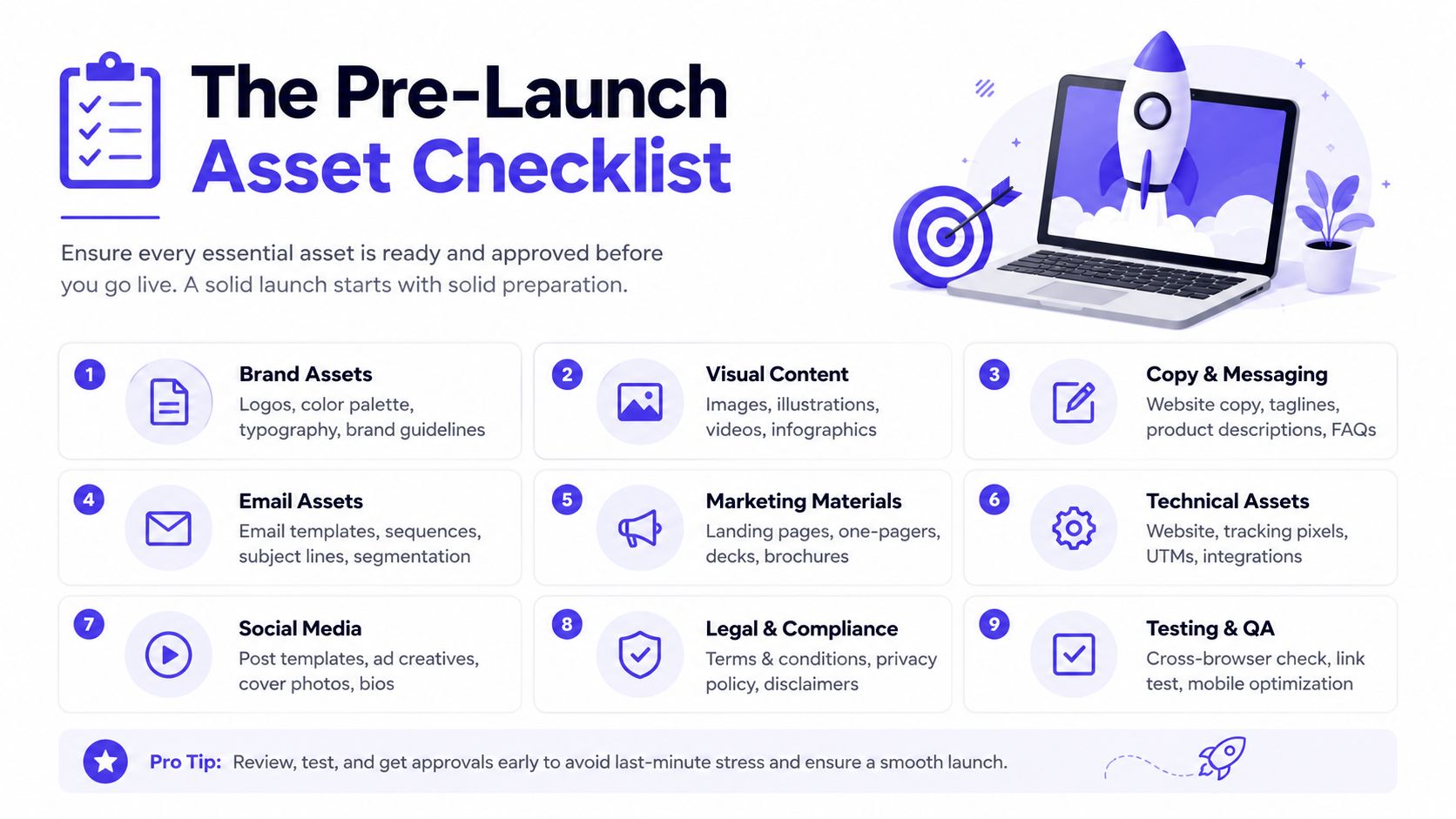
The Pre-Launch Asset Checklist
Build the canonical brand kit first
Before any form opens, the product identity has to be locked. I’ve watched too many teams rewrite the tagline three times mid-campaign because marketing, product, and the founder all had different versions of the same promise.
Start with one standardized product name, one tagline, and one elevator pitch that doesn’t change from directory to directory. The tagline should stay tight enough to fit awkward profile fields, and the short pitch should be clear enough to survive review-site moderation without sounding like ad copy.
A strong setup usually includes:
- Product name: one exact spelling, one capitalization pattern, no alternates.
- Tagline: short, specific, and consistent across every profile.
- Short description: a compact elevator pitch that can be reused without rewriting.
- Long description: one version for general platforms, one version for review sites.
- Screenshots: a small, categorized set with matching dimensions and a consistent visual style.
- Founder assets: a clean headshot and a logo pack in both SVG and PNG.
- Category tags: three to five accurate tags, not a laundry list.
- Uniform URL pattern: the same canonical website format everywhere.
- OG image variants: versions sized for the directory formats you know you’ll hit.
The quality bar matters more than the count. If screenshots are inconsistent, descriptions are vague, or the logo looks cropped on half the sites, the listing looks improvised. That weakens trust, especially on directories and review platforms where humans still check for signal before approval.
A profile that looks rushed usually gets treated like it was rushed.
Standardize for moderation, not just for aesthetics
Google’s Business Profile flow shows why this prep work matters. Verification is often the gating step, and postcard verification commonly takes 5–14 days, so timeline planning has to respect that delay instead of assuming instant placement (AIT). That same logic applies to other platforms, because moderation teams reject or delay listings when the identity fields don’t line up.
Operationally, the main failure mode is inconsistent NAP data, meaning name, address, and phone, plus incomplete profiles. Guidance on online listings repeatedly emphasizes accurate, consistent details, relevant keywords, images, and regular updates because those elements improve trust and reduce listing conflicts (Jasmine Directory).
If you’re using a service like StartupSubmit, or running the work in-house, the win comes from getting the asset pack ready once and reusing it everywhere. That turns submission from a creative task into a repeatable launch workflow, which is what you want when the clock is already moving.
DIY Submissions Versus a Managed Service
The decision usually comes down to one of three paths. Do it yourself, hand it to a freelancer, or use a managed service that runs the submission flow for you.
The wrong choice isn’t always the expensive one. The wrong choice is the one that makes the founder the bottleneck while launch marketing, product feedback, and support all pile up at once.
| Dimension | DIY Founder | Freelancer | StartupSubmit |
|---|---|---|---|
| Time | High founder time, often spread across many sessions | Lower founder time, but still requires coordination | Low founder time after intake |
| Cost | Low cash outlay, high time cost | Variable pricing and variable quality | One-time fee structure |
| Quality control | Depends on the founder's attention to detail | Uneven, especially if the freelancer doesn't understand SaaS directories | Manual workflow with curation and duplicate-checking |
| Risk | Inconsistent submissions, stale profiles, missed follow-up | Mixed standards, hard to audit | Lower submission noise, more structured reporting |
| Reporting | Usually fragmented or nonexistent | Depends on the freelancer | Final report with URLs, acceptance notes, and screenshots |
DIY can work if you're patient and the launch calendar is loose. It's cheap in cash terms, but it burns a lot of founder attention across a lot of forms, and the annoying part is that every directory has its own moderation quirks.
Freelancers sit in the middle. Some are excellent, but the quality spread is wide, and you still need to review the copy, verify the directory list, and check that the submissions weren't pushed into low-value networks just to make the spreadsheet look full.
A managed service like StartupSubmit makes sense when the constraint is time-to-coverage. It runs a manual workflow, focuses on higher-authority directories, and hands back a report you can use. If you want to see how that's presented operationally, View best advertising creative today is a useful reminder that execution quality matters more than raw volume in any channel.
For teams that want a managed option, StartupSubmit fits the same category of workflow tool that turns submissions into a tracked launch task rather than a side project.
The 24-Hour-to-14-Day Execution Window
What happens after intake
A clean submission run starts at intake, not at the first directory form. In a managed workflow, onboarding should usually be finished within 24 hours, because that is when the source details get normalized, checked, and locked before any listings go out. After that, the manual submission work usually fits inside a 5 to 14 day delivery window, which matches the pace of directories that review entries by hand or require extra verification. This timing is consistent with the operational guidance published by AIT.
That timeline matters because launch work rarely happens in isolation. Founders are trying to coordinate announcement copy, press outreach, product updates, and internal reporting at the same time, and the moment you assume every directory will approve on contact, the launch calendar stops being trustworthy.
A simple launch timeline that actually holds
- Day 0 to 1: intake confirmation, asset QA, and standardization of name, URL, categories, and descriptions.
- Day 2 to 4: batch submission to the prioritized core directories.
- Day 5 to 10: follow-ups on pending approvals, claim requests, and verification steps where needed.
- Day 11 to 14: final report delivery with submitted URLs, screenshots, and acceptance notes.
Some listings slow the process more than others. Google Business Profile is a common example because verification can take extra back and forth, especially if postcard verification is involved, so a realistic plan should assume the slowest approval path rather than the easiest one. Service-area businesses need their own handling too, since they have to set service areas correctly and complete verification before the listing becomes official, as outlined by Jasmine Directory.
How to plan around the slowest platform
The mistake I see most often is founders saying “we're listed everywhere” before the verification queue has even cleared. That creates messy internal tracking and weakens confidence in the launch report.
Don't schedule your launch story around the fastest directory. Schedule it around the slowest one that matters.
The practical move is to set public timing from the hardest approval in the batch, then treat everything else as a bonus if it lands early. That keeps the reporting clean, avoids awkward corrections after the announcement goes out, and gives the team a timeline that can survive real review delays.
If you are comparing delivery models before you commit, the StartupSubmit pricing page shows the kind of scope and turnaround detail you want to check before setting public launch dates.
Why AI Search Changed Which Listings Matter
Volume stopped being the main game
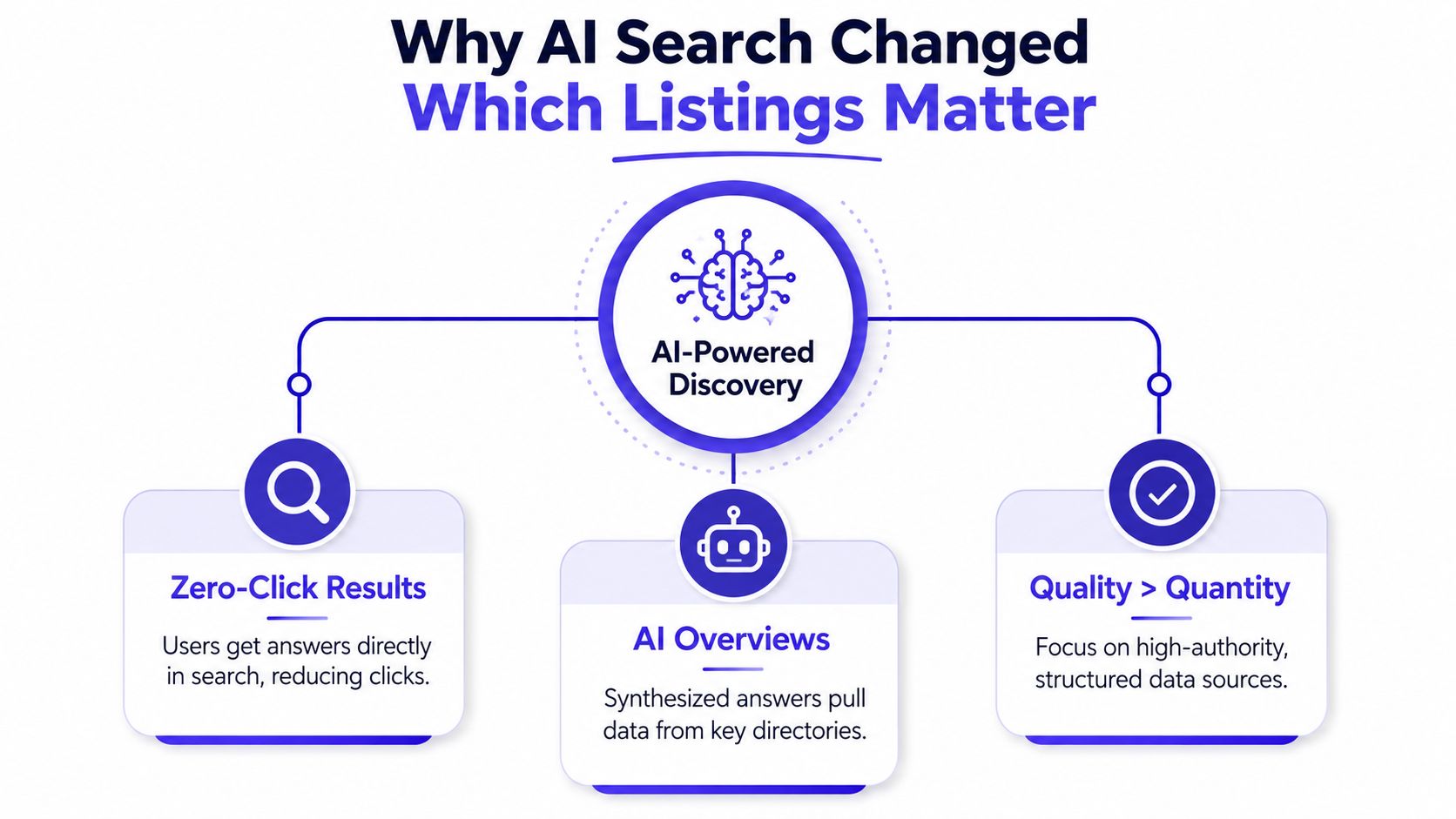
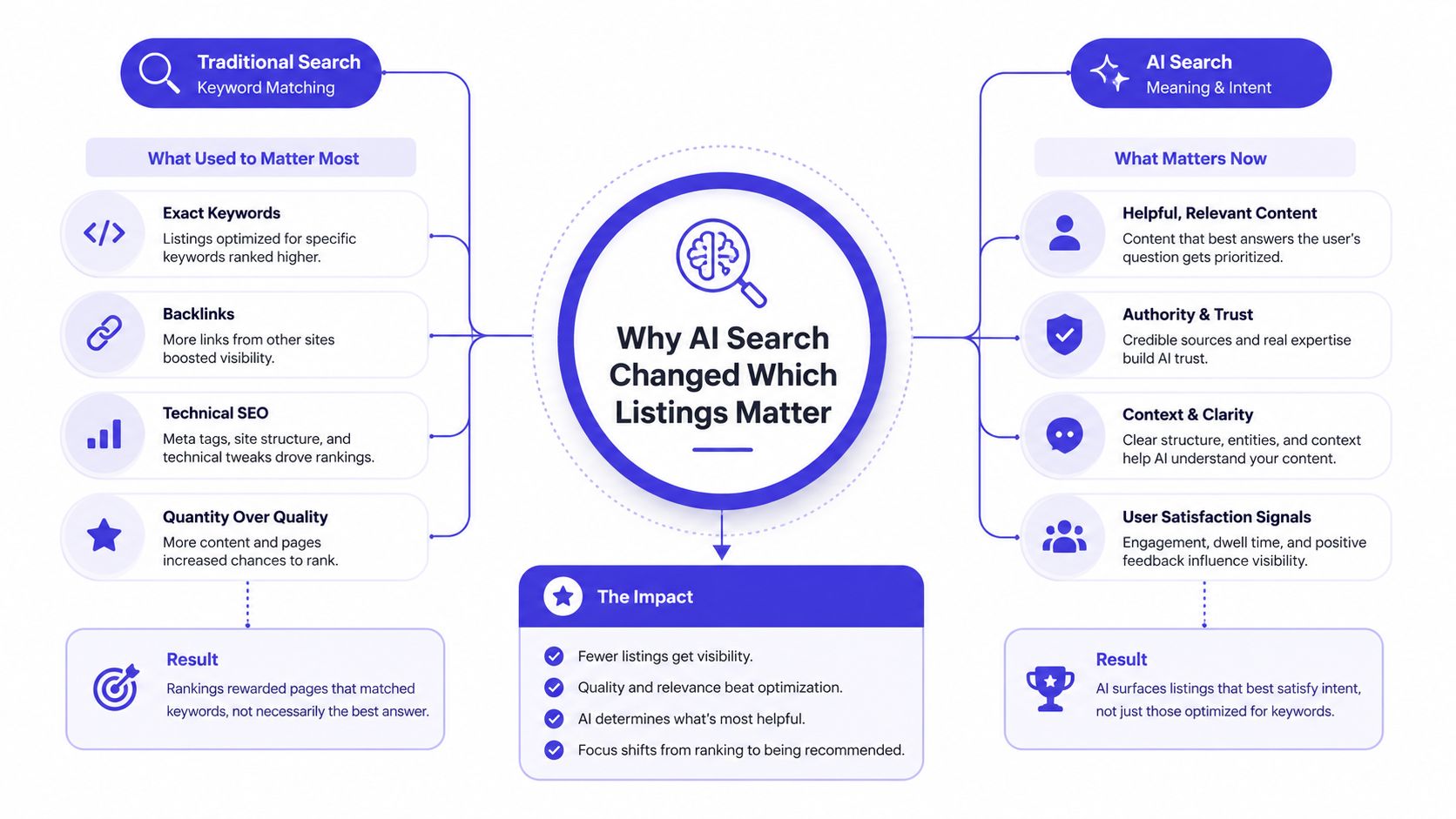
Old directory advice assumed more links automatically meant more discovery. That logic was never perfect, and it's even weaker now that AI summaries and zero-click answers are changing how people get information.
The better approach is to think in terms of entity trust. Search systems and AI systems need stable brand references, consistent profile data, and authoritative mentions they can reconcile across the web. That's why profiles on Product Hunt, G2, Capterra, Crunchbase, and Trustpilot tend to matter more than a pile of thin, mid-tier directory links.
Google's 2025 AI Search guidance also makes the technical baseline clear. Pages still need to be indexable, return an HTTP 200 status code, and keep Googlebot unblocked, while structured data has to match visible content and rich media can support AI Search performance (Google Search Central). That means a directory listing only helps if the profile is clean, crawlable, and consistent with the public brand.
What to prioritize now
For SaaS and AI startups, I'd rank listings this way:
- Canonical brand profiles first: the places people and search engines are most likely to trust.
- Review platforms next: the profiles that influence reputation, comparison behavior, and entity confidence.
- Category directories after that: the niche surfaces that reinforce topic relevance.
- Everything else last: only if the listing is reputable and indexed.
Google's Helpful Content guidance backs up the same direction of travel. It says content should be judged on originality, completeness, value, expertise, clear sourcing, and trustworthiness, and it warns against mass-produced pages that exist only to manipulate rankings (Google Search Central). That's a good lens for directories too. If a listing feels like filler, crawlers and users usually treat it that way.
A practical launch team doesn't chase raw directory count anymore. It builds a small cluster of profiles that reinforce one another, then uses those to populate search results, review surfaces, and AI citations with a consistent brand story.
Duplicate Checks, Curation, and Avoiding Spam Networks
A lot of cheap submission work breaks down here. The vendor blasts the same blurb across a long list of sites, doesn't check whether an old listing already exists, and ends up creating duplicate profiles that fight each other for attention.
The smarter move is to search first, claim second, and overwrite stale details where possible. That keeps the brand from appearing fragmented, and it reduces the risk that crawlers or editors treat the new profile as a conflicting duplicate.
Practical rule: if the profile already exists, improve it before you create a new one.
Curation matters just as much. A young startup doesn't need exposure on spam-heavy networks that exist mainly to sell links. Those placements usually add noise, not trust, and they can leave a bad pattern in the backlink profile that search engines don't value.
This is why a manual workflow is safer when the service is selective. The right filter is simple. Does the directory have real moderation, real traffic, and a profile page that people would click? If the answer is no, the listing probably isn't worth the time.
If you're judging a managed option, the benefits page should make the curation logic obvious. The StartupSubmit benefits page is the sort of reference point you want when you're checking whether the service avoids spam networks and duplicate problems.
QA, Follow-Up, and Your First Seven Days After Submission
The final report isn't the finish line. It's the moment the work becomes useful.
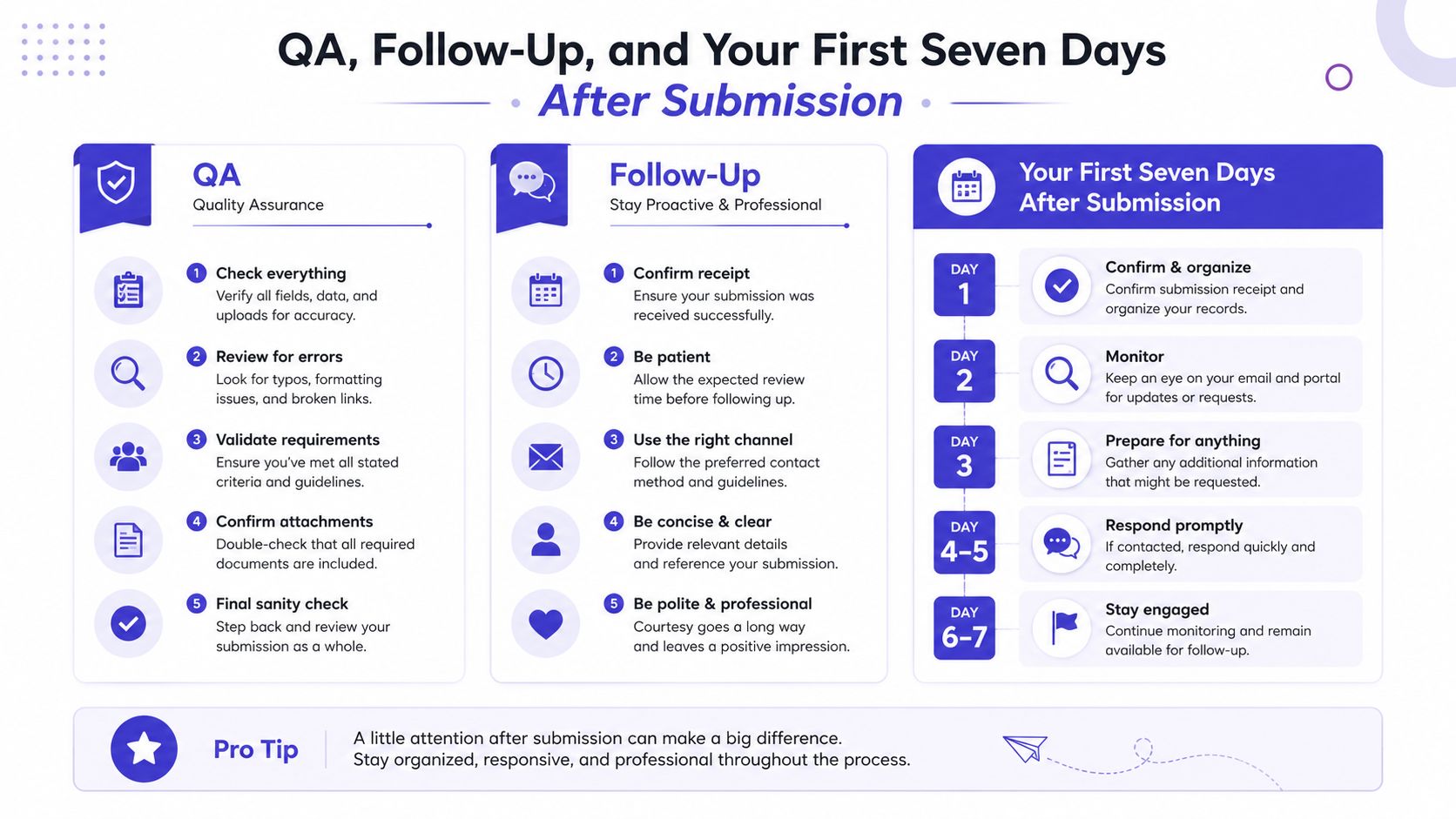
Start by auditing every submitted URL for placement quality. Check whether the profile is live, whether the description copied over cleanly, whether the logo renders correctly, and whether the category choice matches the product. Any unclaimed profile should be claimed immediately, because ownership is what lets you fix stale data later.
On day three, respond to early reviews or comments where the platform allows it. That's one of the easiest trust signals to strengthen, and it shows the listing isn't abandoned after submission.
By day seven, I'd check referring-domain growth in Ahrefs or a similar tool and then decide whether a second wave of niche directories makes sense. If the launch is also driving discussion on community platforms, Reddit-focused support can be worth layering on only after the core profiles are clean and consistent.
A simple seven-day sequence
- Day 1: review the report and claim any open profiles.
- Day 3: answer early feedback and correct obvious mistakes.
- Day 5: verify that canonical brand data matches across the live listings.
- Day 7: assess the backlink and referral footprint, then choose whether to expand into niche or community channels.
The reason this sequence works is simple. Directory submissions only compound when the live profiles are accurate, visible, and maintained. If the first batch is sloppy, the second batch just creates more cleanup later.
You don't need more pages. You need the right pages, in the right places, with the right identity attached.
If you're ready to get listed today without turning launch week into a manual submission marathon, send your core brand assets to StartupSubmit and use the final report to guide the next wave of listings, reviews, and launch visibility.